


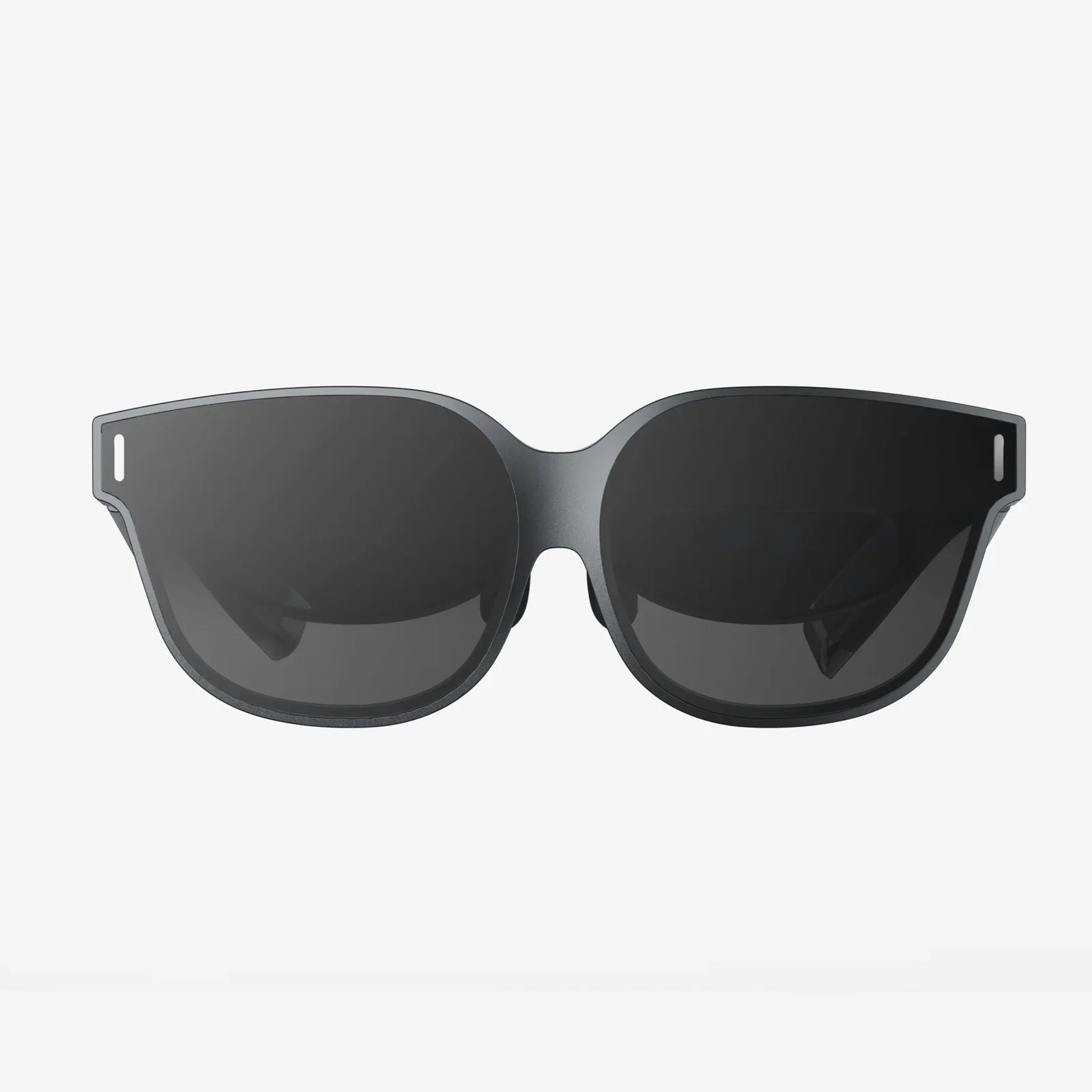
Imagine a world where digital information seamlessly overlays your physical surroundings, where virtual objects are as tangible as real ones, and where you can be transported to any place, real or imagined, in an instant. This is no longer the realm of science fiction; it is the burgeoning reality being built today through two revolutionary technologies: Augmented Reality (AR) and Virtual Reality (VR). While often mentioned in the same breath, they represent fundamentally different approaches to blending the digital and physical worlds. Understanding the pivotal battle and synergy of augmented reality vs virtual reality is crucial to comprehending the next great leap in human-computer interaction.
Defining the Realms: Core Concepts Unveiled
At its heart, the difference between AR and VR is a question of presence and immersion. Virtual Reality is an entirely simulated, computer-generated environment. It is a gateway to a digital world, completely replacing your field of vision with a virtual one. By wearing a head-mounted display that blocks out the physical world, users are immersed in a experience that can be a realistic simulation or a completely fantastical creation. The goal of VR is to convince your senses that you are somewhere you are not, creating a powerful sense of presence.
In stark contrast, Augmented Reality does not seek to replace the real world but to augment it. AR layers digital information—be it images, text, data, or 3D models—onto the user's view of their physical environment. This is achieved through devices like smart glasses, smartphones, or tablets, which use cameras to see the world and then display relevant digital content on top of it. The user remains present in their real-world setting, but that setting is enhanced with contextual, interactive data. The magic of AR lies in its ability to blend the real and the virtual, making the physical world your interactive interface.
The Technological Chasm: How AR and VR Achieve Immersion
The technological requirements and approaches for AR and VR, while sharing some common ground in graphics processing and motion tracking, diverge significantly to achieve their distinct goals.
Virtual Reality's Total Immersion Toolkit
VR technology is built around the principle of sensory isolation and control.
- Headsets: VR headsets are fully enclosed, featuring high-resolution displays for each eye to create a stereoscopic 3D effect. They completely block out ambient light and sound to prevent the real world from breaking the illusion.
- Tracking Systems: Precise tracking is paramount. This includes rotational tracking (using gyroscopes, accelerometers, and magnetometers to follow head orientation) and positional tracking (using external sensors or internal cameras to map the user's movement through physical space). This allows users to lean, duck, and walk around within a defined area, translating their real movements into the virtual world.
- Controllers: Handheld motion-tracked controllers are standard, acting as virtual hands. They provide haptic feedback (vibrations) to simulate touch, further deepening the immersion. Advanced systems are moving towards glove-based controllers or even finger-tracking without any hardware.
- Computational Power: Generating two high-frame-rate, photorealistic streams of video in real-time is computationally intensive, often requiring a powerful connected computer or a high-end mobile processor.
Augmented Reality's Seamless Integration Engine
AR's technology stack is focused on perception, understanding, and precise alignment.
- Transparent Displays: Unlike VR's opaque screens, AR devices use waveguides, holographic lenses, or semi-transparent mirrors to project digital imagery onto the user's view of the real world. Smartphone AR simply uses the screen as a window.
- Computer Vision: This is the cornerstone of AR. The device's cameras continuously scan the environment. Sophisticated algorithms perform simultaneous localization and mapping (SLAM), which allows the device to understand the geometry of the space, recognize surfaces (floors, tables, walls), and place digital objects persistently within it.
- Sensors: A suite of sensors including depth sensors (LiDAR), accelerometers, and gyroscopes work in concert to understand the device's position and orientation relative to the world with millimeter accuracy. This ensures a virtual vase doesn't slide off a real table when you move.
- Processing: The constant environmental processing demands significant on-device processing power, though much of the heavy lifting for complex recognition tasks is increasingly handled by cloud-based AI.
A World of Applications: Where AR and VR Excel
The philosophical and technological differences between AR and VR naturally lead them to excel in different application domains.
The Virtual Reality Domain: Training, Simulation, and Escape
VR's strength is creating experiences that are too dangerous, expensive, or impossible to do in the real world.
- Gaming and Entertainment: This is VR's most famous application. It offers unparalleled immersion, placing players inside the game world for a level of engagement flat screens cannot match. It's also revolutionizing cinematic experiences and virtual tourism.
- Professional Training: From training surgeons for complex procedures without risk to patients, to simulating flight for pilots or dangerous machinery operation for engineers, VR provides a safe, repeatable, and cost-effective training environment.
- Therapy and Rehabilitation: VR is used for exposure therapy to treat phobias (fear of heights, flying) and PTSD. It's also a powerful tool for physical rehabilitation, turning repetitive exercises into engaging games.
- Remote Collaboration: Teams distributed across the globe can meet in a shared virtual boardroom, interact with 3D models of products, or train together as if they were in the same physical space.
The Augmented Reality Domain: Enhancement, Information, and Assistance
AR's power is in providing contextual information and visual assistance exactly when and where it's needed.
- Industrial and Field Service: Technicians can see schematics overlaid on the machinery they are repairing. Warehouse workers can see optimal picking routes and item information displayed through smart glasses, freeing their hands.
- Healthcare: Surgeons can see critical patient data, like heart rate or a 3D model of a tumor, directly in their field of view during an operation. Medical students can practice on detailed anatomical models superimposed on a mannequin.
- Retail and Design: Customers can visualize how a new sofa would look in their living room or how a pair of glasses would look on their face before buying. Interior designers can place virtual furniture into a space to plan layouts.
- Navigation and Education: Walking directions can be arrows painted onto the street in front of you. Historical facts and figures can pop up when pointing a device at a monument. Text can be translated in real-time by simply looking at it through a phone.
The Blurring Lines: Mixed Reality and the Convergent Future
The dichotomy between AR and VR is not absolute. The spectrum of experiences is often described as the virtuality continuum, a concept introduced by researchers in the 1990s. On one end is the completely real environment, and on the other is a completely virtual one. AR sits closer to the real world, VR at the opposite end.
Bridging the middle is Mixed Reality (MR). MR is a more advanced form of AR where virtual objects are not just overlaid but are truly integrated into and interact with the real world in real-time. A virtual character in MR could hide behind your real couch, and a virtual ball could bounce off your real walls. This requires a deep understanding of the environment's physics and geometry, facilitated by advanced sensors like LiDAR. Modern headsets are increasingly MR-capable, allowing users to switch between a fully immersive VR experience and a transparent AR/MR one, demonstrating that the future is not about AR vs. VR, but rather a flexible blend of both.
Choosing the Right Tool for the Task
The decision to use AR or VR is not about which technology is "better," but which is the right tool for the specific task at hand. Ask these questions:
- Do I need the user to be aware of and interact with their physical surroundings? -> Choose AR.
- Do I need to completely control the user's visual and auditory experience to tell a story or simulate an environment? -> Choose VR.
- Is the primary goal to provide contextual information and assistance within a real-world workflow? -> Choose AR.
- Is the goal to train for a scenario that is dangerous, expensive, or logistically impossible to replicate? -> Choose VR.
Ultimately, both technologies are driving toward the same goal: to break down the barriers between the digital and physical realms, enhancing human capability, creativity, and connection. They are two sides of the same coin, each with a vital role to play in building our shared technological future.
The line between what is real and what is digital is rapidly fading, creating unprecedented opportunities to learn, work, and play. Whether you choose to augment your world or escape entirely into a new one, the power to redefine your reality is now, quite literally, in your hands. The next chapter of human experience is being written not on pages, but in the very air around us, waiting for you to look up and see it.
Share:
What Spatial Audio Means: A Revolution in How We Hear Sound
Augmented Reality vs Virtual Reality Speech: A Comprehensive Guide to Immersive Communication