


- by wangfred
Augmented vs Extended Reality: The Ultimate Guide to Our Blended Future
- by wangfred
Imagine a world where digital information doesn't just live on a screen but is seamlessly woven into the very fabric of your physical environment, enhancing everything you see, do, and experience. This isn't a distant sci-fi fantasy; it's the burgeoning reality being built today through two powerful, often conflated technologies: Augmented Reality and Extended Reality. The journey to understand the nuanced battle of augmented vs extended reality is more than a technical exercise—it's a glimpse into the next chapter of human-computer interaction, a future where our physical and digital lives are irrevocably and wonderfully intertwined.
To truly grasp the difference between AR and XR, we must first understand that they exist on a broad continuum known as the Virtuality Continuum. This spectrum defines the relationship between a completely real environment and a fully virtual one.
On one end, you have the unmediated reality we all experience. On the opposite end lies a completely immersive, computer-generated simulation known as Virtual Reality (VR), which replaces the user's real-world environment. Occupying the vast and complex middle ground between these two poles are the technologies we are exploring.
Augmented Reality is a technology that superimposes computer-generated perceptual information—images, text, sounds, haptic feedback—onto the user's view of the real world. The core principle of AR is annotation and enhancement. It takes your existing environment and adds a digital layer on top of it, much like a heads-up display (HUD) in a fighter jet or the first-down line drawn on a televised football game.
The magic of AR lies in its three core components:
The key takeaway is that AR does not replace reality; it augments it. The user remains grounded in their physical surroundings, with digital elements serving as helpful or entertaining supplements. Popular mobile applications that place virtual furniture in your living room or add playful filters to your face are ubiquitous examples of marker-based and markerless AR.
If AR is a specific tool, then Extended Reality (XR) is the entire toolbox. XR is not a single technology but an umbrella term that encompasses all combined real-and-virtual environments, including Augmented Reality (AR), Virtual Reality (VR), and Mixed Reality (MR). It represents the entire spectrum from the completely real to the completely virtual.
Think of XR as the overarching category for all technologies that alter reality by blending the physical and virtual worlds or creating a fully immersive experience. The term was coined to eliminate the silos between AR, VR, and MR, acknowledging that the future will likely involve a fluid movement between these states rather than the use of one in isolation.
Therefore, the relationship is hierarchical: XR is the parent category, and AR is one of its key subsets. When we talk about the XR industry, we are referring to the collective development of hardware, software, and experiences across this entire spectrum.
Often, the most significant confusion arises between high-fidelity AR and a subset of XR known as Mixed Reality. MR sits at the most complex point on the spectrum, blending the real and virtual worlds to create environments where physical and digital objects co-exist and interact in real-time.
While basic AR overlays digital content, advanced MR anchors that content to the real world in a way that it understands and responds to its environment. A virtual character in an MR experience could hide behind your real sofa, or a digital ball could bounce off your actual wall. This requires significantly more advanced sensors, cameras, and processing power to create a detailed spatial map of the environment.
In essence, all MR is a form of AR, but not all AR is sophisticated enough to be considered MR. MR represents the pinnacle of contextual, interactive augmentation.
Augmented Reality: The philosophy is assistance and information. The user experience is primarily about accessing contextual data without leaving the real world. You are present in your environment, and the technology assists you within it. The immersion is partial and additive.
Extended Reality: The philosophy is versatility and spectrum. The user experience can range from a simple AR overlay to a fully immersive VR simulation. XR describes the user's ability to traverse different levels of digital immersion, from having one foot in the real world to being completely transported to another.
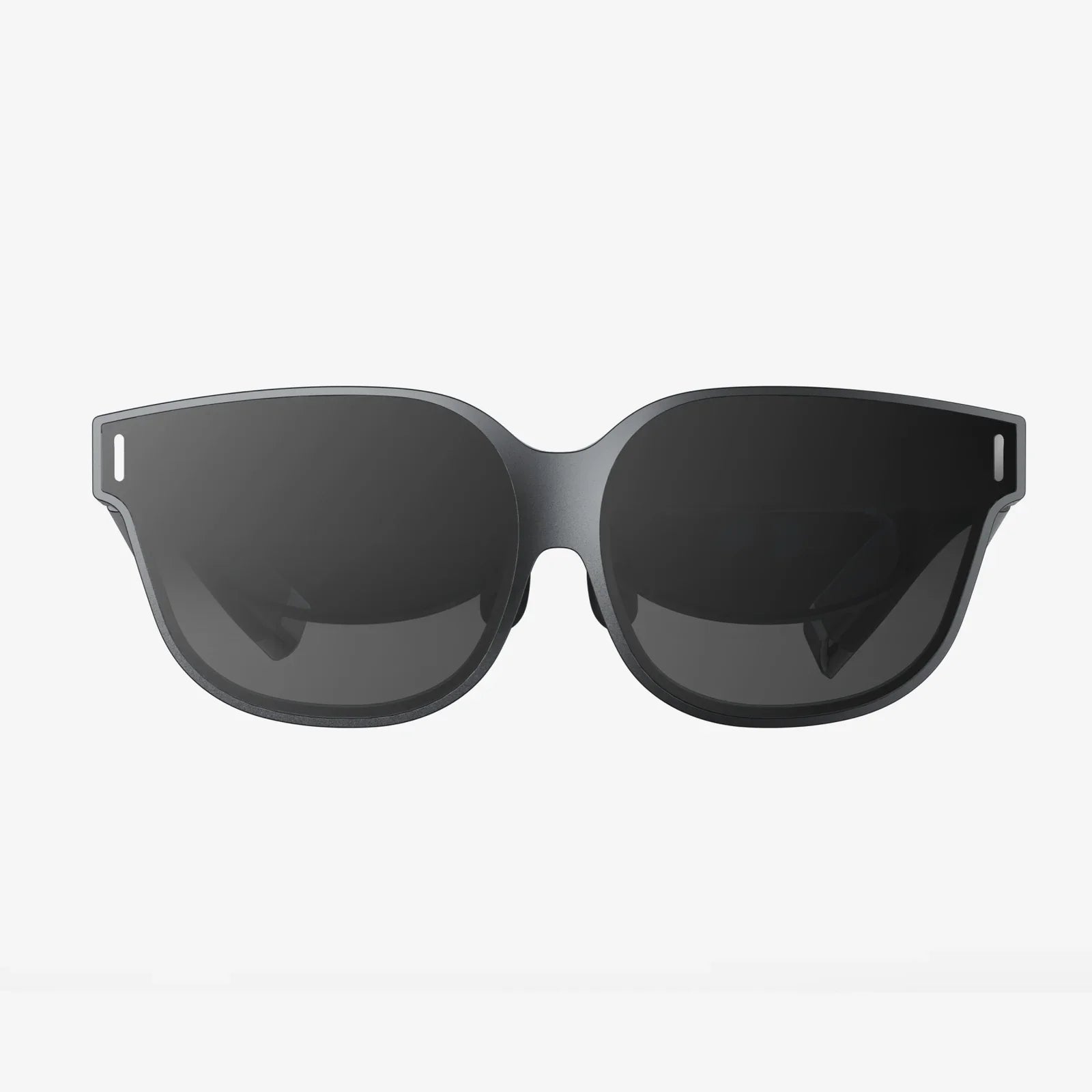
Augmented Reality: Can be experienced through ubiquitous devices like smartphones and tablets, making it highly accessible. More advanced AR requires see-through smart glasses or headsets with cameras, sensors, and displays that project light onto the lenses.
Extended Reality: As an umbrella term, its hardware is diverse. It includes everything from smartphones (for AR) to standalone VR headsets (for immersive VR) to cutting-edge MR headsets that feature a complex array of depth sensors, high-resolution cameras, and powerful onboard computers to blend worlds seamlessly. XR hardware aims to support the entire spectrum.
Augmented Reality: Offers a low to moderate level of immersion. Interaction is often limited to viewing, simple gestures, or screen touches. The digital world does not profoundly interact with the physical one beyond basic placement.
Extended Reality: Encompasses the full range of immersion. This includes the non-immersive experience of phone-based AR, the semi-immersive experience of MR where you can physically interact with digital objects, and the fully immersive experience of VR where you are cut off from the physical world and can interact naturally within the virtual one.
The theoretical differences between AR and XR become concrete when we examine their practical applications across various sectors. These technologies are already moving beyond novelty and into core business functions and daily life.
In industrial settings, AR is a powerhouse for efficiency and accuracy. Technicians can use AR glasses to see schematics overlaid on the machinery they are repairing, receiving step-by-step instructions hands-free. Warehouse workers can have optimal picking routes and item information displayed directly in their line of sight, drastically reducing errors and training time. This is augmentation for practical, measurable outcomes.
XR takes this further by enabling full-scale virtual prototyping and design collaboration. Engineers and designers from across the globe can don VR headsets to interact with a life-size 3D model of a new engine or building before a single physical prototype is built, identifying design flaws and making changes in a cost-effective virtual space.
AR applications are helping medical students visualize complex anatomical structures in 3D by overlaying them onto mannequins or even their own bodies. Surgeons use AR projections to display critical patient vitals and imaging data (like MRI scans) directly onto their field of view during procedures, maintaining focus and precision.
XR platforms enable immersive surgical training, allowing students to practice delicate operations in a risk-free VR environment. MR is also being used for advanced physical therapy, where patients can engage in gamified exercises that use their real-world movements to control virtual elements, making rehabilitation more engaging and measurable.
The retail sector has warmly embraced AR. Consumers can now use their smartphones to see how a new sofa would look in their living room, how a pair of glasses fits their face, or how a shade of paint appears on their wall. This "try before you buy" augmentation reduces purchase uncertainty and minimizes returns.
XR is pushing the boundaries further with the concept of the virtual store. Instead of browsing a 2D website, customers can enter a fully immersive VR boutique, interact with products in 3D, and even socialize with friends or store assistants as avatars, recreating the social aspect of physical shopping from the comfort of home.
Education is perhaps one of the most fertile grounds for these technologies. AR can bring textbooks to life, with historical figures appearing to give a speech or a dinosaur skeleton animating in a student's bedroom. This layer of interactive information makes learning engaging and contextual.
XR enables experiential learning that was previously impossible. History students can take a virtual field trip to ancient Rome. Medical students can walk through a simulation of the human bloodstream. Mechanics can practice disassembling a complex jet engine virtually. This level of immersion fosters deeper understanding and retention of knowledge.
The trajectory of both AR and the broader XR field points toward a future of increasingly seamless and powerful integration. The distinctions between AR, MR, and VR will likely blur as hardware becomes more capable and affordable. We are moving toward lightweight, socially acceptable glasses that can dynamically shift between offering simple AR annotations and fully immersive VR experiences, all powered by sophisticated AI that understands our intentions and environment.
The ultimate goal is the concept of the Metaverse—a persistent network of shared, real-time rendered 3D virtual worlds. In this vision, XR devices will be our primary portal. We will use AR to interact with metaverse data in our physical lives and VR to dive completely into its digital realms, all under the umbrella of a continuous XR experience. This future will be built not on a single technology, but on the harmonious interplay of the entire spectrum that XR represents.
Despite the immense potential, the path forward is not without significant hurdles. For AR to become an all-day wearable technology, devices must overcome challenges related to battery life, form factor, and display brightness. Social acceptance is another major barrier; walking around with a computer on your face requires a shift in social norms.
For the XR industry as a whole, critical issues around privacy, data security, and ethical design loom large. These devices collect unprecedented amounts of data about our environments, behaviors, and even our biometrics. Establishing robust frameworks to protect users is paramount. Furthermore, preventing the creation of digital divides and ensuring these transformative tools are accessible to all, not just a privileged few, is a societal challenge that must be addressed proactively.
The line between the physical and digital is not just blurring; it's being actively redrawn by the minute. The conversation around augmented vs extended reality is far more than semantic nitpicking—it's a fundamental roadmap to understanding how we will interface with the next generation of computing. This isn't about choosing one over the other; it's about recognizing that our future will be a fluid tapestry woven from both threads, empowering us to see the world not just as it is, but as it could be.
Share:
Augmented Reality Now: The Invisible Layer Reshaping Our Daily Lives
Are Eyeglasses Technology? The Digital Evolution of Vision