


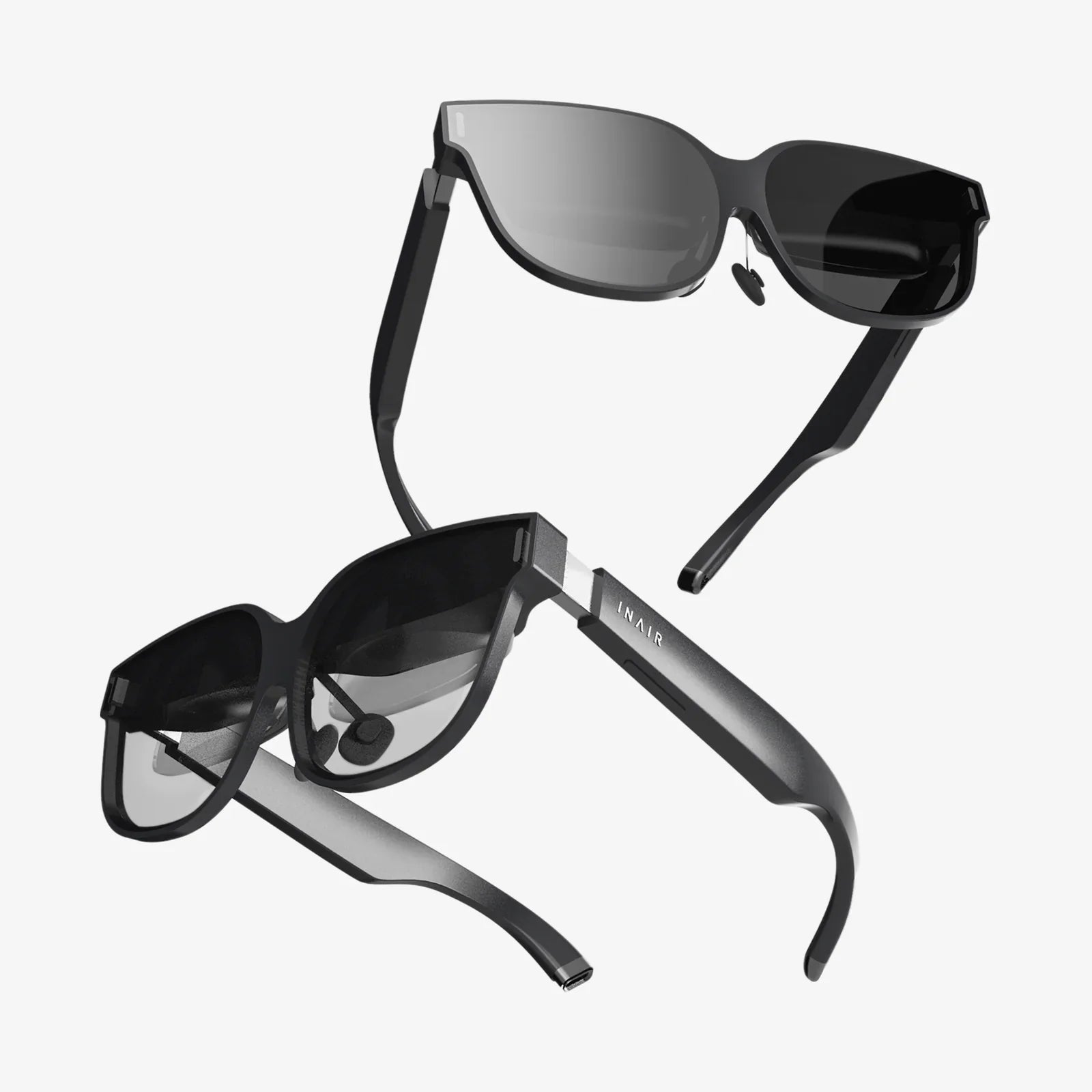
Imagine a world where digital information doesn’t just live on a screen in your hand or on your desk, but is seamlessly woven into the very fabric of your physical environment. A world where instructions float over a complex machine you’re repairing, historical figures seemingly stroll through the ruins you’re touring, and navigation arrows are painted directly onto the road ahead. This is not a distant science fiction fantasy; it is the imminent future being unlocked by the rapid advancement of augmented reality glasses, a technology poised to deliver a paradigm shift in human-computer interaction with benefits so profound they will touch nearly every aspect of our lives.
Beyond the Novelty: Defining the Augmented Shift
To understand the benefits, we must first move beyond the gimmickry of simple filters and understand what true, persistent augmented reality (AR) represents. Unlike virtual reality (VR), which replaces your world with a digital one, AR supplements it. Augmented reality glasses are wearable computers with transparent displays that project digital imagery, data, and interfaces into the user’s field of view, effectively turning the world into a dynamic canvas. This shift from looking at a device to looking through a device is fundamental. It represents a move towards what is often called "spatial computing" or the "immersive web," where the context of your location, the objects around you, and your specific needs drive the digital experience.
Revolutionizing the Professional and Industrial Landscape
The most immediate and tangible benefits of AR glasses are emerging within enterprise and industrial settings, where they are already driving significant gains in efficiency, accuracy, and safety.
Enhanced Productivity and Precision in Manual Tasks
For field technicians, maintenance engineers, and assembly line workers, AR glasses are a game-changer. Instead of constantly shifting attention between a physical engine and a PDF manual on a tablet or laptop, the instructions, torque specifications, and schematic diagrams can be overlaid directly onto the equipment itself. An arrow can point to the exact bolt that needs loosening, a highlight can indicate a faulty component, and an animation can demonstrate the correct assembly sequence. This hands-free access to contextual information drastically reduces errors, slashes task completion times, and minimizes the cognitive load on the worker, allowing them to focus entirely on the task with their hands.
Unprecedented Remote Collaboration and Expertise
Often referred to as "see-what-I-see" technology, AR glasses obliterate geographical barriers to expertise. A seasoned engineer sitting in a headquarters thousands of miles away can see the live feed from a technician's glasses on-site. Using digital annotations, the expert can draw circles, arrows, and notes that appear in the technician's field of view, directly onto the machinery. They can pull up a 3D model and virtually place it into the environment for discussion. This remote guidance capability enables less experienced staff to perform complex procedures, reduces the need for costly expert travel, and ensures problems are resolved correctly the first time.
Improved Training and Onboarding
Training for complex, dangerous, or expensive equipment can be revolutionized. Instead of learning from a book or a video, a trainee wearing AR glasses can be guided through a procedure with digital cues overlaid on the actual machinery in a safe, controlled environment. They can practice virtual simulations that respond to their actions before ever touching the real, multi-million dollar equipment. This experiential learning accelerates skill acquisition, improves knowledge retention, and enhances overall safety protocols.
Transforming the Educational and Learning Experience
The classroom, whether in a school, university, or corporate setting, is another domain ripe for augmentation. AR glasses can turn abstract concepts into interactive, tangible experiences.
Bringing Abstract Concepts to Life
Imagine a history lesson where students wearing AR glasses can watch a pharaoh oversee the construction of the pyramids right on their desk. A biology class where a beating human heart hologram floats in the middle of the room, allowing students to walk around it, peel back layers, and observe blood flow from every angle. A geometry lesson where 3D shapes can be manipulated and examined from within. This immersive educational content moves learning from passive reception to active exploration, fostering deeper understanding and sparking curiosity in ways textbooks never could.
Personalized and Adaptive Learning Pathways
AR learning environments can be tailored to the individual student. If a student struggles with a particular concept, the glasses can present additional information, a different explanatory animation, or guided practice. For those who excel, they can offer more advanced challenges. This adaptive learning ensures no student is left behind and every student is sufficiently challenged, creating a more effective and equitable educational experience.
Redefining Social Connection and Communication
While often seen as an isolating technology, AR glasses have the potential to enhance, not replace, human connection when designed with a human-centric focus.
Bridging Physical Distance with Shared Presence
The future of video calls could be a shared augmented space. Instead of talking to a grid of faces on a screen, you could have a life-sized, volumetric hologram of a remote family member sitting on your couch, able to gesture and interact with your environment. Friends separated by continents could play a virtual board game on your actual coffee table, seeing the same pieces and moves. This sense of shared presence creates a far more natural and emotionally resonant form of communication than current technology allows.
Augmenting Shared Experiences in the Real World
At a live event like a concert or sports game, AR glasses could offer a layer of shared entertainment. You could see stats about a player floating beside them, witness fantastical digital effects synchronized with the music, or choose different camera angles. Critically, you would share this experience with the crowd around you, laughing and reacting together, rather than being immersed in a solitary screen. It adds a digital layer to a fundamentally shared physical experience.
Enhancing Daily Life and Personal Empowerment
The benefits will extend into the most mundane aspects of our daily routines, offering newfound convenience, accessibility, and personal enrichment.
Seamless Navigation and Environmental Awareness
Gone are the days of holding up a phone and trying to figure out which way to turn. With AR glasses, walking directions can be intuitively mapped onto the sidewalk ahead of you, with clear arrows and distance markers. You could look at a restaurant and instantly see its reviews and today’s specials floating beside its sign. In a supermarket, the glasses could highlight the items on your shopping list on the shelves and show you which brand is on sale or aligns with your dietary preferences. This contextual environmental data makes navigating and interacting with the world effortlessly efficient.
Breaking Down Language and Accessibility Barriers
AR glasses could serve as a universal translator in real-time. Look at a foreign street sign or menu, and a translated version appears superimposed over the original text. For individuals who are hard of hearing, spoken conversation could be converted into real-time subtitles displayed in their glasses. For those with low vision, the glasses could highlight curbs, identify obstacles, and enhance contrast. This technology has the profound potential to democratize access to information and experiences for millions of people.
Personalized Fitness and Wellness Coaching
During a workout, your AR glasses could display your heart rate, rep count, and correct form guidance directly in your line of sight, eliminating the need to constantly check a watch or gym mirror. A yoga instructor could demonstrate the next pose virtually on your mat. For nutrition, the glasses could analyze the food on your plate and provide a breakdown of its estimated calories and macronutrients. This integrated health monitoring provides constant, contextual feedback to support a healthier lifestyle.
Navigating the Challenges on the Path to Adoption
For all their potential, the widespread adoption of AR glasses is not without significant hurdles that must be thoughtfully addressed.
The Form Factor and Comfort Conundrum
Current technology often struggles to balance performance with aesthetics. For all-day wear, glasses must be lightweight, comfortable, socially acceptable, and stylish. They cannot be bulky, heavy, or cause eye strain. Achieving a socially normal form factor with all the necessary processing power, battery life, and display technology remains the single biggest challenge for manufacturers.
Safeguarding Privacy and Security in an Augmented World
The always-on, always-sensing nature of AR glasses raises legitimate privacy concerns. The ability to record video and audio discreetly, to constantly scan and analyze environments and people, necessitates a robust ethical and legal framework. Clear visual and auditory cues must be developed to indicate when recording is active. Data must be encrypted, and users must have complete control over their information. Without transparent and ironclad privacy protections, the technology risks a severe public backlash.
The Digital Divide and Economic Accessibility
As with any transformative technology, there is a risk that the benefits of AR glasses will initially be available only to those who can afford them, potentially exacerbating existing social and economic inequalities. Ensuring that the productivity, educational, and accessibility benefits are not limited to a privileged few will be a critical societal challenge.
The journey towards mainstream AR glasses is less about a single revolutionary product and more about a gradual, inevitable convergence of technologies. It’s a future being built in research labs and industrial settings today, promising a world where our digital and physical realities are no longer separate, but synergistically combined. The benefits—from empowering workers and enlightening students to connecting loved ones and assisting those in need—paint a picture of a more efficient, informed, and intuitively connected society. The world is about to get a major software update, and we will all be wearing the interface.
Share:
AR Glasses Clear Lenses: The Invisible Gateway to a Brighter Digital Future
Virtual Office Advice: The Ultimate Guide to Mastering the Remote Workspace