


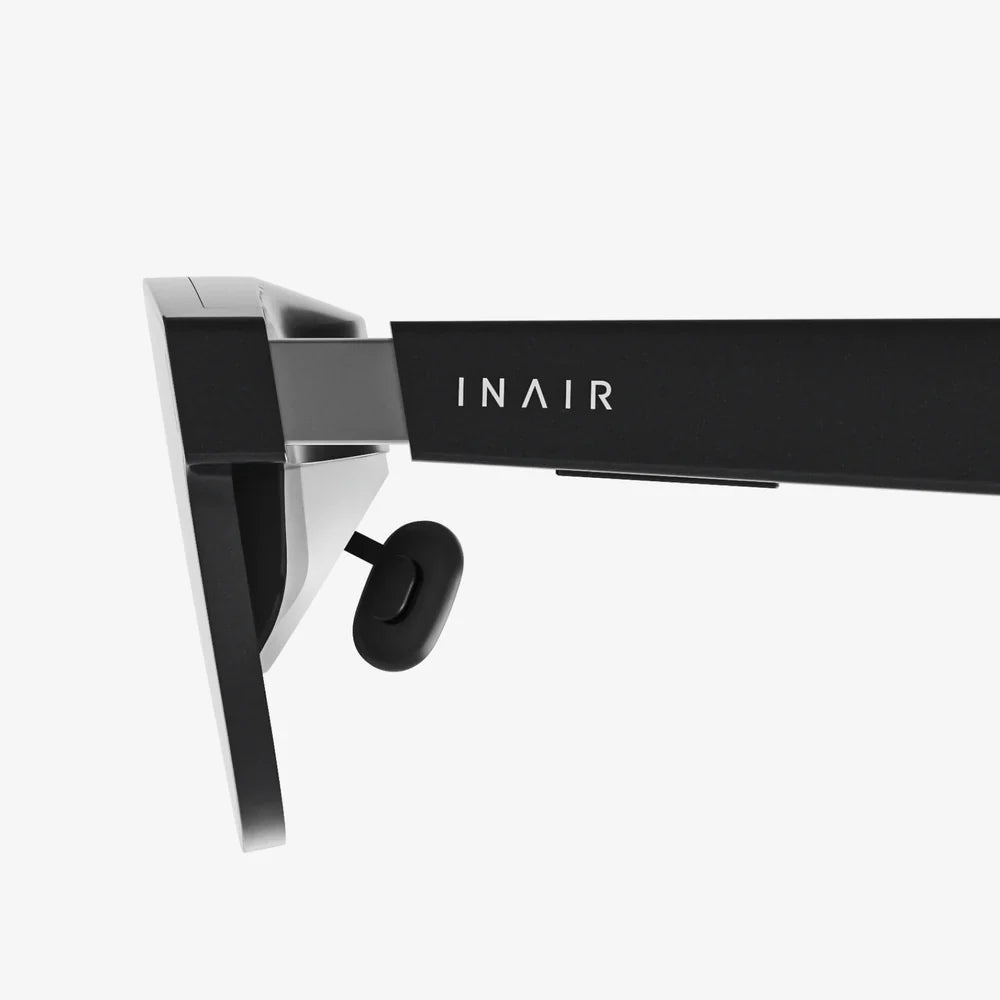
Imagine stepping into a world where the boundaries between reality and digital fantasy blur into nothingness, where you can climb mountains, explore alien planets, or sit courtside at a championship game—all from your living room. This is the promise held within the sleek, futuristic frames of the best 3D VR goggles, a portal to experiences that were once confined to the realm of science fiction. The journey to finding your perfect window into these virtual worlds, however, is paved with technical jargon and a dizzying array of choices. This definitive guide cuts through the noise, arming you with the knowledge to choose the headset that will transform your perception of entertainment, productivity, and connection.
The Core of the Experience: Understanding Display and Visual Fidelity
At the very heart of any virtual reality goggle is its display. This is your window to another world, and its quality directly dictates the level of immersion you will experience. When evaluating the best 3D VR goggles, several key display specifications demand your attention.
The first and most critical is resolution. Measured in pixels per eye, a higher resolution means a sharper, clearer, and more detailed image. Early VR suffered from the "screen door effect," where users could discern the faint lines between pixels, shattering the illusion. Modern high-end headsets have all but eliminated this with resolutions that rival high-definition monitors. Look for terms like 4K, or specific pixel counts (e.g., 1832 x 1920 per eye or higher) to ensure a crisp visual experience where text is readable and distant objects are defined, not blurry smudges.
Equally important is the refresh rate, measured in Hertz (Hz). This determines how many times the image on the screen refreshes per second. A higher refresh rate, typically 90Hz and above, is crucial for creating smooth, fluid motion. A low refresh rate can lead to choppy visuals, lag, and for many users, motion sickness. The best 3D VR goggles now push 120Hz or even 144Hz, providing buttery-smooth gameplay and head tracking that feels instantaneous and natural, keeping your stomach settled as you soar through virtual skies.
Another vital component is the field of view (FOV). Expressed in degrees, FOV is how much of the virtual world you can see at any given moment without turning your head. A narrow FOV can feel like looking through binoculars or a scuba mask, constantly reminding you that you are wearing a device. A wider FOV, ideally 100 degrees or more, expands your peripheral vision, deepening the sense of "being there" and making the experience vastly more immersive and believable.
Finally, the type of panel technology (LCD vs. OLED) plays a role. OLED panels offer perfect blacks and incredibly vibrant colors, which is fantastic for space scenes or horror games shrouded in darkness. LCDs, while sometimes offering slightly less contrast, can achieve higher resolutions and refresh rates at a more accessible price point and are less prone to a visual artifact known as "mura." The best headsets often use advanced versions of these technologies, like Fast-Switch LCDs or custom OLEDs, to maximize their visual performance.
Beyond the Screen: Tracking, Controllers, and Audio
A stunning visual display is useless if the virtual world doesn't respond to your movements with pinpoint accuracy. This is where tracking technology comes in.
Inside-Out Tracking has become the standard for modern, consumer-friendly VR goggles. Cameras mounted on the headset itself look outward to track the position of the controllers and map your physical play space. This eliminates the need for external sensors or base stations you must mount on your walls. It offers fantastic freedom and ease of setup, making it ideal for users who want a quick, uncomplicated entry into VR. The best systems use multiple wide-angle cameras for robust, 360-degree tracking.
Outside-In Tracking, which uses external sensors placed around the room, is still prized in high-end and professional setups for its sub-millimeter accuracy, especially for full-body tracking. However, for most users seeking the best 3D VR goggles for home use, a high-quality inside-out tracking system provides more than enough precision for gaming, fitness, and social applications.
The controllers are your hands in the virtual world. The best ones are ergonomic, feel natural to hold, and offer haptic feedback—subtle vibrations that simulate the sensation of touching virtual objects, drawing a bowstring, or feeling the recoil of a weapon. Features like finger tracking, which can individually detect the position of your fingers without a glove, add an incredible layer of expressiveness and realism to social interactions and complex simulations.
Immersion is a multi-sensory experience, and audio is half the battle. Many top-tier headsets integrate spatial audio directly into the headstrap. This technology uses clever audio processing to simulate 3D sound, allowing you to hear exactly which direction a sound is coming from—behind you, above you, or to your left. This is critical for gaming (hearing an enemy creep up behind you) and is utterly transformative for cinematic experiences. Some sets offer a 3.5mm jack for your own headphones, while others have built-in solutions that are surprisingly effective.
The Human Factor: Comfort, Fit, and Ergonomics
You can have the most technologically advanced headset in the world, but if it's uncomfortable to wear, it will gather dust on a shelf. Comfort is not a luxury; it is a fundamental requirement for prolonged enjoyment.
Weight distribution is paramount. A front-heavy headset will strain your neck and cheeks. The best 3D VR goggles counter this with sophisticated strap designs, often with a rigid halo or a counterweight at the back, to evenly distribute the weight across your head. This allows for multi-hour sessions without discomfort.
The materials matter. Plush, breathable foam facial interfaces that are easy to clean (or even replaceable) make a huge difference, especially during active VR fitness sessions. Adjustability is key: the ability to finely tune the strap tightness, the distance between the lenses (interpupillary distance or IPD), and even the lens distance from your eyes ensures a perfect fit for a wide range of face shapes and sizes, securing the "sweet spot" for the clearest image.
Power and Performance: Tethered vs. Standalone Systems
This is the great divide in the VR market, and your choice here will define your entire experience.
Standalone VR goggles are all-in-one units. They have a mobile processor, battery, and storage built directly into the headset. They are the epitome of convenience—wireless, portable, and ready to play within seconds of putting them on. They offer a fantastic, accessible entry point into VR with a large library of games and experiences. However, their graphical processing power is necessarily limited compared to a high-end computer, meaning visuals, while often impressive, will not reach the pinnacle of fidelity possible on a tethered system.
Tethered (PC-Powered) VR goggles connect via a high-speed cable to a powerful computer. This setup unleashes the full potential of VR, delivering breathtaking, photorealistic graphics, vastly more complex worlds, and experiences that are simply impossible on mobile chips. For the user who already owns a capable gaming PC and seeks the absolute best visual quality and deepest, most demanding games, a tethered headset is the only choice. The trade-off is being physically connected to a computer, though wireless adapter kits exist for some models.
A growing category of hybrid headsets offers the best of both worlds: they can operate as a standalone device but can also be connected to a PC to access its full library of high-end content, providing incredible flexibility.
The Ecosystem: Software, Content, and the Social Metaverse
The hardware is just a vessel; the software is the soul. The value of any VR goggle is intrinsically linked to the ecosystem it provides access to.
When considering the best 3D VR goggles, you must evaluate the content library available to it. Look for a robust and diverse storefront filled with highly-rated games, creative applications, immersive 360-degree videos, and social platforms. A strong exclusive lineup can be a significant selling point. Beyond games, consider productivity apps for virtual desktops, fitness programs that turn exercise into a game, and creative tools for painting and sculpting in 3D space.
The modern VR experience is increasingly social. Platforms exist where you can meet friends, watch movies together in a virtual cinema, attend live concerts, or simply hang out in fantastical worlds as personalized avatars. The best headsets facilitate these connections with robust social features, easy partying systems, and expressive avatar creation tools. This transforms the device from a solitary gaming accessory into a powerful tool for human connection across vast distances.
Future-Proofing and Advanced Features
As you invest in a premium experience, considering features that point toward the future of the technology is wise.
Eye-Tracking is a revolutionary feature beginning to appear in consumer headsets. Tiny cameras inside the headset track the movement of your pupils. This enables two groundbreaking technologies: foveated rendering and enhanced social expression. Foveated rendering allows the computer to render only the exact spot you are looking at in full detail, while intelligently reducing the detail in your peripheral vision—a massive performance savings that can be used to push graphics even further. Socially, it allows your avatar to make natural eye contact and blink, adding a profound layer of non-verbal communication.
Mixed Reality (MR) or Augmented Reality (AR) passthrough is another frontier. Using the headset's external cameras, these features allow you to see a real-time video feed of your physical surroundings inside the headset. The best systems then allow digital objects to interact with your real-world space—you could have a virtual pet running around your actual coffee table or pin a massive virtual screen to your physical wall. This blurring of realities is widely seen as the next major evolution of the technology.
Making Your Choice: Aligning the Technology with Your Reality
Selecting the best 3D VR goggles is not about finding the objectively "best" headset on a spec sheet; it's about finding the best headset for you. Your decision should be guided by a few key questions: What is your budget? Do you already own a powerful gaming PC, or do you value wireless freedom above all else? What is your primary use case: hardcore gaming, daily fitness, socializing, or professional work? How important is absolute top-tier visual fidelity compared to convenience and accessibility?
By weighing your answers against the technological pillars outlined in this guide—display quality, tracking, comfort, and ecosystem—you can cut through the marketing hype. You'll be empowered to make an informed investment in a device that doesn't just show you a new world, but makes you feel truly present within it.
The revolution is not coming; it's already here, waiting on a store shelf or in an online cart. The gap between dreaming of an adventure and living it has never been smaller, bridged by a pair of sophisticated lenses and a world of digital light. Your journey into the vast, uncharted territories of virtual reality begins with a single, conscious choice—selecting the perfect goggles to see it all. What will you experience first?
Share:
Smart Device Companies Are Reshaping Our Reality: The Invisible Architects of Modern Life
Smart Glasses with Longest Battery Life 2025: The Ultimate All-Day Wearables Have Arrived