


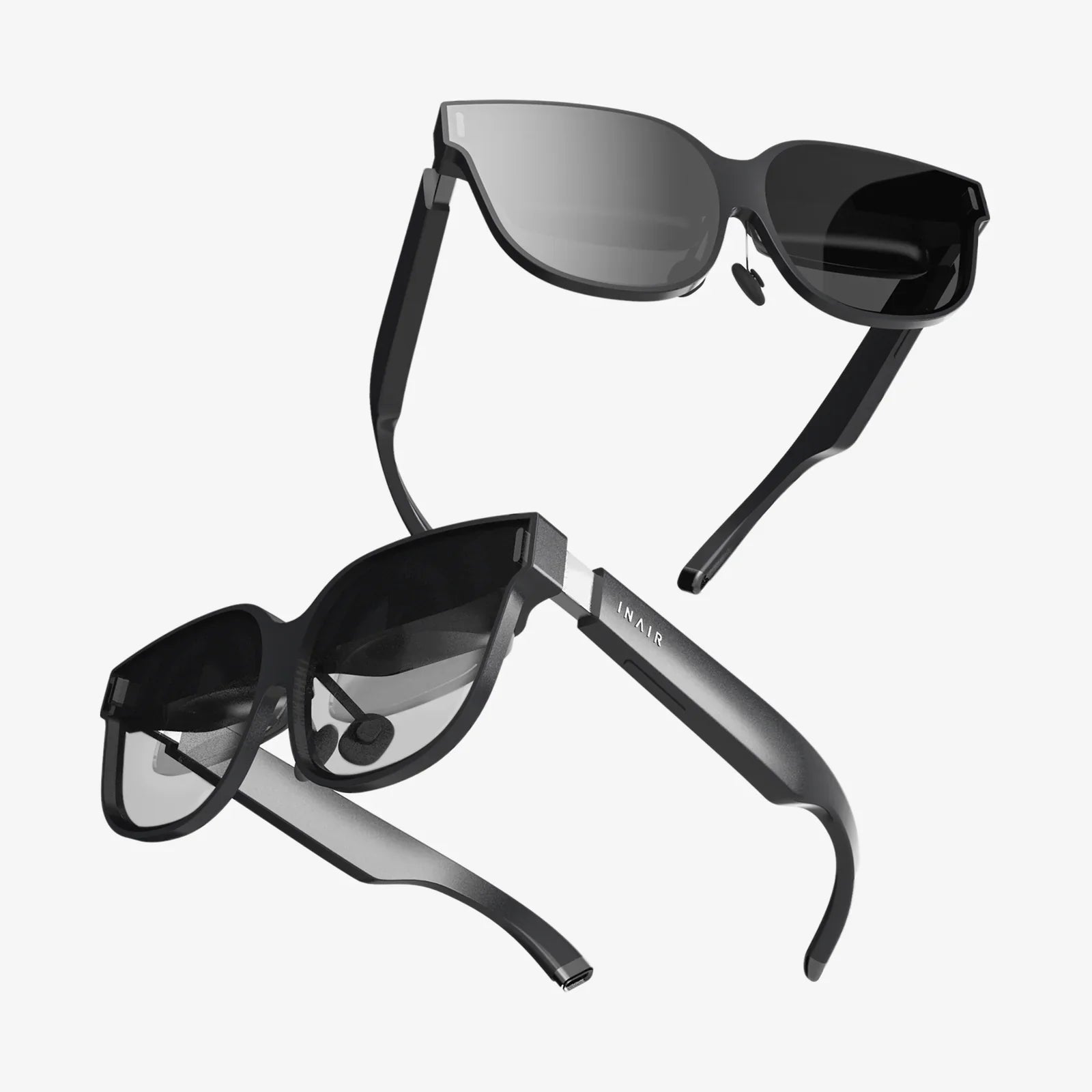
Imagine a world where information doesn’t live on a screen you hold in your hand, but is seamlessly woven into the very fabric of your perception. A world where a whispered question to the air yields an immediate, insightful answer, where navigating a foreign city feels like being guided by a local, and where the line between your digital life and physical reality becomes beautifully, usefully blurred. This is not a distant science fiction fantasy; it is the promise of the best AI glasses of 2025, a new class of wearable technology poised to fundamentally alter how we live, work, and connect.
The Evolution from Novelty to Necessity
The journey of smart glasses has been a long and often rocky one. Early iterations were often clunky, aesthetically questionable, and offered limited functionality that failed to justify their intrusion into our personal space. They were solutions in search of a problem. The pivotal change, culminating in the 2025 models, has been a fundamental shift in philosophy. Instead of trying to miniaturize a smartphone and strap it to your face, the focus is now on ambient computing. The goal is not to command your attention but to assist it, to provide information and capabilities precisely when and where you need them, without ever requiring you to look down or disengage from the world around you. This paradigm shift is powered by a trifecta of technological advancement: exponentially more powerful and efficient dedicated AI processors, sophisticated sensor arrays, and a mature software ecosystem built around contextual awareness.
Decoding the AI Powerhouse: Features That Define 2025
The term "AI features" is often thrown around loosely. For the 2025 generation of smart glasses, it refers to a concrete set of capabilities that feel nothing short of magical. These are the functionalities that separate them from their predecessors and from simple augmented reality displays.
Real-Time Visual and Audio Translation
This is perhaps the most immediately transformative feature. We are moving far beyond simple text translation. The best AI glasses of 2025 offer real-time, overlayed translation of street signs, menus, and documents directly onto your field of view. But the true magic lies in conversational translation. Advanced microphones pick up speech in one language, and near-instantaneously, the glasses' AI will translate it, playing the translation through the bone conduction or discreet speaker system. You can then respond in your native tongue, and the person you're speaking with will hear their language. This effectively creates a universal translator, breaking down one of humanity's oldest and most significant barriers.
Contextual Awareness and Proactive Assistance
These glasses are not just passive devices; they are active partners. Using a combination of cameras, GPS, and other sensors, they build a deep understanding of your context. Walk into a supermarket, and your shopping list might automatically appear in the corner of your vision. Glance at a complex piece of machinery, and the AI, recognizing the model, could overlay a simplified maintenance guide. Look up at the night sky, and constellations are identified and labeled. This proactive, contextual assistance is the core of their value proposition, turning every moment into a potential learning or efficiency opportunity.
Advanced Computer Vision and Object Recognition
The AI's ability to see and interpret the world is staggering. It can identify plants, animals, landmarks, and products. For professionals, this means a technician could look at a network of wires and have the correct schematic overlaid, or an architect could view a construction site and see the digital blueprint aligned with the physical structure. For everyday users, it means never forgetting a name at a party again—the AI can subtly display the name of the person you're speaking to after a quick, discreet facial recognition scan (with appropriate privacy controls, of course).
Seamless Digital Integration and Content Control
Imagine controlling your smart home with a glance, flipping through presentation slides with a subtle gesture, or having your running stats and map navigation appear before you without ever touching a watch or phone. The 2025 glasses act as a central hub for your digital life. They can project a massive, private virtual screen for you to work on anywhere, stream content without disturbing others, and manage notifications intelligently, ensuring only the most important alerts break your concentration.
Enhanced Photography and Videography
The ultimate hands-free camera is here. Directed by voice commands or even eye-tracking, the AI can capture photos and videos from your point of view. It can automatically stabilize footage, adjust settings for the perfect shot, and even help frame your composition. This allows for incredibly immersive and authentic documentation of life's moments, from a child's first steps to an breathtaking mountain vista, all without the barrier of a device.
Under the Hood: The Technology Making It Possible
This leap in functionality is not accidental. It is driven by specific hardware innovations that have finally reached maturity.
The Dedicated Neural Processing Unit (NPU)
At the heart of every top-tier model is a powerful, ultra-low-power NPU. This chip is specifically designed to handle the massive computational demands of continuous machine learning tasks—like processing live video feed for object recognition or running complex natural language models—directly on the device. This "on-device AI" is crucial for both speed (eliminating latency from cloud processing) and privacy, as sensitive data like live camera feeds never needs to leave your glasses.
Advanced Display Systems: Waveguides and MicroLED
The dream of bright, clear, and unobtrusive graphics overlayed on the real world is now a reality thanks to advancements in waveguide technology and MicroLED displays. These systems project information directly onto the lenses, which then reflect it into the user's eye. The result is a bright, high-resolution image that is visible even in direct sunlight, all while the lenses themselves can appear nearly transparent to others. This solves the two biggest problems of past designs: poor visual quality and the "cyborg" aesthetic.
Sophisticated Sensor Arrays
High-resolution cameras, depth sensors, accelerometers, gyroscopes, and eye-tracking cameras work in concert to give the AI a rich, multidimensional understanding of its environment and your interaction with it. This sensor fusion is what enables precise gesture control, accurate spatial mapping, and the nuanced contextual awareness that defines the experience.
Design and Form Factor: The Invisible Revolution
In 2025, the best AI glasses have finally cracked the code on design. The days of bulky, geeky frames are over. The leading models are indistinguishable from high-end traditional eyewear. They are lightweight, comfortable for all-day wear, and come in a variety of styles to suit personal taste. Battery life, once a major constraint, now comfortably lasts a full day of typical use, with sleek charging cases providing multiple additional charges on the go. This normalization of design is perhaps the most critical factor for mass adoption—people will only wear technology they are not embarrassed to be seen in.
Navigating the Challenges: Privacy, Security, and Society
With great power comes great responsibility, and a device that sees and hears what you do all day raises significant questions. The leading manufacturers in 2025 have made privacy a core tenet of their design. Features like a physical hardware shutter for the cameras and a prominent LED indicator light when recording are now standard. Most processing is done on-device, and users are given granular control over what data is collected and how it is used. Furthermore, new social etiquette is emerging, much like it did with smartphones. The societal conversation around when and where it is appropriate to use such powerful technology is ongoing and essential for their healthy integration into our lives.
The Future is Through Your Eyes
The best AI glasses of 2025 are more than just a new gadget; they represent a fundamental shift in human-computer interaction. They are the key to a world of ambient computing, where technology enhances our humanity instead of distracting from it. They promise to make us more knowledgeable, more efficient, and more connected to the world around us. The revolution won't be televised on a screen you hold—it will be illuminated right before your eyes, changing everything from how we learn a language to how we remember our own lives. The gateway to this seamlessly augmented world is waiting, and it looks just like a pair of glasses.
Share:
AR VR to Feature: The Seamless Integration Reshaping Our Digital and Physical Worlds
What AR VR Headsets Are Like: A Journey Into Digital Realms