


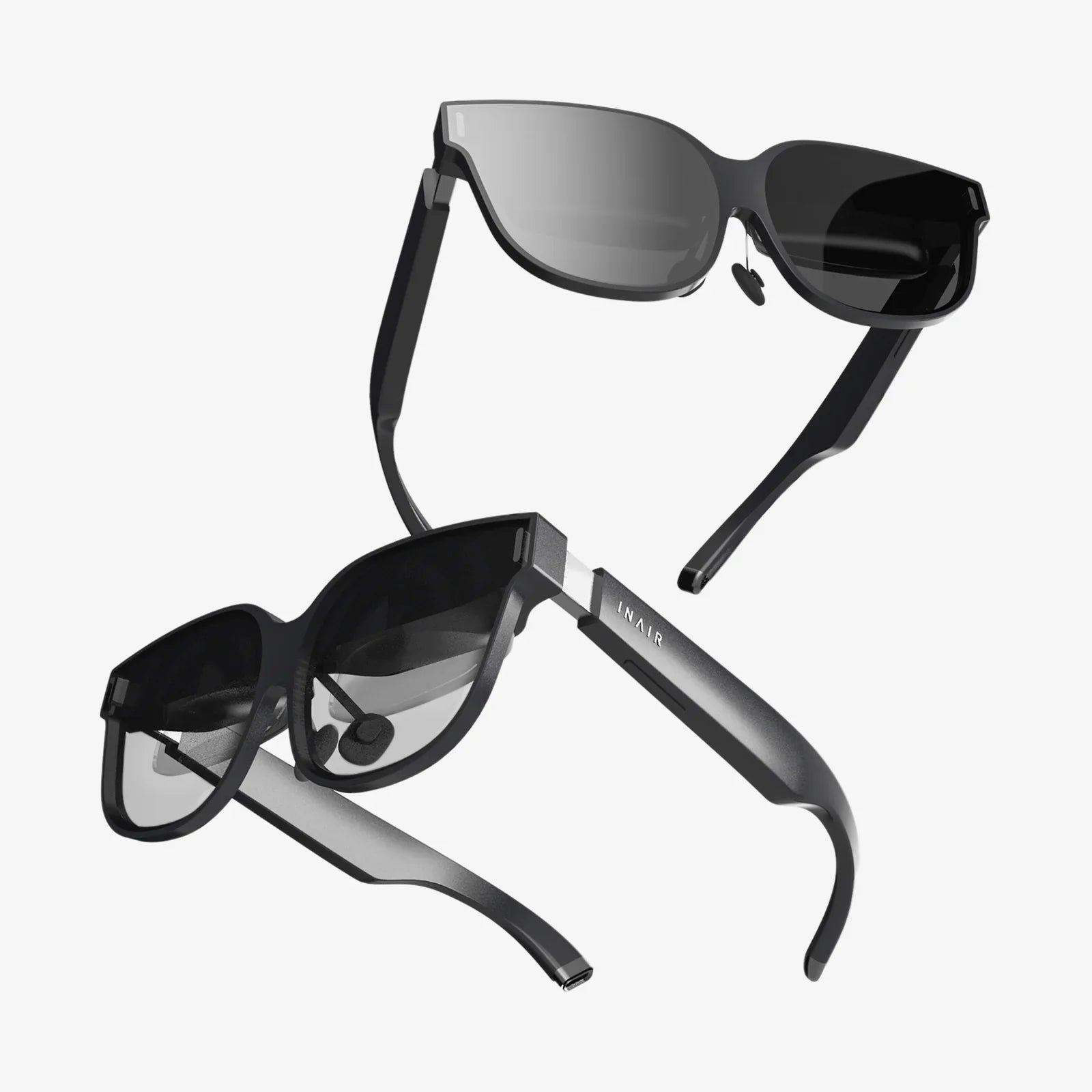
Imagine pointing your phone at your living room and watching a life-sized dinosaur stride across the carpet, or visualizing a new sofa in your space before you buy it, or even having a cartoon character sit next to you on the real-world bench you're occupying. This isn't science fiction; it's the everyday magic made possible by the fusion of powerful hardware and innovative software. For owners of a certain premium device, the world is quite literally their augmented playground. The key to unlocking this potential lies in discovering the right applications that can truly harness the raw power at their fingertips, turning a powerful smartphone into a window to a layered, interactive reality.
The Perfect Storm: Why Your Device is an AR Powerhouse
To understand what makes an augmented reality application truly exceptional on this particular device, one must first appreciate the technological symphony working behind the scenes. This isn't just any smartphone; it was a landmark release specifically engineered for spatial computing.
The Game-Changing LiDAR Scanner
At the heart of this augmented revolution is the Light Detection and Ranging (LiDAR) scanner. This is not just a minor upgrade; it's a fundamental shift. Unlike the standard camera that captures light and color, the LiDAR scanner fires out invisible infrared dots to measure the distance between the sensor and objects in a room. It does this millions of times per second, creating a incredibly detailed depth map of your environment in real-time.
This has two monumental benefits for augmented reality:
- Instant Surface Detection: Apps no longer need to slowly "scan" your room to find floors, walls, and tables. The LiDAR scanner knows the geometry of your space the instant you open an app. This eliminates the frustrating "move your phone slowly" prompts and creates a rock-solid anchor for virtual objects.
- Realistic Occlusion: This is the magic trick that sells the illusion. Virtual objects can now realistically pass behind and in front of real-world objects. A digital character can hide behind your real sofa. A virtual lamp post can be obscured by a real tree. This seamless blending of the real and the virtual is what makes modern AR feel so immersive and believable.
Raw Processing Power
Driving this complex operation is the A14 Bionic chip. This processor is a computational beast, handling the immense data from the LiDAR scanner, the cameras, the motion sensors, and the gyroscope simultaneously. It performs trillions of operations per second to track the world, understand lighting and shadows, and render high-fidelity 3D graphics without breaking a sweat. This power ensures that AR experiences are smooth, responsive, and visually stunning, not janky or delayed.
The Super Retina XDR Display
All of this computational effort would be wasted without a canvas worthy of the art. The large, high-resolution, high-contrast OLED display is that canvas. It presents virtual content with incredible clarity, vibrant colors, and deep blacks, making the digital elements feel as tangible and real as the world they are superimposed upon.
Curating the Experience: Categories of Must-Have Applications
The best applications are those that don't just use AR as a gimmick, but as a core, indispensable function that provides genuine utility or unparalleled entertainment. Here are the categories where the device truly shines.
Design and Home Improvement
This is arguably the most practical and immediately useful category of augmented reality. It answers the age-old question: "Will this look good in my space?"
Furniture and Decor Placement
Several powerful applications allow you to browse catalogues of furniture, lighting, and home decor and place them in your actual home at true-to-life scale. You can walk around a virtual coffee table, see how a floor lamp casts light in the evening, or check if a new rug matches your existing color scheme. The precision of the depth-sensing means these items don't float; they sit firmly on your floor, tucked under your table, or against your wall. It has revolutionized online shopping for the home, drastically reducing returns and buyer's remorse.
Room Planning and Measurement
Beyond shopping, some apps function as powerful spatial tools. You can create detailed floor plans simply by walking through your home, with the app automatically measuring room dimensions, wall lengths, and ceiling height. This is invaluable for planning renovations, ordering custom furniture, or calculating how much paint you need. Other apps turn this functionality into a simple tap-to-measure tool, allowing you to quickly measure the length of a countertop, the height of a window, or the distance between walls with astonishing accuracy, turning your phone into a high-tech tape measure.
Gaming and Entertainment
This is where imagination runs wild. AR gaming takes the immersive experience of video games and plants it firmly in your environment.
Immersive Tabletop and Strategy Games
Forget playing on a flat screen. Imagine a strategy game where the battlefield is your entire kitchen table, with units marching between salt shakers and around fruit bowls. The device's tracking is so stable that these virtual battlefields persist, allowing you to leave the game and come back hours later to find it exactly as you left it. This persistence opens up new genres of long-form, tabletop-style games that live in your physical space.
Narrative and Character-Driven Experiences
Other titles use your world as the stage for a story. You might be tasked with defending your home from an alien invasion, with spacecraft swooping down your hallway. Or you could solve puzzles that are spatially mapped onto your walls and furniture. The high-fidelity graphics rendered by the powerful chipset make these characters and effects look fantastic, and the LiDAR scanner ensures they interact with your world in a physically believable way, creating moments of genuine wonder and excitement.
Education and Exploration
Augmented reality has the power to make learning visceral and interactive, transforming abstract concepts into tangible experiences.
Historical and Astronomical Visualization
Point your device at the sky, and a powerful app can overlay constellations, planets, and satellites in their correct positions, identifying everything you see. You can also explore the solar system by placing a scale model of the sun and planets in your garden, walking between them to grasp the vastness of space. Similarly, historical applications can resurrect ancient ruins on their original sites or place famous sculptures in your living room, allowing you to examine them from every angle.
Interactive Science and Anatomy
Educational apps bring textbooks to life. A student studying anatomy can place a full-scale, beating human heart on their desk, zoom in, and explore its chambers. Another app might demonstrate physics principles by letting you build elaborate Rube Goldberg machines that interact with gravity and real-world surfaces. This hands-on, visual learning is incredibly powerful for students of all ages.
Creative Tools and Productivity
For artists, designers, and professionals, AR is becoming a serious tool for creation and workflow enhancement.
3D Modeling and Sculpting
Powerful creative suites allow artists to sculpt 3D models in the air in front of them, using the device's screen as a window into a virtual workspace. This is a much more intuitive way to create 3D art than using a mouse and a 2D screen. The models created can then be exported for animation, 3D printing, or use in game engines.
Professional Utility
For architects and engineers, apps can project blueprints and 3D models onto a real-world construction site, allowing for precise planning and visualization. For mechanics, an app might overlay repair instructions directly onto the engine they are working on. The combination of precise tracking and high-resolution display makes these professional-grade applications not just possible, but practical.
Finding the Gems: How to Identify Truly Great AR Experiences
With thousands of applications claiming AR functionality, how do you separate the transformative from the trivial? Look for these hallmarks of quality:
- LiDAR Integration: The best apps specifically mention LiDAR or "RoomPlan" support. This is a sure sign they are built to leverage the full power of your device.
- Object Persistence: Can the app remember where you placed objects after you close it? This is a sign of advanced spatial anchoring.
- Realistic Physics and Occlusion: Do virtual objects obey the laws of physics? Do they correctly hide behind real objects? This is a key indicator of a sophisticated experience.
- Positive User Reviews: Look for reviews that specifically praise the AR functionality, stability, and immersion.
The line between our digital and physical lives is blurring, and it's happening right through the screen of your device. This isn't about replacing reality, but enriching it, adding a layer of information, imagination, and interaction that was previously impossible. The applications that excel are those that understand this principle, using breathtaking technology not for its own sake, but to solve real problems, tell compelling stories, and spark joy and wonder. They transform your device from a communication tool into a literal magic window, capable of reshaping your perception of the space around you. The real world is just the beginning; it's the foundation upon which you can now build, play, learn, and create anything you can imagine.
Share:
Best AR Headset for iPhone: Your Ultimate Guide to Unlocking a New Reality
Standalone VR Headset UK: The Ultimate Guide to Untethered Immersion