


Imagine pointing your iPhone at a blank wall and watching a masterpiece materialize in perfect scale, or holding your screen over a city street to see navigational arrows painted directly onto the pavement ahead. This isn't science fiction; it's the reality available today in your pocket, powered by the sophisticated fusion of hardware and software that makes the best AR for iPhone not just a feature, but a portal to a new layer of existence. The line between the digital and physical worlds is blurring, and your smartphone is the lens through which it all comes to life.
The Engine Room: Hardware That Powers iPhone AR
The magic of Augmented Reality on any device, especially the iPhone, doesn't happen by software alone. It's a symphony of specialized hardware components working in perfect harmony. Unlike virtual reality, which creates a completely synthetic environment, AR must understand and interact with the real world in real-time. This requires a suite of sensors and processors that are exceptionally powerful and precise.
At the heart of this system is the LiDAR (Light Detection and Ranging) Scanner, a technology that has become a game-changer for mobile AR. Found on the higher-end models, the LiDAR scanner fires out invisible laser dots to measure the distance between the phone and surrounding objects. This creates a detailed, real-time depth map of the environment, allowing digital objects to understand the geometry of a space. A virtual chair can now appear to sit convincingly behind a real table, and an animated character can accurately run up a flight of stairs and hide behind a couch. This eliminates the jittery, floating effect of early AR and grounds digital content firmly in our world.
Complementing the LiDAR scanner are the advanced cameras. The wide and ultra-wide lenses capture high-resolution imagery, while the dedicated TrueDepth camera system (the same one that enables Face ID) is crucial for understanding depth at a closer range and for placing selfie filters and Animoji with remarkable accuracy. These cameras work with gyroscopes, accelerometers, and a magnetometer (compass) to track the phone's precise position, orientation, and movement in space with six degrees of freedom (6DoF). This means your iPhone knows not only which way you're tilting it but exactly how you're moving it through a room, ensuring the AR experience remains stable and locked in place.
Orchestrating this flood of data is the A-series Bionic chip. The neural engine within these processors is designed for machine learning tasks at incredible speeds. It handles the complex computer vision algorithms needed for simultaneous localization and mapping (SLAM), object recognition, and motion tracking without draining the battery or causing the device to overheat. This seamless hardware-software integration is what sets the stage for the best AR for iPhone experiences available today.
Beyond the Hardware: The Software Ecosystem
Powerful hardware is useless without sophisticated software to command it. Apple provides developers with a robust and accessible toolkit to build these immersive experiences. The cornerstone of this ecosystem is ARKit, a comprehensive framework that gives developers the tools to create high-quality AR apps.
With each iteration, ARKit has introduced groundbreaking capabilities. It enables:
- World Tracking: Precise positioning of the device in real-world space.
- Scene Geometry: Creating a topological map of the environment, identifying floors, walls, ceilings, and windows.
- Raycasting: Allowing digital objects to interact with this understood geometry. You can "shoot" a ray from the screen into the world to determine where a virtual object should be placed.
- People Occlusion: A stunning feature where the software recognizes a person in the camera feed and allows virtual objects to be realistically obscured behind them, making the AR illusion perfect.
- Object and Image Detection: Recognizing specific 2D images (like a movie poster) or 3D objects (like a sculpture) to trigger AR content.
For users, this technical prowess translates into incredibly intuitive interactions. You can simply point your phone's camera to launch an experience, using touch, voice, or even just gaze to navigate and control the digital elements. The operating system itself is also deeply integrated with AR, from the Measure app that turns your phone into a tape measure to the immersive walking directions in Maps.
Transforming Industries: The Practical Power of AR
While games and fun filters often grab headlines, the most profound impact of iPhone AR is happening in practical, professional, and educational fields. It is revolutionizing how we work, learn, and shop.
Retail and E-Commerce
The "try before you buy" dilemma of online shopping is being solved by AR. Customers can now project life-sized, photorealistic 3D models of furniture into their living rooms, see how a new lampshade casts light on their desk, or virtually try on watches and sunglasses. This drastically reduces purchase hesitation and product returns, building consumer confidence. For interior designers and architects, apps allow them to create entire room layouts and let clients walk through the proposed designs before a single piece is ordered.
Education and Cultural Heritage
Textbooks are transforming into interactive portals. Students can dissect a frog in biology class, explore the layers of the Earth in geology, or walk around a rotating DNA helix. History lessons become immersive as ancient ruins are rebuilt on the classroom floor, and museum exhibits can be brought home, allowing artifacts to be examined from every angle. This hands-on, visual learning style caters to different learning methods and makes complex subjects tangible and engaging.
Industrial Design and Manufacturing
Engineers and designers are using AR for prototyping and assembly. Instead of building expensive physical models, they can project full-scale 3D designs of machinery onto a factory floor to check for fit and potential issues. Step-by-step AR instructions can be overlaid onto complex equipment, guiding a technician through a repair procedure by highlighting exactly which bolt to turn next, thereby reducing errors and training time.
Navigation and Wayfinding
Looking at a blue dot on a 2D map is being replaced by seeing arrows, directions, and points of interest superimposed on the live camera view of the street. This is especially powerful in complex environments like large airports, university campuses, or subway stations, helping people navigate intuitively without constantly looking down at their phones.
Creativity and Connection: The Social and Artistic Side
Beyond utility, AR is a powerful medium for artistic expression and social connection. Social media platforms have popularized face filters and effects, allowing users to play with their identity and share creative, augmented moments with friends. But this is just the beginning.
Artists are creating breathtaking AR sculptures and installations that exist only when viewed through a phone in a specific location, challenging notions of art ownership and gallery space. Musicians can project virtual bands into their living rooms for private concerts. Storytellers are crafting narratives where the action unfolds on your kitchen table. This new canvas merges the artist's vision with the viewer's reality, creating a uniquely personal and interactive form of engagement.
Getting Started: How to Access the Best AR Experiences
You don't need to be a developer to dive into the world of iPhone AR. The App Store is filled with thousands of incredible applications. To find the best ones, search for categories like "AR Games," "AR Shopping," or "AR Education." Look for apps that leverage the full potential of the technology—those that use environment understanding and people occlusion for a more believable effect.
When trying an AR app, ensure you are in a well-lit space with plenty of visual texture for the camera to track. Move your phone slowly at first to allow it to map the area. The more recent your iPhone model, the more advanced and stable the experience will be, thanks to the LiDAR scanner and more powerful processors. However, even older models that support ARKit can run a vast library of impressive AR content.
The Future is an Overlay
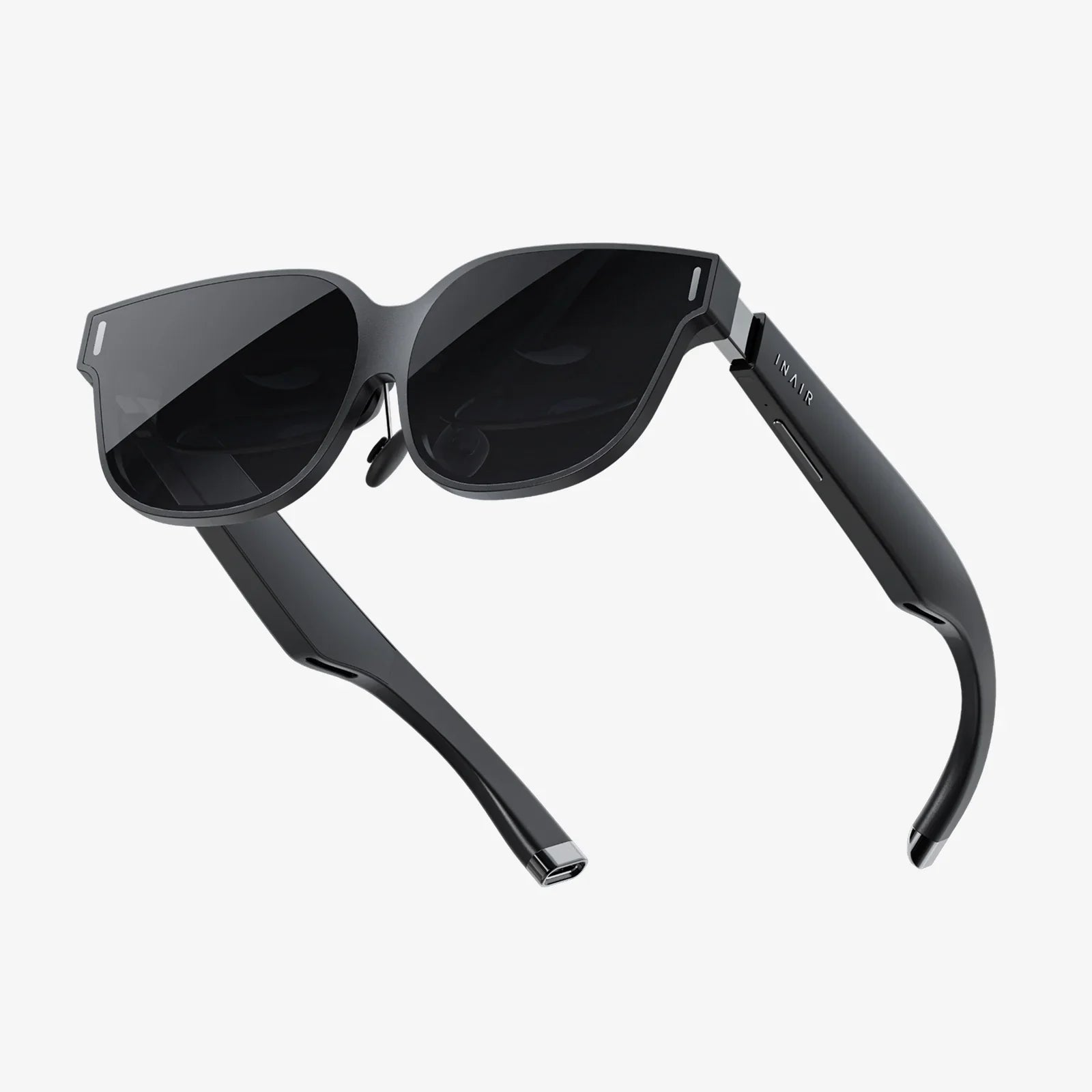
The journey of mobile AR is just beginning. We are moving towards a future where lightweight, stylish AR glasses will eventually replace the handheld screen, projecting information directly onto our retinas. The development happening today on the iPhone is the foundational work for that future. It is teaching machines to see and understand our world and teaching us how to interact with a digital layer seamlessly integrated into our lives.
Every time you use your iPhone to visualize a new piece of art on your wall, follow directions painted on the road, or bring a textbook diagram to life, you are not just using a cool feature. You are participating in the next major computing shift. The most powerful AR device is the one you already own, and it is constantly evolving, waiting to show you what’s possible when your imagination is the only limit.
Share:
VR Headset for iPhone 13 Mini: The Ultimate Guide to Mobile Immersion
AI Smart Glasses 2025 Release: The Dawn of a Seamless Augmented Reality Future