


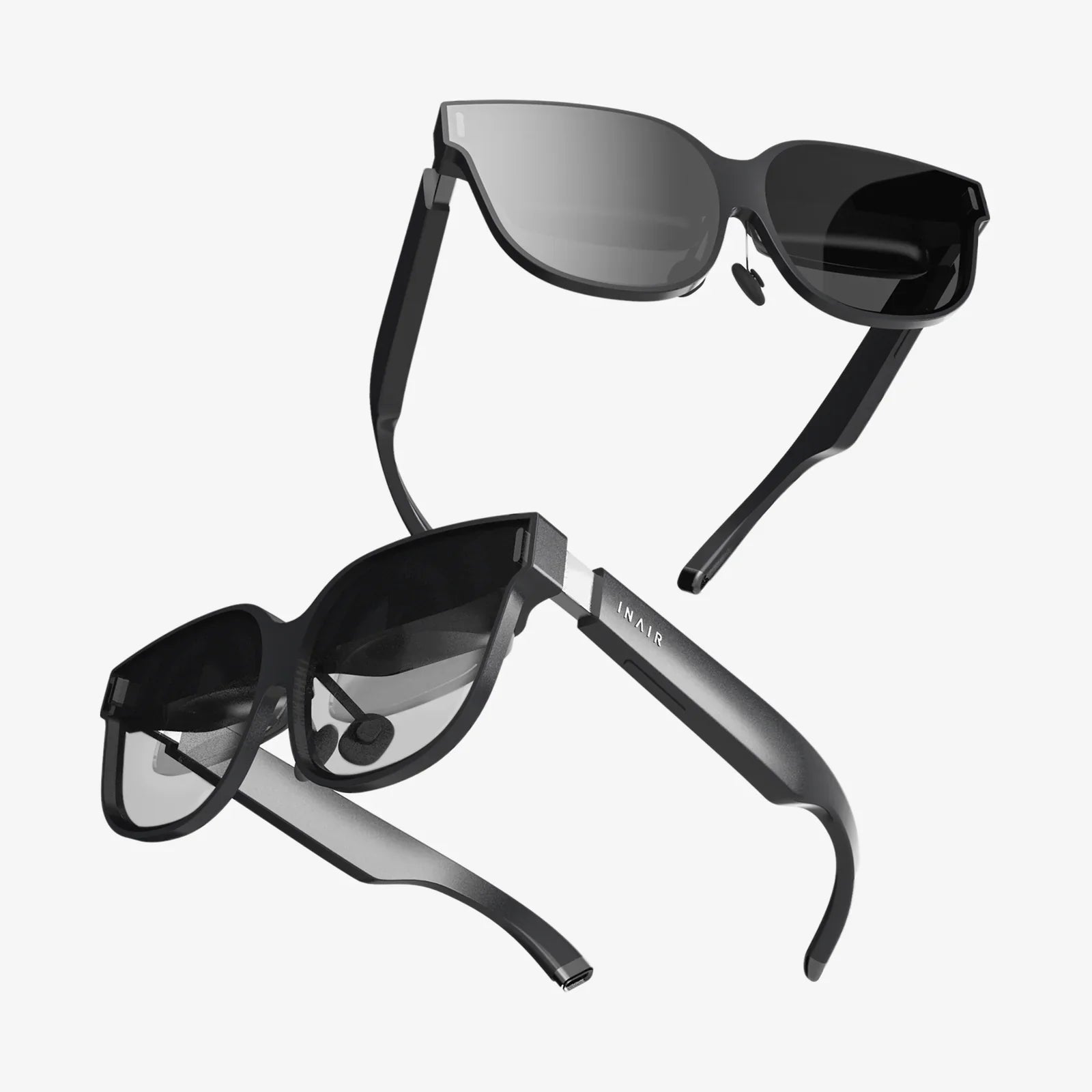
Imagine a world where digital information doesn’t live on a screen in your hand, but is seamlessly woven into the fabric of your reality. Directions float on the street in front of you, a recipe hovers beside your mixing bowl without a smudge, and a colleague’s 3D model materializes on your coffee table for a final review. This is the promise of augmented reality, and the gateway to this enhanced world is a pair of the best AR glasses. This technology is rapidly evolving from science fiction fantasy into a powerful, tangible tool, poised to revolutionize how we work, learn, play, and connect. The journey to find the perfect pair is an exciting one, filled with incredible potential, and this guide is your essential map to navigating this new frontier.
The Core Technologies Powering AR Glasses
Before diving into what makes one pair stand out from another, it's crucial to understand the fundamental technologies at play. Not all AR glasses are created equal, and their capabilities are defined by their underlying architecture.
Display Systems: How Your World is Augmented
The most critical component of any AR glasses is its display system—the method by which digital images are projected into your field of view. There are several competing approaches, each with its own strengths and trade-offs.
Waveguide Technology: This is currently the dominant method for sleek, consumer-friendly designs. Waveguides use tiny, transparent pieces of glass or plastic etched with microscopic patterns to "bend" light from a projector on the temple of the glasses into your eye. They allow for a relatively thin lens design but can sometimes suffer from limited field of view or issues with brightness and clarity.
Birdbath Optics: This design uses a beamsplitter (the "birdbath") to reflect the image from a micro-display mounted above the lens into your eye. This often allows for a wider field of view and richer colors than many waveguides but can result in a bulkier form factor, as the optics stack requires more space.
Retinal Projection: A more experimental approach, retinal projection systems literally scan a low-power laser directly onto the retina of your eye. The promise is an incredibly bright and high-contrast image that appears to be in perfect focus regardless of the user's vision. However, this technology is complex and has yet to be widely commercialized in a consumer product.
Processing: The Brain Behind the Beauty
Rendering complex digital objects and anchoring them stably in the real world requires serious computational power. AR glasses typically handle this in one of three ways:
Tethered Processing: The glasses act primarily as a display, with all the heavy computational lifting done by a connected device, such as a powerful smartphone, a dedicated processing unit worn on the body, or even a desktop computer. This allows for incredibly high-fidelity experiences but sacrifices portability and freedom of movement.
Standalone Processing: The glasses contain their own onboard processor, battery, and sensors, functioning as a complete, self-contained system. This offers maximum freedom and is the ideal form factor for all-day wear and mobility, but it requires balancing performance with thermal management, battery life, and weight.
Hybrid Processing: A growing trend is a hybrid approach, where the glasses handle some basic tasks and sensor data onboard but offload more intensive computations to a paired companion device, creating a balance between performance and efficiency.
Sensors and Tracking: Mapping Your World
For digital content to interact convincingly with the real world, the glasses must understand their environment and their position within it. This is achieved through a suite of advanced sensors:
- Cameras: Used for simultaneous localization and mapping (SLAM), object recognition, and hand-tracking.
- Inertial Measurement Units (IMUs): Accelerometers and gyroscopes that track the precise movement and rotation of your head.
- Depth Sensors: LiDAR, time-of-flight, or structured light sensors that accurately map the depth and geometry of a room, allowing digital objects to be occluded by real-world furniture.
- Eye-Tracking Cameras: These sensors monitor where you are looking, enabling intuitive interface control (dwell selection) and enabling advanced rendering techniques that save processing power.
Defining "Best": Finding the Right AR Glasses for You
The search for the "best" AR glasses is a deeply personal one, as the ideal device is entirely dependent on your intended use. A pair perfect for an industrial engineer would be overkill for a casual user wanting to watch movies, and vice versa.
For the Professional and Enterprise User
In the professional realm, AR glasses are already delivering massive returns on investment. The key criteria here are robustness, functionality, and integration.
Key Features: Enterprise users prioritize hands-free operation, long battery life, powerful processing for complex CAD visualizations, and rock-solid environment tracking. Durability is paramount, as these devices are used on factory floors, in repair hangars, and on construction sites. They often feature noise-canceling microphones and high-quality speakers for clear communication in loud environments and are designed to integrate with existing enterprise software platforms.
Primary Use Cases: Remote expert assistance (allowing an off-site expert to see what a field technician sees and guide them with AR annotations), complex assembly and maintenance instructions overlaid directly on machinery, and immersive training simulations that are both safer and more effective than traditional methods.
For the Developer and Creator
This group is building the experiences that will define the future of AR. Their needs center on access, power, and flexibility.
Key Features: Developers need access to robust Software Development Kits (SDKs), powerful sensors for experimentation (e.g., high-resolution depth sensing), and high-resolution displays to test the limits of their creations. A comfortable form factor is still important, as they will be wearing the device for extended periods during testing and development.
For the Everyday Consumer
The consumer market is the holy grail, but it presents the toughest engineering challenges: balancing performance, style, battery life, and cost.
Key Features: For mass adoption, consumer AR glasses must first and foremost look like ordinary eyewear. They need to be lightweight, comfortable for all-day wear, and socially acceptable. Battery life must support a full day of intermittent use. The killer applications for consumers are often seen in navigation, contextual information, fitness, and immersive media consumption—watching a massive virtual screen anywhere you go.
Critical Factors to Consider Before You Buy
Armed with an understanding of the technology and your primary use case, you can evaluate specific devices based on these critical factors.
Field of View (FOV)
Often measured diagonally in degrees, the FOV is the window through which you see the digital world. A small FOV (15-30 degrees) can feel like looking through a postage stamp, with digital content easily cropped out. A larger FOV (50+ degrees) is far more immersive but is technologically challenging and expensive to achieve. It is one of the most important specifications to consider.
Resolution and Brightness
A high-resolution display ensures text is sharp and graphics are clear. However, resolution is meaningless without sufficient brightness (measured in nits) to overcome ambient light. If the digital image is too dim, it will be washed out and unusable in sunlight.
Form Factor and Design
Will you actually wear them? Consider weight, distribution of weight (nose vs. ear pressure), and overall aesthetics. Do they look like something you'd be comfortable wearing in public? Do they come with prescription lens options or fit over your existing glasses?
Battery Life and Performance
Always check if the stated battery life is for active AR use or just media playback. There's a vast difference. Understand whether the device is tethered, standalone, or hybrid, as this directly impacts both performance and how you'll use it throughout the day.
Content and Ecosystem
The hardware is useless without software. Investigate the available apps and experiences. Is there a robust app store? Does the platform have strong developer support? Are the applications you care about—whether it's a specific enterprise tool or a streaming service—available or coming soon?
The Future of Augmented Reality Eyewear
The AR glasses we see today are merely the first steps on a long road. The future holds even more transformative potential. We are moving toward true all-day glasses that are indistinguishable from traditional eyewear, thanks to advancements in micro-LED displays and waveguides. The concept of the "spatial web" will mature, where digital information is persistently anchored to locations and objects in the real world, accessible to anyone wearing AR glasses. Furthermore, AI will become the invisible engine of AR, intelligantly surfacing the right information at the right time, translating signs in real-time, and identifying objects simply by looking at them.
Navigating Your Purchase
Start by honestly assessing your primary goal. Set a realistic budget, as prices can range significantly. Then, prioritize the features that matter most to that goal: a developer will prioritize FOV and SDK access, an enterprise user will prioritize durability and specific software, and a consumer will prioritize style, comfort, and media apps. Read reviews from trusted sources that have tested the devices in scenarios similar to your intended use, and always be wary of renderings and hype videos that may not reflect the real-world experience.
The quest for the perfect pair of AR glasses is about more than just specs on a page; it's about choosing the key that will unlock a new layer of reality. The technology is here, it's real, and it's more accessible than ever. The right pair will fade into the background, not as a piece of bulky tech, but as an intuitive extension of your own perception, empowering you to see, learn, and achieve more than you ever thought possible. The future is not just something we will watch on a screen—it’s something we will step into and interact with, and it all starts by choosing the best AR glasses to open the door.
Share:
Top AI Tools March 2025: The Ultimate Guide to the Next Generation of Intelligence
Best AR Glasses CES: The Future of Reality is Transparent