


Imagine a world where digital information doesn’t live on a screen in your hand, but is seamlessly woven into the fabric of your reality. Directions float on the road ahead, a recipe hovers beside your mixing bowl, and a colleague’s 3D model is presented on your empty conference table. This is the promise of augmented reality, a promise that felt closer to science fiction than fact just a few years ago. Yet, walking the bustling floors of the Consumer Electronics Show, that future doesn’t just feel imminent; it feels present. The hunt for the best AR glasses at CES isn’t about finding a single winner; it’s about witnessing the entire spectrum of a revolution, from sleek consumer-ready spectacles to powerhouse professional tools, all vying to define how we will see the world tomorrow.
The CES Stage: A Proving Ground for Digital Sight
CES has long been the global launchpad for technological ambition, a place where concepts become prototypes and prototypes inch toward products. For augmented reality, this stage is particularly critical. It’s where the industry’s boldest claims are put to the test under the bright lights and critical eyes of developers, media, and early adopters. The show floor acts as a massive focus group, revealing what resonates with people and what falls flat. The best AR glasses at CES aren’t just judged on spec sheets; they are judged on the intangible “wow” factor—the moment a user’s eyes widen as they reach out to touch a hologram that isn’t there. This environment separates the truly immersive from the merely impressive, setting the benchmark for the entire year ahead.
Beyond the Hype: Defining What Makes AR Glasses “Best”
Labeling any technology as “best” is a fraught endeavor, as it heavily depends on the user’s needs. At CES, this is especially true. The best AR glasses for a hardcore gamer are vastly different from the best for an architect or a surgeon. However, several universal criteria emerged as key differentiators among the frontrunners, creating a framework for evaluation that goes beyond mere marketing.
Visual Fidelity: The Quest for Crystal-Clear overlays
The single most important aspect of any AR experience is what you see. It’s not just about resolution; it’s about brightness, contrast, color accuracy, and field of view (FOV). A narrow FOV feels like looking through a tiny window into the AR world, while a wide FOV offers a more immersive, enveloping experience. This year, advancements in micro-OLED and laser beam scanning displays delivered visuals that were significantly brighter and more vibrant, capable of holding up even in well-lit convention halls. The dreaded “screen-door effect,” where users can discern the gaps between pixels, was noticeably absent from the top contenders, creating smoother and more realistic digital objects.
Form Factor and Comfort: The Invisible Computer
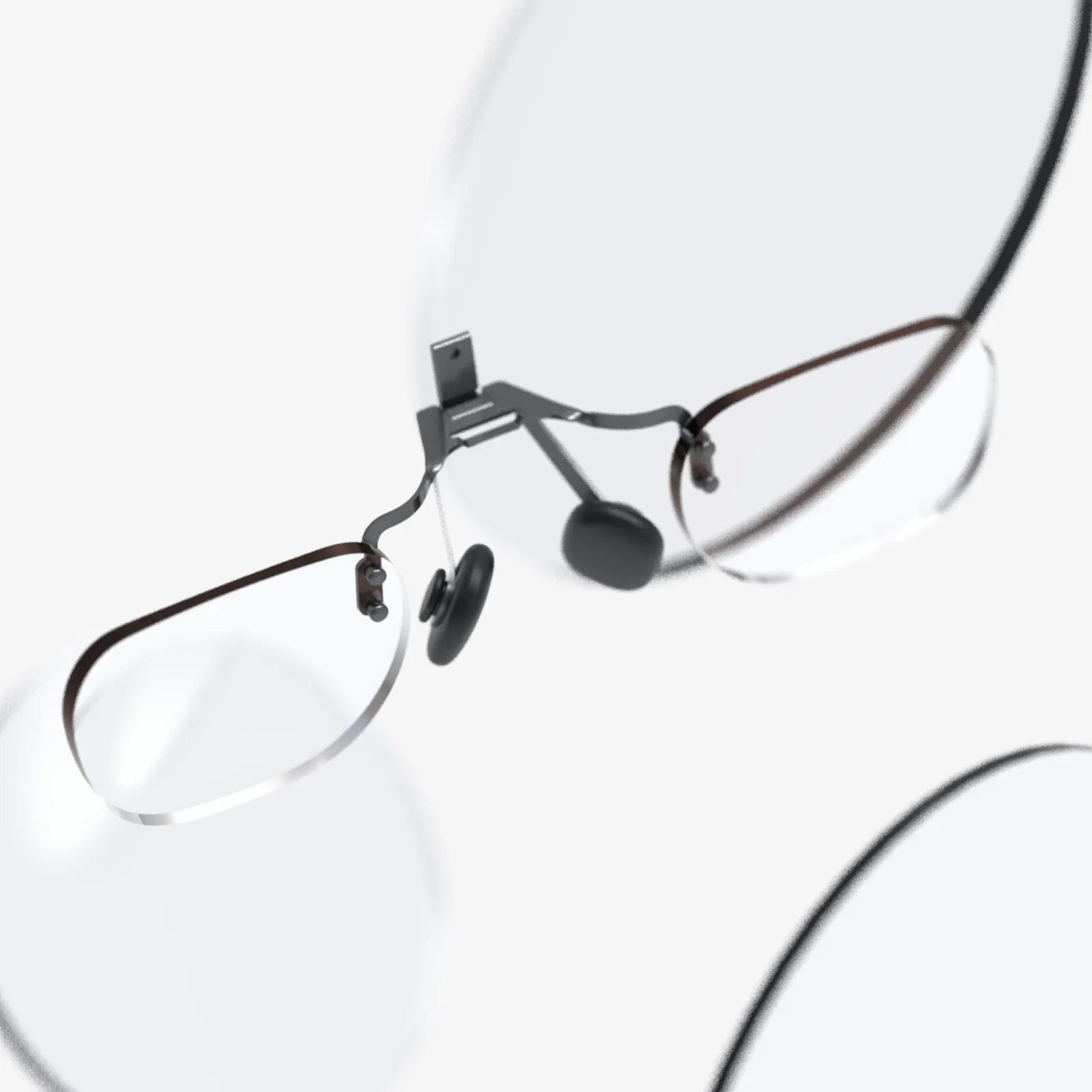
Technology that isn’t comfortable is technology that gets left in a drawer. The perennial challenge for AR glasses has been balancing computational power with a wearable, socially acceptable form factor. The best AR glasses at CES made significant strides toward looking like a slightly bulky pair of premium sunglasses rather than a futuristic scuba mask. Lightweight materials, improved weight distribution, and adjustable nose pads were common themes. The goal is clear: all-day wearability. For consumers, this is non-negotiable.
Intuitive Interaction: How We Talk to the Digital World
How do you interact with a interface that has no physical buttons? The solutions on display were wonderfully diverse. Voice commands powered by advanced AI assistants were ubiquitous and more responsive than ever. Hand tracking technology reached new levels of precision, allowing users to pinch, select, and drag holograms with minimal latency, making the experience feel magical and natural. Several prototypes also featured touch-sensitive temple arms, acting as a subtle trackpad for discreet control. The best devices offered a seamless blend of these methods, allowing the user to choose the right tool for the right task.
Battery Life and Performance: Unplugging the Experience
True untethered freedom is the holy grail. While some professional-grade units still utilized a wired connection to a powerful computing unit for maximum graphical prowess, the trend was decisively toward self-contained operation. The best consumer-focused AR glasses featured integrated batteries offering several hours of use, often with a sleek magnetic charging case for top-ups on the go. This shift is enabled by more power-efficient processors and displays, a silent but crucial engineering victory.
A Spectrum of Brilliance: Categories of Excellence
Rather than crown one undisputed champion, it’s more revealing to celebrate the best in different categories, as each represents a distinct vision for the future of AR.
The Consumer Visionary
These are the glasses designed for everyone. They prioritize style, comfort, and accessibility. Their focus is on media consumption (streaming a massive virtual screen), light gaming, notifications, and social connection. At CES, the leaders in this category were remarkably sleek, often shipping with prescription lens options and polarized shades. They demonstrated compelling use cases like watching a movie on a plane or following a workout instructor in your living room, proving that AR has mass-market appeal beyond the novelty factor.
The Enterprise Powerhouse
For the professional world, the stakes are different. These glasses are tools for increasing efficiency, improving safety, and enabling remote expertise. The best enterprise AR glasses at CES were rugged, featured a wider FOV for complex schematics, and offered rock-solid, precise tracking for tasks like guiding a technician through a repair or overlaying blueprints onto a construction site. Battery life was often extended via hot-swappable battery packs, acknowledging that a work shift doesn’t stop for a recharge.
The Developer's Canvas
This category is for the platforms that are pushing the absolute boundaries of what’s possible. They might be bulkier, but they offer unparalleled graphical power, experimental interaction modalities, and full access to their development environment. These are the glasses that creators and engineers use to build the applications that will define the next decade of spatial computing. Seeing their demos—from complex data visualization to immersive training simulations—was a glimpse into a future that is being built today.
The Invisible Engine: Spatial Computing and AI
The hardware is only half the story. The magic is powered by sophisticated software. Spatial computing was the buzzword underpinning everything. This refers to the device’s ability to understand its environment in 3D—using cameras and sensors to map a room, recognize surfaces (floors, walls, tables), and persistently anchor digital content to the real world. The best demonstrations showed digital objects that remained locked in place, even if you walked away and came back.
Furthermore, the integration of on-device AI was a game-changer. This allows for real-time translation of foreign text on signs or menus, object recognition (identifying a product on a shelf and pulling up reviews), and more responsive and contextual voice assistants without requiring a constant internet connection. This intelligence makes the glasses feel less like a display and more like a truly smart companion.
Challenges on the Horizon: The Path to Mainstream Adoption
Despite the incredible progress, the path forward is not without its obstacles. The “kill app” for AR glasses—the must-have functionality that drives every household to buy one—is still evolving. While watching a virtual TV is cool, is it enough? Content ecosystems need to grow exponentially. There are also legitimate concerns about privacy and social etiquette; always-on cameras and sensors understandably give people pause. The industry will need to address these concerns with transparent policies and clear user controls to build the necessary trust for widespread adoption.
The dazzling array of augmented reality eyewear at CES proves one thing unequivocally: the age of staring down at a handheld rectangle is drawing to a close. The winning designs are no longer clunky proofs-of-concept but thoughtful, powerful, and increasingly desirable pieces of technology that offer a tangible preview of a more connected and intuitive world. They promise to unlock new levels of productivity, redefine entertainment, and fundamentally change our relationship with information. The future they envision is not one of escaping reality, but of enhancing it, and after seeing what’s now possible, it’s a future you’ll be desperate to see for yourself.
Share:
Best AR Glasses: A Comprehensive Guide to the Future on Your Face
AR Glasses Function: How They Transform Reality and Redefine Human Capability