


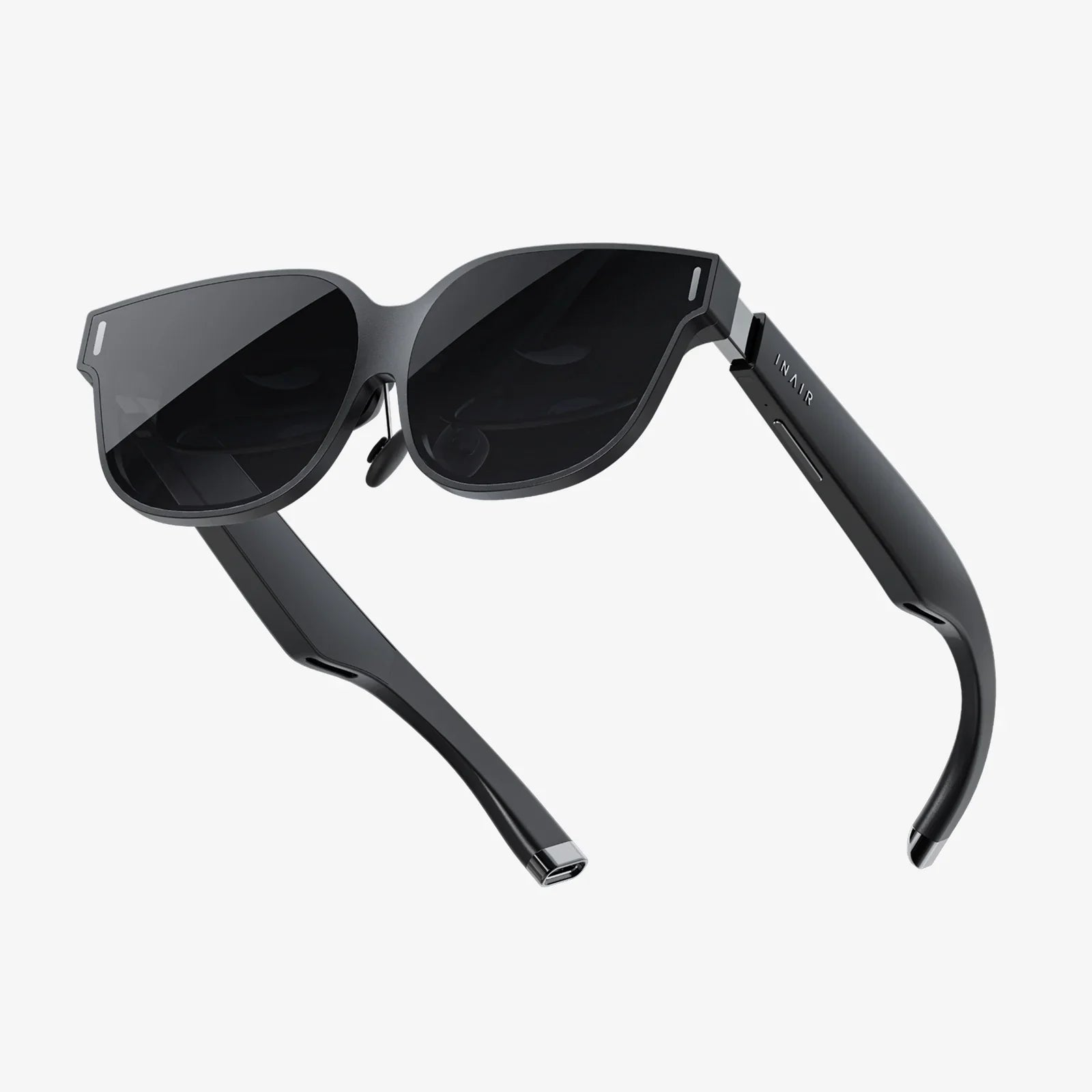
Imagine a world where digital information doesn’t just live on a screen in your hand but is seamlessly woven into the fabric of your reality. Directions float on the road ahead, recipe instructions hover beside your mixing bowl, and a virtual colleague sits across your kitchen table. This is the promise of augmented reality (AR) glasses, a technology rapidly evolving from science fiction to a tangible consumer product. For Australians, navigating this emerging landscape to find the best AR glasses can be both thrilling and daunting. This comprehensive guide is designed to cut through the hype, exploring the key considerations, potential applications, and future trends to help you identify the perfect pair for your digital life down under.
Beyond the Hype: Understanding Augmented Reality Glasses
Before diving into selection criteria, it's crucial to understand what AR glasses are and, just as importantly, what they are not. Unlike Virtual Reality (VR) headsets that transport you to a completely digital environment, AR glasses overlay digital content—images, text, videos, 3D models—onto your view of the real world. The goal is to enhance your perception and interaction with your surroundings, not replace it.
The core technology enabling this magic involves a combination of sensors, cameras, processors, and most critically, optical displays. These displays project light into your eyes, creating the illusion that digital objects exist in your physical space. The quality, brightness, and field of view of these displays are among the most significant differentiators between various models available to Australian consumers.
Key Features to Consider When Choosing Your AR Glasses
Selecting the best AR glasses is not a one-size-fits-all endeavour. Your ideal pair depends heavily on how you intend to use them. Here are the critical factors to weigh in your decision.
1. Display Technology and Visual Fidelity
This is arguably the most important aspect. Key questions to ask include:
- Field of View (FoV): Measured in degrees, this is how much of your vision the digital image occupies. A larger FoV creates a more immersive experience but often comes with a trade-off in size, weight, and cost.
- Resolution and Brightness: Can you see the digital content clearly, even in bright Australian sunlight? High resolution prevents a screen-door effect, while high nit-rated brightness is essential for outdoor use.
- Optical Scheme: Designs vary from birdbath optics to waveguide technology, impacting the glasses' form factor, clarity, and price.
2. Design, Form Factor, and Comfort
Will you actually wear them? The best technology is useless if it sits in a drawer. Consider:
- Style: Do they look like bulky safety goggles or a pair of sleek, modern sunglasses? Design is rapidly evolving towards more socially acceptable, everyday wearables.
- Weight and Fit: Lightweight frames and adjustable nose pads are essential for long-term comfort, especially during extended use.
- Battery Life and Placement: Is the battery integrated into the frames or housed in a separate pack? This drastically affects weight distribution and practicality. Look for all-day battery life for true mobility.
3. Performance and Processing Power
AR is computationally intensive. The device needs to understand its environment in real-time. This is handled either by:
- Standalone Units: Glasses with their own onboard processor, offering complete untethered freedom.
- Tethered Systems: Glasses that act as a display, leveraging the processing power of a connected smartphone or a small external compute unit. This often allows for more powerful experiences but sacrifices some convenience.
4. Audio Capabilities
Spatial audio is a core part of the immersive experience. Many AR glasses use bone conduction or directional speakers that pipe sound directly into your ears without blocking ambient noise, allowing you to stay aware of your environment—a critical safety feature.
5. Software, Ecosystem, and Developer Support
The hardware is just a window; the software is the view. A robust app ecosystem is what brings AR glasses to life. Investigate what applications are available. Is there strong support for popular platforms? A healthy developer community is a strong indicator of a platform's long-term viability and a key factor in finding the best AR glasses in Australia.
The Australian AR Landscape: Connectivity and Content
Adopting cutting-edge tech in Australia comes with its own unique set of considerations. Fortunately, the widespread rollout of 5G networks across major cities and regional centres is a massive boon for AR. High-speed, low-latency connectivity is essential for streaming rich AR content and for cloud-processing tasks, potentially reducing the hardware requirements of the glasses themselves.
Furthermore, Australian developers and companies are increasingly exploring AR applications tailored to local needs. From tourism experiences that bring historical sites to life, to practical tools for remote assistance in the mining and agricultural sectors, the local content scene is growing. When evaluating a platform, check for region-specific apps that add genuine value to your life.
Transforming Industries: Professional Use Cases in Australia
While consumer applications are exciting, some of the most compelling uses for AR glasses today are in enterprise and professional settings. Australian industries are already leveraging this technology to improve safety, efficiency, and outcomes.
- Healthcare: Surgeons can access patient vitals and imaging data without looking away from the operating field. Medical students can practice procedures on detailed 3D holograms.
- Manufacturing & Logistics: Warehouse workers can see picking instructions and navigation overlayed on shelves, streamlining fulfilment. Technicians on assembly lines can access digital manuals and schematics hands-free.
- Field Services & Mining: A technician repairing a complex piece of equipment in a remote location can be guided by an expert seeing what they see from thousands of kilometres away, overlaying annotations directly onto their field of view.
- Architecture & Design: Architects and clients can walk through full-scale 3D holographic models of buildings before a single brick is laid, enabling real-time changes and immersive previews.
A Glimpse into the Future: Where AR Glasses are Headed
The AR glasses we see today are merely the first steps on a long journey. The trajectory points towards several key developments that will redefine what we consider the best AR glasses.
We are moving towards a future where the distinction between prescription lenses and AR displays will blur, with smart lenses becoming the norm. Advancements in micro-LED and laser beam scanning will enable even smaller, lighter, and more powerful displays with vast fields of view. Ultimately, the goal is a device that is indistinguishable from regular eyeglasses but capable of enriching our perception of reality in profound ways. The convergence of AI assistants with contextual, visual AR will create a truly intuitive computing interface, always available but never obtrusive.
Making Your Choice: Aligning Technology with Your Needs
With this knowledge in hand, how do you decide? Start by honestly assessing your primary use case. Are you a developer eager to build the next big app? A professional seeking a tool to enhance your workflow? Or an early adopter looking to experience the future of computing and entertainment? Your answer will point you towards the right balance of performance, design, and software.
Read reviews from trusted Australian tech sources that test devices in local conditions. Pay attention to how they perform under our bright sun and on our networks. If possible, seek out hands-on demos at tech expos or showrooms to experience the field of view and comfort for yourself. Remember, you are not just buying a product; you are investing in a platform and an ecosystem.
The quest for the perfect pair of AR glasses is a personal journey into the next era of computing. It’s about finding a device that doesn’t just show you a new world but enhances the one you already live in, unlocking new levels of productivity, creativity, and connection right here in Australia. The future is not just something we will watch on a screen; it’s something we will step into, interact with, and see through a new lens.
Share:
Virtual Reality Goggles for iPhone 6s Plus: The Ultimate Guide to Mobile Immersion
3D Product Platform: The Ultimate Guide to Revolutionizing Digital Commerce