


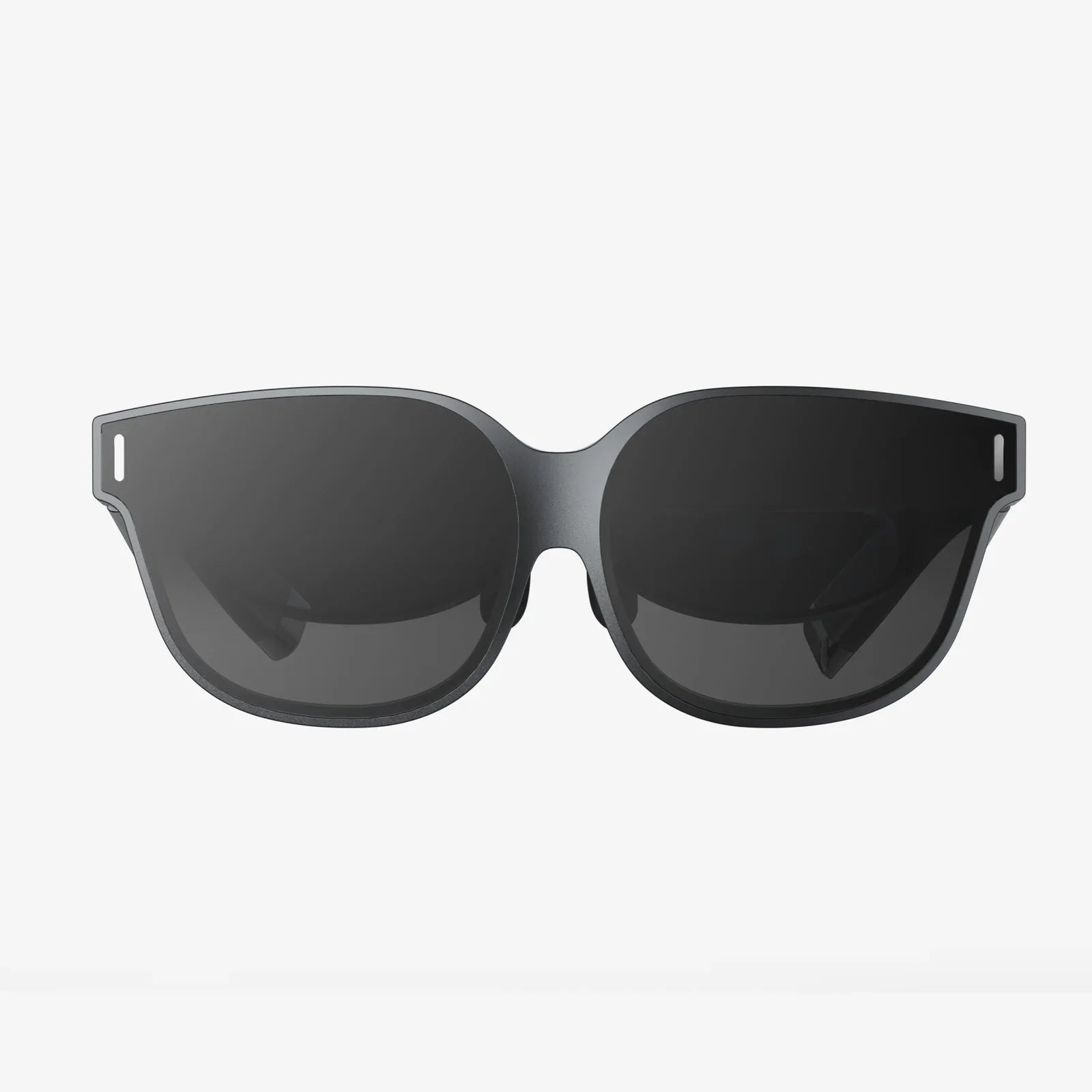
Imagine a workspace unbound by physical monitors, where your digital life floats seamlessly around you, responsive to your gaze and gestures. The promise of augmented reality for professional use is no longer a distant sci-fi fantasy—it’s a tangible reality poised to redefine our very concept of productivity. For knowledge workers, designers, engineers, and remote collaborators, finding the best AR headset for work isn't about chasing a gadget; it's about unlocking a fundamentally new way to interact with information and with each other. This isn't just an upgrade; it's a revolution waiting on your desk, and it’s closer than you think.
The Evolution of the Workspace: From Desktop to Augmented Reality
The traditional office setup has remained remarkably static for decades. A laptop, one or more external monitors, a keyboard, and a mouse. This paradigm, while functional, tethers us to a specific physical location and limits our digital canvas to the confines of static screens. The rise of remote and hybrid work models has only amplified these limitations, creating a need for more dynamic, flexible, and immersive tools. Enter Augmented Reality. AR technology overlays digital information onto the real world, effectively turning any environment into a potential workspace. The best AR headset for work acts as a portal to this new dimension, offering the potential to replace monitors, facilitate unparalleled collaboration, and provide contextual information exactly where it's needed.
Core Features That Define a Professional-Grade AR Headset
Not all AR headsets are created equal. Consumer-focused devices often prioritize gaming and entertainment. For professional applications, a different set of criteria takes precedence.
Visual Fidelity and Display Technology
This is arguably the most critical factor. The display must be sharp enough to render text from emails, code, and spreadheets clearly without causing eye strain. Key metrics include:
- Resolution and Pixels-Per-Degree (PPD): High resolution is essential. Look for specifications that prioritize PPD, a measure of angular resolution, which is a better indicator of clarity than raw resolution alone. A high PPD ensures text is crisp and readable for extended periods.
- Field of View (FoV): A wider FoV means a larger digital canvas. For multitasking across multiple virtual windows, a generous FoV is necessary to create an immersive and practical experience without feeling like you're looking through a narrow letterbox.
- Optical See-Through vs. Video See-Through: Optical see-through uses semi-transparent lenses to overlay digital images onto the real world, often providing a more natural view. Video see-through uses cameras to capture the real world and blend it with digital elements on displays, allowing for more advanced occlusion (where digital objects can appear behind physical ones) and manipulation of the environment. Both have merits for professional use.
Comfort and Ergonomics for Long Sessions
A device meant for an eight-hour workday cannot be heavy, cumbersome, or uncomfortable. The best AR headset for work must be designed for longevity.
- Weight Distribution: The weight should be balanced between the front and back of the head to avoid pressure on the nose and face.
- Materials: Lightweight materials, soft yet secure straps, and interchangeable facial interfaces for different users are hallmarks of a well-designed device.
- Thermal Management: The headset should not become uncomfortably warm during prolonged use.
Intuitive Interaction Models
How you interact with the digital world is paramount. Fumbling with controllers is not conducive to productivity.
- Hand Tracking: Advanced computer vision allows users to manipulate virtual objects with natural hand gestures—pinching, dragging, and selecting with fingers. This is a game-changer for seamless interaction.
- Voice Control: Integration with voice assistants allows for hands-free operation, perfect for pulling up information, taking notes, or initiating calls without breaking flow.
- Compatible Peripherals: Support for Bluetooth keyboards, mice, and even specialized controllers for CAD or 3D modeling software ensures professionals can use the tools they already know and love.
Performance and Battery Life
Under the hood, the headset needs substantial processing power to handle multiple high-resolution applications simultaneously. A tethered option connected to a powerful computer may offer the highest performance for stationary tasks, while a standalone, all-in-one device offers ultimate mobility. Battery life is a crucial consideration for standalone units; it must last a full work session or support hot-swapping batteries.
Transforming Key Professional Workflows
The theoretical benefits are compelling, but how does this technology translate into tangible improvements for specific professions?
The Ultimate Remote Collaboration Tool
Video conferencing is a poor substitute for in-person collaboration. AR changes the game. Imagine a scenario where remote colleagues, each wearing a headset, appear as photorealistic avatars in your physical space. You can collaboratively review a 3D model of a new product prototype, walking around it together, making annotations in mid-air that everyone can see, and pulling up schematics or data sheets that are anchored to the model. This shared spatial experience fosters a level of understanding and teamwork that flat screens simply cannot achieve.
Design, Engineering, and Architecture
For creators, AR is a transformative tool. Architects can project their building designs onto an empty plot of land at a 1:1 scale, allowing them to walk through and experience the space before a single brick is laid. Automotive engineers can visualize a full-scale engine model on a workbench, examining parts and assembly sequences from every angle. This ability to visualize complex 3D designs in the real world drastically improves design validation, reduces errors, and streamlines the prototyping process.
Data Visualization and Multitasking
For data analysts, financial traders, or software developers, the ability to create a vast, customizable workspace is invaluable. Instead of being limited to two or three physical monitors, you can surround yourself with dozens of virtual screens. Charts, graphs, code repositories, and communication apps can be arranged spatially. You might pin your email to the wall on your left, keep your primary coding environment front and center, and have a real-time data dashboard floating to your right. This spatial organization of information can significantly enhance focus and contextual awareness.
Navigating the Current Landscape and Considerations
While the technology is advancing rapidly, it's important to approach it with a clear understanding of its current state. The ideal, all-day-every-day headset for everyone does not yet exist. Considerations include:
- Cost: Professional-grade AR hardware represents a significant investment, though often comparable to high-end professional monitors and workstations.
- Software Ecosystem: The utility is dictated by the available applications. The ecosystem is growing rapidly, with major software companies developing AR versions of popular productivity suites, but it is still maturing.
- Privacy and Social Acceptance: Using a camera-equipped device in public or shared offices raises valid privacy concerns that companies must address with clear policies. Furthermore, wearing a headset in a meeting may seem antisocial to those not participating, a social hurdle that will diminish as the technology becomes more commonplace and discreet.
The Future of Work is Augmented
The trajectory is clear. As the technology continues to evolve—becoming lighter, more powerful, with longer battery life and richer software—adoption will accelerate. We are moving towards a future where the digital and physical realms are not separate, but intertwined. The best AR headset for work today is the one that most effectively bridges these two worlds for your specific needs, unlocking levels of efficiency, creativity, and collaboration that were previously unimaginable. It’s the first step into a wider world of work, limited only by our imagination.
Your desk is about to get a lot bigger. In fact, the walls of your office will dissolve entirely, replaced by an infinite canvas of productivity tailored precisely to your tasks. The hunt for the perfect headset is more than a search for specs; it's a quest for the key to this new frontier. The tools to build your ideal digital workspace are here, waiting to liberate you from the screen and connect you to your work in a way that feels, finally, natural. The future of work isn't on a screen; it's all around you.
Share:
VR Headset for 4.5 Inch Screen: Unlocking Immersive Experiences on Compact Devices
iPhone VR Headset Best Buy: Your Ultimate Guide to Immersive Mobile Reality