


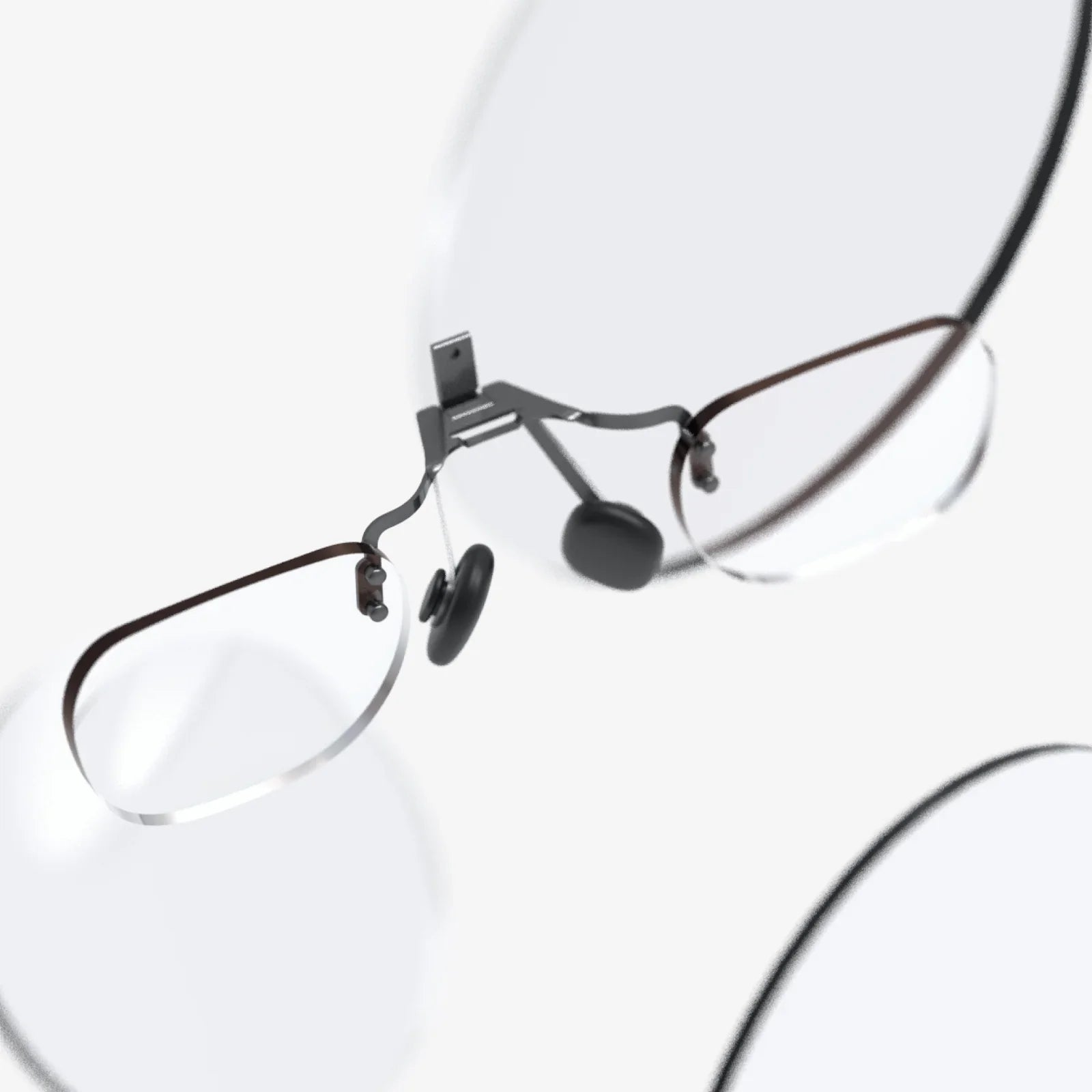
Imagine a world where digital information doesn’t live on a screen in your hand but is seamlessly woven into the fabric of your reality, accessible with a glance, a gesture, or a spoken word. This is the promise of AR and XR glasses, a promise that by 2025 has finally, tangibly, and spectacularly begun to deliver. The race to put a powerful, socially acceptable computer on your face has reached a fever pitch, making the search for the best AR XR glasses 2025 has to offer one of the most exciting—and complex—consumer tech journeys of the year. The future is not just coming; it's looking right back at you.
The 2025 AR/XR Landscape: Beyond the Hype
The term "XR" or Extended Reality has become the accepted umbrella for the spectrum of experiences, from the fully digital virtual reality (VR) to the digital-overlaid-physical world of augmented reality (AR) and the complex blend of both in mixed reality (MR). In 2025, the distinctions are becoming less important than the capabilities. The market is no longer dominated by clunky prototypes or enterprise-focused tools with five-figure price tags. This is the year of the consumer, the professional, the creator, and the everyday user.
The evolution has been driven by a perfect storm of technological maturation. Breakthroughs in micro-OLED and laser-beam scanning displays deliver stunning brightness and clarity, even in direct sunlight. Spatial computing chipsets, now in their third and fourth generations, provide desktop-level processing in a thermally efficient package small enough to fit in an eyeglass frame. And perhaps most critically, the ecosystem of apps, services, and content has exploded, moving beyond novelty demos to become genuinely useful and engaging.
Defining "Best" in a Multifaceted Market
Asking for the single "best" device is like asking for the best vehicle; the answer depends entirely on the journey. A Formula 1 car is terrible for a cross-country road trip, and a minivan won't win any races. The same is true for eyewear computing. The best AR XR glasses 2025 offers will be the ones that excel in the categories most important to you. We can break down the market into several key archetypes.
The All-Day Companion
This category prioritizes form factor above all else. The goal is to create a device that looks, feels, and weighs as close to standard eyewear as possible. These devices often feature a minimalist design, sometimes even passing for fashionable glasses. Their processing power might be limited, often leveraging a companion device like a smartphone or a dedicated wearable compute puck for heavier tasks.
Key Strengths: Unmatched wearability and social acceptance. You can wear them all day without neck strain or social awkwardness. They are perfect for notifications, simple translations, navigation cues, and recording snippets of your life from a first-person perspective.
Considerations: The field of view (FOV) is typically narrow, offering a small, postage-stamp-like window into the digital world. Graphics are often monochromatic or limited in complexity. They are assistants, not immersive portals.
The Immersive Powerhouse
On the other end of the spectrum are devices designed for deep work and deep play. These are often bulkier headsets that prioritize display quality, immersive audio, and processing muscle. They are designed for sessions of several hours where the user is fully engaged in a digital task—be it designing a 3D model on a virtual canvas, collaborating with remote colleagues in a photorealistic meeting room, or gaming in a mixed-reality environment where your physical room becomes part of the game level.
Key Strengths: breathtaking, high-resolution, full-color displays with a wide field of view; powerful onboard compute; advanced hand, eye, and voice tracking for intuitive interaction; high-fidelity spatial audio.
Considerations: The form factor is larger and heavier, making them less ideal for all-day casual wear. Battery life, while improving, is still measured in hours, not days. They are statement pieces, not subtle accessories.
The Hybrid Hero
The most exciting and competitive category in 2025 is the hybrid device that attempts to bridge the gap between the companion and the powerhouse. These devices employ ingenious engineering, often using swappable magnetic attachments. You might have a lightweight frame for everyday wear that connects to a more powerful battery and processing unit when you need to dive into a complex task.
Key Strengths: Versatility is the name of the game. They offer a compelling blend of acceptable wearability and serious capability, adapting to your needs throughout the day.
Considerations: This can be a "jack of all trades, master of none" scenario. The design can involve compromises, and you may need to manage and carry additional components.
The Non-Negotiable Tech Specs to Decipher
Cutting through the marketing jargon is essential. Here are the key specifications you must understand before investing in the best AR XR glasses 2025 will present.
Visual Fidelity: See the Light
This is arguably the most important aspect of the experience.
- Display Technology: Look for micro-OLED or advanced waveguide systems. These technologies offer the best combination of brightness, contrast, and pixel density.
- Resolution and PPD: While 4K per eye is a common boast, a more meaningful metric is Pixels Per Degree (PPD). This measures angular resolution, or how sharp the image appears based on the field of view. Aim for 40+ PPD for a truly "retina" level of sharpness where you cannot discern individual pixels.
- Field of View (FOV): A wider FOV is more immersive but technically challenging. Companion glasses might have a 15-20 degree FOV (like a small floating screen), while powerhouses can exceed 100 degrees, filling your peripheral vision.
- Brightness (Nits): To be visible in a sunlit room or outdoors, displays need to be incredibly bright, often over 2,000 nits, to overcome ambient light. Dim displays will wash out and become useless.
Interaction: How You Command the Digital
How you interact with the interface is what makes XR feel like magic—or a clunky gimmick.
- Hand Tracking: The gold standard. The ability to use your bare hands as controllers, with pinch, grab, and point gestures, is incredibly intuitive and natural.
- Voice Control: Essential for quick commands, dictation, and searching without lifting a finger.
- Eye Tracking: This is a game-changer for both interaction and performance. It enables foveated rendering, where only the part of the scene you're directly looking at is rendered in full detail, drastically reducing the processing power needed. It also allows for menus to be activated just by looking at them.
- Companion Controllers: Some systems, especially for gaming or precision design, still benefit from dedicated physical controllers for haptic feedback and precise input.
Comfort and Form: The Forgotten Spec
The most powerful device is useless if you don't want to wear it.
- Weight Distribution: Is the weight on the front of your face, or is it balanced by a counterweight on the back strap? This is crucial for long-term comfort.
- Battery Life and Strategy: Does it have an onboard battery? A swappable battery pack? Does it rely on a pocketable battery puck? Real-world battery life for intensive use is often 2-3 hours, so understand the charging strategy.
- Prescription Solutions: If you wear corrective lenses, check if the company offers custom magnetic prescription inserts. This is a far better solution than trying to wear the device over your regular glasses.
Software and Ecosystem: The Soul of the Device
Hardware is nothing without software. The best AR XR glasses 2025 has available are those with a robust and growing ecosystem.
- The Operating System: Is it a closed, walled-garden OS or an open platform that encourages development? The health of its app store is a primary indicator of the device's long-term viability.
- Key Apps and Services: Look for native support for the productivity and creativity tools you use every day. Is there a killer app that is exclusive to this platform?
- Spatial Mapping: How well does the device understand your environment? Can it quickly and accurately map a room, allowing digital objects to occlude behind your real-world furniture? This is the foundation of true MR.
Gazing into the Crystal Ball: What's Next?
The progress from 2024 to 2025 has been dramatic, but the road ahead is even more thrilling. We are rapidly approaching the holy grail: a device with the visual immersion of a powerhouse, the form factor of a companion, and the all-day battery life of a smartwatch. Key to this will be advancements in photonics, leading to even thinner and more efficient waveguides. Artificial intelligence will become the invisible engine, proactively surfacing information and contextually understanding our intentions without explicit commands. The line between the device and our own perception will continue to blur.
The conversation is shifting from which device has the highest specs to which one most elegantly solves a real human problem. It’s about enhancing memory, boosting productivity, deepening connection, and unlocking creativity. The perfect pair of glasses won’t just be a piece of technology you own; it will be a seamless extension of your mind and capabilities, a loyal digital companion that helps you navigate and interact with the world in ways you are only just beginning to imagine. The future on your face is waiting to be tried on.
Share:
Upcoming AR VR Headset Feature Three: The Trifecta That Will Redefine Reality
Difference Between AR and VR: A Complete Guide to Understanding Immersive Technologies