


Imagine a world where the digital and the physical are no longer separate realms, where information and imagination can be overlaid onto your everyday reality or you can be transported to entirely new ones. This is no longer the stuff of science fiction; it's the promise of two of the most transformative technologies of our time: Augmented Reality and Virtual Reality. While often mentioned in the same breath, they represent fundamentally different approaches to altering our perception. Understanding the difference between AR and VR is the first step to grasping the future of human-computer interaction.
The Core Philosophical Divide: Enhancement vs. Replacement
At its heart, the difference between AR and VR is a philosophical one. It’s a question of intent: does the technology aim to enhance your existing world or completely replace it?
Augmented Reality (AR) is best understood as a layering technology. It takes your real-world environment—the room you're in, the street you're walking down, the machine you're operating—and superimposes digital information, images, or 3D models onto it. Your reality remains the foundation; the digital content is an additive enhancement. Think of it as a high-tech heads-up display for life. You are not removed from your surroundings; instead, your surroundings are made more informative, entertaining, or interactive.
Virtual Reality (VR), on the other hand, is a technology of immersion and substitution. It seeks to block out the physical world entirely and transport your senses into a fully simulated, computer-generated environment. When you put on a VR headset, your real surroundings disappear, replaced by a digital universe. This could be a realistic simulation of a place on Earth, a fantastical alien landscape, or an abstract digital space. The goal is to create a convincing sense of presence, making you feel as if you are truly somewhere else.
Hardware and User Experience: How We Interface with New Realities
This philosophical divide directly dictates the hardware required for each experience, creating a clear distinction in how users interact with them.
The VR Experience: Total Immersion
To achieve its goal of complete immersion, VR relies on a specific set of hardware:
- Headsets: VR headsets are typically fully enclosed, featuring a high-resolution screen (or two, one for each eye) placed mere centimeters from the user's face. They completely cover the user's field of vision to prevent any glimpse of the outside world.
- Tracking Systems: To sell the illusion of being in a virtual space, the system must track the user's head movements with extreme precision and low latency. This is done through internal sensors (like gyroscopes and accelerometers) and often external cameras or base stations that map the user's physical position in a room.
- Controllers: VR almost always involves handheld controllers. These are also tracked by the system, allowing users to reach out, grab, manipulate, and interact with the virtual world. Their buttons, triggers, and haptic feedback are essential for input and creating a tactile connection.
- Audio: Immersive 3D spatial audio is a critical, often overlooked, component. Sounds come from specific directions and distances in the virtual world, further cementing the feeling of "being there."
The user experience is one of isolation from their physical environment, dedicated to the digital one.
The AR Experience: Blended Interaction
AR hardware is more varied, as its goal is to augment, not replace. It ranges from simple to complex:
- Smartphones and Tablets: The most common and accessible AR devices. They use their camera to capture the real world and their screen to display the augmented overlay. This is known as "see-through" AR.
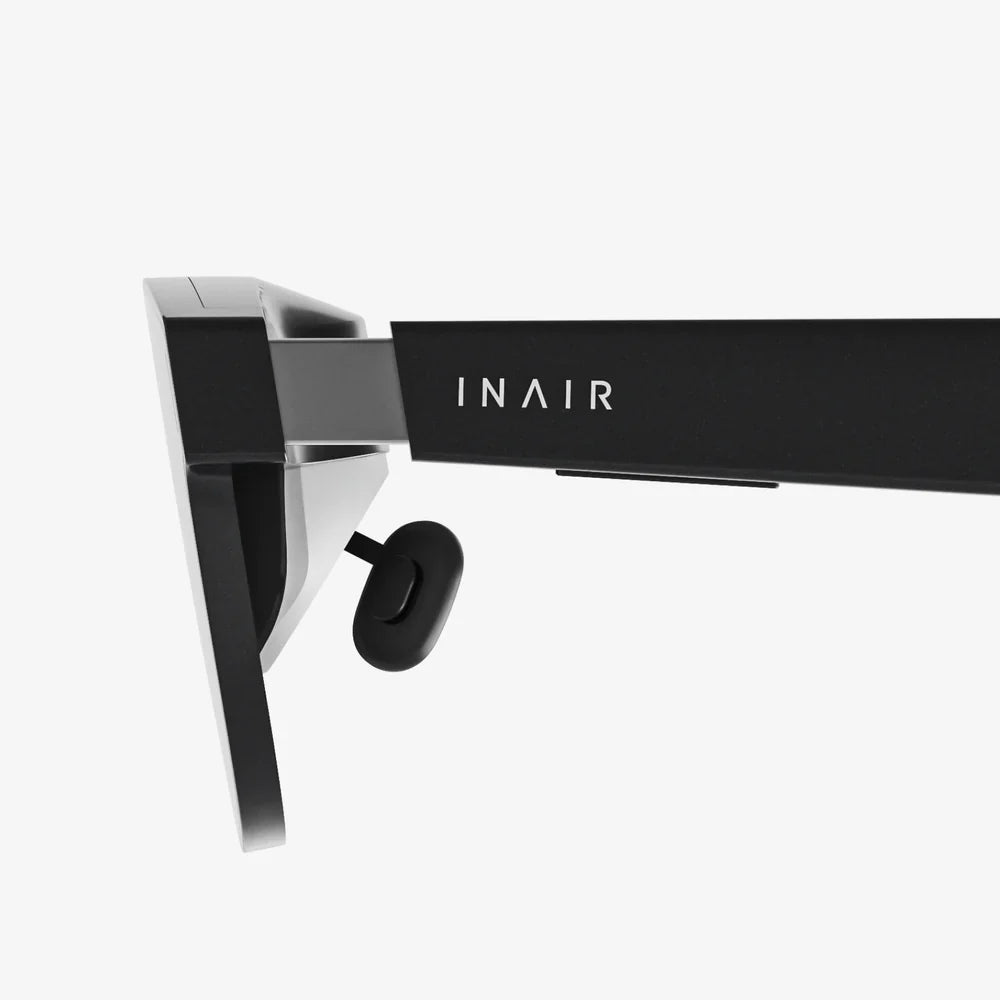
- Smart Glasses and Headsets: More advanced AR wearables use transparent lenses or cameras paired with miniature projectors to overlay graphics directly into the user's field of view. This is called "optical see-through" AR, allowing users to see the digital and physical world simultaneously without a mediating screen.
- Sensors: AR devices require a sophisticated understanding of the real world. They use cameras, depth sensors, LiDAR, and GPS to map the environment, understand surfaces (floors, walls, tables), and place digital objects convincingly within it.
The user experience is one of seamless integration, moving freely in their world while accessing a layer of digital content.
Under the Hood: The Technology Powering the Illusions
While both technologies rely on complex computer vision and graphics processing, their technical challenges differ significantly.
Virtual Reality's Technical Hurdles
VR's primary challenge is rendering and latency. It must generate two high-frame-rate, high-resolution views (one for each eye) to create a stereoscopic 3D effect. Any lag between the user's head movement and the screen updating can lead to disorientation and motion sickness, a phenomenon known as simulator sickness. The entire system is engineered to minimize this latency. Furthermore, creating believable virtual worlds requires immense artistic and computational resources to model, texture, and animate everything the user sees.
Augmented Reality's Technical Hurdles
AR's biggest challenge is contextual understanding and registration. The system must perceive and interpret the real world in real-time. It needs to:
- Map the environment and understand its geometry.
- Recognize objects and surfaces (e.g., this is a table, that is a wall).
- Anchor digital objects to specific points in the physical world so they don't drift or jitter when the user moves.
- Handle occlusion—understanding when a real-world object should logically block the view of a digital object, which is crucial for believability.
This requires a fusion of data from multiple sensors and incredibly efficient algorithms.
A World of Applications: How AR and VR Are Used Today
The practical applications for AR and VR are vast and growing, reflecting their unique strengths.
Virtual Reality's Domains
- Gaming and Entertainment: This is VR's most famous application. It offers unparalleled immersion, allowing users to step inside their games, explore virtual worlds, and experience stories in a first-person perspective.
- Training and Simulation: VR is ideal for training in high-risk or high-cost scenarios. Pilots train in flight simulators, surgeons practice complex procedures, and soldiers prepare for combat missions—all in a safe, controlled, and repeatable virtual environment.
- Architecture and Design: Architects and clients can "walk through" a building long before the foundation is poured. Designers can prototype and interact with 3D models of products at full scale.
- Therapy and Rehabilitation: VR is used for exposure therapy to treat phobias (e.g., fear of heights, flying) and PTSD. It's also used in physical rehab to make exercises more engaging and to simulate real-world movements.
Augmented Reality's Domains
- Retail and E-commerce: Users can "try on" clothes, glasses, or makeup virtually using their phone's camera. They can see how a new piece of furniture would look in their living room at true scale.
- Industrial Maintenance and Repair: Field technicians can use AR glasses to see schematics, instructions, and animated guides overlaid directly onto the machinery they are fixing, freeing their hands and reducing errors.
- Navigation: AR can project turn-by-turn directions onto the real-world view through a smartphone or windshield, making navigation more intuitive.
- Education: Students can interact with 3D models of the human heart, historical artifacts, or solar systems, bringing abstract concepts to life in their classroom.
The Blurring Line: Mixed Reality and the Future
As technology evolves, the line between AR and VR is beginning to blur, giving rise to a spectrum of experiences often referred to as Mixed Reality (MR) or Extended Reality (XR). MR aims to combine the best of both worlds: the immersive qualities of VR with the contextual awareness of AR.
Imagine a VR headset with forward-facing cameras that can digitize your real-world surroundings and bring them into the virtual space, allowing you to see your real hands and coffee cup while sitting in a virtual meeting room. Conversely, imagine AR glasses so advanced that they can dim the lenses to block out the real world and fully immerse you in a digital environment when desired. This convergence represents the next frontier, where the choice between augmentation and immersion becomes a dynamic slider rather than a binary switch.
Choosing the Right Tool for the Job
There is no "better" technology; there is only the right technology for a specific purpose. The choice between AR and VR comes down to a simple question: Does the user need to be present in the real world or isolated from it?
- Choose VR for total immersion, training simulations, experiencing remote locations, and deep, uninterrupted engagement.
- Choose AR for enhancing productivity, providing contextual information, overlaying data on real-world tasks, and bridging the gap between digital content and physical life.
One seeks to build a new world for you to visit; the other seeks to make your world richer. As these technologies become more sophisticated and accessible, they will cease to be novelties and become integral, invisible parts of how we work, learn, play, and connect. The future isn't just virtual or just augmented—it's a blend waiting to be defined, and understanding this crucial difference is your key to stepping into it.
Share:
Best AR XR Glasses 2025: The Ultimate Guide to the Future on Your Face
Top Augmented Reality Platforms: A Comprehensive Guide to the Future of Digital Interaction