


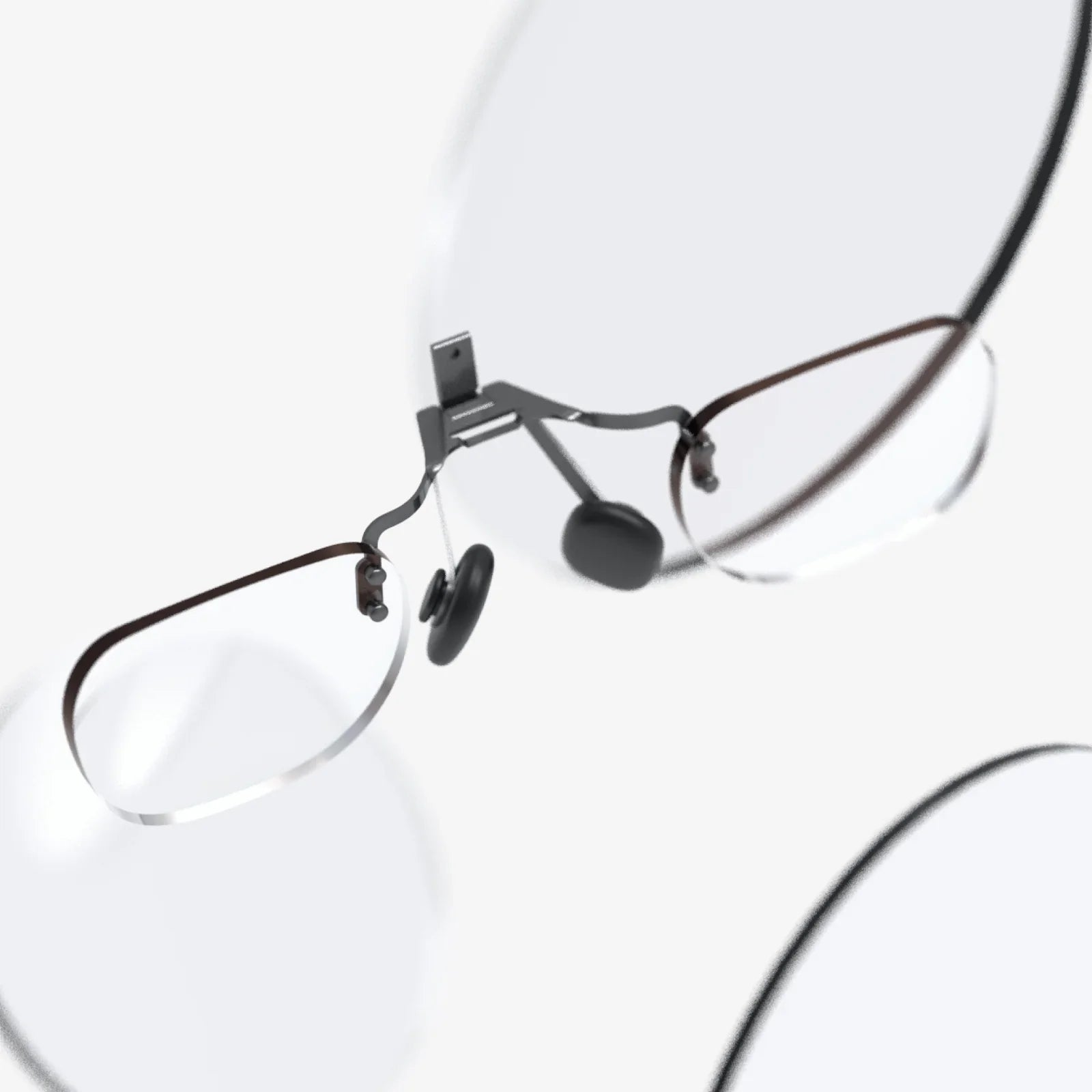
Imagine a world where digital information doesn't live on a screen in your hand but is seamlessly woven into the fabric of your reality. Directions float on the road ahead, a recipe hovers beside your mixing bowl, and a colleague's 3D model is presented on your empty conference table. This is the promise of augmented reality, and it’s finally moving from science fiction to tangible reality. The latest generation of AR glasses is lighter, smarter, and more powerful than ever before, bringing this futuristic vision within reach. If you're ready to see the world in a new dimension, the journey starts here.
The Evolution of Augmented Reality Wearables
The path to today's sleek devices has been long and iterative. Early prototypes were bulky, tethered headsets with limited field of view and underwhelming battery life, confined mostly to industrial and enterprise applications. They were tools, not companions. The dream was always a pair of glasses—something you could wear all day that augmented your life without isolating you from it. Breakthroughs in micro-optics, waveguide technology, and miniaturized computing power have finally converged to make this dream a consumer-grade reality. The best new AR glasses represent a fundamental shift from clunky prototypes to wearable, desirable technology designed for everyday use.
Defining What Makes AR Glasses "Best"
Labeling any technology as "the best" is inherently subjective, as it depends heavily on the user's needs. However, when evaluating the current market leaders, several key criteria emerge that separate the exceptional from the merely functional.
Visual Fidelity and Display Technology
At the heart of any AR experience is what you see. The quality of the display is paramount. Key factors include:
- Brightness and Color Accuracy: The digital images must be bright enough to be visible in various lighting conditions, especially outdoors, without washing out. Vivid, accurate colors are essential for a realistic blend of digital and physical.
- Field of View (FoV): This is the angular extent of the observable world through the glasses. A wider FoV means larger, more immersive digital objects that don't feel like they're confined to a small window. While no device yet offers a perfect human FoV, the latest generations have made significant strides.
- Resolution and Pixel Density: To avoid a screen-door effect and ensure text and graphics are sharp and clear, a high resolution is critical. The goal is pixels so dense you cannot distinguish them individually.
- Waveguide vs. Birdbath Optics: Most advanced glasses use waveguide technology, which pipes light from micro-displays to the eye using microscopic gratings, allowing for a thinner lens form factor. Birdbath optics, which reflect display light into the user's eye, is another common approach that can offer excellent color and contrast.
Form Factor and Comfort
Technology that isn't comfortable won't be worn. The best new devices prioritize a lightweight design that doesn't cause fatigue over extended periods. They often resemble high-end sunglasses or contemporary eyewear, making them socially acceptable to wear in public. Considerations for different face shapes and the availability of prescription lens inserts are also hallmarks of a user-centric design.
Audio and Interaction
Immersive AR isn't just visual. Spatial audio is a critical component, making sounds seem like they are emanating from their digital sources in the real world. For interaction, the most intuitive methods are being refined:
- Voice Commands: Hands-free control using natural language.
- Touch-sensitive Temples: Swiping and tapping on the arms of the glasses for quick controls.
- Hand Tracking: Advanced cameras track finger and hand movements, allowing you to pinch, select, and manipulate digital objects in mid-air as if they were really there.
- Companion Device Control: Using a smartphone or a small handheld controller for more precise input.
Processing Power and Connectivity
Some glasses are self-contained computers, with their own onboard processors, memory, and batteries. Others act as a high-resolution display, leveraging the processing power of a connected smartphone or a small, portable computing pack. Each approach has trade-offs between mobility, performance, and battery life. The best solutions offer a seamless, low-latency connection that feels instantaneous.
Battery Life and Ecosystem
All-day battery life remains a holy grail. The top contenders offer several hours of active use, often supplemented by a portable charging case. Furthermore, a robust software ecosystem is what brings the hardware to life. Access to compelling applications for productivity, navigation, entertainment, and information is what transforms a novel gadget into an indispensable tool.
Groundbreaking Features Reshaping the Market
The current crop of AR glasses isn't just incrementally better; it introduces features that redefine what's possible.
True Full-Color Passthrough
While many glasses use optical see-through (you look directly at the real world through lenses), some newer models use high-resolution cameras to capture the world and display it on internal screens with digital overlays. This video passthrough approach allows for more dramatic alterations of reality, like changing your environment's lighting or applying full digital filters, and is a stepping stone towards more advanced mixed reality.
Spatial Computing and Persistent Anchors
This is the ability for the glasses to understand and map the 3D geometry of your space. Digital objects can be placed on a physical table and will stay there, even if you leave the room and come back. This persistence is fundamental for productivity apps and immersive games, creating a stable blend of the digital and physical realms.
Advanced Eye and Hand Tracking
Built-in eye-tracking serves multiple purposes: it enables foveated rendering (where only the area you're directly looking at is rendered in full detail, saving processing power), allows for intuitive menu navigation just by looking, and can create more expressive avatars in social applications. Coupled with sophisticated hand tracking, it creates a powerfully intuitive and natural control scheme.
Transforming Industries and Daily Life
The applications for this technology extend far beyond novelty. The best new AR glasses are already proving their value across numerous domains.
Productivity and Remote Work
Imagine having multiple virtual monitors漂浮 in your home office, accessible wherever you go. Colleagues from across the globe can appear as life-like avatars in your living room for a collaborative design session, manipulating 3D models together in real-time. Step-by-step instructions for complex tasks can be overlaid directly onto machinery, reducing errors and training time.
Navigation and Information
Walking through a new city? Turn-by-turn directions are painted onto the sidewalk. Look at a restaurant, and see its reviews and menu pop up. Glance at a landmark, and get a historical briefing. This ambient access to information, without ever looking down at a phone, is a profound shift in how we interact with our surroundings.
Entertainment and Gaming
Watch a movie on a virtual hundred-inch screen on your blank wall. Play a tabletop strategy game where the board and pieces come to life on your coffee table. Experience a narrative where characters and events unfold in your own home. AR gaming creates a unique blend of physical movement and digital fantasy that is unlike any other medium.
Fitness and Health
Follow a workout regimen with a virtual trainer demonstrating forms right in front of you. Track your pace and heart rate stats floating in your periphery during a run. For medical professionals, AR can overlay vital signs, ultrasound data, or surgical plans directly onto their field of view, keeping crucial information always accessible.
Navigating the Current Landscape and Considerations
Despite the incredible progress, this is still emerging technology. Prospective users should be aware of the existing limitations. Battery technology continues to be a constraint, often limiting intensive use to a few hours. The field of view, while improving, can still feel restrictive. Furthermore, the social etiquette of wearing cameras on your face is still being negotiated, and privacy concerns are valid and important to consider. The software ecosystem, though growing rapidly, is not yet as mature as that of smartphones. Choosing the right pair often involves balancing these trade-offs against your primary use cases and budget.
The Road Ahead: The Invisible Computer
The trajectory is clear: AR glasses will continue to become lighter, more powerful, and more integrated into our daily lives. The ultimate goal is the "invisible computer"—technology that enhances our human capabilities without demanding our focus or isolating us. Future iterations will likely feature even more advanced holographic displays, better battery solutions, and deeper AI integration, anticipating our needs before we even articulate them. We are moving towards a world where the line between the digital and the physical will become increasingly blurred, and ultimately, indistinguishable.
The future is not something we enter; it's something we create, and right now, that creation is happening at the intersection of our vision and technology. The best new AR glasses are more than just gadgets; they are portals to this new layer of reality, offering a glimpse into a world where information, creativity, and connection are freed from the confines of screens. This is just the beginning of a fundamental shift in human-computer interaction, and the opportunity to be an early explorer of this new frontier has never been more compelling or accessible.
Share:
How to Create AR Glasses: A Comprehensive Guide to Building Your Own Augmented Reality
Designing Immersive 3D Experiences: The Blueprint for Captivating Digital Worlds