


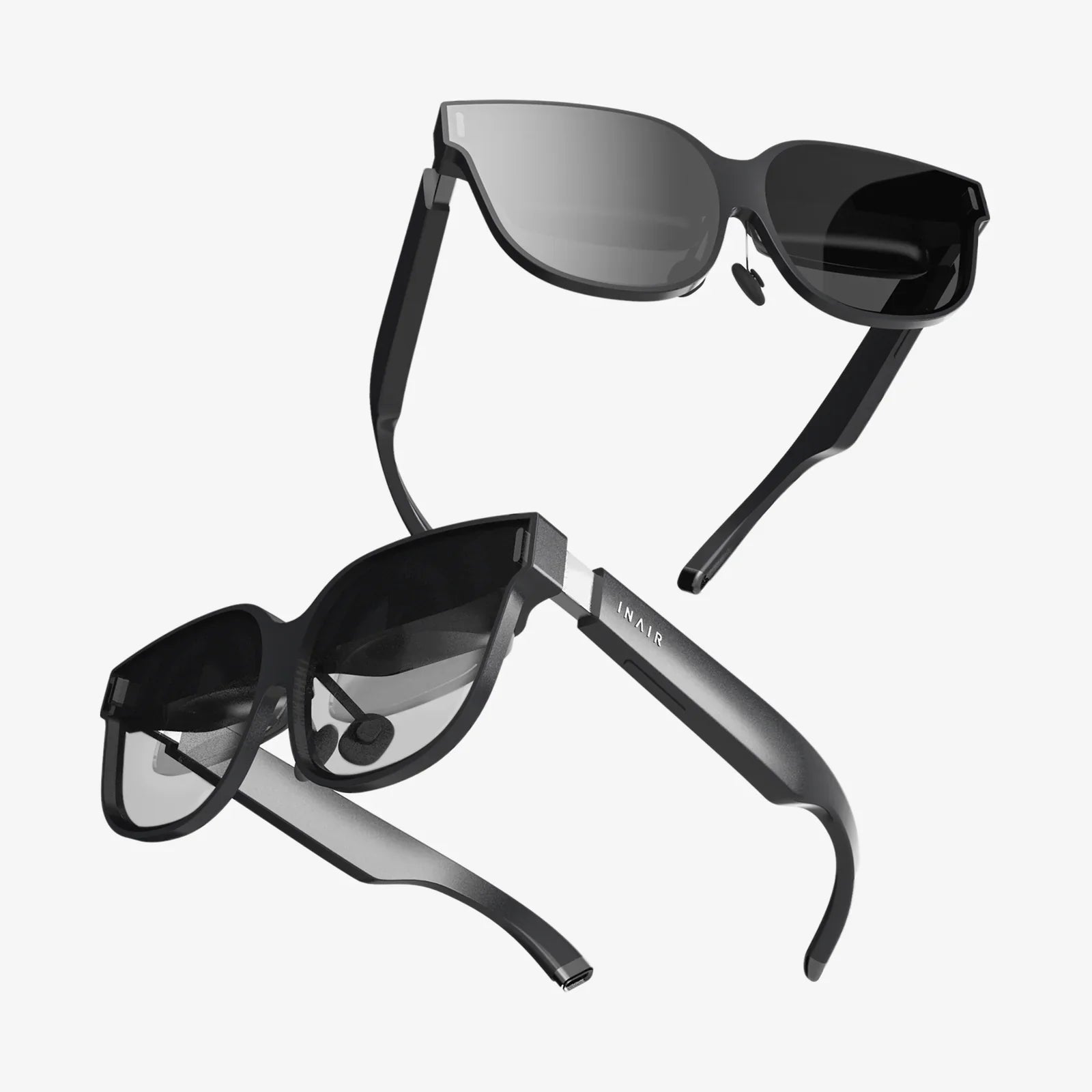
Imagine a world where digital information seamlessly blends with your physical reality, where instructions float over machinery you're repairing, and historical figures narrate their stories as you walk through a city. This is the promise of augmented reality, and the key to unlocking it rests on a device perched on your nose. The journey of how to create AR glasses is a complex but fascinating convergence of hardware engineering, software wizardry, and user-centric design. It's a challenge that beckons innovators, developers, and dreamers to build the next window into our mixed-reality future.
Deconstructing the Dream: Core Components of AR Glasses
Before a single line of code is written or a prototype is 3D printed, it is crucial to understand the fundamental building blocks that make AR glasses possible. Each component presents its own set of engineering hurdles and compromises.
The Window to a New World: Optical Systems
The heart of any AR glasses experience is the optical system. This is the mechanism that projects digital images into your eyes while allowing you to see the real world. There is no single perfect solution, and the choice of technology dramatically affects the device's form factor, cost, and performance.
- Waveguide Displays: Often considered the gold standard for consumer-ready devices, waveguides use a process of internal reflection to pipe light from a micro-display into the eye. They can be made from optical glass or plastic and are known for enabling relatively sleek and lightweight designs. Diffractive waveguides (like surface relief gratings) and reflective waveguides are common subtypes.
- Birdbath Optics: This design uses a combiner (a partially reflective mirror) and a beamsplitter to fold the light path from a micro-display into the user's eye. While often bulkier than waveguides, birdbath optics can offer a wide field of view and bright images, making them popular for many development kits and earlier commercial attempts.
- Free-Space Combiners: This is a more straightforward approach where a see-through combiner element, like a flat piece of glass or a curved mirror, is placed directly in front of the eye to reflect the image from a projector mounted on the temple. This can be simpler to implement but often results in a larger and less aesthetically pleasing design.
- Retinal Projection: A more experimental approach, retinal projection (or scanning laser display) aims to draw images directly onto the user's retina using low-power lasers. This technology promises extremely high focus and brightness but comes with significant technical and regulatory challenges.
The Digital Brain: Processing Units
AR glasses require significant computational power to track the user's head and environment, render complex 3D graphics, and run applications. The decision on where to place this processing power is a critical architectural choice.
- On-Device Processing: Integrating a full System-on-a-Chip (SoC) into the glasses themselves provides the most untethered experience. This requires mastering thermal management, power consumption, and miniaturization. These SoCs need to be powerful enough for simultaneous localization and mapping (SLAM) and graphics rendering while being efficient enough to avoid overheating and preserve battery life.
- Tethered Processing: Many development kits and specialized professional AR glasses offload the heavy computation to an external device, like a powerful smartphone or a dedicated computing pack worn on a belt. This tether, whether wired or wireless (e.g., Wi-Fi, ultra-wideband), allows for more powerful processing and graphics but sacrifices mobility and convenience.
- Hybrid Approach: A common strategy is to split the workload. The glasses themselves might handle basic sensor data processing and tracking, while a connected smartphone handles the heavier rendering and application logic, creating a balance between performance and power efficiency.
Perceiving Reality: Sensors and Tracking
For digital content to stay locked in place in the real world, AR glasses must constantly understand their position and the geometry of their surroundings. This is achieved through a suite of sensors.
- Cameras: Multiple cameras serve different purposes. Monochrome cameras are often used for positional tracking, while RGB cameras enable object recognition and video passthrough AR. Depth-sensing cameras (like structured light or time-of-flight sensors) are crucial for understanding the 3D structure of the environment, allowing digital objects to occlude behind real-world furniture.
- Inertial Measurement Units (IMUs): These are the workhorses of tracking, containing accelerometers, gyroscopes, and magnetometers. They provide high-frequency data on movement and rotation, which is fused with camera data to create a stable and accurate understanding of the headset's pose (position and orientation).
- Eye-Tracking Cameras: Increasingly important, inward-facing infrared cameras track the user's gaze. This enables intuitive interaction (selecting things by looking at them), foveated rendering (allocating more processing power to where the user is looking to save energy), and creating a more realistic social experience by animating virtual avatars' eyes accurately.
Powering the Experience: Batteries and Thermal Management
All this technology is useless without power. Battery life is one of the most significant constraints in AR glasses design. Designers must make tough choices between capacity, weight, and safety. Batteries can be housed in the temple arms or, for longer life, in a separate pack. Crucially, power consumption generates heat. Effective thermal management—using heat sinks, passive cooling, and careful component placement—is essential to keep the device comfortable and prevent performance throttling.
The Blueprint: A Step-by-Step Development Process
Transforming the concept of AR glasses into a functional prototype is a multi-stage process that blends iterative design with rigorous engineering.
Phase 1: Definition and Conceptualization
This initial phase is about answering fundamental questions. What is the primary use case? Is it for industrial maintenance, consumer entertainment, or healthcare? Who is the user? What are the key features that are non-negotiable? This is where you define the target specifications: Field of View (FOV), resolution, battery life, weight, and form factor. Creating rough sketches and storyboards to visualize the user experience is invaluable at this stage.
Phase 2: Optical Engine Selection and Prototyping
Based on your target specs, you must select and prototype your optical system. For many developers, this does not mean designing waveguides from scratch—a notoriously difficult task. Instead, it involves sourcing optical evaluation kits from specialized manufacturers. These kits allow you to experiment with different display engines (e.g., LCoS, Micro-OLED, DLP) paired with combiners to understand the resulting image quality, brightness, and FOV. This phase is critical for validating the core visual experience.
Phase 3: Hardware Integration and PCB Design
Once the optical path is validated, the task becomes integrating all other components. This involves:
- Selecting an SoC: Choosing a processor that meets your computational needs and power budget.
- Sensor Integration: Placing and calibrating cameras, IMUs, and microphones.
- Designing the PCB: Creating the main circuit board that connects all components, a process that requires expertise in high-speed signal integrity and miniaturization.
- Mechanical Design: Using CAD software to design the housing and structure that will hold all components securely and ergonomically. 3D printing is indispensable for rapid iteration of mechanical prototypes.
Phase 4: Software Stack Development
The hardware is inert without software. The software stack is multi-layered:
- Firmware: Low-level code that drives the sensors and hardware components.
- Operating System: A customized version of Android or a real-time operating system (RTOS) to manage resources.
- Core AR Services: This is the magic sauce. You need to implement or license a powerful AR engine capable of SLAM (e.g., ARCore, ARKit, or open-source libraries like OpenCV), plane detection (finding floors and tables), and scene understanding.
- Application Layer: The actual apps and experiences that users interact with, built in game engines like Unity or Unreal Engine, which provide robust tools for 3D development.
Phase 5: Testing, Iteration, and Refinement
This phase is cyclical. User testing is paramount. Does the device fit comfortably for long periods? Is the text readable in bright sunlight? Does the tracking jitter or lose its place? Gather feedback, identify failures, and return to previous phases to refine your design. This iterative loop continues until the product meets the usability and performance standards set out in the initial definition phase.
Beyond the Device: The Role of Content and Ecosystem
The most beautifully engineered AR glasses are useless without compelling content and a supportive ecosystem. Developers must consider how they will enable others to create experiences for their platform. This involves creating a Software Development Kit (SDK) with clear APIs for accessing the device's tracking, input, and display capabilities. Furthermore, thinking about an application store or distribution platform is crucial for long-term adoption. The hardware and software must be designed in tandem with the developer community in mind.
Navigating the Invisible: Challenges and Considerations
The path to creating functional AR glasses is fraught with obstacles that extend beyond pure engineering.
- The Vergence-Accommodation Conflict (VAC): A fundamental perceptual problem where your eyes converge (cross) to look at a nearby virtual object, but the focal distance remains fixed on the display screen, causing eye strain and discomfort. Solving VAC is a major focus of optical research.
- Social Acceptance: Designing glasses that people will actually want to wear in public is a immense challenge. They must be fashionable, lightweight, and non-intrusive. The "cyborg" aesthetic of early head-mounted displays is a significant barrier to mass consumer adoption.
- Privacy and Ethics: Glasses with always-on cameras and microphones raise serious privacy concerns. Transparent policies on data collection, storage, and usage, along with clear physical indicators like recording lights, are essential for building public trust.
- Cost and Manufacturing: Precision optics and custom micro-components are expensive to develop and manufacture at scale. Moving from a hand-assembled prototype to mass production requires expertise in supply chain management and high-volume assembly techniques.
The quest to seamlessly merge our digital and physical lives is one of the defining technological endeavors of our time. While the challenges of how to create AR glasses are daunting, they are not insurmountable. They represent a puzzle waiting to be solved by a new generation of engineers, designers, and storytellers. By understanding the intricate dance of light, silicon, and code, you can move from being a passive observer of the future to an active architect of it. The tools are emerging, the knowledge is accumulating, and the frontier of augmented reality is open for exploration.
Share:
How Far Will Virtual Reality Go? Exploring the Future of Immersive Digital Worlds
Best New AR Glasses: A Deep Dive into the Future on Your Face