


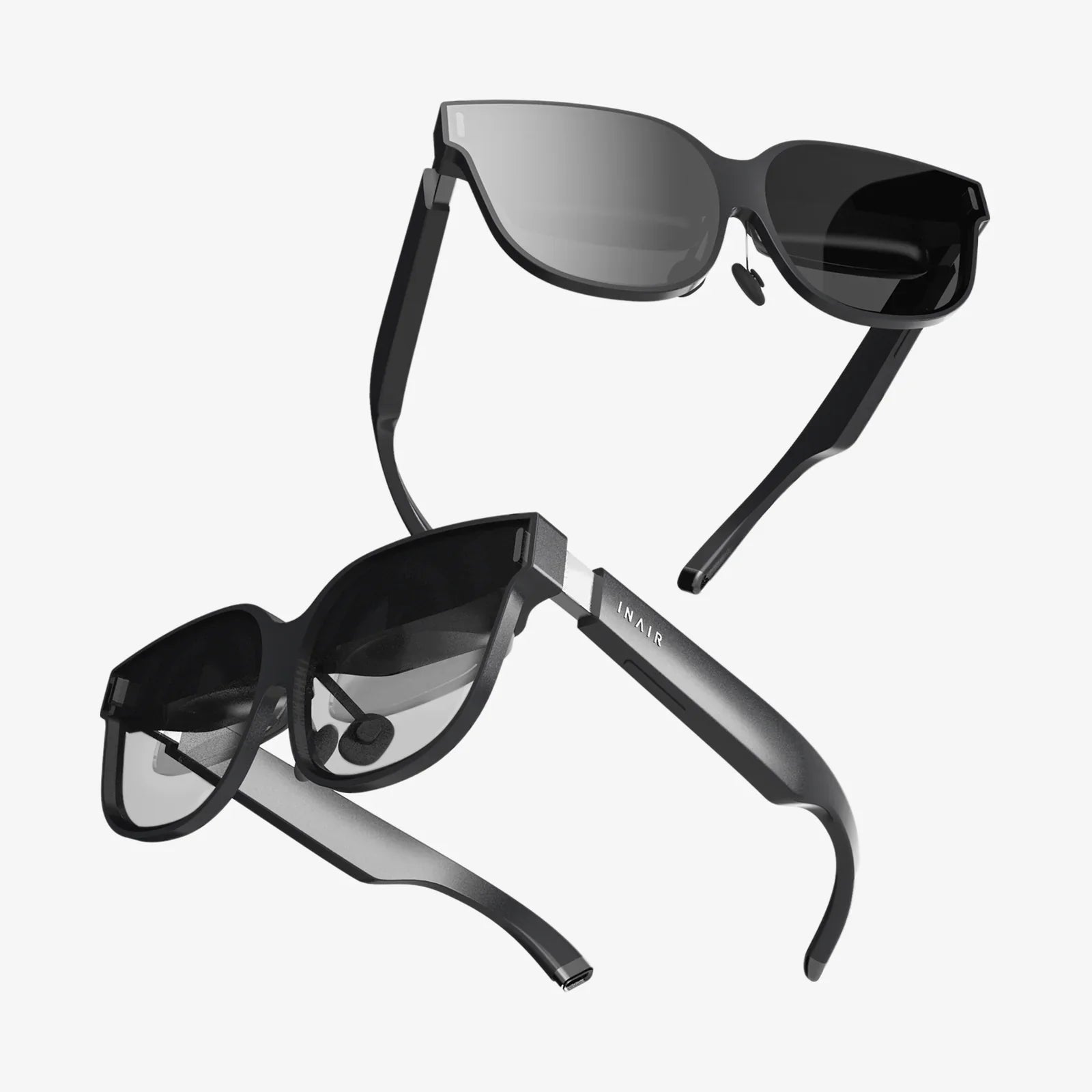
Imagine a world where the boundaries between the digital and the physical dissolve, where you can travel to any place, real or imagined, in the blink of an eye, and where the very definition of human experience is expanding into the infinite. This is the tantalizing promise of virtual reality, a technology that has captured our collective imagination and now stands poised to fundamentally reshape our existence. The journey from clunky headsets to seamless immersion has been rapid, but it is merely the first step on a path whose ultimate destination is both exhilarating and unknown. The question isn't just about better graphics or more comfortable hardware; it's about how far we, as a species, are willing to let this digital genie out of its bottle.
From Novelty to Necessity: The Meteoric Ascent of VR
The concept of virtual reality is not new. For decades, it lived in the realms of science fiction and academic research labs, a futuristic dream depicted in films and novels. Early iterations were expensive, low-fidelity, and offered experiences that were more nauseating than mesmerizing. They were novelties, demonstrations of a potential that seemed perpetually out of reach. The turning point came with a convergence of technologies: the miniaturization of high-resolution displays, the development of precise motion tracking, and the availability of immense computing power. This trifecta transformed VR from a speculative concept into a commercially viable platform.
Today, we stand at the end of the beginning. The current generation of hardware has successfully cracked the code on immersion, providing convincing and compelling experiences that are accessible to millions. The primary application, and the driver of its initial adoption, has been the gaming and entertainment industry. Here, VR is not just a new way to play; it's a new medium altogether. It replaces the traditional screen-based relationship with a first-person, embodied experience. You are no longer controlling a character; you are the character inside the world. This fundamental shift is what gives VR its unique power and suggests that its future will extend far beyond leisure.
The Next Frontiers: Revolutionizing Industry and Human Capability
The true measure of a technology's impact is its ability to transform essential human endeavors. Virtual reality is rapidly moving beyond entertainment and is now demonstrating profound utility across a wide spectrum of industries.
Healthcare and Medicine
In medicine, VR is becoming a life-saving tool. Surgeons are using it to plan complex procedures, practicing on detailed 3D models of a patient's specific anatomy before making a single incision. This reduces operation times and improves outcomes. For medical students, it offers an unparalleled training ground, allowing them to dissect virtual cadavers or practice rare surgical scenarios without risk. Beyond the operating theater, VR is proving to be a powerful therapeutic instrument. It is used for exposure therapy to treat phobias and PTSD, allowing patients to confront their triggers in a safe, controlled environment. For patients undergoing painful treatments or lengthy rehabilitation, immersive VR experiences can significantly reduce perceived pain and anxiety, a phenomenon known as virtual analgesia.
Education and Training
The potential for education is staggering. Imagine a history class where students don't just read about ancient Rome—they can walk through a faithfully reconstructed Forum, hearing the sounds and seeing the scale of it all. Biology students can journey through the human bloodstream, and astronomy students can stand on the surface of Mars. This experiential learning fosters a deeper, more intuitive understanding than textbooks ever could. In corporate and industrial training, VR is used to simulate dangerous situations for firefighters, pilots, and factory workers, providing critical muscle memory and decision-making practice without any real-world danger.
Work and Collaboration
The concept of the metaverse—a persistent, shared virtual space—promises to redefine remote work. Instead of a grid of faces on a video call, colleagues from across the globe could meet around a virtual conference table, interact with 3D models of products they are designing, or collaborate on virtual whiteboards as if they were in the same room. This spatial collaboration could restore the nuance and spontaneity of in-person interaction that is lost in current remote work setups, potentially reducing the need for business travel and changing the very nature of the corporate office.
Social Connection and Experience
At its core, VR is a social technology. Platforms already exist that allow people to gather as avatars for concerts, movie nights, or simply to hang out. The future points toward a world where physical distance is no longer a barrier to shared experience. You could attend a friend's birthday party on another continent, feeling a genuine sense of presence, or explore a virtual museum with family members across the country. This has profound implications for reducing loneliness and building communities based on shared interests rather than geographic accident.
The Technological Horizon: What Will Power the Next Leap?
For VR to go further, several technological hurdles must be overcome. The current goal is to achieve what is known as the "visual Turing test"—a VR experience so real that the human brain cannot distinguish it from physical reality. This will require massive leaps in display technology, with resolutions moving into the realm of 8K or 16K per eye to eliminate the "screen door effect." Wider fields of view, high dynamic range (HDR), and variable focus will all be necessary to trick the eye completely.
Perhaps the most significant challenge is haptic feedback. True immersion requires that the virtual world can push back. The next generation of interfaces will move beyond simple hand controllers to full-body haptic suits, gloves that simulate touch and resistance, and even devices that can simulate temperature and wind. Brain-computer interfaces represent the final frontier, potentially allowing us to control virtual environments with our thoughts and receive feedback directly into our neural pathways, bypassing traditional sensory organs altogether. This would represent the ultimate fusion of human and machine.
The Ethical Abyss: Navigating the Perils of Perfection
As the technology approaches this level of fidelity and immersion, it raises a host of deep and disturbing ethical questions. If a virtual world becomes indistinguishable from, or even more appealing than, the real one, what incentive do people have to engage with reality? The risk of mass escapism is real, potentially leading to societal neglect, addiction, and a devaluation of physical human connection. The concept of "experience inequality" could emerge, where the wealthy can afford hyper-realistic, fulfilling virtual experiences while others are left with a diminished reality.
The data privacy concerns are monumental. VR headsets are arguably the most intimate surveillance devices ever created. They can track not just where you look, but your pupil dilation, your blink rate, your body language, and even your neural responses. This data is a treasure trove for advertisers and a nightmare for personal liberty. Who owns this data? How is it used? The potential for manipulation is unprecedented.
Furthermore, the nature of the self could be called into question. In a world where you can be anyone or anything, does the concept of a stable identity begin to erode? And if we can simulate any experience, does that devalue authentic experience? If you can climb Mount Everest in VR from your living room, does the real, dangerous, and arduous journey lose its meaning? These are not technical questions; they are philosophical ones that we must grapple with as a society.
The Ultimate Destination: A Symbiotic Future
So, how far will virtual reality go? It will likely go as far as we allow it to. The path is not predetermined. The ultimate destination for VR is not necessarily a world where we all retreat into pods and abandon physical reality. Instead, the most optimistic vision is one of symbiosis, where VR augments and enhances our real lives rather than replacing them. It will be a tool for overcoming physical and geographical limitations, for healing our bodies and minds, for learning and creating in ways previously unimaginable.
It will become an integral layer of our daily existence, an invisible fabric of digital information and experience overlaid onto our physical world through advancements in augmented reality, which is ultimately a subset of the broader VR spectrum. We will move seamlessly between the real and the virtual, using each for what it does best. The physical world will remain the anchor for authentic human connection, biological existence, and the tangible stuff of life. The virtual world will be our playground, our workshop, our classroom, and our gateway to the infinite.
The journey into the virtual is ultimately a journey into ourselves, forcing us to define what is truly real, what is truly valuable, and what it means to be human in an age where our perception of reality itself is becoming a customizable commodity. The technology is merely the vessel; we are the ones who must decide where it sails.
We are standing at the precipice of a new dimension, armed with a technology that challenges the very fabric of perception. The path forward is not just one of engineering, but of philosophy, ethics, and collective choice. The virtual realm beckons with infinite possibilities—to heal, to connect, to create, and to escape. How deeply we choose to step into it will define the next chapter of our story, blurring the lines between the world we were born into and the worlds we are now capable of building. The ultimate limit isn't processing power or pixel density; it's the scope of our own imagination and the wisdom with which we wield this unprecedented power to reshape reality itself.
Share:
Programmable AR Glasses: The Next Universal Computing Platform Is Here
How to Create AR Glasses: A Comprehensive Guide to Building Your Own Augmented Reality