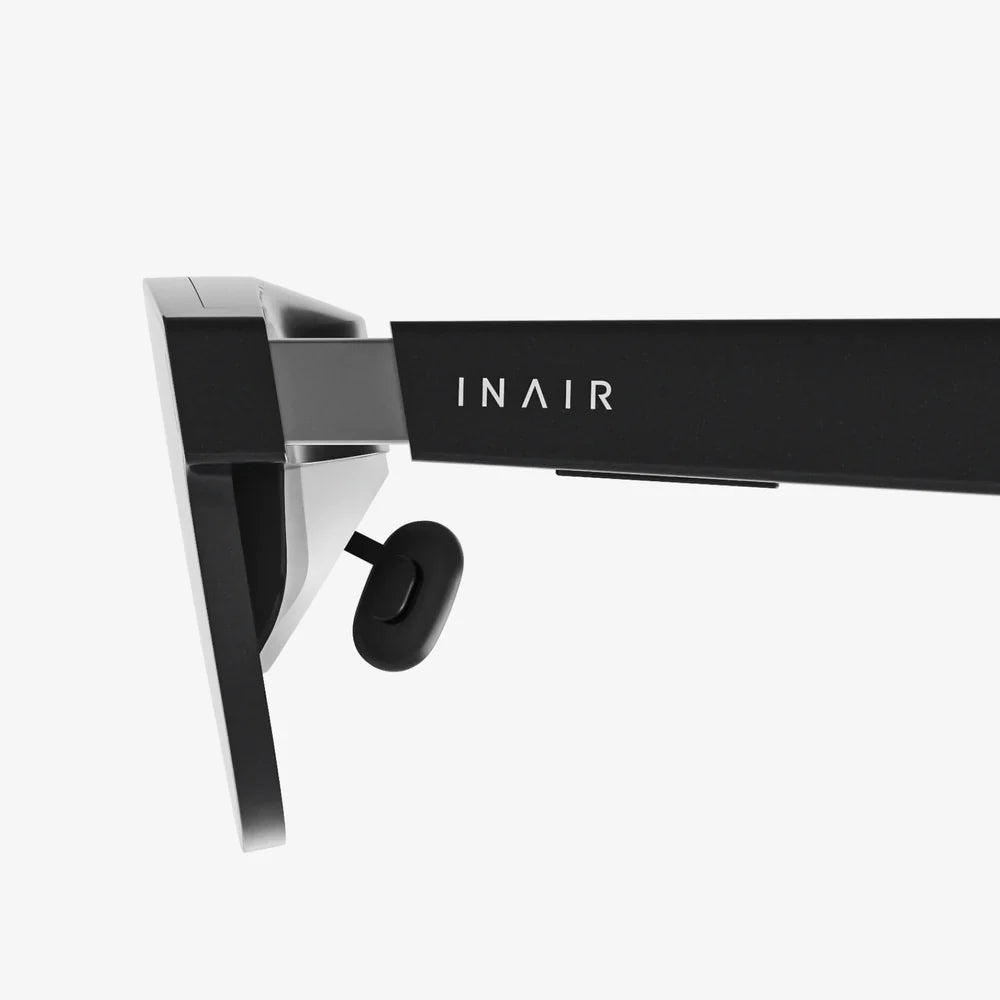
Imagine a world where the digital and physical seamlessly intertwine, where information, entertainment, and productivity are not confined to a screen in your hand but are elegantly overlaid onto your field of vision, all while perfectly correcting your eyesight. This is no longer the realm of science fiction; it is the tangible, awe-inspiring reality offered by the latest generation of prescription augmented reality glasses. For anyone who has ever squinted at a screen or struggled with the awkwardness of wearing AR headsets over their regular spectacles, the emergence of truly integrated prescription AR glasses is nothing short of revolutionary. This technology promises to fundamentally reshape how we interact with information and our environment, offering a glimpse into a future where our reality is enhanced, not interrupted.
The Core Technology: How Prescription AR Glasses Work
At their heart, prescription AR glasses are a marvel of optical engineering, merging two distinct technologies into a single, cohesive device. Understanding how they work is key to appreciating their value.
Waveguide and Projection Systems
The magic of AR lies in its ability to project digital images onto transparent lenses. This is most commonly achieved through waveguides—thin, transparent pieces of glass or plastic etched with microscopic patterns. A tiny projector, often located in the temple of the glasses, shoots light containing the digital image into the edge of the waveguide. This light bounces along inside the waveguide through a process called total internal reflection until it hits a diffractive optical element, which then directs it outward toward your eye. The result is a crisp, bright image that appears to float in space several feet away, all while allowing you to see the real world clearly behind it.
Integrated Prescription Lenses
This is where customization comes in. Unlike non-prescription AR glasses, which are a one-size-fits-all solution, prescription AR models integrate your unique vision correction parameters directly into the optical stack. This can be done in two primary ways:
-
Custom Lenses: The waveguide itself can be manufactured with a prescription curvature, embedding the corrective power directly into the AR display element. This offers the most seamless integration and optimal optical performance.
-
Lens Inserts: Some systems use a magnetic or clip-in insert that slots behind the primary waveguide lens. This insert is custom-ground to your prescription, much like traditional eyeglass lenses. While slightly less integrated, this approach offers flexibility and easier upgrades.
The engineering challenge is immense: aligning the projected digital image perfectly with your corrected vision so that both the real world and the virtual content are in sharp focus simultaneously, without causing eye strain or distortion.
Beyond Novelty: Transformative Applications
The true power of prescription AR glasses is revealed not in their technical specifications, but in their practical, life-enhancing applications across numerous fields.
Professional and Enterprise Use
This is currently the most mature market for this technology. Professionals in various sectors are using prescription AR glasses to achieve unprecedented levels of efficiency and safety.
-
Field Service & Repair: Technicians can have schematics, instruction manuals, and remote expert guidance overlaid directly onto the machinery they are fixing, keeping their hands free and their focus intact.
-
Healthcare: Surgeons can visualize patient vitals or 3D anatomical models during procedures without looking away from the operating table. Medical students can learn through interactive overlays on mannequins or even through assisted procedures.
-
Logistics and Warehousing: Workers can see picking lists, inventory data, and optimal navigation paths through a warehouse directly in their line of sight, dramatically speeding up fulfillment processes.
-
Design and Architecture: Architects can walk through 3D models of their designs at scale, and interior designers can preview furniture and finishes in a real space before making a purchase.
Everyday and Consumer Applications
While enterprise leads, consumer applications are rapidly evolving, promising to change our daily routines.
-
Navigation: Imagine walking through a new city with turn-by-turn directions and points of interest painted onto the streets in front of you, eliminating the need to constantly glance down at a phone.
-
Fitness and Health: Runners and cyclists could see their heart rate, pace, and route mapped onto the road. During workouts, proper form instructions could be demonstrated in real-time.
-
Social Connectivity and Entertainment: Watching a movie on a virtual giant screen while on a plane, having subtitles translated in real-time during a conversation with someone speaking another language, or playing immersive games that transform your living room into a digital playground are all within reach.
-
Accessibility: For individuals with hearing impairments, speech could be converted to text and displayed in their glasses. For those with low vision, the glasses could highlight obstacles or enhance contrast.
What to Look For: A Buyer's Considerations
Choosing the right pair of prescription AR glasses is a significant decision. Here are the critical factors to weigh before making an investment.
Visual Fidelity and Display Quality
The quality of the augmented image is paramount. Key metrics include:
-
Field of View (FoV): This measures how large the digital image appears. A wider FoV creates a more immersive experience, but it often comes with a higher cost and larger form factor.
-
Resolution and Brightness: A high-resolution display ensures text is sharp and images are clear. High brightness is essential for the digital content to be visible in various lighting conditions, especially outdoors.
-
Depth of Field and Focus: The best devices project images at a comfortable focal distance, typically a few meters away, reducing the vergence-accommodation conflict that can cause eye strain.
Comfort, Fit, and Form Factor
These devices are meant to be worn for extended periods. They must be comfortable and socially acceptable.
-
Weight and Balance: The glasses should feel balanced on your face and not be overly heavy, which can cause pressure on the nose and ears.
-
Battery Life and Management: AR processing is power-intensive. Consider where the battery is located (e.g., in the frame, in a separate pocketable pack) and how long it will last on a single charge for your intended use.
-
Aesthetics: While function is key, form matters. The best designs strive to look as close to regular eyeglasses as possible, making them less conspicuous for everyday wear.
Software Ecosystem and Compatibility
The hardware is useless without powerful software. Investigate the platform.
-
Operating System: Does it run a familiar OS or a proprietary one? This affects the available apps and ease of use.
-
App Availability: Are there compelling applications for your specific needs, whether for work, creativity, or play?
-
Input Methods: How do you interact with the interface? Look for intuitive methods like voice commands, hand tracking, touch-sensitive temples, or a companion controller.
The Prescription Process
This is the most crucial differentiator. Understand exactly how the company handles your prescription.
-
Verification: Reputable companies will require a valid, recent prescription from a licensed optometrist or ophthalmologist.
-
Accuracy: Ensure they can accommodate complex prescriptions, including high astigmatism, prism corrections, and multifocal needs (though bifocal and progressive support is still emerging).
-
Lens Options: Inquire about photochromic (transition) lenses, polarization, blue light filtering, and other premium lens features.
Navigating the Current Limitations
As with any nascent technology, it's important to have realistic expectations. Current prescription AR glasses, while impressive, are not perfect.
-
Field of View Trade-offs: Achieving a wide field of view in a sleek form factor remains a significant technical hurdle. Many current consumer models have a relatively narrow FoV, meaning the digital content appears in a central rectangle rather than filling your entire vision.
-
Battery Life: Intensive AR applications can drain batteries quickly, often limiting full-featured use to a few hours. This necessitates carrying and managing external battery packs.
-
Content and Developer Adoption: The "killer app" for mass consumer AR is still evolving. While enterprise software is robust, the consumer app ecosystem is still growing and can feel limited.
-
Social Acceptance: Wearing technology on your face in public, especially devices with visible cameras, raises questions of privacy and social etiquette that are still being navigated.
-
Cost: As a cutting-edge technology that includes custom optical fabrication, these devices represent a considerable investment, often placing them out of reach for the average consumer as a casual purchase.
The Future is Clear: What's Next for Prescription AR
The trajectory of this technology points toward a future where prescription AR glasses are as common and essential as smartphones are today. We can expect rapid advancements in several key areas:
-
Miniaturization: Components will continue to shrink, leading to glasses that are virtually indistinguishable from their non-AR counterparts.
-
Advanced Displays: Technologies like holographic optics and laser beam scanning promise to deliver wider fields of view, higher resolution, and more realistic images with better contrast.
-
Contextual and AI-Powered Intelligence: Your glasses will become an intelligent assistant, anticipating your needs and providing information before you even ask. They will understand what you're looking at and offer relevant data instantly.
-
Seamless Biometric Monitoring: Integrated sensors will continuously and unobtrusively monitor health metrics like blood glucose levels, hydration, and fatigue, providing real-time feedback and alerts.
-
The AR Cloud: A persistent, shared digital layer over the physical world will allow for collaborative experiences, persistent digital objects, and location-based information that anyone with AR glasses can access and interact with.
The journey toward perfect vision, both physical and digital, is well underway. The best prescription AR glasses available today are not the endpoint but a thrilling and powerful beginning. They represent the first true steps into a spatially aware, contextually rich computing paradigm that will unlock human potential in ways we are only starting to imagine. For those ready to take the plunge, the view from the forefront of this technological wave is truly spectacular.
Stepping into a pair of prescription AR glasses is like gaining a superpower—the power to see the unseen, to access infinite information without breaking your gaze from the world, and to interact with the digital realm as intuitively as pointing a finger or speaking a thought. The barrier between your ideas and their execution, between a question and its answer, begins to dissolve. This isn't just about checking notifications or getting directions; it's about augmenting your very perception and cognition. The potential to enhance professional workflows, revolutionize creative expression, and redefine personal connectivity is literally sitting right before our eyes. The future is not something we will look at on a screen; it is something we will look through, clearly and correctly, transforming every moment into an opportunity for discovery and efficiency.