


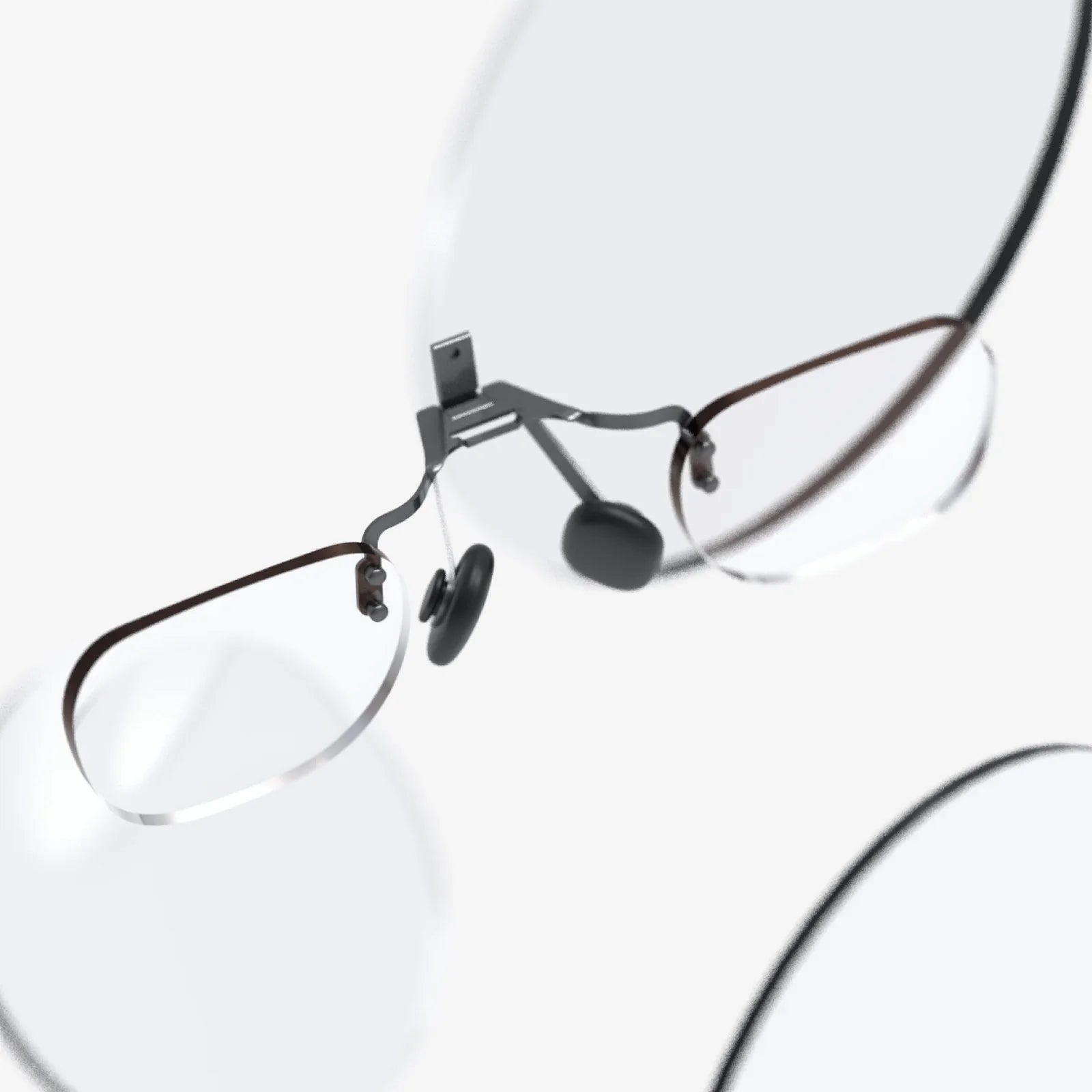
Imagine a world where crucial information—directions, messages, notifications—floats effortlessly in your field of vision, accessible without ever looking down at a screen. This isn't a scene from a sci-fi blockbuster; it's the reality being built today with portable HUD displays. This technology promises to untether us from our devices, overlaying a digital layer onto our physical world and fundamentally changing our relationship with information. The era of glancing down at a smartphone while walking, driving, or working may soon be a relic of the past, replaced by a more intuitive, integrated, and arguably safer way to stay connected.
Demystifying the Technology: How Portable HUDs Work
At its core, a Heads-Up Display (HUD) is any transparent display that presents data without requiring users to look away from their usual viewpoint. The term originated in aviation, where pilots would see critical flight data projected onto the cockpit windshield, allowing them to keep their "heads up" and focused on the sky ahead. Portable HUD displays miniaturize this powerful concept, making it accessible for consumer and professional use.
The magic happens through a combination of optics, software, and connectivity. A miniature projector, often using LEDs or lasers, generates an image. This image is then bounced off a series of specially designed lenses and mirrors within the device. These optical components are engineered to correct the image, focus it at a distance that is comfortable for the human eye, and project it onto a transparent combiner—a piece of glass or plastic that reflects the projected light toward the user while allowing ambient light from the real world to pass through. The result is a crisp, seemingly floating image that appears several feet to several yards away, superimposed on the user's surroundings.
Beyond the Novelty: Core Applications and Use Cases
The true value of any technology lies in its application. Portable HUDs are rapidly moving beyond a mere gadget for tech enthusiasts and finding practical, impactful uses across various domains.
Navigation Reimagined
For drivers, cyclists, and even pedestrians, navigation is a primary application. Instead of mounting a phone on the dashboard and constantly glancing down, turn-by-turn directions, street names, and points of interest are projected directly into the line of sight. This allows for significantly improved situational awareness and reduces the dangerous cognitive distraction of looking away from the road. Advanced systems can even highlight potential hazards or display real-time traffic data directly onto the roadway ahead.
The Augmented Professional
In fields where hands-free operation is critical, portable HUDs are a game-changer. Technicians and engineers can view schematics, instruction manuals, or receive remote expert guidance without fumbling with a tablet or manual. Logistics and warehouse workers can see order information and inventory locations without interrupting their workflow. The potential for improving efficiency and reducing errors in industrial settings is immense.
Fitness and Outdoor Adventure
For athletes and outdoor enthusiasts, real-time biometric data is invaluable. Runners and cyclists can monitor their heart rate, pace, distance, and route without breaking stride. Hikers can see a topographic map overlaid on the trail in front of them. The technology offers a seamless way to access performance metrics without the physical and mental interruption of checking a wristwatch or handlebar computer.
The Engine Room: Connectivity and the Software Ecosystem
A portable HUD display is far more than just lenses and projectors; it is a sophisticated connected computer. Most units connect to a smartphone via Bluetooth or Wi-Fi, leveraging its processing power, internet connection, and GPS. The smartphone acts as the brain, running the applications and feeding the relevant data to the display unit. This symbiotic relationship keeps the HUD device itself small, lightweight, and power-efficient.
The user experience is almost entirely dictated by the software. A robust software development kit (SDK) is crucial for encouraging developers to create apps specifically designed for the HUD interface. These apps must prioritize glanceable information, presenting only the most critical data in a clean, non-obtrusive format. The operating system or platform running on the connected device must be optimized for voice control and minimal touch interaction to maintain the hands-free ethos of the technology.
Challenges on the Road to Ubiquity
Despite its promise, the widespread adoption of portable HUD technology faces several significant hurdles that manufacturers and developers are actively working to overcome.
The Battle for Battery Life
Projecting bright, visible images, especially in daylight conditions, is notoriously power-intensive. Consumers expect all-day battery life from their wearable devices, a benchmark that is difficult for current HUD technology to meet. Innovations in low-power micro-displays, more efficient optical systems, and aggressive power management in the connected software are essential to making these devices truly all-day companions.
Readability and Environmental Adaptation
A display that is perfectly readable in a dimly lit room can become completely washed out in bright sunlight. Conversely, a display bright enough for noon can be blindingly harsh at night. Advanced portable HUDs require sophisticated ambient light sensors and software algorithms that can automatically and dynamically adjust brightness and contrast to ensure optimal readability across all lighting conditions without user intervention.
Design, Form Factor, and Social Acceptance
Early iterations of wearable tech often suffered from a bulky, geeky aesthetic that limited their appeal. For portable HUDs to achieve mass-market success, they must be fashionable, lightweight, and comfortable for extended wear. Designers face the immense challenge of packing complex optics and electronics into a form factor that people will want to wear. Furthermore, the social acceptance of someone wearing technology on their face and interacting with a floating screen is still evolving, much like the journey Bluetooth earpieces went through over a decade ago.
Glimpsing the Horizon: The Future of Portable HUDs
The technology is still in its relative infancy, but the trajectory points toward a future where portable HUDs become as commonplace as smartphones are today. We can anticipate several key evolutions.
Future devices will move beyond simple monochromatic or limited-color displays to full-color, high-resolution projections capable of rendering complex graphics and even video. Integration with artificial intelligence will be transformative. An AI-powered HUD could act as a true personal assistant, proactively surfacing relevant information based on context, location, and routine—telling you the name of a restaurant you're walking past and pulling up its reviews, or translating foreign language signs in real-time as you look at them.
The ultimate goal is the development of true Augmented Reality (AR) glasses—smart glasses that are indistinguishable from regular eyewear but can project interactive, context-aware digital objects into the environment. While the technical challenges for true AR are even greater, portable HUDs are the foundational stepping stone, solving the critical problems of display, power, and connectivity that will make ubiquitous AR possible.
The potential is staggering. From revolutionizing how we learn and access information to creating new forms of entertainment and social connection, the portable HUD display is not just a new screen; it's a new window onto our world, blending the digital and physical into a single, seamless experience. The race to perfect this technology is on, and the winner will not just be a company, but anyone who values a more informed, efficient, and immersive way to move through life.
The next time you find yourself fumbling for your phone to check a notification or confirm a turn, remember—a future where that information is already right in front of you, clear as day and without ever breaking your stride, is closer than you think. The age of looking down at our world is ending; the age of looking up and through it is just beginning.
Share:
Coworking Space Virtual Office: The Definitive Guide to the Future of Work
Best Prescription AR Glasses: The Ultimate Guide to Merging Vision Correction with Augmented Reality