


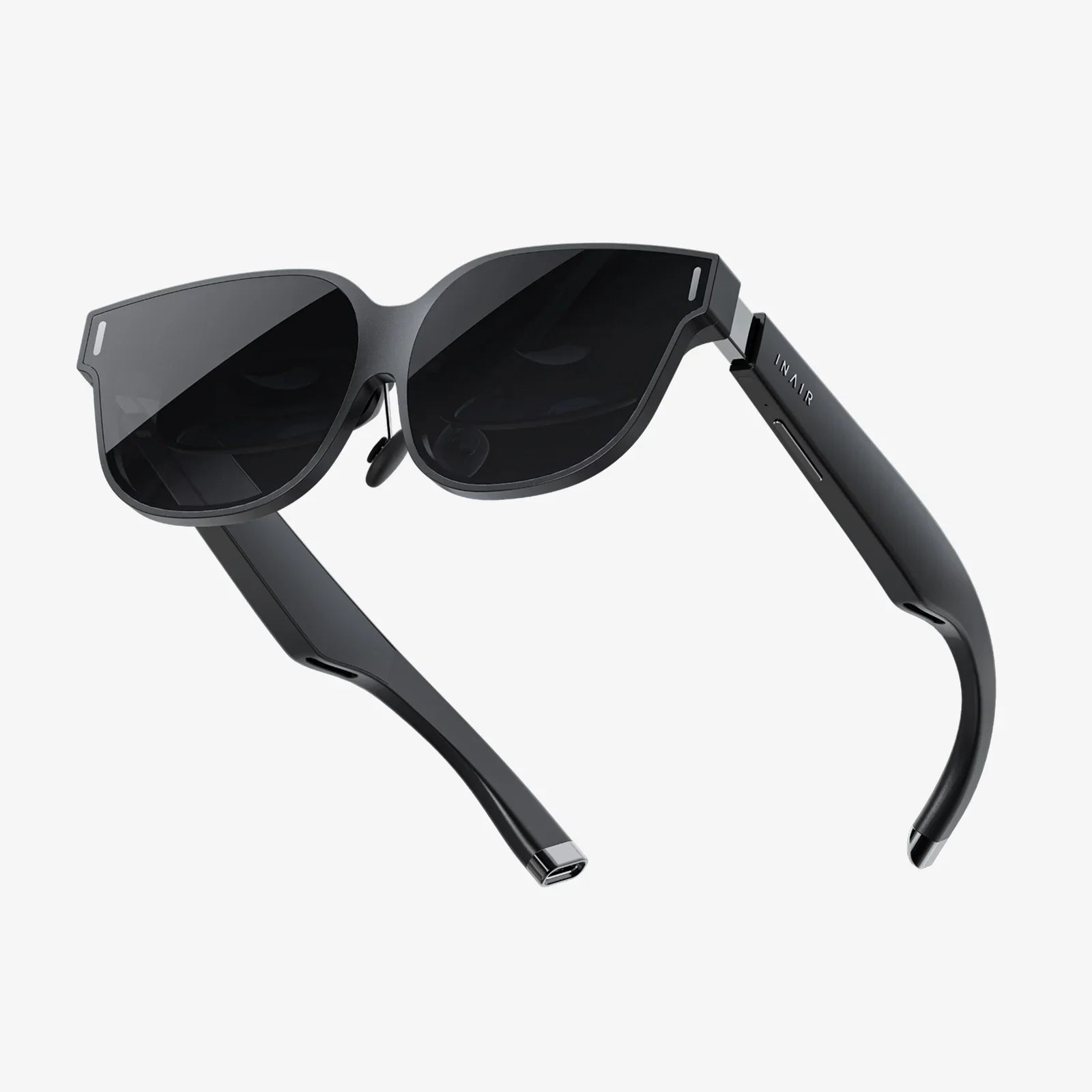
Imagine a world where information doesn't live on a screen in your hand but is seamlessly woven into the fabric of your reality. Where directions float on the sidewalk ahead of you, a colleague's avatar helps you fix a complex engine from across the globe, and the history of the building you're admiring is displayed right beside it. This is no longer the stuff of science fiction; it is the imminent future being built today, and its primary gateway will be the best smart glasses of 2025. The market is on the cusp of a revolution, transitioning from curious prototypes and developer kits to must-have consumer and enterprise devices that will fundamentally alter our digital and physical lives.
The Evolutionary Leap: From Geek to Chic
The journey to the 2025 smart glasses market has been a long and often awkward one. Early iterations were plagued by a fundamental conflict: technological ambition versus social acceptability. They were either too bulky, too expensive, or too... obvious. They screamed "tech enthusiast" in a way that made the average consumer hesitant. The market of 2025 has decisively solved this problem. The defining characteristic of the leading devices is their normalization.
Design is now paramount. The best smart glasses of 2025 are indistinguishable from high-end traditional eyewear. Companies have partnered with renowned designers and luxury eyewear manufacturers to create frames that are stylish, lightweight, and available in a multitude of shapes and sizes to suit personal taste. The technological components—the waveguides for projection, the miniature cameras, the speakers, and the array of sensors—have been miniaturized to the point of near-invisibility. Battery life, once a severe limitation, now comfortably lasts a full day through a combination of efficient low-power processors and innovative power management, often supplemented by a sleek, pocketable charging case.
Under the Hood: The Core Technologies Defining 2025
The sleek exterior of 2025's smart glasses hides a breathtaking amount of sophisticated technology. Several key innovations have converged to make this possible.
Advanced Display Systems
The battle between display technologies has been largely settled for the consumer segment. MicroLED displays, coupled with advanced diffractive waveguides, have become the gold standard. This combination offers exceptional brightness, allowing text and images to remain clear and vibrant even in direct sunlight, while maintaining a wide field of view that is essential for immersive experiences. The dreaded "holographic shrimp effect"—where only users looking directly into the glasses can see the display—is a relic of the past. The displays are now full-color, high-resolution, and perceptually layered over reality with stunning clarity.
The Pervasive Intelligence of AI
If the display is the eyes, then artificial intelligence is the brain. On-device AI processing is the single most important differentiator in the 2025 market. Thanks to dedicated neural processing units (NPUs) within the chipsets, these glasses can process vast amounts of visual and auditory data in real-time without needing a constant cloud connection. This enables a host of powerful, responsive, and private features:
- Real-Time Translation: Look at a foreign menu, and the translated text appears over it instantly. Have a conversation with someone speaking another language, and subtitles of their translated speech appear in your field of view.
- Contextual Awareness: The glasses can recognize objects, people, and places. Look at a landmark to get its history, look at a plant to identify its species, or be reminded of a person's name and where you met them at a networking event.
- Visual Search: Simply gaze at a piece of furniture in a friend's house and ask, "Where can I buy this?" The AI will identify it and pull up shopping results without you ever taking out your phone.
Spatial Audio and Haptic Feedback
The experience is not just visual. Bone conduction and miniature directional audio systems have advanced to deliver rich, immersive spatial audio that only the wearer can hear, making phone calls, listening to music, and receiving notifications a private affair. Furthermore, subtle haptic feedback built into the temples provides tactile confirmation of commands, creating a more intuitive and multi-sensory interaction with the digital world.
Market Segmentation: A Device for Every Purpose
The 2025 market is not a monolith. It has elegantly segmented into three distinct categories, each serving a different primary need.
The Enterprise and Professional Powerhouse
This segment boasts the most feature-rich devices. They are designed for fields like manufacturing, logistics, healthcare, and field service. For these users, smart glasses are a productivity tool that provides hands-free access to manuals, schematics, and remote expert assistance. A surgeon can see a patient's vital stats and previous imaging results without looking away from the operating table. A technician can have a schematic overlay directly on the machinery they are repairing. Durability, enterprise-grade security, and specific industrial software integrations are the key selling points here.
The Mainstream Consumer Companion
This is the largest and most competitive segment. These glasses focus on seamless integration with the user's digital ecosystem. They are primarily an extension of the smartphone, designed for communication, media consumption, navigation, and lifestyle augmentation. They handle calls, messages, music playback, and social media notifications effortlessly. Their killer app is often turn-by-turn navigation painted onto the real world, making it impossible to get lost. Privacy is a major focus, with physical camera shutters and clear LED indicators to signal when recording is active.
The Niche Enthusiast and Gaming Rig
A smaller but highly influential segment caters to gamers and augmented reality enthusiasts. These devices prioritize a ultra-wide field of view, high refresh rates, and low latency to create truly immersive mixed-reality gaming experiences. They are designed to interact with specialized controllers and are powered by more robust processing units to handle complex AR graphics. While not for everyone, they drive innovation that eventually trickles down to the consumer segment.
The App Ecosystem: Building the Metaverse, One App at a Time
Hardware is nothing without software. The app ecosystem for smart glasses has exploded in 2025. Developers are no longer just porting smartphone apps; they are creating native experiences designed for spatial computing. Popular categories include:
- Productivity: Virtual monitors that let you work from anywhere, collaborative 3D design tools, and spatial email clients.
- Fitness: Coaching avatars that run alongside you, displaying real-time biometrics and correcting your form.
- Social: Platforms that allow friends to leave virtual notes and artwork in specific locations for others to discover.
- Entertainment: Watching movies on a virtual giant screen in your living room or interacting with narrative stories that play out in your own environment.
This rich ecosystem is the final piece of the puzzle, transforming the glasses from a novelty into an indispensable platform.
Navigating the Challenges: Privacy, Security, and Social Etiquette
The path forward is not without its obstacles. The very features that make smart glasses powerful—always-on cameras and microphones—raise significant privacy concerns. The 2025 market leaders have addressed this head-on with robust privacy frameworks. Features like explicit recording indicators (both visual and auditory), granular privacy controls that let users disable sensors on a per-app basis, and local processing of sensitive data are now industry standards. Furthermore, a new social etiquette is emerging, with clear norms around when it is and isn't appropriate to use them, much like the societal rules that developed for smartphone use.
The Competitive Landscape: A Battle of Titans and Titans-to-Be
The competition is fierce. The market is a fascinating clash between established tech giants, ambitious startups, and traditional eyewear companies. Tech giants bring immense resources, existing ecosystem integration, and AI expertise. Startups are pushing the boundaries with disruptive display technologies and innovative use cases. Traditional eyewear companies contribute unparalleled design credibility and distribution channels. This competition is driving rapid innovation, falling prices, and a wider variety of choices for consumers, ensuring that the best smart glasses of 2025 are truly the best they've ever been.
The conversation has finally moved on from "if" this technology will become mainstream to "how" it will reshape our world. The best smart glasses of 2025 are not just a new product category; they are the beginning of a fundamental shift in human-computer interaction. They promise a future where technology enhances our reality without isolating us from it, where our digital and physical lives converge into a single, seamless experience. The devices are ready, the software is compelling, and the market is poised for mass adoption. The world is about to put on a whole new lens, and the view is going to be extraordinary.
Share:
Wearable Technology Brands: Beyond the Wrist, A Revolution on the Horizon
Wearable Technology News 2025: The Year Your Clothes Became Your Doctor, Coach, and Personal Assistant