


Imagine a world where your morning shirt not only tells you it's going to rain but also analyzes your stress levels before your first meeting, all while your smart ring quietly monitors your heart's every beat for signs of atrial fibrillation. This isn't a scene from a distant sci-fi future; this is the reality unfolding in wearable technology news 2025. The pace of innovation has accelerated beyond mere step-counting and notification-pinging, catapulting us into an era where wearables are becoming indispensable, proactive partners in our health, productivity, and daily existence. The convergence of artificial intelligence, advanced biosensing, and seamless form factors is redefining what it means to be connected, and the developments this year are nothing short of revolutionary.
The Seamless Integration: When Technology Disappears
The most dominant theme in wearable technology news 2025 is the move towards invisibility. The clunky wristbands and obvious smartwatches of yesteryear are giving way to a new generation of devices designed to integrate flawlessly into our lives and our wardrobes. The goal is no longer to be a conspicuous piece of tech but to become an indistinguishable part of the user.
Advanced smart fabrics are at the forefront of this shift. We're seeing a surge in garments woven with conductive polymers and micro-sensors that are machine washable, breathable, and visually indistinguishable from high-end athletic or casual wear. These e-textiles can monitor a vast array of physiological data—muscle exertion, posture, respiration rate, and core body temperature—providing athletes with unparalleled feedback and offering physical therapists real-time data on patient recovery.
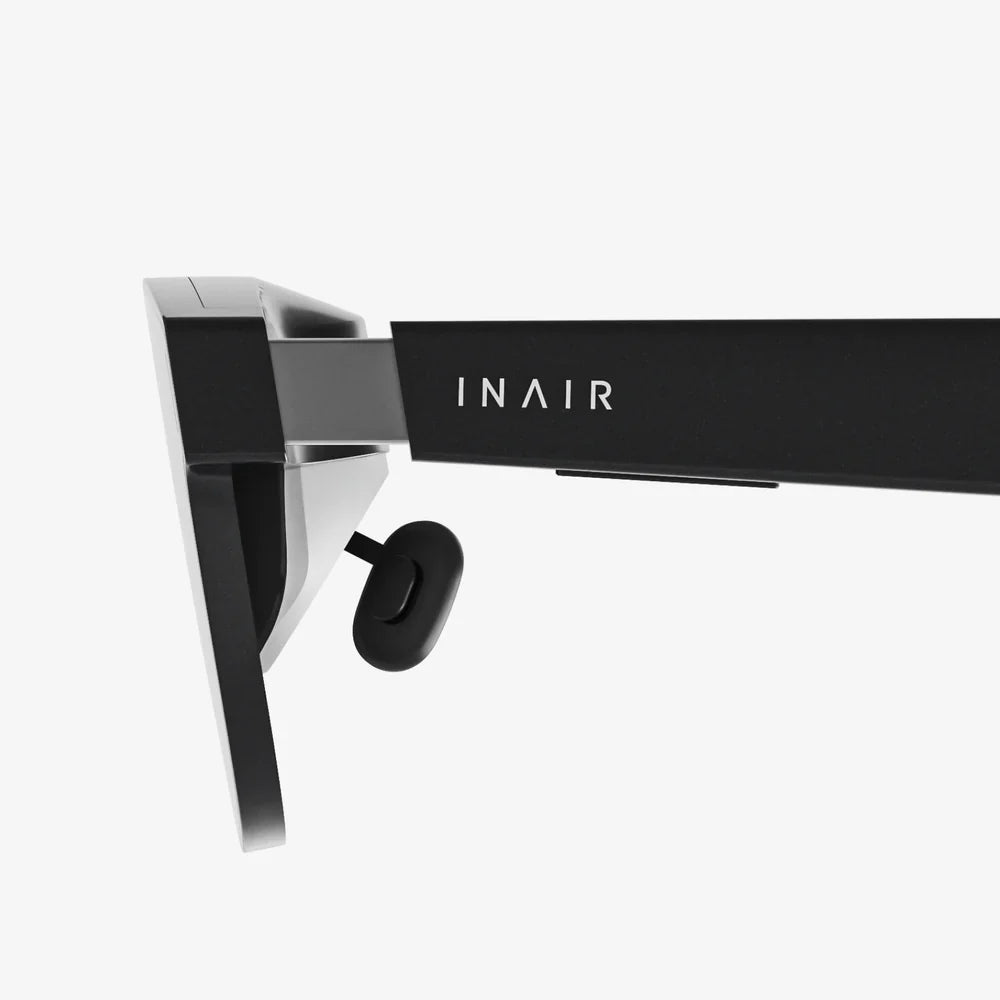
Beyond clothing, the miniaturization of components has led to the rise of intelligent accessories. Smart rings, once a niche market, have exploded in popularity, offering continuous health monitoring in a discreet, jewelry-like form factor. Similarly, smart hearing aids and augmented reality glasses have evolved from medical devices or gaming peripherals into sophisticated wearable computers for the mainstream, offering real-time language translation, audio augmented reality, and contextual information overlay without the need to glance at a screen.
The AI Health Guardian: Predictive and Proactive Wellness
If 2024 was about data collection, 2025 is unequivocally about data intelligence. Raw biometric data is useless without context and interpretation. This is where Artificial Intelligence and Machine Learning have become the true game-changers, transforming wearables from passive loggers into proactive health guardians.
The most significant development is the move towards regulatory-approved diagnostic capabilities. Wearables are now capable of detecting and alerting users to potential health events before they become critical. We're witnessing devices with FDA-cleared algorithms for:
- Early Infection Detection: By continuously analyzing subtle changes in resting heart rate, heart rate variability, and skin temperature, AI models can now identify the body's early response to viral or bacterial infections, such as flu or even Lyme disease, often before overt symptoms appear.
- Sleep Apnea Diagnosis: Advanced PPG sensors and accelerometers can now track blood oxygen saturation (SpO2) throughout the night with clinical-grade accuracy, identifying patterns consistent with sleep apnea without the need for an intrusive lab sleep study.
- Mental Health Support: By correlating physiological data (sleep quality, HRV) with behavioral patterns (activity levels, social interaction via communication metrics), wearables can provide insightful nudges. They might suggest a breathing exercise when detecting heightened stress or recommend a walk after noticing prolonged inactivity linked to a low mood.
This shift to predictive health is creating a new paradigm of "continuous check-ups," moving the healthcare focus from reactive treatment in a clinic to proactive maintenance in daily life.
The Power Paradigm: Solving the Energy Dilemma
A critical barrier to always-on, sophisticated wearables has always been battery life. Wearable technology news 2025 is dominated by breakthroughs in energy solutions that are finally breaking this bottleneck. The industry is aggressively pursuing two parallel paths: ultra-low-power consumption and innovative energy harvesting.
New chipsets built on process nodes as small as 5nm are drastically reducing the power required for complex AI processing directly on the device (on-edge computing). This means less data needs to be constantly streamed to the cloud, preserving battery and enhancing privacy.
More excitingly, energy harvesting has moved from the lab to the consumer. Kinetic energy harvesters that convert movement into power, and advanced solar cells integrated into watch faces or clothing are becoming commonplace. The most promising development is in bioenergy, where devices are being prototyped that can generate small amounts of electricity from the body's own heat or from the glucose in a user's sweat. While not yet powering entire devices, these methods are significantly extending battery life, with some devices now boasting multi-week longevity even with always-on sensing.
The Invisible Network: Connectivity Beyond the Smartphone
The era of the wearable as a mere smartphone accessory is over. Wearable technology news 2025 highlights the rise of completely standalone devices connected via low-power, wide-area networks (LPWAN) like LTE-M and NB-IoT, and enhanced Bluetooth protocols.
This independent connectivity is crucial for two reasons. First, it enables safety features like fall detection and emergency SOS to function even if the user's phone is left at home or out of battery. For elderly users living independently, this is a life-saving development. Second, it allows for seamless experiences. A runner can leave their phone behind and still stream music, receive important notifications, and have their workout data synced directly to the cloud, all thanks to an embedded eSIM.
Furthermore, wearables are becoming central hubs in the broader Internet of Things ecosystem. Your smart ring can authenticate you to your car, unlocking the door and setting your preferred seat position. Your smart glasses can communicate with smart displays in a museum to pull up information on the painting you're viewing. This interconnectedness is creating a truly ambient computing environment.
The Ethical Frontier: Privacy, Security, and the Data Dilemma
With great power comes great responsibility, and the capabilities of 2025's wearables raise profound ethical questions that are a central part of the industry's discourse. The amount of intimate data these devices collect—from your precise location and daily routines to your deepest health metrics—is staggering.
The industry is grappling with implementing robust "Privacy by Design" principles. This includes:
- On-Device Processing: Keeping sensitive data, like health metrics, on the device itself rather than transmitting it to the cloud.
- Granular User Control: Giving users unprecedented control over what data is collected, how it is used, and who it is shared with, including insurers or employers.
- Transparent Data Policies: Moving away from dense terms of service to clear, simple explanations of data usage.
Furthermore, the potential for data discrimination is a major concern. Could the data from your wearable be used by a company to deny you health insurance or by an employer to question your productivity? Legislation is struggling to keep pace with the technology, making corporate ethics and user education more critical than ever.
The Future is Now: A Glimpse Beyond 2025
The trends defining wearable technology news 2025 point towards an even more integrated and intelligent future. We are on the cusp of seeing the first commercial applications of brain-computer interfaces for meditation and focus enhancement. Developments in flexible, stretchable electronics will lead to skin-like "electronic tattoos" that can monitor health metrics for days at a time without removal. The line between the biological and the technological will continue to blur.
The wearable of the near future will be a seamless, always-on health AI, a contextual guide to the world, and a secure key to our digital and physical environments. It will work not because we interact with it, but because it understands us. The revolution is not coming; as the headlines of 2025 prove, it is already being worn.
The devices highlighted in this year's wearable technology news are no longer just gadgets; they are the vanguard of a personalized health revolution, quietly working in the background to grant us something more valuable than any notification: a deeper understanding of our own bodies and the promise of a longer, healthier life. The choice to engage with this world is increasingly becoming one of the most significant decisions we make about our future well-being.
Share:
Best Smart Glasses 2025 Market: A Vision of the Future is Now in Focus
AR Connect: The Invisible Thread Weaving Our Digital and Physical Worlds