


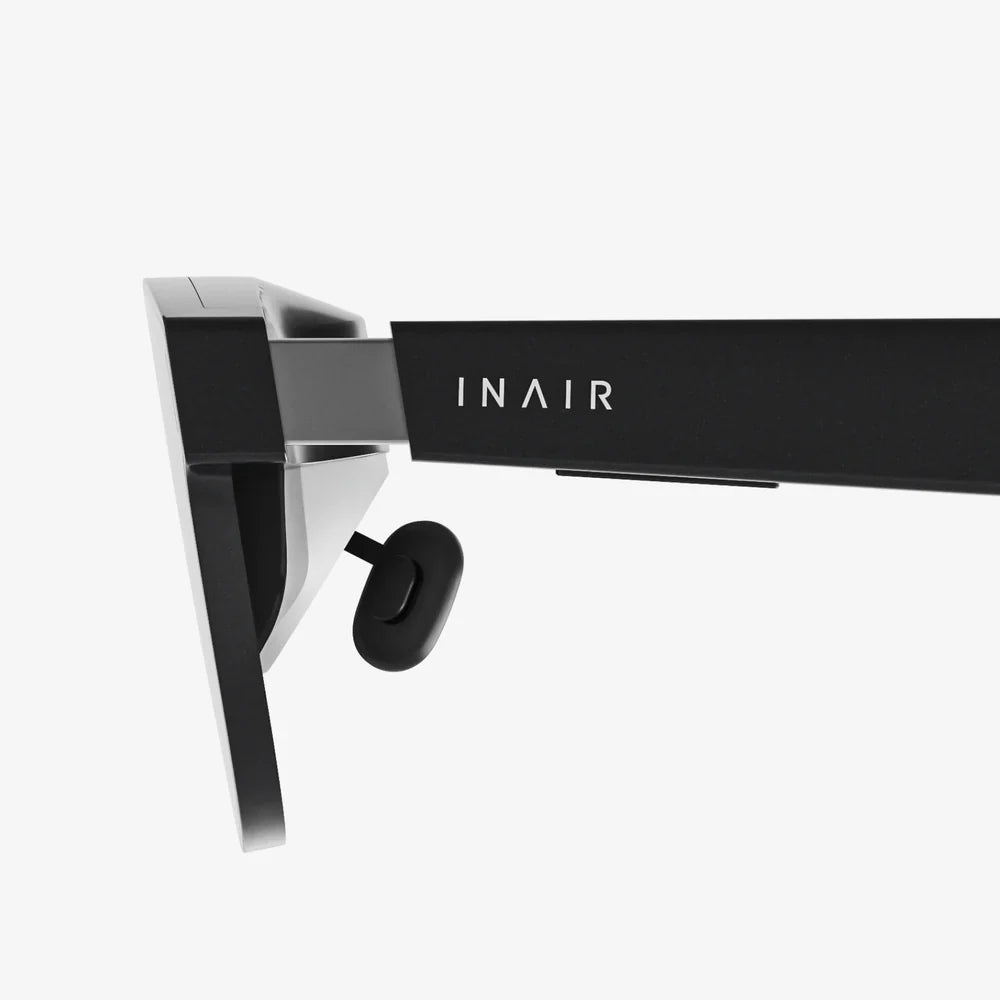
Imagine a world where the digital and physical seamlessly coalesce, where information floats effortlessly in your periphery, and your entire digital life is accessible without ever glancing down at a screen. This isn't a distant sci-fi fantasy; it's the promise of the best smartglasses of 2025, a technological leap that is poised to redefine our relationship with technology, and indeed, with reality itself. The race to your face is hotter than ever, and this year's contenders are nothing short of revolutionary.
The Evolution from Novelty to Necessity
The journey of smartglasses has been a turbulent one, marked by early prototypes that were either too clunky, too expensive, or too socially awkward to gain mainstream traction. For years, they existed in a nebulous space between ambitious concept and practical tool. However, the foundational technologies—miniaturized processors, advanced battery solutions, high-resolution micro-displays, and sophisticated sensor arrays—have been quietly evolving at a breakneck pace. By 2025, these components have finally converged into a form factor that is not only powerful but also, crucially, desirable.
The pivotal shift in 2025 is the move from assisted reality to true, contextual augmented reality. Earlier iterations were often little more than a notification screen, projecting basic text and icons. The best smartglasses of this year leverage a combination of on-device and cloud-based artificial intelligence to understand the world around you. They don’t just show data; they show the right data at the perfect time, transforming them from a peripheral device into a cognitive partner.
Defining the "Best" in 2025: A Multi-Faceted Benchmark
Labeling any product as "the best" is inherently subjective. In the context of 2025's smartglasses, superiority is no longer defined by a single killer feature but by a harmonious balance of several critical factors. A device that excels in display technology but fails in battery life is relegated to a niche. The true champions are those that master the following aspects:
Visual Fidelity and Display Technology
The window to your digital overlay must be crystal clear. In 2025, we see the widespread adoption of holographic waveguides and Laser Beam Scanning (LBS) systems. These technologies allow for bright, vibrant, high-resolution graphics that are perfectly overlayed onto the real world, even in direct sunlight. The dreaded "screen-door effect"—where users could perceive the gaps between pixels—is a relic of the past. Furthermore, advanced eye-tracking allows for dynamic focal planes, meaning digital objects can appear to be at different distances, reducing eye strain and creating a more convincing and comfortable illusion.
The Auditory Revolution: Spatial Audio and Audio Beamforming
Visuals are only half the experience. The auditory component has undergone a parallel revolution. The best models now feature sophisticated spatial audio systems that anchor sound to specific points in your environment. A navigation prompt might sound like it's coming from the street corner you need to turn at, or a notification from a colleague could feel like it originates from your left. Coupled with audio beamforming technology, these glasses can project audio directly into your ears with minimal sound leakage, allowing for private listening in public spaces without the need for earbuds.
The Invisible Engine: AI and Contextual Awareness
This is the true brains of the operation. A powerful suite of sensors—including high-resolution cameras, LiDAR, depth sensors, and inertial measurement units—constantly scans the environment. This raw data is processed in real-time by a dedicated Neural Processing Unit (NPU) within the glasses. The AI can identify objects, people, text, and locations, enabling a new class of context-aware applications.
Imagine looking at a monument and instantly seeing a historical summary overlay. Or walking through a supermarket and having your shopping list highlight the items on the shelves you’re looking at, complete with pricing and nutritional information pulled from the store’s database. This seamless, intuitive interaction is the hallmark of a top-tier 2025 device.
Design and Social Acceptability
Technology that is not worn is useless. The social stigma of wearing bulky, obvious tech on your face has been a significant barrier. The leading smartglasses of 2025 have finally cracked the code on design. They are indistinguishable from high-end traditional eyewear, offering a variety of shapes, sizes, and materials to suit personal style. They are lightweight, comfortable for all-day wear, and crucially, include options with prescription lenses, acknowledging that they are meant to replace your everyday glasses, not supplement them.
Battery Life and Thermal Management
All this power is meaningless if the device dies in two hours. Efficient system-on-chip designs and low-power displays have enabled all-day battery life for typical use, a non-negotiable feature for a wearable. This is often achieved through a hybrid design: a lightweight battery in the temples paired with a slightly larger, pocketable battery pack that can provide multiple full charges. Furthermore, advanced passive cooling ensures the glasses never become uncomfortably warm on your face, even during intensive tasks.
Key Applications Reshaping Industries and Daily Life
The hardware is impressive, but it is the software and applications that truly unleash its potential. The best smartglasses of 2025 are productivity powerhouses, creative studios, and personal assistants rolled into one.
- Enhanced Navigation: Walking or driving directions are superimposed onto the real world, with arrows painted onto the road itself, making it impossible to take a wrong turn.
- Real-Time Translation: Look at a foreign language menu or sign, and see the translation overlaid in real-time. Conversations with people who speak different languages are facilitated by live subtitle translations appearing near the speaker.
- Remote Assistance and Collaboration: A field technician can receive expert guidance from a colleague who can see their point of view and draw annotations directly into their visual field, highlighting exactly which component needs attention.
- Immersive Learning and Training: Medical students can practice procedures on holographic patients; mechanics can learn to repair an engine with step-by-step instructions layered over the actual machinery.
- Content Creation: Capture photos and video from a first-person perspective, hands-free, making them perfect for vlogging, documenting tasks, or simply preserving memories without a barrier.
The Inevitable Challenges: Privacy, Security, and the Social Contract
With great power comes great responsibility, and a device that can record and analyze the world continuously raises profound questions. The best smartglasses of 2025 address these concerns head-on with robust privacy-centric features. Physical privacy shutters that block the cameras are becoming standard. Clear, audible, and visual recording indicators are mandatory to inform others when they are being recorded. On-device processing is emphasized for sensitive data, ensuring that your personal video feeds aren't constantly being streamed to the cloud.
Furthermore, a new social etiquette is emerging. Establishments may create designated zones where recording is discouraged, and users are developing a sense of when it is and isn't appropriate to use certain features. Navigating this new landscape will be an ongoing process for society as a whole.
The Horizon: Beyond 2025
As staggering as the 2025 offerings are, they are merely a stepping stone. Research is already underway into technologies like direct neural interfaces for even more seamless control, holographic displays with full retinal projection, and even more compact form factors. The line between the device and the user will continue to blur.
The best smartglasses of 2025 represent a fundamental shift in human-computer interaction. They are moving computing from our pockets and laps back into our natural field of vision, offering a more intuitive, immersive, and ultimately more human way to interact with the digital realm. They promise to augment not just our reality, but our own human capabilities.
We stand at the precipice of a new era of personal technology, one where the most powerful device you own won't be something you hold, but something you see through. The future is not on your wrist or in your pocket; it's right before your eyes, waiting to reveal a world enhanced with a layer of magic only you can see. The question is no longer if you will adopt this technology, but which vision of the future you will choose to wear.
Share:
Best AR Glasses for Gaming: The Ultimate Portal to Immersive Play
What Is Augmented Reality AR: A Comprehensive Guide to the Digital Overlay