


Imagine a world where digital information doesn't just live on a screen but is seamlessly woven into the fabric of your physical reality. A world where learning to repair a complex engine means interactive diagrams floating over the machinery, where navigating a new city involves arrows painted directly onto the street, and where history literally comes to life before your eyes at a museum. This is not a distant science fiction fantasy; it is the present and rapidly evolving world of Augmented Reality. The question on everyone's mind is no longer if this technology will become mainstream, but how quickly it will transform everything from how we work and play to how we connect with the world around us.
At its most fundamental level, Augmented Reality (AR) is an interactive experience that enhances the real world by superimposing computer-generated perceptual information onto it. Unlike Virtual Reality (VR), which creates a completely artificial digital environment for the user to immerse themselves in, AR takes your existing environment and adds to it. This key distinction is crucial: VR replaces reality, while AR supplements it. The goal of AR is to create a system where the digital and physical worlds coexist in harmony, providing a composite view that is richer and more informative than either could be alone.
The Core Technology: How AR Works Its Magic
The magic of AR may seem effortless to the user, but it is powered by a sophisticated symphony of hardware and software components working in concert. The process typically involves several key steps:
1. Capture (Sensing the Real World)
First, a device—most commonly a smartphone, tablet, or a pair of smart glasses—uses its cameras and sensors to capture the user's real-world environment. This isn't just about taking a picture; it's about understanding the space. Sensors like gyroscopes, accelerometers, and magnetometers work together to determine the device's precise orientation and position in space (a concept known as 6DoF or six degrees of freedom). Advanced systems may also use LiDAR (Light Detection and Ranging) scanners to create a detailed depth map of the surroundings, understanding the distance to every surface.
2. Processing (Making Sense of the Data)
The raw sensor data is then processed by sophisticated algorithms. This is where the real computational heavy lifting occurs. A critical technology at this stage is SLAM (Simultaneous Localization and Mapping). SLAM allows the device to both map an unknown environment and simultaneously track its own location within that map in real-time. It identifies unique features and points in the physical space to create a digital anchor points. This digital understanding of the environment is what allows virtual objects to be placed persistently and accurately, so they don't drift or float away as you move.
3. Projection (Overlaying the Digital)
Once the environment is understood and the device's position is tracked, the AR software renders the digital content—a 3D model, a piece of text, an animated character—precisely within the user's field of view. This content is then projected onto the display. On a smartphone, this is simply shown on the screen, creating a "window" into an augmented world. On smart glasses, the technology is more complex, often using miniature projectors and waveguides or holographic optical elements to beam the light directly onto the user's retina, making the digital elements appear as if they are part of the natural world.
Marker-Based vs. Markerless AR: The Anchors of Digital Content
Not all AR experiences are created equal. They are often categorized by how they anchor digital content to the real world.
Marker-Based AR
This was one of the earliest forms of AR. It relies on a specific, predefined visual object or image—a "marker"—to trigger the digital overlay. This marker, often a black-and-white QR-like code or a distinct image, is recognized by the device's camera. Once detected, the software knows exactly where and how to display the associated digital content (e.g., a 3D model pops up from the marker). While reliable, this method is limited because it requires prior setup and a specific physical trigger.
Markerless AR
This is the more advanced and flexible approach that dominates modern AR applications. As the name implies, it doesn't need a special marker. Instead, it uses the technologies mentioned above—SLAM, GPS, and digital compasses—to understand the environment and place content contextually. This allows for far more dynamic experiences, such as placing a virtual piece of furniture in your living room, seeing navigation arrows on the road, or having a game character run across your kitchen table. Markerless AR can be further broken down into:
- Projection-Based: Projects synthetic light onto physical surfaces, sometimes creating interactive surfaces.
- Location-Based: Uses GPS data to anchor AR content to a specific location in the world, enabling treasure-hunt games or historical tours.
- Superimposition-Based: Replaces the original view of an object with an augmented one, like a medical app overlaying an X-ray onto a patient's body.
The Hardware: Gateways to an Augmented World
The AR experience is delivered through various hardware, each offering a different level of immersion and convenience.
Smartphones and Tablets
These are the most common and accessible AR gateways today. Their powerful processors, high-resolution cameras, and full suite of sensors make them perfectly capable AR machines. Users experience AR through the device's screen, holding it up as a viewfinder to see the blended world. This method, often called "magic window" AR, has successfully introduced billions to the technology.
Smart Glasses and Headsets
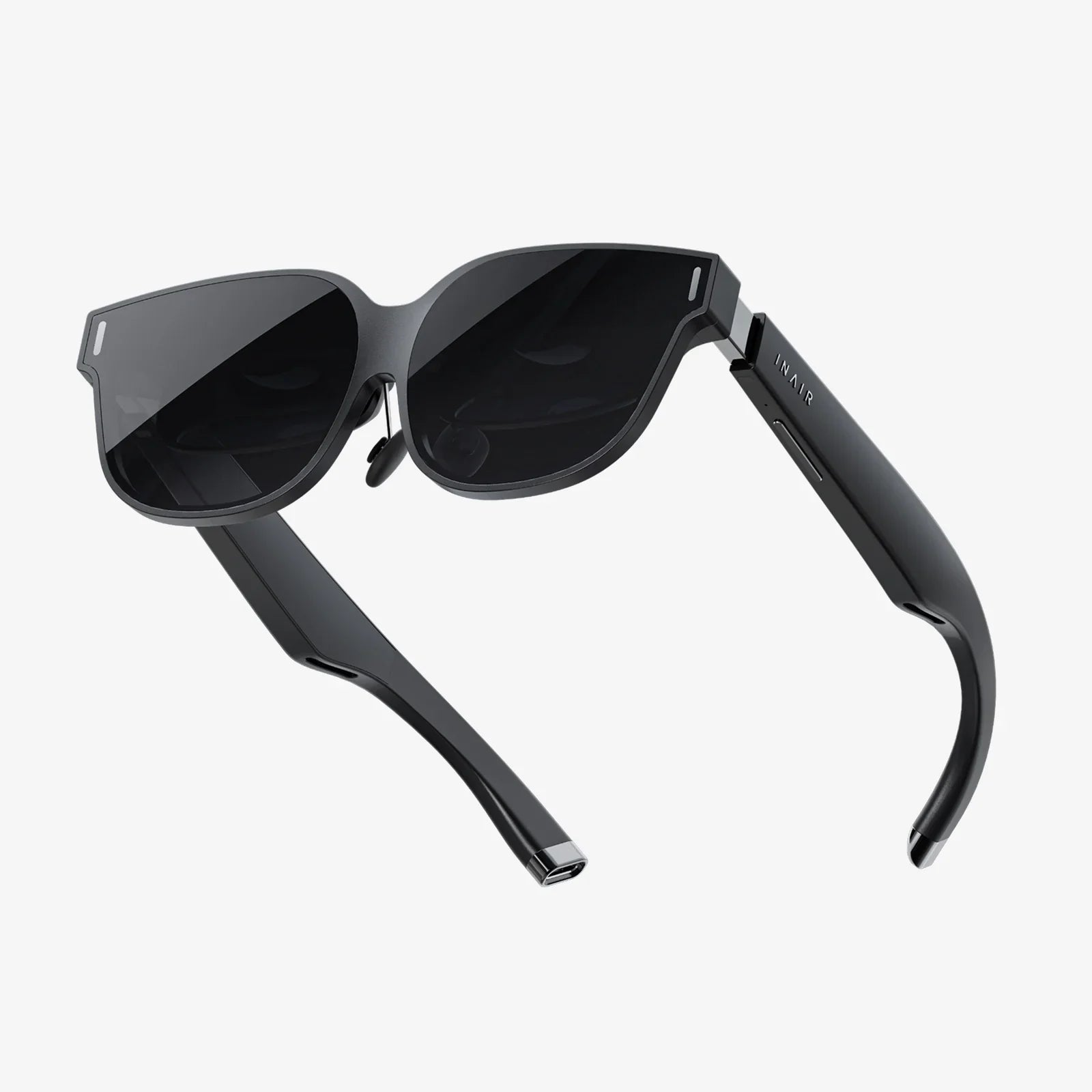
This form factor represents the future of AR, aiming for true hands-free, always-available augmentation. Smart glasses project images directly into the user's eyes, allowing them to see digital content overlaid on their natural field of vision without holding a device. They range from simpler models that provide notifications and basic information to complex systems like optical see-through and video see-through headsets used in enterprise and development, which offer a fully immersive and interactive experience.
Specialized AR Systems
In industrial, medical, and military settings, highly specialized AR systems exist. These can include heads-up displays (HUDs) in aircraft cockpits or automotive windshields, which project critical data like speed and navigation into the driver's line of sight, and advanced helmet-mounted displays for soldiers or surgeons.
Transforming Industries: The Practical Applications of AR
The potential of AR extends far beyond playful filters and games. It is a powerful tool driving efficiency, enhancing understanding, and creating new experiences across numerous sectors.
Retail and E-Commerce
AR is revolutionizing the way we shop. Customers can now visualize products in their own space before buying. They can "try on" watches, makeup, or sunglasses virtually, or see how a new sofa would look and fit in their living room. This reduces purchase hesitation and product returns, creating a more confident and engaging customer journey.
Manufacturing, Maintenance, and Logistics
In factories and warehouses, AR is a game-changer for productivity and accuracy. Technicians wearing smart glasses can see digital repair instructions and animated diagrams overlaid on the equipment they are fixing, freeing their hands for work. Warehouse workers can have the most efficient picking routes and item information displayed in their vision, dramatically speeding up order fulfillment. AR can also provide remote expert assistance, where an off-site expert can see what a field technician sees and annotate their view with guidance.
Healthcare and Medicine
AR is providing innovative solutions for training, surgery, and patient care. Medical students can practice procedures on detailed, interactive 3D holograms of human anatomy. Surgeons can use AR to visualize critical information like CT scans and MRI data projected directly onto the patient's body during an operation, improving precision. It can also aid in vein detection for injections and provide therapeutic experiences for patients.
Education and Training
AR turns abstract concepts into tangible, interactive experiences. Textbooks can come alive with 3D models of planets, historical figures, or biological cells. Students can explore the solar system from their desk or walk through a reconstructed ancient Roman settlement. This immersive form of learning boosts engagement and improves knowledge retention.
Navigation and Tourism
Imagine walking through a city and having directional arrows appear on the sidewalk or having historical facts and building names pop up as you look around. AR-powered navigation apps are making this a reality, offering a more intuitive way to explore unfamiliar places. Museums are using AR to create interactive exhibits where artifacts can tell their own stories.
The Future and Challenges of Augmented Reality
The journey of AR is just beginning. The future points toward more seamless, powerful, and socially integrated experiences. The concept of the "metaverse"—a persistent network of shared virtual spaces—is deeply intertwined with AR, as it will serve as a primary interface between our physical world and these vast digital realms. We are moving toward AR contact lenses and even neural interfaces that could make the augmentation indistinguishable from reality.
However, this exciting future is not without significant challenges. Technical hurdles remain, such as improving battery life, developing more natural and intuitive user interfaces, and creating smaller, lighter, and more socially acceptable form factors for smart glasses. The field of spatial computing needs to advance to allow digital objects to interact with the physical world in more believable ways (e.g., a virtual ball bouncing under a real table).
Perhaps the most pressing challenges are social and ethical. The proliferation of AR will raise serious questions about data privacy, as these devices constantly capture and analyze our environments. The potential for digital spam—unwanted advertisements plastered over every surface—is a concern. There are also risks of reality blurring, misinformation, and new forms of addiction. Establishing clear norms, regulations, and ethical frameworks will be just as important as the technological breakthroughs themselves.
The line between our digital and physical lives is not just blurring; it is being deliberately and intelligently merged. Augmented Reality is the brush with which we are painting this new hybrid world, offering a fundamental shift in how we access information, perform tasks, and perceive our surroundings. It promises to augment not just our reality, but our very human potential, making us more informed, efficient, and connected. The next time you look at the world around you, remember—you are only just beginning to see its full, incredible potential.
Share:
Best Smartglasses 2025: The Dawn of Seamless Augmented Reality
Custom Augmented Reality Solutions: The Ultimate Guide to Transforming Your Business Reality