


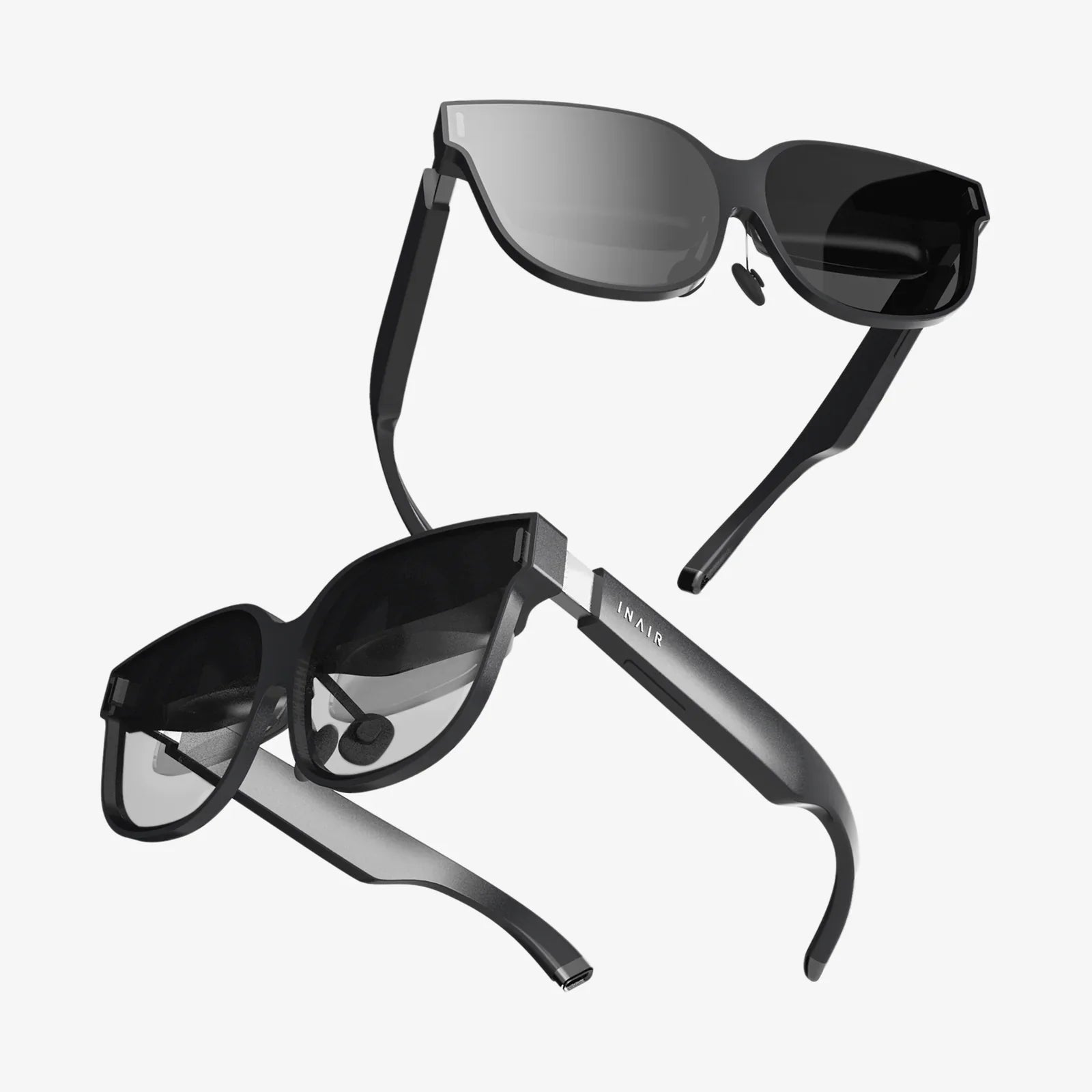
Imagine a world where digital information doesn’t live trapped behind a glass screen but flows seamlessly into your physical environment, responding to your gaze, your voice, and the space around you. This is the promise of spatial computing, and the key to unlocking it rests on the bridge of your nose. The quest for the best spatial computing glasses is more than a search for a new gadget; it’s about finding the perfect portal to a blended reality where our digital and physical lives finally converge. The right pair can feel like a superpower, transforming how you work, learn, create, and connect.
Beyond the Screen: Defining the Spatial Revolution
Spatial computing represents a fundamental shift in our relationship with technology. Unlike virtual reality, which seeks to replace your world with a digital one, or augmented reality, which simply overlays digital objects onto it, spatial computing aims to understand and interact with the physical space. It’s a bidirectional conversation between the user and their environment.
The best spatial computing glasses are the embodiment of this philosophy. They are not merely displays; they are packed with a sophisticated array of sensors, cameras, LiDAR scanners, and powerful onboard processors. These components work in concert to create a live, three-dimensional map of your surroundings—a digital twin. This allows virtual objects to behave like physical ones: they can occlude behind your sofa, cast accurate shadows from your lamp, and remain persistently anchored to a specific point on your wall, even if you leave the room and return.
The Core Technologies Powering the Experience
To understand what separates the best from the rest, one must look under the hood. Several cutting-edge technologies converge to make spatial computing possible.
High-Fidelity Passthrough Video
Instead of using transparent waveguides or prisms to see the real world, many advanced devices use high-resolution cameras to capture your environment and display it on internal screens in real-time. This video passthrough method allows for incredible flexibility, enabling features like dynamic dimming (making virtual objects appear solid) and complex visual effects. The quality of this passthrough is paramount; it requires ultra-low-latency cameras and displays to avoid nausea and create a convincing blend of real and virtual.
Precision Spatial Mapping
This is the brains of the operation. Using a combination of dedicated depth sensors, LiDAR, and computer vision algorithms, the glasses constantly scan and interpret the geometry, textures, and lighting of a room. This creates a understanding of surfaces, edges, and objects, allowing for precise placement and interaction with digital content.
Intuitive Input Modalities
The best spatial computing glasses move beyond traditional controllers. They employ a multi-modal input system:
- Eye Tracking: This allows for foveated rendering, where the highest detail is rendered only where you are looking, drastically reducing processing power. It also enables incredibly intuitive UI navigation—you can simply look at a button to select it.
- Hand Tracking: Cameras track the precise movement of your fingers and hands, allowing you to pinch, grab, push, and manipulate digital objects naturally, as if they were really there.
- Voice Commands: Integrated microphones and AI assistants allow for hands-free control, perfect for issuing commands or dictating text while your hands are busy in the digital realm.
Auditory Immersion
Spatial audio is a critical, often overlooked, component. High-quality speakers or ear buds beam sound directly into your ears, simulating audio sources that appear to come from specific points in your room. A virtual robot ticking on your desk will sound like it’s right there, completing the illusion of presence.
Hallmarks of the Best Spatial Computing Glasses
With the underlying technology in mind, we can identify the key features that define a top-tier device. When evaluating options, these are the critical areas to consider.
Visual Fidelity and Comfort
The display is the soul of the experience. The best devices offer incredibly high-resolution micro-OLED displays with wide color gamuts and high brightness levels to ensure virtual content is sharp, vibrant, and visible even in well-lit rooms. However, this must be balanced with comfort. A device can have the best display in the world, but if it’s too heavy, poorly balanced, or generates excessive heat, it will remain on your shelf. Lightweight materials, ergonomic design, and swappable components for different face shapes are essential for all-day wear.
Seamless Interaction
The technology should fade into the background. Input lag on hand tracking, jittery object placement, or inaccurate eye tracking will instantly shatter the illusion. The best devices offer interactions that feel immediate, precise, and natural. The learning curve should be minimal, leveraging our innate human abilities to look, point, and speak.
Power and Performance
Spatial computing is computationally intensive. The device needs a powerful processor to handle real-time world mapping, rendering complex 3D graphics, and running advanced AI algorithms simultaneously. This can be achieved through a tethered connection to a powerful external computer or through self-contained, onboard processing. The best standalone devices offer untethered freedom without a significant compromise on performance.
Software Ecosystem and Developer Support
Hardware is nothing without software. A robust and growing ecosystem of applications is what transforms a novel device into an indispensable tool. Look for platforms that attract serious developer interest, with a healthy mix of productivity apps, creative tools, games, and experimental experiences. The operating system should feel designed for spatial computing, not just a ported mobile OS.
Battery Life and Practicality
All this power demands energy. Realistic battery life for intensive use is a key differentiator. The best systems manage power efficiently, often through a separate battery pack that can be swapped out to extend usage. The overall package must feel practical for use in everyday settings, from a coffee shop to an office.
Transforming Industries: The Practical Applications
The potential of this technology extends far beyond watching immersive videos or playing games. It is poised to revolutionize numerous fields.
Productivity and Remote Work
Imagine replacing your physical monitors with infinite, virtual screens that you can arrange anywhere. You could work from your kitchen table with a sprawling, multi-monitor setup visible only to you. Remote collaboration becomes palpable, with 3D models or data visualizations that colleagues can gather around and manipulate together as avatars, as if they were in the same room.
Design and Engineering
Architects can walk clients through a full-scale, digital model of a building before a single brick is laid. Engineers can visualize complex machinery, seeing internal parts overlaid onto a physical engine for maintenance or training. This allows for rapid prototyping and design iteration in real space.
Healthcare and Medicine
Surgeons could have vital patient statistics and imaging data, like MRI scans, visually pinned to their field of view during procedures, keeping their focus on the patient. Medical students could practice complex surgeries on detailed holographic anatomies, and therapists could use immersive environments for patient rehabilitation.
Education and Training
History lessons can come alive with historical figures reenacting events in your living room. Chemistry students can safely combine volatile elements in virtual beakers. This experiential learning creates deeper understanding and retention than any textbook could provide.
Navigating the Current Landscape and Future Gaze
The field is evolving at a breathtaking pace. Early devices have laid the groundwork, proving the concept and thrilling early adopters. The current generation has made significant strides in miniaturization, display technology, and input fidelity, bringing us closer to the ideal form factor: glasses that are socially acceptable, comfortable, and powerful.
The next frontier involves overcoming the remaining challenges: achieving all-day battery life, perfecting photorealistic passthrough, and solving the "hologram in sunlight" problem. We can expect future iterations to become even lighter, more powerful, and more integrated with the broader Internet of Things, allowing your glasses to intelligently interact with your other smart devices.
The ultimate goal remains a pair of glasses that look entirely ordinary but offer a full spatial computing suite, seamlessly blending the digital and physical until the line between them becomes irrelevant. This is the direction the entire industry is moving toward.
Choosing Your Portal to a New Reality
Selecting the best spatial computing glasses is a deeply personal decision that hinges on your specific needs and priorities. Are you a developer seeking the most powerful and open platform to build upon? A creative professional needing a portable studio? Or a consumer looking for the most accessible and fun entry into mixed reality? Your use case will dictate the importance of factors like raw processing power, specific application availability, comfort for long sessions, and portability.
The most important step is to try them for yourself, if possible. The subjective feel of the display, the comfort on your face, and the intuitiveness of the interactions are things no spec sheet can fully convey. Read reviews from trusted sources that have spent significant time with the devices, and pay close attention to how they perform in the tasks that matter most to you.
The journey to find the perfect pair is a journey to define your own future. It's about choosing the lens through which you will increasingly see and interact with a world enriched by data, animated by creativity, and limited only by imagination. This isn't just about the next computing platform; it's about fundamentally expanding human potential, and it all starts with finding the right glasses to see what's possible.
Share:
AR Smart Glasses Market Forecast 2030: A Vision of the Future
3D Virtual Stereo Digital Video Glasses: A New Dimension in Immersive Entertainment