


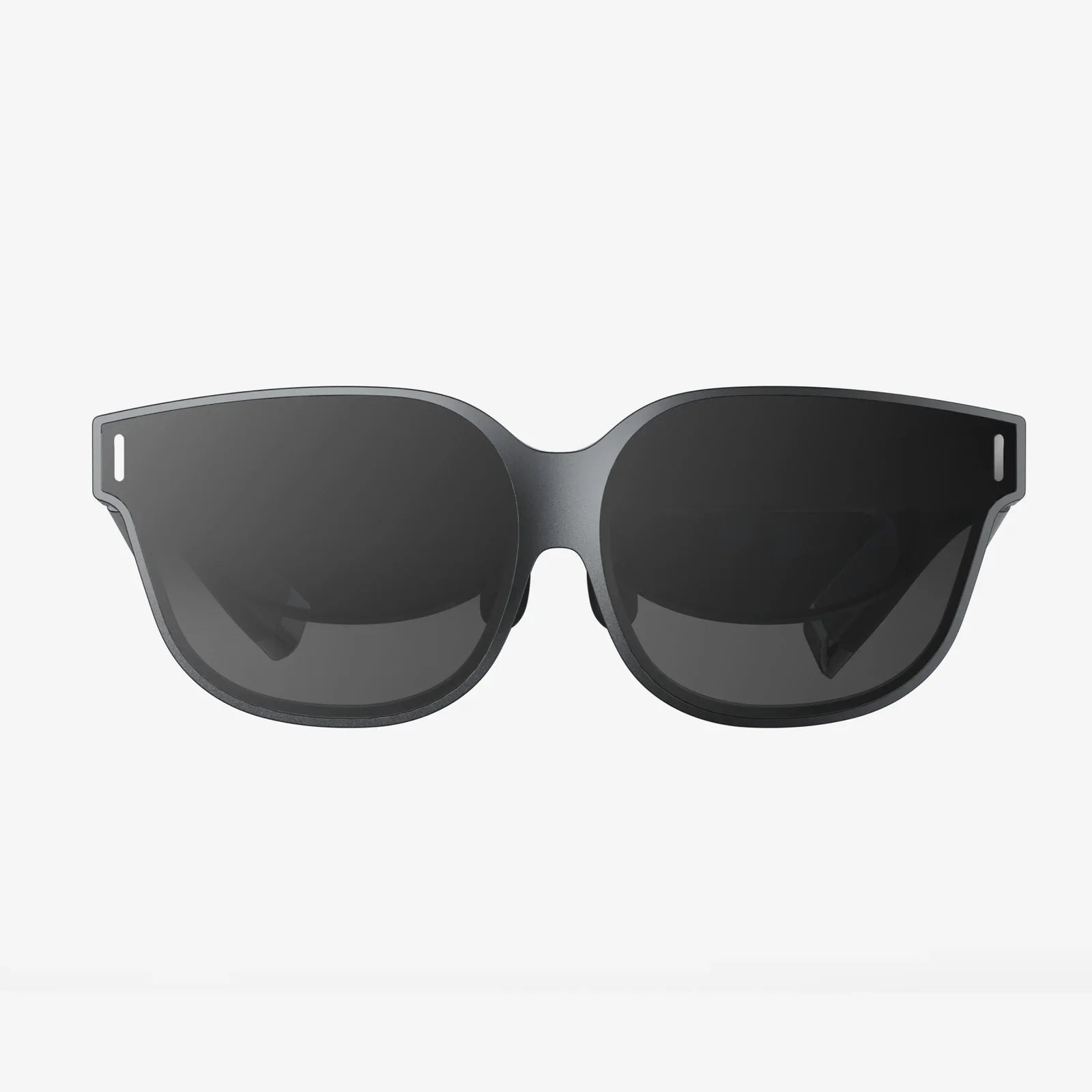
Imagine a world where digital information doesn’t live on a screen in your hand, but is seamlessly woven into the very fabric of your reality. Where directions float on the sidewalk before you, the name and work history of a new acquaintance discreetly appears beside them during a handshake, and a complex engine repair is guided by animated instructions overlaid directly onto the machinery. This is the promise of augmented reality (AR) smart glasses, a technology poised to redefine human-computer interaction. The journey to this future is already underway, and the market forecast leading to 2030 paints a picture of explosive growth, technological convergence, and profound societal change. The next decade will not merely see the adoption of a new device; it will witness the dawn of a new computing paradigm.
The Foundation: Understanding the AR Smart Glasses Ecosystem
Before delving into the forecast, it is crucial to define the scope. AR smart glasses are wearable computer glasses that add digital information, or imagery, onto a user's real-world field of view. Unlike virtual reality (VR), which creates a fully immersive digital environment, AR enhances the real world. The ecosystem supporting these devices is complex and multifaceted, comprising several key layers that must mature in unison for the market to flourish.
Hardware: The Quest for the Perfect Form Factor
The most significant barrier to mass adoption has historically been the hardware. Early prototypes were often bulky, heavy, suffered from short battery life, and offered a limited field of view. The forecast to 2030 is predicated on a relentless march of miniaturization and innovation. We will see advancements in:
- Waveguide and Photonic Chip Technology: This is critical for projecting images onto the lenses without bulky optics. Developments in holographic waveguides and diffractive optics will lead to thinner, lighter, and more efficient glasses that resemble standard eyewear.
- Micro-LED Displays: Offering high brightness, exceptional contrast ratios, and low power consumption, Micro-LEDs are essential for creating clear digital overlays that are visible even in bright sunlight.
- Battery Technology and Power Management: Innovations in solid-state batteries and ultra-low-power processors will extend usage from hours to days, moving from a device you charge nightly to one you charge weekly.
- Spatial Computing Chipsets: Dedicated processors capable of handling simultaneous localization and mapping (SLAM), object recognition, and gesture tracking without draining the battery are becoming standard, enabling truly immersive and responsive experiences.
Software and Platforms: The Operating System for Reality
Hardware is nothing without software. The development of robust operating systems and software development kits (SDKs) is paramount. These platforms will handle the complex tasks of understanding the physical environment, anchoring digital content persistently, and ensuring a consistent experience across different device manufacturers. The battle to become the dominant AR platform—the equivalent of Android or iOS for the physical world—will be a defining narrative of the next decade, driving rapid innovation and investment.
Connectivity: The 5G and 6G Imperative
For AR smart glasses to reach their potential, they require ubiquitous, high-speed, low-latency connectivity. The rollout of 5G networks, and the early planning for 6G towards the end of the decade, is a critical enabler. This allows for computationally intensive tasks to be offloaded to the cloud (edge computing), reducing the processing burden and heat generation within the glasses themselves, thereby enabling a sleeker design and longer battery life.
Key Market Drivers Propelling Growth Towards 2030
The AR smart glasses market is not growing in a vacuum. It is being propelled by a powerful confluence of technological, economic, and social forces that will accelerate adoption through the latter half of the 2020s.
The Enterprise Metaverse: Productivity Reimagined
The most immediate and substantial growth driver is the enterprise sector. Businesses are already recognizing the immense return on investment (ROI) that AR smart glasses can deliver. By 2030, they will be as commonplace in many industries as a laptop or smartphone is today.
- Remote Assistance and Collaboration: A field technician can receive live visual guidance from an expert thousands of miles away, who can draw annotations directly into the technician's field of view. This reduces travel costs, resolves issues faster, and democratizes expertise.
- Design and Prototyping: Engineers and designers can visualize and interact with 3D models at full scale, making iterative changes in real-time and identifying potential issues long before physical prototypes are built.
- Warehousing and Logistics: Workers can see optimized picking routes, instantly identify items, and access inventory data hands-free, dramatically increasing efficiency and reducing errors.
- Training and Simulation: New employees can be trained on complex machinery or dangerous procedures in a safe, controlled digital overlay, reducing risk and improving learning outcomes.
Consumer Applications: From Novelty to Necessity
While enterprise leads, the consumer market will experience a slower but ultimately massive adoption curve. The catalyst will be the identification of a single "killer app"—a use case so compelling it justifies the purchase. This could be in:
- Navigation: Superimposed arrows and directions onto streets, along with information about local businesses.
- Social Interaction and Gaming: Persistent digital artifacts left in specific locations, immersive multiplayer games played in public parks, and new forms of social media that blend the digital and physical.
- Fitness and Health: Real-time biometric data overlay during workouts, form correction in yoga, and guided meditation experiences.
- Accessibility: Features like real-time transcription and translation, object recognition for the visually impaired, and sound source identification for the hearing impaired.
Demographic and Cultural Shifts
The generation that grew up with smartphones and digital overlays in games like Pokémon Go will be the prime adopters of AR glasses. They are digitally native and comfortable with the blending of physical and digital realities. Furthermore, as the technology becomes more normalized and socially acceptable—shifting from a conspicuous geeky gadget to a fashionable accessory—adoption will skyrocket.
Challenges and Hurdles on the Path to 2030
The path to a multi-billion-unit market is not without its obstacles. Several significant challenges must be overcome for the forecast to be realized.
The Privacy Conundrum
Devices with always-on cameras and microphones worn on the face represent a privacy nightmare. The industry must proactively address these concerns with transparent data policies, on-device processing for sensitive information, and clear visual indicators when recording is active. Building trust will be as important as building better technology.
User Experience and Digital Etiquette
How do we interact with these devices without isolating ourselves from the people around us? Refining user interfaces to be intuitive—using voice, gesture, and eventually neural inputs—is critical. Furthermore, new social norms and etiquette will need to develop to govern their use in public spaces, meetings, and social gatherings.
Content Creation and the Developer Economy
A thriving ecosystem requires content. attracting developers to build compelling applications and experiences is essential. This requires mature development tools, clear monetization pathways, and a large enough addressable market to make the investment worthwhile.
A Regional Forecast: Global Adoption Patterns
Adoption will not be uniform across the globe. The market forecast shows distinct regional patterns:
- North America and Europe: Will lead in enterprise adoption, driven by strong technological infrastructure, high labor costs that justify ROI, and major tech company headquarters. Consumer adoption will follow, starting in tech-savvy urban centers.
- Asia-Pacific: This region, particularly countries like China, South Korea, and Japan, is expected to show the fastest growth rate. Strong government support for technology, massive manufacturing bases that can leverage enterprise AR, and a culture enthusiastic about new gadgets will fuel rapid expansion.
- Rest of the World: Adoption may be slower in other regions due to infrastructure challenges and economic factors, but enterprise use cases in specific sectors like mining, agriculture, and infrastructure development will still drive significant growth.
The Societal Impact: A World Transparently Augmented
By 2030, AR smart glasses will begin to have a impact that extends far beyond productivity metrics. They will change how we learn, work, socialize, and perceive the world itself. We will move from a model of "pull" information (searching for it on a phone) to one of "push" information (relevant data contextually delivered to us based on our location and activity). This has the potential to democratize information and expertise but also raises concerns about information overload, digital distraction, and the potential for manipulated realities. The cities we live in may become "phygital"—a blend of physical infrastructure and persistent digital layers that can be changed as easily as updating a website.
The AR smart glasses market forecast for 2030 is not just a story of units shipped and revenue generated; it is the blueprint for the next platform shift in computing. The convergence of AI, 5G/6G, and advanced optics is creating a perfect storm of innovation that will dissolve the barrier between the digital and the physical. The companies, developers, and policymakers who begin navigating this complex landscape today will be the ones shaping the reality of tomorrow. The future is not something we enter; it is something we build, and by 2030, we will be building it right before our eyes.
Share:
Augmented Reality Glasses: The Invisible Revolution Reshaping Our World
Best Spatial Computing Glasses: A Guide to the Future on Your Face