


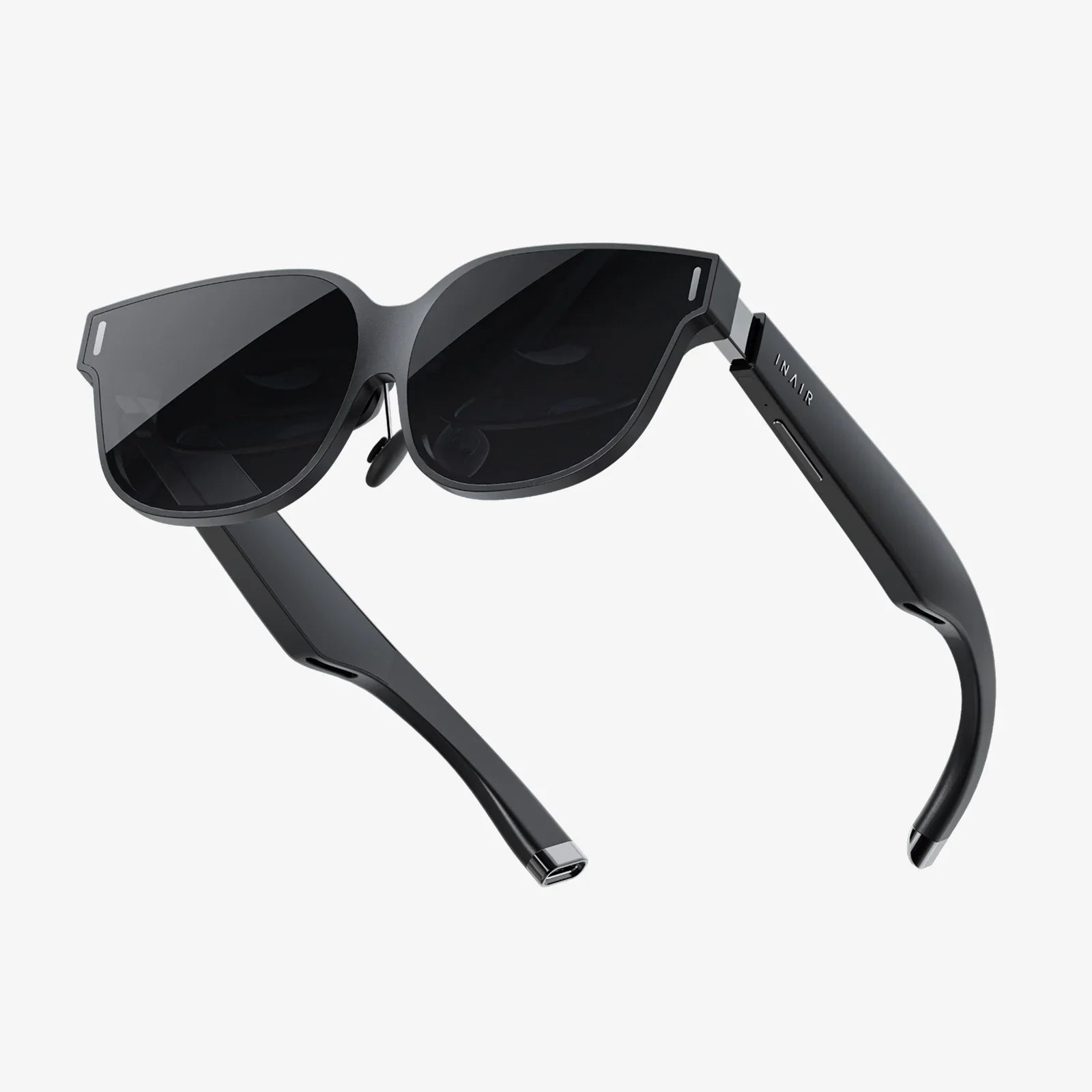
Imagine a world where information doesn't live on a screen in your hand, but is seamlessly woven into the very fabric of your reality. Directions float effortlessly on the street ahead, the history of a monument unfolds before your eyes, and a colleague's 3D schematic appears on your coffee table for you to manipulate. This is not a distant science fiction fantasy; it is the imminent future being unlocked by augmented reality glasses, a technology quietly poised to revolutionize every aspect of our lives from the moment we wake up until we close our eyes at night.
Beyond the Hype: Defining the True Nature of AR Glasses
To understand the revolution, we must first move beyond simplistic definitions. Augmented reality glasses are not merely a wearable display. They are a sophisticated convergence of technologies designed to mediate your perception of the physical world by overlaying persistent, interactive digital content. This core differentiator—blending the real and the virtual rather than replacing it—is what sets them apart from their virtual reality counterparts.
The magic is orchestrated by a symphony of components working in perfect harmony. Advanced optical waveguide or holographic lenses project light directly into the user's eyes, creating the illusion that digital objects coexist with physical ones. A suite of outward-facing sensors, including high-resolution cameras, depth sensors, and LiDAR, continuously scans the environment, mapping the geometry of a room, tracking surfaces, and understanding the position of objects within it. This spatial mapping is the canvas upon which the digital world is painted. Powerful onboard processors, often assisted by cloud computing, analyze this sensor data in real-time, anchoring digital content to a specific point in space so it doesn't drift or float aimlessly. Finally, microphones and speakers enable voice commands and spatial audio, making the digital layer not just visible, but audible and interactive.
A Journey Through Time: The Evolution of a Vision
The dream of augmenting human vision is decades old. Early systems, developed for industrial and military applications, were monstrous, head-mounted displays tethered to room-sized computers. They were functional but bore no resemblance to the sleek, consumer-focused devices envisioned today. The modern era of AR began in the 2010s, catalyzed by the proliferation of powerful smartphones. These devices demonstrated that the necessary sensors and processors could be miniaturized, setting the stage for the next leap.
The first wave of consumer-facing AR glasses offered a tantalizing glimpse of the future but were hampered by significant limitations. They often suffered from a narrow field of view, creating a frustrating "letterbox" effect where digital content was confined to a small window. Battery life was woefully short, and the form factor was often clunky and socially awkward. They were, in essence, proof-of-concepts that prioritized function over form. However, they served a critical purpose: they validated the use cases and exposed the technological hurdles that needed to be overcome.
The Pillars of the Revolution: Where AR Glasses Are Making an Impact Today
While the consumer market is still developing, AR glasses have already found powerful, transformative applications in enterprise and specialized fields, quietly building a robust foundation for the technology.
The Industrial Metropolis: Revolutionizing Manufacturing and Repair
On factory floors and in repair hangars, AR glasses are already boosting productivity and reducing errors to unprecedented levels. Technicians can see step-by-step instructions overlaid directly onto the machinery they are servicing, highlighting the exact bolt to turn or wire to connect. Remote experts can see what a field engineer sees and annotate the real world with arrows and notes to guide complex procedures, eliminating travel time and costs. This hands-free access to information and expertise is not just a convenience; it is a fundamental shift in how complex physical work is performed and supported.
The Scalpel and The Syllabus: Transforming Medicine and Education
In healthcare, the implications are profound. Medical students can practice complex surgeries on detailed, interactive 3D holograms of human anatomy, reducing risk and improving learning outcomes. Surgeons in the operating room can have vital patient data, such as heart rate or MRI scans, displayed in their line of sight without ever looking away from the patient. This seamless integration of data can enhance precision and improve patient safety.
In education, AR glasses can turn any classroom into an immersive learning environment. History lessons can come alive with historical figures and events reenacted in the corner of the room. Biology students can walk around and examine a life-sized, beating human heart. This shift from abstract, textbook learning to experiential, spatial understanding has the potential to unlock new depths of comprehension and engagement for students of all ages.
Redefining Connection: The Future of Social Interaction and Remote Work
The concept of a "digital twin"—a virtual copy of a physical space—combined with AR glasses, promises to shatter the limitations of video conferencing. Instead of staring at a grid of faces on a screen, remote colleagues could appear as realistic avatars sitting on your office couch, able to interact with shared 3D models as if they were physically present. This sense of shared presence, of truly being in a room together despite being continents apart, could redefine remote collaboration, making it more natural, effective, and human.
The Invisible Threshold: Overcoming the Barriers to Mass Adoption
For AR glasses to transition from powerful professional tools to an everyday consumer commodity, several significant challenges must be addressed. The most obvious is form factor. The ultimate goal is a device that is indistinguishable from regular eyeglasses—lightweight, comfortable, and socially acceptable to wear all day. Current technology is inching closer, but achieving this ideal requires breakthroughs in miniaturizing batteries, optics, and processing units.
Equally important is the development of a intuitive and powerful user interface (UI). The UI cannot rely on traditional keyboards and mice. It must be a seamless blend of voice commands, hand gestures, eye-tracking, and contextual awareness. The device should anticipate your needs, presenting relevant information without overwhelming you, creating what designers call "calm technology."
Finally, and perhaps most critically, there are the intertwined issues of privacy, security, and social etiquette. Glasses with always-on cameras raise legitimate concerns about surveillance and data collection. Clear visual indicators that recording is taking place, robust data encryption, and transparent privacy policies will be non-negotiable for public trust. Furthermore, new social norms will need to develop around when and where it is appropriate to use such devices, navigating the fine line between enhanced living and disconnecting from the immediate physical world.
A World Remade: The Long-Term Societal Implications
The widespread adoption of augmented reality glasses will ripple through society, creating a world that is both fascinating and fraught with new complexities. Our relationship with advertising and commerce will be transformed. Billboards could become dynamic and interactive, and virtual storefronts could appear on empty lots, accessible only through your glasses. This creates incredible opportunities for immersive commerce but also raises the specter of an overwhelming, personalized advertising landscape that is impossible to escape.
On a deeper level, the very nature of shared reality could be challenged. If everyone can customize their perceptual layer of the world—filtering out noise, translating signs instantly, or applying artistic filters to their surroundings—do we risk fracturing a common experience of reality? The potential for incredible accessibility (e.g., visual aids for the visually impaired) is matched by the potential for deeper social isolation and new forms of digital inequality.
The future of these devices likely lies not in a single, all-powerful pair of glasses, but in a spectrum of form factors. We may have sleek, lightweight glasses for all-day information browsing and communication, and more robust, feature-rich models for specialized professional work and immersive entertainment. This flexibility will be key to integrating the technology into the diverse tapestry of human life.
The path toward the perfect pair of augmented reality glasses is not a straight line; it's a winding road of technological breakthroughs, cultural negotiations, and ethical considerations. But with every passing day, the components get smaller, the software gets smarter, and the vision gets clearer. We are not just building a new device; we are building a new layer of human experience, and the world that emerges will be more connected, more informed, and more astonishing than we can currently comprehend. The revolution won't arrive on a screen; it will be right before your eyes.
Share:
What Is Spatial Computing Glasses Technology: The Invisible Bridge to a New Reality
AR Smart Glasses Market Forecast 2030: A Vision of the Future