


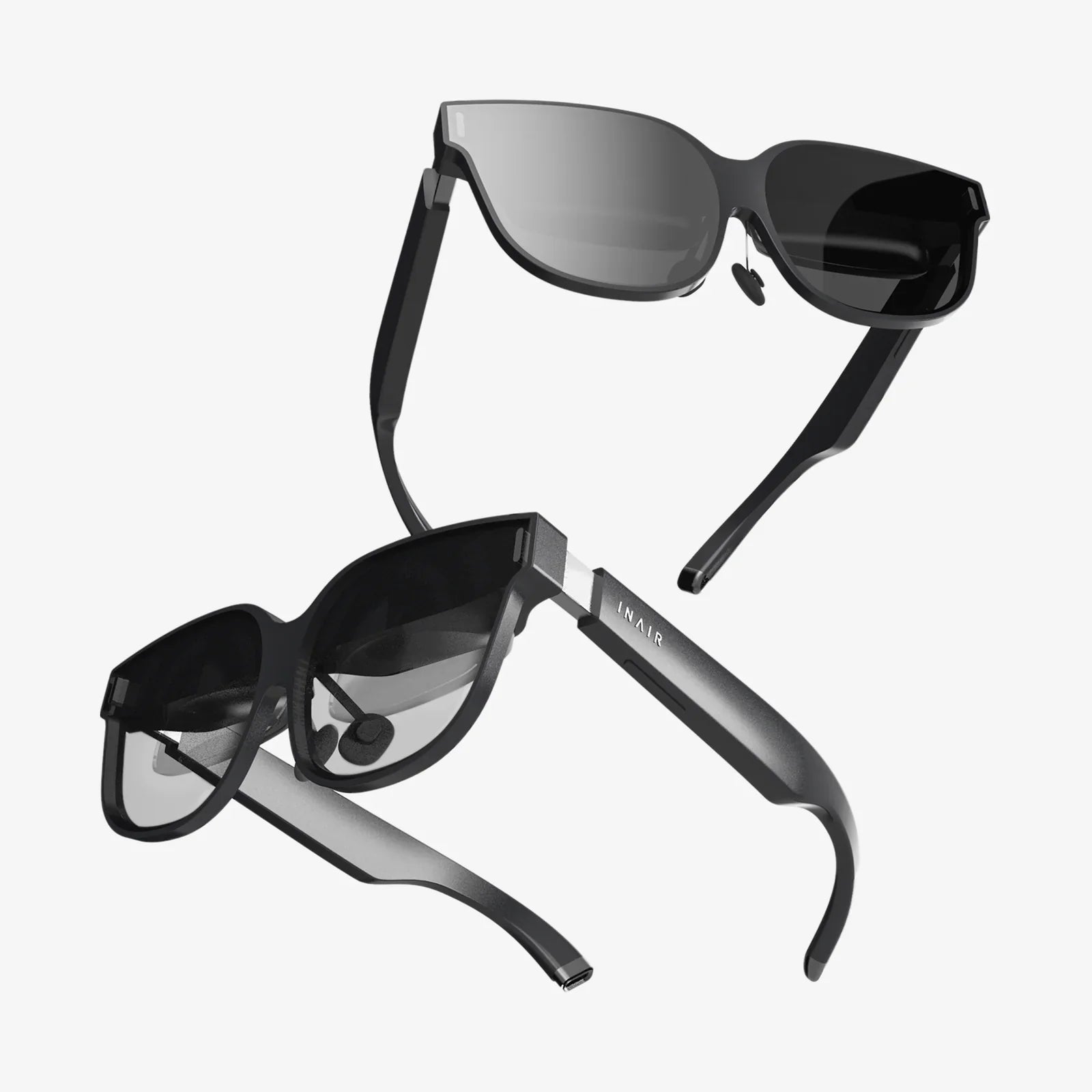
Imagine a world where information is not confined to the screens in our pockets or on our desks but is instead woven seamlessly into the fabric of our reality. Directions appear as glowing arrows on the sidewalk, a complex engine repair is guided by holographic instructions overlaid on the machinery, and a video call with a colleague places them virtually in the empty chair across from you, as if they were truly there. This is not a distant science fiction fantasy; it is the imminent future being built today through the rapid advancement of spatial computing glasses technology. This emerging field represents one of the most significant technological evolutions of our time, promising to dissolve the barrier between the digital and the physical and fundamentally alter how we work, learn, play, and connect.
The Foundational Pillars of Spatial Reality
To understand spatial computing glasses, one must first grasp the concept of spatial computing itself. At its core, spatial computing is a form of human-computer interaction that uses the surrounding environment as a canvas for digital information. It is the practice of creating, manipulating, and interacting with digital content that is aware of and anchored to the three-dimensional space around us. Spatial computing glasses are the primary gateway to this experience. They are sophisticated wearable computers designed to be worn on the face, projecting digital imagery and information onto transparent lenses or directly into the user's eyes, all while understanding the geometry and context of the user's environment.
Beyond Augmented and Virtual Realities
While often grouped with Virtual Reality (VR) and Augmented Reality (AR), spatial computing glasses typically sit within the AR spectrum but aim for a more integrated and context-aware experience. VR completely replaces the user's vision with a simulated digital world, isolating them from their physical surroundings. Traditional AR overlays simple graphics onto a view of the real world. Spatial computing, however, goes several steps further. It involves a continuous, bidirectional dialogue between the user, their device, and the environment. The glasses don't just display data; they comprehend the space—understanding surfaces, objects, lighting, and their relative positions—to allow digital content to interact with the physical world in a believable and useful way.
Deconstructing the Technology: How They See and Show the World
The magic of spatial computing glasses is enabled by a complex symphony of hardware and software components working in perfect harmony. This system can be broken down into three critical functions: perception, processing, and projection.
The Perception Suite: Digital Eyes and Ears
To blend the digital with the physical, the glasses must first have a deep understanding of the physical world. This is achieved through a suite of advanced sensors that act as the device's eyes and ears.
- Cameras: Multiple high-resolution cameras serve various purposes. Some are dedicated to tracking the user's eye movements (eye-tracking), which is crucial for intuitive interaction and optimizing rendering. Others are used for depth sensing, employing technologies like stereoscopic vision or structured light to map the environment in 3D, measuring the distance to every surface and object.
- LiDAR (Light Detection and Ranging): This sensor fires out millions of pulses of invisible laser light every second, measuring how long they take to bounce back. This creates an extremely precise, real-time 3D map (a "point cloud") of the room, allowing the glasses to understand the geometry of the space with remarkable accuracy, right down to the contours of a couch or the edge of a table.
- Inertial Measurement Units (IMUs): These components, including accelerometers and gyroscopes, track the precise movement, rotation, and orientation of the glasses themselves in space. This ensures that digital objects remain locked in place even as the user's head moves.
- Microphones and Speakers: Spatial audio is a key component of immersion. Microphones capture voice commands and environmental sound, while speakers can be tuned to make a digital object seem like it's emitting sound from a specific point in the room, further blurring the line between what is real and what is rendered.
The Onboard Brain: Processing and Power
The raw data from these sensors is a colossal amount of information that must be processed in milliseconds to create a responsive and lag-free experience. This requires immense computational power housed within the glasses' frame or, in some designs, offloaded to a companion processing unit worn on the body.
- System-on-a-Chip (SoC): A custom-designed processor handles the general computing tasks, similar to the CPU in a smartphone but optimized for the unique demands of spatial applications.
- AI and Machine Learning Engines: Specialized neural processing units (NPUs) are critical. They power the real-time computer vision algorithms that identify objects (is that a chair or a person?), understand hand gestures, parse text, and enable simultaneous localization and mapping (SLAM). SLAM technology allows the glasses to both map an unknown environment and track their own location within that map simultaneously, which is the foundational technology for anchoring digital content.
The Display Engine: Painting Light onto Reality
This is the final and most crucial step: rendering the digital content for the user to see. There are two primary display methodologies, each with its own advantages.
- Optical See-Through: This method uses waveguides—tiny, transparent pieces of glass or plastic etched with microscopic patterns. A micro-display projector, usually based on LED or laser technology, shoots light into the edge of the waveguide. This light bounces along inside it through a process called total internal reflection before being directed out into the user's eye. The user sees both the real world through the transparent lens and the digital imagery projected onto it. The challenge is achieving high brightness, full color, and a wide field of view without compromising the clarity of the real world.
- Video See-Through: This approach uses outward-facing cameras to capture a live video feed of the real world. This feed is then combined with digital graphics on an internal, non-transparent display (like a micro-OLED screen) positioned in front of the user's eyes. This method allows for more vivid and opaque digital visuals and can more easily manipulate the view of reality (e.g., applying digital filters), but it can suffer from latency and a potential reduction in the user's connection to their actual surroundings.
A World Transformed: Applications Across Industries
The potential use cases for spatial computing glasses are as vast as human endeavor itself. They are not merely a consumer gadget but a powerful tool poised to revolutionize numerous professional fields.
Revolutionizing the Workplace
In industrial and enterprise settings, the value proposition is immediately clear. Technicians maintaining complex machinery can see animated schematics and step-by-step instructions overlaid directly on the equipment they are repairing, with their hands free to work. Architects and engineers can walk clients through full-scale, interactive 3D models of unbuilt structures, making changes in real-time. Warehouse workers can have picking routes and inventory information visually guided into their line of sight, dramatically increasing efficiency and reducing errors. In healthcare, a surgeon could have vital patient statistics and real-time imaging data visible during a procedure without looking away from the operating field.
Redefining Collaboration and Communication
Spatial computing promises to make remote collaboration truly feel local. Instead of a flat video call on a screen, participants wearing glasses could be rendered as realistic, life-sized avatars or volumetric videos in a shared virtual space. Colleagues from across the globe could stand around a holographic prototype of a new product, examining it from all angles and making annotations in mid-air that everyone can see. This creates a profound sense of "presence," a feeling of being together in a shared space, which is impossible to achieve with current video conferencing tools.
The Future of Learning and Everyday Life
Education can become an immersive, interactive journey. History students could witness historical events unfold around them, biology students could walk through a detailed, beating holographic heart, and mechanics-in-training could practice on digital twins of engines. In our daily lives, navigation will evolve from looking at a phone to following a line on the street. Cooking could be guided by recipes that highlight ingredients on your counter and demonstrate techniques on your cutting board. The very way we shop, socialize, and consume media is set for a fundamental shift.
Navigating the Challenges on the Horizon
For all its promise, the path to ubiquitous spatial computing is fraught with significant technical and social hurdles that must be overcome.
The Technical Gauntlet
The foremost challenge is hardware. Creating glasses that are socially acceptable—meaning they are lightweight, comfortable, have all-day battery life, and look like ordinary eyewear—is an immense engineering feat. It requires breakthroughs in miniaturization, battery technology, thermal management, and display efficiency. The field of view, the brightness of the displays in outdoor environments, and the accuracy of the spatial mapping all need continuous improvement. Furthermore, developing the software ecosystems, apps, and development tools to create compelling experiences is a massive undertaking that will take years to mature.
The Societal and Ethical Imperative
Perhaps the most profound challenges are not technical but human. The constant capture of video and audio data from a user's perspective raises monumental privacy and data security concerns. Who owns this data? How is it stored and used? The concept of an "attention economy" could be taken to a new extreme, with digital advertisements and notifications becoming inescapable parts of our visual field. The digital divide could widen into a "reality divide," and the potential for new forms of distraction, addiction, and social isolation is very real. Establishing clear ethical guidelines, robust privacy frameworks, and thoughtful digital etiquette will be just as important as the engineering breakthroughs.
The Invisible Future
The ultimate goal for spatial computing glasses technology is to become invisible—not in the sense of being unseen, but in the sense of being so intuitive, seamless, and integrated into our lives that we stop thinking of it as technology at all. The ideal interface is no interface; it is a natural extension of our own cognition and perception. We are moving from a world of computers we go to, to a world of computing that comes to us, enhancing our capabilities and enriching our experiences without demanding our constant conscious attention.
The journey from the clunky prototypes of today to the sleek, powerful, and socially embraced eyewear of tomorrow will be a defining narrative of the next decade. It is a convergence of optics, artificial intelligence, sensor technology, and human-centered design, all aimed at a single goal: building an invisible bridge between our minds and the digital universe. The question is no longer if this future will arrive, but how quickly we can navigate the challenges to get there, and more importantly, what kind of reality we will choose to build with it. The promise is a world augmented, our potential amplified, and our human experience deeply enriched—all through the lenses we will one day wear without a second thought.
Share:
Best Video Glasses 4K: Your Ultimate Guide to Cinematic Immersion
Augmented Reality Glasses: The Invisible Revolution Reshaping Our World