


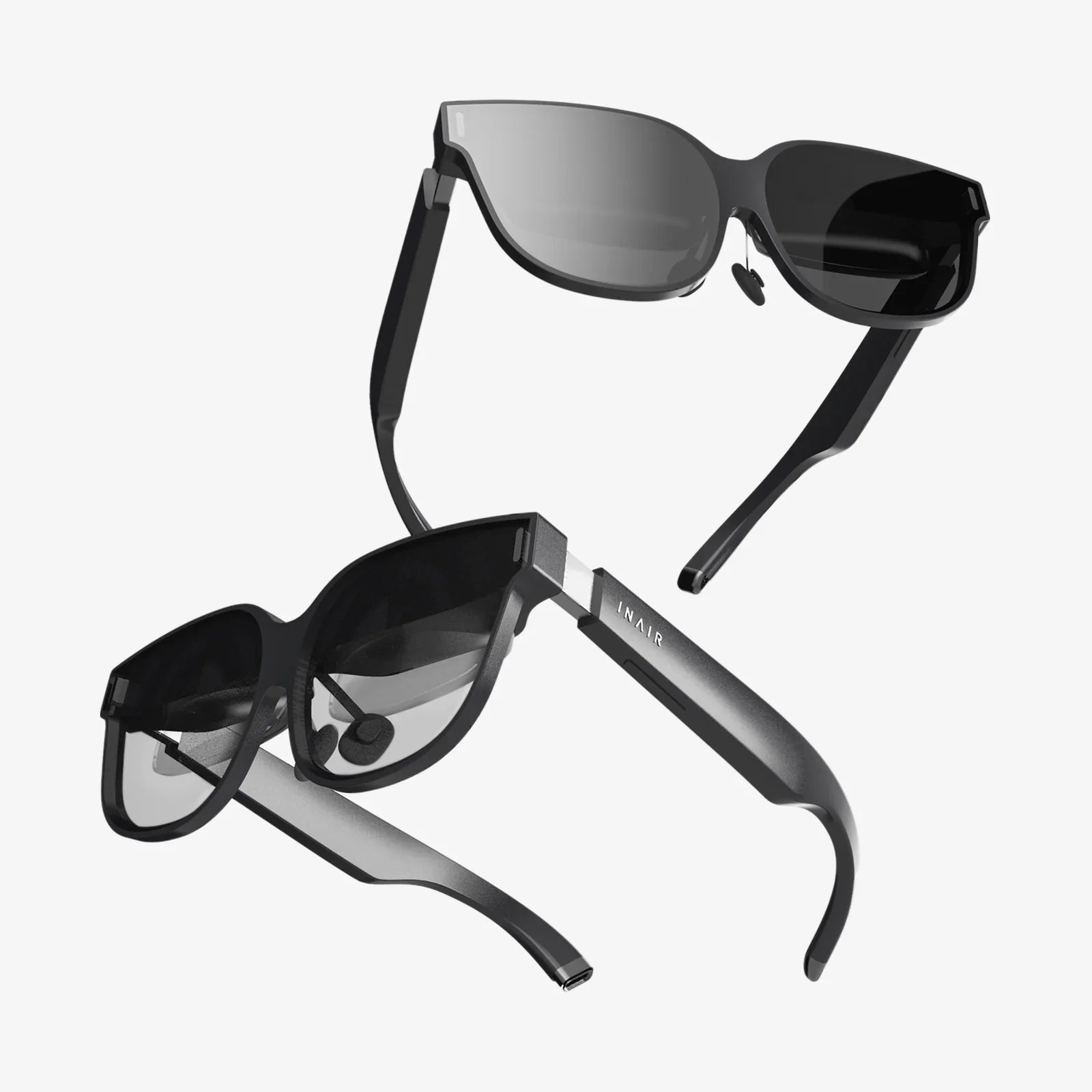
Imagine a world where digital information doesn't just live on a screen in your hand or on your desk, but is seamlessly woven into the fabric of your reality, accessible instantly without a single wire or external computer. This is no longer the stuff of science fiction; it's the promise being delivered by the best standalone AR headsets with no PC tethering in 2025. The shackles have been cut, and the era of truly mobile, powerful, and immersive augmented reality is finally here, ready to redefine how we work, play, and connect.
The Dawn of a New Reality: Untethered and Unbound
For years, the potential of augmented reality was hamstrung by a critical limitation: the tether. High-fidelity AR experiences required a physical cable connecting a headset to a powerful, and expensive, desktop computer. This umbilical cord severely restricted movement, confined users to a specific space, and presented a significant barrier to mainstream adoption. The dream of taking AR anywhere—onto a factory floor, into a classroom, or out into the city—remained just out of reach.
The year 2025 marks a definitive turning point. Advancements in mobile processing, thermal management, display technology, and spatial computing have converged to create a new class of device: the truly standalone AR headset. These are not mere peripherals but self-contained computers for your face, packing enough power to generate convincing digital overlays onto the real world without any external aid. The elimination of PC tethering isn't just a convenience; it's a fundamental shift that unlocks the true, ubiquitous potential of augmented reality.
Defining the 2025 Standalone AR Headset
What exactly separates the best standalone AR headsets of 2025 from their predecessors or other wearable categories? It's a combination of key attributes that define this new generation of devices.
- Complete Computational Independence: The device houses its own System-on-a-Chip (SoC), RAM, and storage. It processes all data, runs the operating system, and renders complex AR environments entirely on-board. There is no need to stream content from a phone or computer.
- Advanced Inside-Out Tracking: Using a sophisticated array of cameras, LiDAR, and inertial measurement units (IMUs), the headset maps its environment and tracks its own position within it in real-time. This allows digital objects to be placed and remain locked in the real world with stunning accuracy.
- High-Fidelity Passthrough AR: Many modern standalone headsets use high-resolution cameras to feed a live video feed of your surroundings to the displays, upon which digital content is overlaid. This "video see-through" method allows for incredibly rich and dynamic digital interactions that can occlude real-world objects.
- All-Day Form Factor: A critical focus for 2025 has been on ergonomics and wearability. The goal is to move beyond bulky, face-encompassing goggles towards designs that are closer to sleek, heavy-duty eyeglasses, prioritizing comfort for extended use.
The Engine Room: Powering the Untethered Experience
The heart of any standalone device is its processor. The chipsets powering the 2025 generation are marvels of engineering, specifically designed for the immense task of spatial computing.
These custom-built AR SoCs integrate a powerful CPU for general tasks, a high-performance GPU for rendering complex 3D graphics and effects, and, most importantly, a dedicated NPU (Neural Processing Unit). The NPU is the workhorse for constant computer vision tasks. It handles the incredible computational load of simultaneously understanding the geometry of a room, recognizing surfaces and objects, tracking hand gestures with sub-millimeter precision, and managing eye-tracking data—all in real-time and without draining the battery in minutes.
This specialized silicon is the key differentiator. It's what allows a user to pin a virtual television to their living room wall, have a life-sized digital avatar sit convincingly on their real sofa, or manipulate a complex 3D model with their hands, all without a stutter or a lag, and all from a device that rests comfortably on their head.
Through the Looking Glass: Display and Visual Fidelity
The magic of AR is seeing the digital and physical coexist. The quality of this fusion is paramount, and 2025's displays are a quantum leap forward. Two primary technologies dominate:
Waveguide Optics: A technology that has matured significantly. Thin, transparent glass lenses have microscopic gratings that "bend" light from projectors on the temple of the glasses into your eye. The advantage is a sleek, glasses-like form factor. The challenge has historically been field of view (FoV) and brightness, but new manufacturing techniques have expanded FoV dramatically while maintaining clarity and efficiency.
MicroLED with Pancake Lenses: For devices prioritizing stunning visual fidelity and full immersion, MicroLED displays paired with compact pancake lenses are the gold standard. MicroLEDs offer exceptional brightness, contrast, and color gamut, which is crucial for making digital objects look solid and real in brightly lit environments. Pancake lenses use polarization folding to create a long focal path in a very short physical distance, allowing for a much slimmer headset profile without sacrificing optical quality.
The result is a visual experience where text is razor-sharp, digital objects don't suffer from transparency or "ghosting," and the blend between real and virtual is so convincing that the brain readily accepts the illusion.
The Interface of the Future: Beyond Controllers
How do you interact with a world that exists all around you? The best standalone AR headsets of 2025 have largely moved beyond traditional handheld controllers, embracing more intuitive and natural input methods.
Precision Hand Tracking: This is the cornerstone of modern AR interaction. Using its onboard cameras and NPU, the headset can track all 26 degrees of freedom of your hands—the movement of each finger joint. You can pinch, grab, push, and swipe digital content as if it were physically there. The latency is so low and the accuracy so high that it feels instantaneous and magical.
Advanced Voice Commands: Integrated with powerful, on-device AI assistants, voice control provides a hands-free way to launch apps, search for information, or control playback. The assistants are context-aware, understanding your environment and offering relevant suggestions.
Eye Tracking: Built-in infrared sensors monitor where you are looking. This serves multiple purposes: it enables foveated rendering (dynamically rendering the area you're directly looking at in high detail while saving processing power on your peripheral vision), allows for intuitive menu selection just by gazing, and creates more expressive and lifelike avatars in social applications.
Transforming Industries: The Real-World Impact
The value of untethered AR isn't just in playing games; it's in revolutionizing workflows and creating new paradigms across sectors.
- Enterprise and Manufacturing: A technician can wear a headset on the factory floor with a schematic overlaid directly on the machinery they are repairing. A remote expert can see their view and draw annotations into their space to guide them, thousands of miles away. Warehouse workers can see optimal picking paths and inventory data without ever looking down at a clipboard or screen.
- Healthcare: Surgeons can have vital patient statistics and 3D scans visible during procedures without breaking sterility. Medical students can practice complex procedures on detailed holographic anatomy. Physical therapists can guide patients through exercises with perfect digital form demonstrations.
- Design and Architecture: Architects and clients can walk through a full-scale, holographic rendering of a building design before a single brick is laid, making changes to materials or layouts in real-time. Interior designers can place and resize virtual furniture in a client's actual living room.
- Remote Collaboration: Colleagues from around the world can meet in a shared virtual space around a 3D model, appearing as lifelike avatars, able to manipulate and discuss the design as if they were in the same physical room.
Navigating the Ecosystem: Content and Connectivity
A headset is only as good as its software. The ecosystem for standalone AR in 2025 is rich and diverse. Dedicated app stores are filled with productivity tools, immersive games, educational experiences, and social platforms. A key development is the rise of web-based AR experiences, accessible through built-in spatial browsers, which allow users to access AR content instantly without downloading an app, much like visiting a website today.
While these devices are standalone, they are not isolated. Robust Wi-Fi 6E and 7 connectivity is standard, enabling cloud backup, seamless collaboration, and access to more powerful cloud-based rendering for exceptionally complex tasks. Furthermore, many headsets offer simple smartphone companion apps for initial setup, contact sharing, and receiving notifications, maintaining a connection to your existing digital life without being dependent on it.
Choosing Your Portal: Considerations for 2025
With several compelling options on the market, selecting the right headset depends on your primary use case. Key factors to consider include:
- Form Factor vs. Capability: Is your priority all-day wearability (leaning towards glasses-like waveguides) or maximum immersive power and visual fidelity (leaning towards headsets with MicroLED displays)?
- Battery Life: Solutions vary, from all-day battery cells integrated into the frame to smaller batteries with hot-swappable external packs. Consider how long you need to use it continuously.
- Field of View: A wider FoV is more immersive but often requires a larger form factor. How important is peripheral digital vision for your tasks?
- App Ecosystem: Ensure the headset's platform supports the professional software or entertainment experiences you need.
The market in 5 is vibrant and competitive, driving rapid innovation and pushing the boundaries of what's possible in a self-contained wearable. The competition is fierce, and the pace of change is breathtaking, ensuring that consumers and enterprises alike have incredible choices.
We are standing at the precipice of a fundamental shift in personal computing. The best standalone AR headsets of 2025 are not just new gadgets; they are the prototypes for the next major platform, one that will eventually replace the flat, confined screens that dominate our lives today. They offer a glimpse into a future where our digital and physical realities are not separate realms but a single, integrated experience, limited only by our imagination. The question is no longer if this future will arrive, but how quickly you will choose to step into it and see the world anew.
Share:
Wearable Tech Fashion: The Seamless Fusion of Style and Technology
Lightest VR - The Unseen Revolution in Virtual Reality Comfort