


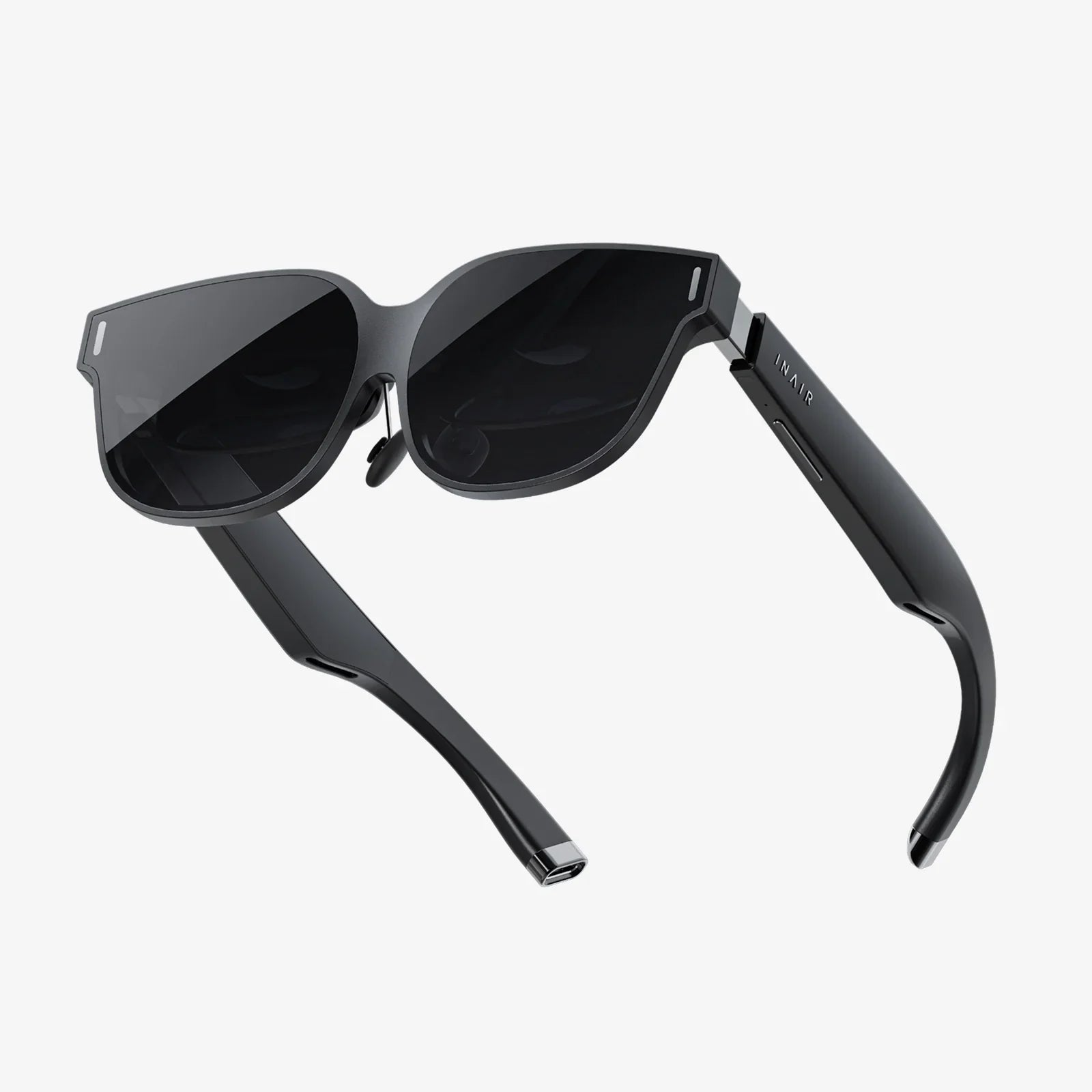
You lean forward, your entire field of view consumed by a digital universe so crisp, so vivid, and so breathtakingly real that the physical world simply melts away. This is the promise of virtual reality, a promise that hinges entirely on one critical factor: unparalleled video quality. For anyone seeking the ultimate escape, the most immersive simulations, or the most visually stunning gaming experiences, the quest begins and ends with finding the best video quality VR headset. But what does that truly mean? Is it just a number on a spec sheet, or is it a more complex alchemy of technology that convinces your brain you're somewhere else entirely? Let's pull on the headset and dive deep into the pixels, panels, and optics that separate a good visual experience from a truly transcendent one.
The Pillars of Visual Fidelity: More Than Just Resolution
When consumers think about video quality, the first metric that often comes to mind is resolution. It's a logical starting point, but it's merely the foundation upon which true visual fidelity is built. The best video quality VR headset is not defined by resolution alone but by a harmonious combination of several key technological pillars.
Resolution and Pixels Per Degree (PPD)
Yes, resolution matters. The combined resolution of a headset's displays—often quoted as something like "1832 x 1920 pixels per eye"—determines the raw number of pixels available to draw the virtual world. A higher resolution means sharper text, finer details in the distance, and a more convincing image. However, the more important metric is Pixels Per Degree (PPD). This measures how many pixels are packed into each degree of your field of view. A high-resolution display stretched across a very wide field of view can end up with a low PPD, resulting in a "screen door effect" where you can see the gaps between pixels. The best video quality VR headsets aggressively minimize this effect through high-PPD designs, making the image appear solid and continuous.
Display Technology: LCD vs. OLED
The type of panel used is a fundamental differentiator in image quality. For years, there was a clear trade-off:
- OLED (Organic Light-Emitting Diode): Prized for their perfect per-pixel black levels and incredibly fast response times. Perfect blacks create an infinite contrast ratio, making space feel truly dark and shadows appear deep and realistic. This is crucial for immersion. However, traditional OLED panels have sometimes struggled with "mura" (slight visual imperfections) and lower sustained brightness compared to LCDs.
- LCD (Liquid Crystal Display): More common in modern high-end headsets, LCDs offer higher peak brightness and, crucially, higher pixel density (subpixels per inch), which all but eliminates the screen door effect. Their main weakness is contrast ratio; since they use a backlight, blacks often appear as dark gray, which can diminish the impact of dark scenes. Advanced techniques like local dimming, where zones of the backlight can be turned off independently, are now being used to bridge this gap, offering much deeper blacks on LCD panels.
The pursuit of the best video quality VR headset now sees manufacturers leveraging the strengths of both, with some even developing custom micro-OLED displays that promise the high resolution and pixel density of LCD with the perfect blacks and speed of OLED.
Refresh Rate: The Smoothness Factor
Resolution and contrast define the clarity of the image; the refresh rate (measured in Hertz, or Hz) defines its smoothness. A standard monitor might run at 60Hz, but in VR, where you are physically moving your head, a low refresh rate can lead to judder, blur, and even motion sickness. Most modern headsets start at 90Hz, with high-end models offering 120Hz or even 144Hz modes.
A high refresh rate creates buttery-smooth motion, which is essential for fast-paced games and any experience involving rapid movement. It reduces latency—the delay between your head moving and the image updating—which is a primary culprit behind VR-induced nausea. The best video quality VR headset doesn't just look good in a static screenshot; it remains crystal clear and stable even when you're turning your head quickly or navigating a high-speed virtual vehicle.
Lens Technology and Field of View (FoV)
All those beautiful pixels have to pass through a lens before they reach your eyes. The quality of these lenses is arguably as important as the quality of the displays themselves. Cheap, simple lenses can introduce god rays (glare around high-contrast elements), chromatic aberration (color fringing), and a "sweet spot" so small that the image is only perfectly clear in the very center of your view.
High-end headsets employ sophisticated lens designs, such as Fresnel hybrids or aspherical elements, to maximize the sweet spot and minimize optical distortions. Furthermore, the Field of View (FoV) determines how much of your vision is enveloped by the virtual world. A narrow FoV can feel like looking through binoculars or a scuba mask, constantly reminding you that you're in a headset. A wider FoV increases immersion dramatically but presents immense engineering challenges in maintaining edge-to-edge clarity and high PPD. The best video quality VR headset finds the optimal balance between a wide, immersive FoV and a sharp, distortion-free image across the entire lens.
Advanced Rendering and Computational Power
The headset itself is only half of the equation. The computational power required to render two high-resolution displays at a very high frame rate is immense. This is where advanced rendering techniques come into play.
- Foveated Rendering: This is a potential game-changer. Eye-tracking technology inside the headset monitors where your pupils are pointing. The system then renders the area you are directly looking at in full, native resolution, while dynamically reducing the rendering detail in your peripheral vision—where your eyes cannot perceive the drop in quality. This massive reduction in GPU load allows for significantly higher graphical fidelity where it matters most, pushing the boundaries of what is visually possible.
- High Dynamic Range (HDR): While still emerging in the VR space, HDR support is a key feature for the future. It allows for a much wider range between the brightest brights and the darkest darks, creating scenes that are more vibrant, realistic, and visually striking. Imagine the blinding glare of a virtual sun compared to the deep, detailed shadows of a forest—HDR makes this possible.
- Super Resolution Technologies: Techniques like NVIDIA's DLSS or AMD's FSR are becoming increasingly important. These AI-powered upscaling technologies render the game at a lower internal resolution and then use intelligent algorithms to reconstruct a sharp, high-resolution image. The performance gains are enormous, often allowing a system to achieve 90Hz or 120Hz performance that would otherwise be impossible with native rendering.
The Content is King: Why Software Matters
You can own the most advanced piece of visual hardware ever created, but if the software isn't optimized to take advantage of it, the experience will fall flat. The best video quality VR headset needs the best content to truly shine. This means well-optimized games and applications that support high resolutions, high frame rates, and advanced features like foveated rendering and HDR.
A visually simple game might look perfectly fine on a modest headset, but a graphically intensive AAA title will reveal the true capabilities of high-end hardware. The difference in texture detail, lighting complexity, shadow quality, and environmental density is staggering when experienced on a headset designed for visual excellence. Furthermore, the source material is vital. A 8K 360-degree video will showcase a headset's clarity far better than a low-bitrate, low-resolution stream.
The Human Element: Comfort and the Interface
Visual fidelity isn't just a technical spec; it's a human experience. A headset can have perfect specs, but if it's so uncomfortable that you can't wear it for more than 20 minutes, or if the software interface is blurry and difficult to read, the overall perception of quality plummets. The best video quality VR headset must be a complete package:
- Ergonomics: A balanced, comfortable design that doesn't press heavily on the cheeks or forehead.
- IPD Adjustment: A physical, mechanical adjustment for the Inter-Pupillary Distance (the space between your eyes) is non-negotiable for achieving a clear and comfortable image for a wide range of users.
- User Interface (UI): The home environment and menus must be rendered at a high resolution with clean, legible text and intuitive design. A jaggy, low-resolution UI immediately undermines the premium feel of the hardware.
The Future is Clear: Where Visual Fidelity is Headed
The trajectory of VR visual technology is incredibly exciting. We are moving rapidly towards headsets that will completely eliminate the visual compromises of today. We can expect to see:
- Micro-OLED and Micro-LED Displays: Becoming the new standard, offering retina-level PPD, perfect blacks, high brightness, and incredibly fast response times all in one package.
- Varifocal Lenses: Lenses that can dynamically adjust their focus based on what you're looking at in the virtual world, solving the vergence-accommodation conflict—a key source of eye strain in current headsets—and making virtual objects feel truly solid.
- Full HDR Support: Widespread adoption of HDR10+ or similar standards to unlock a new dimension of contrast and color.
- Photorealistic Avatars and Environments: Powered by evermore powerful GPUs and advanced rendering techniques like ray tracing, which accurately simulates the behavior of light.
The quest for the best video quality VR headset is a journey towards invisibility. The goal is to perfect the technology to the point where it disappears entirely, leaving you with nothing but the pure, unadulterated experience. It’s a pursuit of making the digital feel not just high-definition, but genuinely real. This isn't just about better gaming; it's about creating portals to new worlds for training, social connection, design, and storytelling. The headset that masters this visual alchemy won't just be a piece of hardware; it will be a window to anywhere, and the clarity of that window will change everything.
Imagine slipping on a device and instantly being transported to a live concert with every detail of the stage crystal clear, feeling the depth of a museum exhibit where you can lean in to see the brushstrokes on a masterpiece, or collaborating with colleagues as if their holograms are right in front of you. This is the horizon that the relentless pursuit of visual fidelity is bringing into focus. The technology is accelerating at a breathtaking pace, promising that the most immersive and visually stunning virtual reality experiences are not just a possibility, but an inevitability, waiting for you to take that first step in.
Share:
Why Isn't My VR Headset Working? A Complete Troubleshooting Guide
Smart Goggles Net Worth: A Deep Dive into the Value and Future of Wearable Tech