


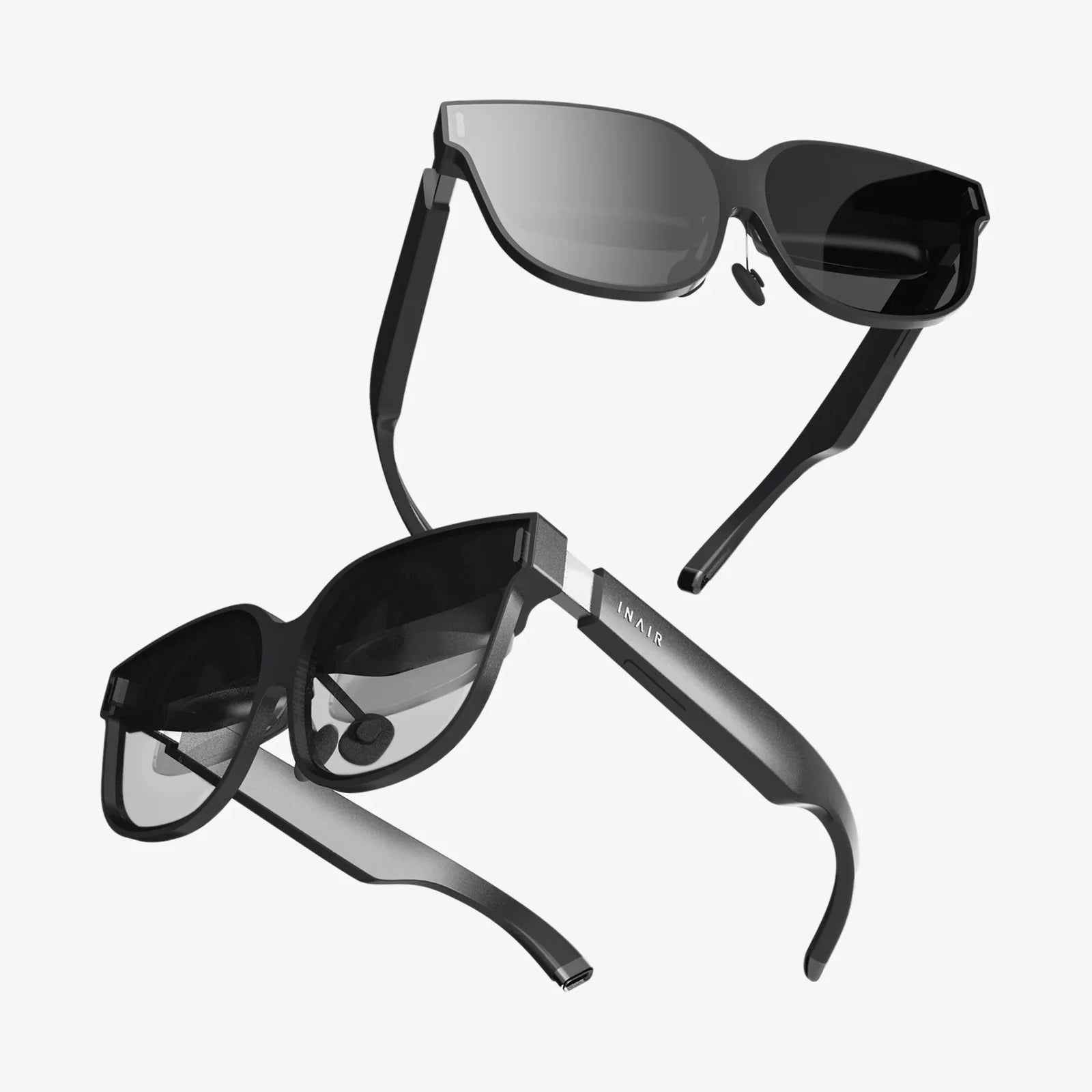
Imagine a world where your field of vision is not just a window to reality but a canvas for digital intelligence, a world where information, entertainment, and productivity are seamlessly overlaid onto your everyday life. This is the promise held by smart goggles, a technological frontier that is rapidly moving from science fiction to tangible commerce. The conversation around this nascent technology is increasingly dominated by a single, compelling metric: net worth. But what exactly constitutes the net worth of smart goggles? Is it merely the sum of their market capitalization and sales figures, or is it a far more complex equation involving technological potential, societal impact, and the power to redefine human-computer interaction? This deep dive goes beyond the balance sheets to explore the multifaceted value of this transformative wearable technology.
Defining the Digital Lens: More Than Just Glasses
Before we can assess value, we must understand the product. Smart goggles are not to be confused with their simpler predecessors. They represent a significant leap in wearable technology, typically featuring:
- Advanced Display Technology: Utilizing micro-OLED or Laser Beam Scanning (LBS) to project high-resolution, immersive imagery directly onto the user's retinas or through transparent waveguides.
- Spatial Computing Capabilities: Equipped with a suite of sensors—including high-fidelity cameras, depth sensors, inertial measurement units (IMUs), and LiDAR—to understand and map the physical environment in real-time.
- Intuitive Interaction Paradigms: Moving beyond touchscreens to embrace voice commands, hand-tracking gestures, and eye-tracking for a more natural and hands-free user experience.
- Standalone Processing Power: Often containing a full computing system-on-a-chip (SoC), allowing them to operate independently of a smartphone or computer, untethering the user physically.
This convergence of technologies creates a device that is not worn for vision correction but for vision augmentation, placing it at the epicenter of the next computing revolution.
The Financial Landscape: Quantifying the Market's Belief
The most direct measure of net worth is financial. The global market for augmented reality (AR) and virtual reality (VR) headsets, a category encompassing smart goggles, is experiencing explosive growth. Valued at a few billion dollars just a few years ago, projections consistently point to a market worth tens of billions within the next five to seven years. This growth is fueled by several key drivers:
- Venture Capital and Corporate Investment: Billions of dollars in funding have flowed into startups and R&D divisions dedicated to developing smart goggles. This massive capital injection is a direct bet on the future value and adoption of the technology. The valuation of companies leading this charge often runs into the multibillions, reflecting investor confidence in their long-term potential to capture market share.
- Enterprise Adoption: While consumer adoption is growing, the enterprise sector is currently the primary engine for revenue. Industries like manufacturing, logistics, healthcare, and field service are deploying smart goggles for remote assistance, digital work instructions, complex assembly guidance, and training. The Return on Investment (ROI) here is clear: reduced errors, faster task completion, enhanced worker safety, and minimized downtime. This practical, revenue-generating application provides a solid foundation for the sector's financial net worth.
- Content and Ecosystem Development: A hardware platform is only as valuable as its software ecosystem. The emergence of dedicated app stores, enterprise software solutions, and immersive content creation tools creates a virtuous cycle. As the ecosystem grows, the hardware becomes more valuable, attracting more users and developers, which in turn further increases the platform's overall net worth.
Beyond the Balance Sheet: The Intrinsic Value Proposition
To view the net worth of smart goggles solely through a financial lens is to miss their profound intrinsic value. Their true worth lies in their potential to solve real-world problems and create new possibilities.
Revolutionizing Industries and Workflows
The enterprise value of smart goggles is arguably their strongest current asset. In a hospital, a surgeon could use them to view a patient's vital stats and 3D surgical plans without looking away from the operating field. An engineer in a remote location could receive expert guidance from a colleague across the globe, who sees what they see and can annotate their reality. This capability to deliver the right information at the right time and in the right place has a transformative net worth on productivity, expertise distribution, and operational efficiency that far exceeds the unit cost of the device.
Redefining Social Connection and Accessibility
Smart goggles hold the potential to create a new paradigm for communication. Instead of flat video calls, imagine sharing a virtual space with photorealistic avatars of friends and family, feeling as if you are sitting together in the same room, regardless of physical distance. For individuals with certain disabilities, this technology could offer unprecedented levels of accessibility, from real-time visual and auditory translations to navigation aids that overlay directions onto the physical world. The social and human net worth of such applications is incalculable.
Unlocking New Realms of Creativity and Experience
The creative and entertainment industries stand on the brink of a renaissance powered by smart goggles. Artists can sculpt in 3D space using virtual clay. Designers can visualize their prototypes at full scale within a real environment. For consumers, entertainment becomes experiential—watching a sports game from the best seat in the house or even from the perspective of a player on the field. This expansion of human experience and creative expression adds a significant layer to the technology's overall valuation.
The Hurdles to Mass Adoption and Value Realization
Despite the immense potential, the path to realizing the full net worth of smart goggles is fraught with challenges that currently act as a counterweight to their valuation.
- The Form Factor Dilemma: For true mass adoption, smart goggles must become as socially acceptable and comfortable to wear as regular eyeglasses. Current generations, while improving, often face criticisms about being too bulky, too heavy, or aesthetically unappealing. Achieving the holy grail of a sleek, all-day wearable remains a significant engineering and design challenge.
- Battery Life and Thermal Management: High-resolution displays and powerful processors are energy-intensive and generate heat. Balancing performance with a battery life that can last a full workday or a long flight is a critical hurdle. Breakthroughs in battery technology and processor efficiency are essential.
- The Privacy Paradox: Devices equipped with always-on cameras and microphones that record the user's environment raise serious and valid privacy concerns. The potential for unauthorized data collection, surveillance, and the creation of detailed behavioral profiles is a major societal hurdle. Establishing robust, transparent, and trustworthy privacy frameworks is not just an ethical imperative but a business one; a failure here could devastate the public's perception of the technology's net worth.
- Content Chasm and Killer Apps: While enterprise has its clear use cases, the consumer market is still searching for its definitive "killer app"—the must-have application that drives every household to own a pair. Until this emerges, consumer adoption may remain slower than proponents hope.
The Future Lens: Projecting the Trajectory of Value
The future net worth of smart goggles is tied directly to the evolution of the technology itself. We are moving towards a paradigm of Ambient Computing, where technology recedes into the background of our lives, providing assistance without requiring our constant attention. Smart goggles are the perfect embodiment of this vision. As they become more powerful, smaller, and more integrated with AI, their value will shift from being a device you use to a constant, intelligent companion you wear.
Furthermore, the concept of the digital twin—a perfect virtual replica of a physical object, system, or city—will be navigated and interacted with most naturally through smart goggles. This will be invaluable for urban planning, advanced simulations, and managing complex systems. The economic net worth of such applications is staggering.
Ultimately, the market will see a stratification, much like the automotive industry. There will be high-end, performance-focused models for professionals and enthusiasts, and more affordable, streamlined models for everyday consumers. Each segment will contribute to the overall financial and functional net worth of the ecosystem.
The true net worth of smart goggles cannot be found on a stock ticker or a quarterly earnings report. It is a composite index of technological ambition, financial investment, practical utility, and human potential. They are not just another gadget; they are a portal to a new way of working, connecting, and experiencing the world. While the path forward has obstacles, the direction is clear. The companies, developers, and policymakers who successfully navigate the challenges of design, privacy, and application will not only capture immense financial value but will also help define the next chapter of human-technology symbiosis. The question is no longer if this technology will become integral to our lives, but how quickly we will adapt to the immense value it places right before our eyes.
Share:
Best Video Quality VR Headset: A Deep Dive into Visual Fidelity
Meta Glasses with Augmented Reality Are Redefining Human Connection and Perception