


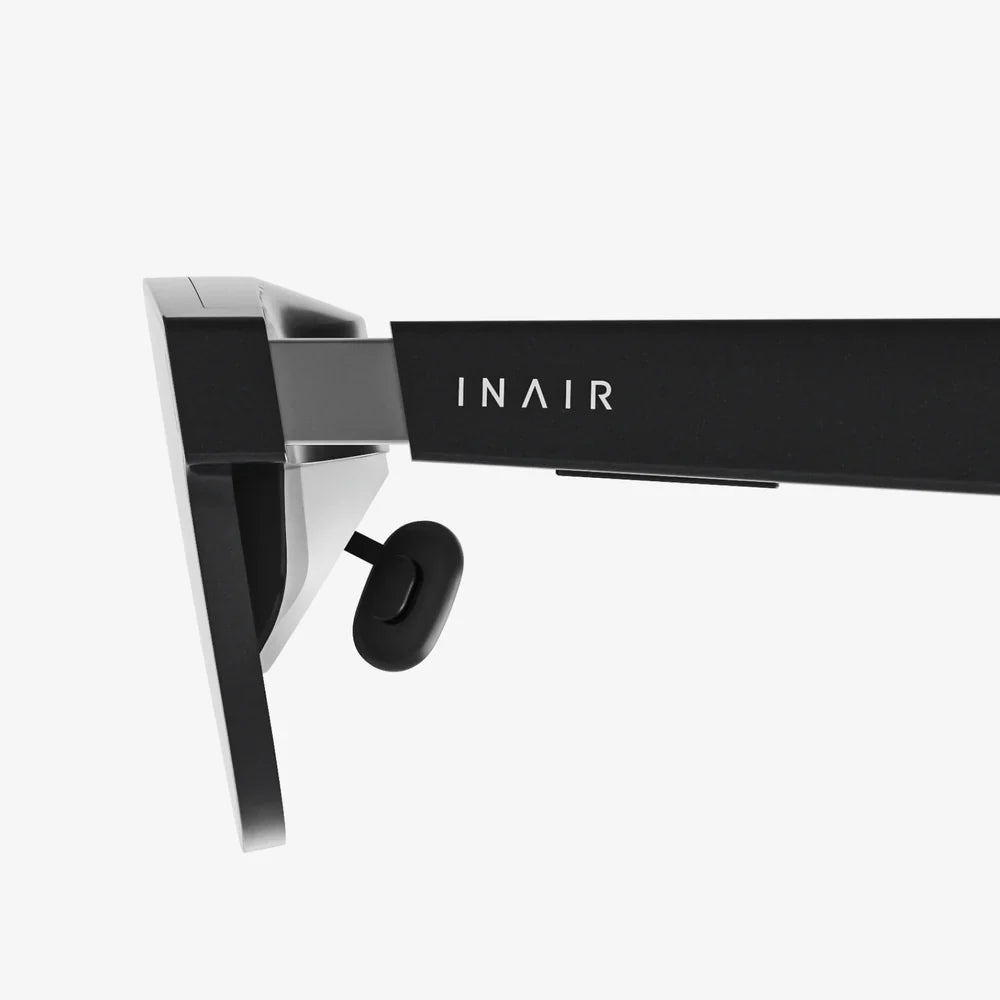
Imagine a world where information doesn’t live on a screen in your hand but is elegantly woven into the very fabric of your reality. Directions appear as a gentle glowing path on the sidewalk in front of you. The history of a monument unfolds in a dynamic holographic display as you gaze upon it. A colleague from across the globe stands in your living room, discussing a 3D model of a new design as if it were physically present. This is not a distant science fiction fantasy; it is the imminent future being unlocked by the rapid development of meta glasses with augmented reality. This technology represents more than just a new gadget; it is a fundamental shift in how we will compute, communicate, and comprehend the world around us, promising to dissolve the barrier between the digital and the physical.
The Architectural Pillars of Augmented Reality Glasses
To understand the revolutionary potential of meta glasses, one must first appreciate the complex symphony of technology required to make them function seamlessly. Unlike virtual reality, which replaces your world, augmented reality aims to supplement it, which presents a unique set of engineering challenges. The core components work in concert to create a convincing and useful blended reality.
At the heart of the experience is the optical system. This is the mechanism that projects digital images onto the user's retina, making them appear as part of the real world. Early systems often used cumbersome optics, but advancements in waveguides, holographic gratings, and microLED displays are miniaturizing these components to fit into a form factor resembling traditional eyewear. The goal is to create bright, high-resolution, and wide field-of-view visuals that can be comfortably viewed for extended periods.
Equally critical is the sensor suite. A sophisticated array of cameras, depth sensors, LiDAR scanners, and inertial measurement units (IMUs) constantly maps the user's environment. These sensors perform simultaneous localization and mapping (SLAM), building a real-time 3D understanding of the room, including the position of walls, furniture, and other objects. This spatial awareness is what allows digital content to be anchored persistently to a physical location—a virtual screen placed on a wall will remain there even if you leave the room and return.
Processing this immense amount of sensor data in real-time requires immense computational power, but it must be done within the strict thermal and power constraints of a device worn on the face. This is where the onboard processing unit comes in, often a specialized chipset designed for AI and computer vision tasks. It handles the complex algorithms for spatial mapping, gesture recognition, and object detection, ensuring a responsive and lag-free experience. Finally, all of this is tied together by intuitive interaction paradigms, moving beyond controllers to voice commands, hand gestures, and even eye-tracking, allowing users to manipulate the digital overlay with natural, effortless motions.
Beyond Novelty: Transformative Applications Across Industries
The true measure of any transformative technology lies not in its specs but in its utility. Meta glasses with augmented reality are poised to redefine workflows and create new possibilities in nearly every professional field.
Revolutionizing the Workspace
In enterprise and industrial settings, the impact is already being felt. For a field technician repairing a complex piece of machinery, meta glasses can overlay step-by-step instructions, highlight specific components with arrows, and display real-time sensor data directly in their line of sight, freeing their hands to work and drastically reducing errors. In architecture and construction, designers can walk through full-scale holographic models of their buildings before a single foundation is poured, identifying design flaws and collaborating with clients in immersive ways. Remote assistance becomes profoundly more effective, as an expert can see exactly what a field worker sees and annotate their reality with helpful notes and diagrams.
Redefining Education and Training
The educational potential is staggering. Instead of reading about ancient Rome, students can walk through a digitally reconstructed Forum, watching historical events play out around them. Medical students can practice complex surgical procedures on hyper-realistic holographic patients, gaining invaluable experience in a zero-risk environment. Mechanics-in-training can see the internal workings of an engine superimposed over the physical block, understanding the flow of fluids and the interplay of parts in a way a textbook could never convey. This shift from abstract learning to experiential, contextual learning will deepen understanding and retention.
Enhancing Social Connection and Accessibility
On a societal level, meta glasses promise to forge stronger human connections. The vision for the metaverse is not about isolating ourselves in virtual worlds, but about enhancing our physical interactions. Imagine a family gathering where a relative who cannot travel can join as a photorealistic hologram, sitting on the couch and conversing naturally. For individuals with visual impairments, AR glasses could amplify contrast, recognize and label objects, and read text aloud from the environment, granting a new level of independence. Real-time translation could be displayed over street signs and conversations, breaking down language barriers like never before.
The Invisible Bridge: Navigating the Challenges Ahead
For all its promise, the path to ubiquitous adoption of meta glasses is fraught with significant technical, social, and ethical hurdles that must be thoughtfully addressed.
The Form Factor Conundrum
The ultimate goal is a device that is socially acceptable, comfortable to wear all day, and powerful. Today's prototypes often struggle with balancing battery life, processing power, and size. A device that is too heavy, too hot, or too obviously "techy" will fail to integrate into daily life. The ideal pair of meta glasses should be indistinguishable from fashionable eyewear, a challenge that demands breakthroughs in materials science, battery technology, and miniaturization.
The Privacy Paradox
This is perhaps the most pressing concern. Glasses with always-on cameras and microphones represent a unprecedented privacy challenge. The constant capture of first-person video and audio raises alarming questions about surveillance, data ownership, and consent. How do we prevent these devices from becoming the ultimate tool for corporate or government oversight? Robust, transparent data policies, on-device processing for sensitive information, and clear visual indicators for when recording is active will be non-negotiable prerequisites for public trust. The industry must prioritize privacy by design, not as an afterthought.
The Digital Divide and Ethical Design
There is a real risk that this powerful technology could exacerbate existing social inequalities, creating a new digital divide between those who can afford AR glasses and those who cannot. Furthermore, the potential for immersive advertising and distraction is immense. Will our field of vision become a new battleground for attention, cluttered with unwanted notifications and promotions? Ethical design principles must ensure that these technologies augment human agency rather than exploit it, enhancing our reality without overwhelming it.
A Glimpse into the Next Decade
The evolution of meta glasses will not be a single event but a gradual progression. The next five to ten years will see them become lighter, more powerful, and more integrated with the AI ecosystems that power them. They will evolve from being task-specific tools for professionals to general-purpose companions for consumers. We will move from simple overlays to persistent digital layers that are shared and experienced collaboratively, giving rise to a true AR cloud—a digital twin of our world that anyone can access and contribute to.
The smartphone defined the last 15 years of human interaction, compressing our world into a palm-sized slate. Meta glasses with augmented reality have the potential to be the antidote to that compression, pushing information off the glass and back into the world where it belongs. They represent a return to a more natural, heads-up, and hands-free way of living. The transition will be complex, raising questions we are only beginning to contemplate. But the destination is a world where technology fades into the background, not as a distraction, but as an invisible lens that brings the hidden layers of our universe into brilliant, actionable focus. The next great platform for human experience is being built not on your desk, but on your face, and it will change everything.
Share:
Smart Goggles Net Worth: A Deep Dive into the Value and Future of Wearable Tech
VR Headset Not for Phone: The Ultimate Guide to Standalone and PC-Powered Virtual Reality