


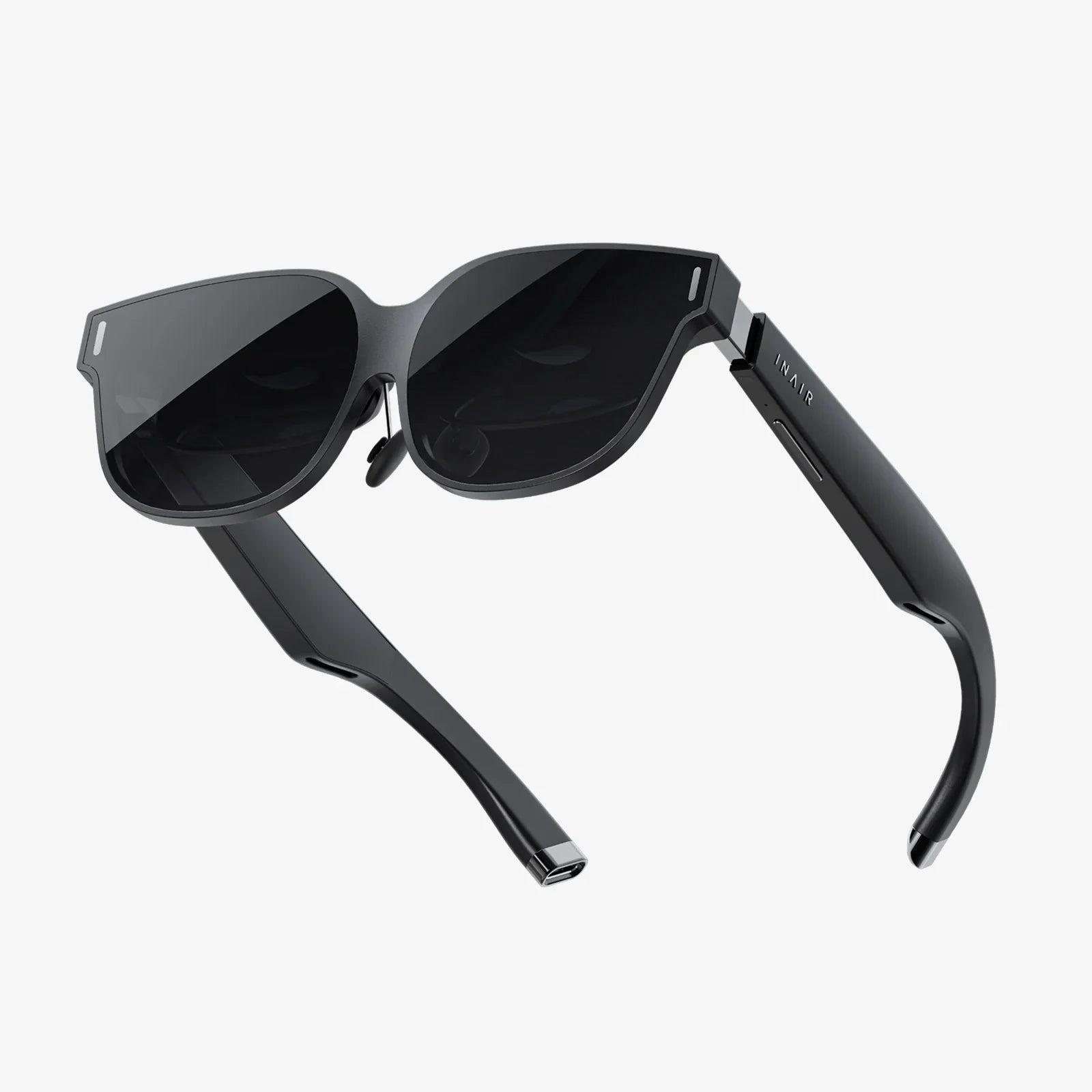
Imagine reaching out into a digital world and seeing your own hands—every flex of a finger, every subtle gesture—perfectly mirrored by a virtual avatar. This isn't the distant future of science fiction; it's the palpable present, made possible by the best VR headsets with finger tracking. This technology represents a monumental leap from clunky controllers to intuitive, natural interaction, fundamentally reshaping our relationship with virtual spaces. It’s the key that unlocks a level of presence and immersion previously unattainable, making the virtual experience feel less like using a tool and more like using your own body. If you're seeking the pinnacle of VR interaction, your journey begins and ends with understanding this groundbreaking feature.
The Evolution of VR Interaction: From Buttons to Biology
The history of virtual reality input is a story of striving for naturalism. Early systems relied on simple joysticks or gamepads, tools that constantly reminded users they were interacting with a simulation. The advent of standard motion controllers was a huge step forward, allowing us to point, shoot, and swing with our arms. Yet, they still acted as a intermediary, a plastic prosthesis that our brain had to interpret. We pressed buttons to grab, to trigger an action, a translation layer between intent and outcome.
Finger tracking dismantles this layer. Instead of mapping a binary grip button to a closed virtual hand, it reads the nuanced positions of your individual digits. This shift is profound. It moves the language of interaction from the mechanical—clicks and presses—to the biological—pinches, points, and waves. This biomimicry is crucial because our hands are our primary tools for manipulating and understanding the physical world. By bringing them faithfully into the virtual one, developers can create experiences that feel instinctive, reducing the cognitive load of learning control schemes and allowing for deeper, more emotional connections to the digital environment.
How Does Finger Tracking Technology Work?
There are two primary methods used by leading headsets to achieve this digital puppetry, each with its own strengths and considerations.
Inside-Out Optical Tracking (Camera-Based)
This is the most common method found in modern, all-in-one headsets. It utilizes a series of small, strategically placed cameras on the headset itself to observe the user's hands. Sophisticated software algorithms and machine learning models then analyze the video feed in real-time to reconstruct a skeletal model of the hand, identifying the position of each joint and knuckle.
Advantages:
- No Additional Hardware: Your hands are the controllers. There's nothing extra to charge or hold.
- Natural Transitions: Easily switch between using hands and holding physical controllers for different tasks.
- Robust Gesture Recognition: Excellent at recognizing broad gestures like waving, thumbs-up, or open-palm pushing.
Considerations:
- Limited Field of View: Cameras can't see your hands if they are outside their view (e.g., behind your back or too close to the headset).
- Lighting Dependent: Performance can degrade in very low-light or extremely bright environments.
- Precision: While excellent, very fine motor movements can sometimes be less accurately tracked than with other methods.
Controller-Based Tracking
This approach embeds the tracking technology directly into the handheld controllers. Instead of cameras, it uses a combination of sensors, including capacitive touch sensors on the controller's surface. These sensors detect where your fingers are making contact, estimating their curl and position based on this touch data, often supplemented by internal orientation sensors.
Advantages:
- High Fidelity: Often provides exceptionally precise tracking of finger placement on the controller itself.
- Full Range of Motion: Since the sensors are in your hands, tracking isn't limited by the headset's camera view.
- Haptic Feedback: Controllers can provide tactile vibration feedback to simulate touch, enhancing immersion.
Considerations:
- Requires Hardware: You must hold the controllers, which some users may find less freeing.
- Battery Dependency: Controllers need to be powered on and charged.
Why Finger Tracking is a Game-Changer: Applications Beyond Gaming
While grabbing virtual ammo or pulling a bowstring feels incredible in games, the implications of finger tracking extend far beyond entertainment.
Professional and Creative Workflows
In virtual design and prototyping, architects and engineers can manipulate 3D models with a pinch and drag, intuitively scaling and rotating components as if they were physical objects. Artists and sculptors gain a powerful new medium; digital clay can be pinched, pulled, and carved with their bare hands, offering a tactile connection to their work that a mouse or stylus cannot replicate. This naturalism drastically shortens the learning curve for complex 3D software.
Social Presence and Communication
Communication is more than words; it's a symphony of non-verbal cues. Finger tracking enables avatars to convey subtle hand gestures during conversation—a thoughtful stroke of the chin, an emphatic point, a reassuring touch. This adds a rich layer of emotional context and personality to virtual meetings and social gatherings, fostering a stronger sense of being "with" someone rather than just talking to a representation of them.
Training and Simulation
For high-stakes fields like surgery, mechanics, or chemistry, finger tracking allows for realistic practice of delicate procedures. Trainees can practice suturing, assembling intricate machinery, or handling virtual materials, developing muscle memory and technique without the risk, cost, or waste associated with real-world training. The fidelity of finger movements is critical for these applications to be effective.
Accessibility
For individuals with certain physical disabilities, standard controllers can be a barrier to entry. Finger tracking, particularly camera-based systems, can offer a new avenue for interaction. Custom gestures and the ability to interact without needing to grip an object can make virtual experiences more accessible and empowering for a wider range of users.
Key Features to Look For in a Headset with Finger Tracking
Not all finger tracking is created equal. When evaluating your options, consider these critical factors:
- Tracking Fidelity and Latency: How accurate and responsive is the tracking? Is there a noticeable delay between your movement and the virtual hand's movement? Look for systems that offer smooth, low-latency performance.
- Number of Tracked Points: Does the system track 21 points of movement (the key joints of each finger)? More points generally equate to more realistic and expressive hand poses.
- Tracking Volume: What is the functional range where your hands can be seen? A larger tracking volume allows for more natural and expansive movements without fear of losing tracking.
- Software and Developer Support: The hardware is only as good as the software that supports it. A robust SDK (Software Development Kit) and active developer community ensure a growing library of compatible applications.
- Ergonomics and Comfort: Since immersion is the goal, the headset itself must be comfortable for extended periods. Consider weight, balance, and interface materials.
- Ecosystem and Content Library: Are there compelling applications, games, and experiences that truly leverage this technology? A headset is an investment in its entire ecosystem.
The Future is in Your Hands
The trajectory of finger tracking points toward even greater integration and realism. We can anticipate the convergence of optical and controller-based methods for flawless tracking in all scenarios. The addition of advanced haptics, perhaps through gloves or ultrasound technology, will provide the sensation of touch, allowing you to feel the texture of a virtual object or the resistance of a virtual switch. Ultimately, this technology is a stepping stone toward the holy grail of VR: full-body presence, where our entire physical form is seamlessly translated into the digital realm, blurring the line between real and virtual forever.
The quest for the ultimate virtual reality experience is, at its heart, a quest to forget the technology itself—to be fully present in another world. The best VR headsets with finger tracking are the current vanguard of this mission, replacing cold, abstract inputs with the warm, familiar language of human gesture. It’s a technology that doesn’t ask you to learn its language but instead learns yours, listening to the silent poetry of your hands and giving it form in worlds of endless possibility. This is more than an upgrade; it's a revelation, and it’s waiting for you to reach out and grab it.
Share:
Woman Using VR Headset: The Unseen Revolution Reshaping Reality
VR Headset for PC India: The Ultimate Guide to Immersive Computing