


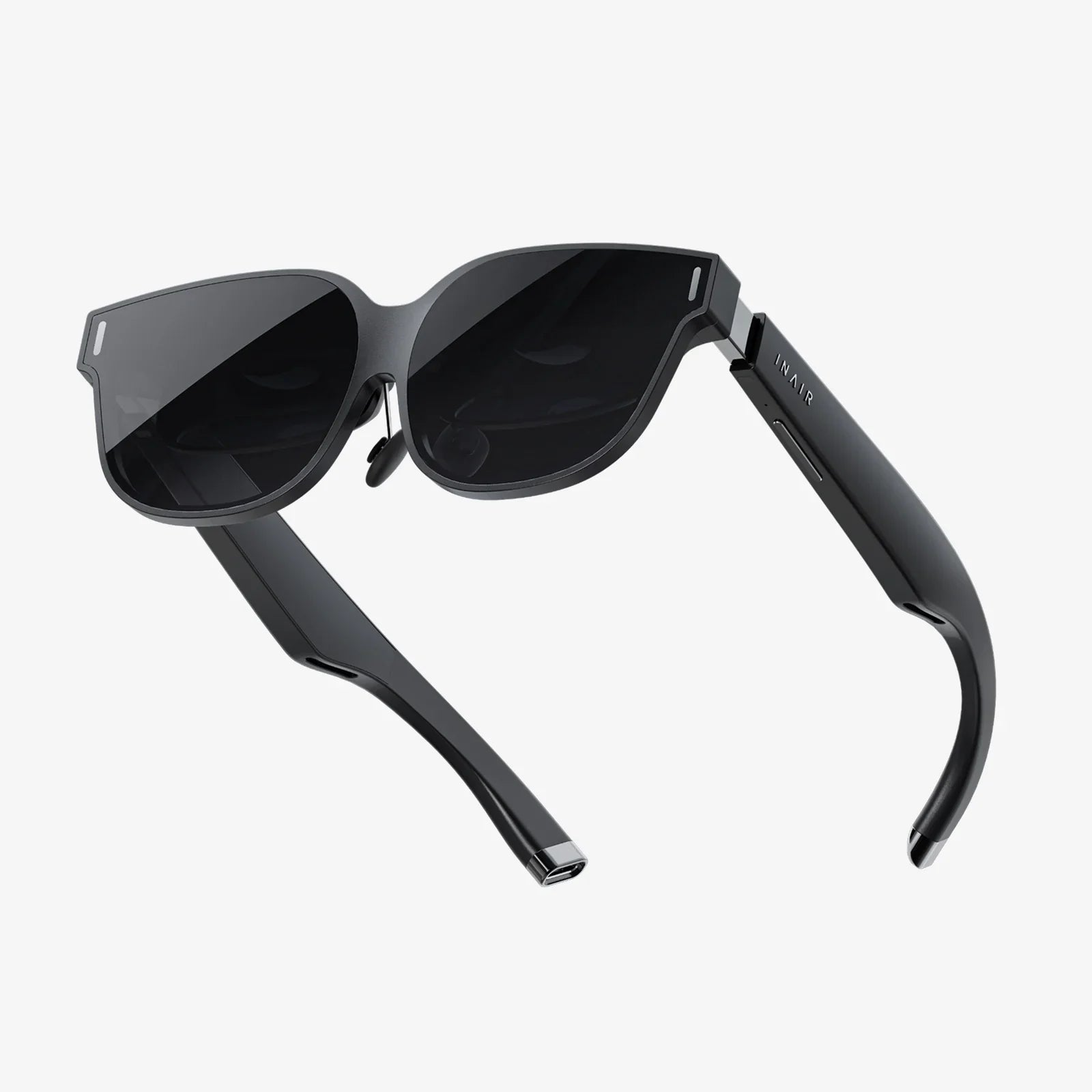
The digital frontier is calling, and the gateway is strapped to your face. You've seen the breathtaking trailers, heard the whispers of fully immersive worlds, and felt the pull of a technology that promises to transport you anywhere, from the deepest oceans to the farthest galaxies. But with a market bursting with options, specs, and bold claims, a single, daunting question remains: what is the absolute best VR headset you can buy? The answer isn't a one-size-fits-all proclamation; it's a key that unlocks a universe tailored precisely to your desires, your budget, and your definition of adventure. This definitive guide is your trusted map to that universe, cutting through the jargon to help you find your perfect portal to the virtual.
Beyond the Hype: Defining the "Best" in Virtual Reality
Labeling any single device as the undisputed "best" is a fool's errand, because excellence in VR is deeply personal. For a hardcore gamer, "best" might mean raw graphical fidelity and a vast library of intense titles. For a fitness enthusiast, it could mean a lightweight, comfortable design for long workout sessions. A parent might prioritize ease of use and child-friendly content, while a creative professional could value resolution and creative tools above all else. Therefore, our quest is not to crown a single winner but to identify the champions across key categories, empowering you to make an informed decision based on what truly matters to you.
The Contenders: A Landscape of Immersion
The modern VR landscape is broadly divided into three distinct archetypes, each with its own philosophy, strengths, and ideal user.
1. The Standalone Sovereigns: Unshackled Freedom
These all-in-one devices represent the most accessible and user-friendly entry point into VR. With a processor, storage, and sensors all contained within the headset itself, they require no wires to a powerful computer or gaming console. They are the epitome of pick-up-and-play convenience.
Who They're For:
First-time users, families, those who value convenience and portability, fitness users, and people with limited space.
Key Strengths:
- Wireless Freedom: No cables means no tangles and no fear of tripping, allowing for complete 360-degree movement.
- Ease of Use: Setup is often incredibly simple, often involving little more than putting on the headset and setting a guardian boundary.
- Affordability: Generally, they offer the lowest barrier to entry, with no need for a expensive gaming PC.
- Portability: Easy to take to a friend's house or move between rooms.
Considerations:
- Processing Power: Being self-contained, they cannot match the graphical prowess of a headset powered by a top-tier gaming PC.
- Graphics: Visuals are often comparable to a mobile gaming experience, which is impressive but not photorealistic.
- Battery Life: Sessions are limited by the internal battery, typically lasting around 2-3 hours.
2. The PC-Connected Powerhouses: The Fidelity Kings
For those who demand the highest possible visual fidelity, the most complex simulations, and the deepest, most graphically intensive games, PC-connected headsets are the undisputed champions. These devices act as high-resolution displays, leveraging the immense processing power of a capable gaming computer to render stunningly realistic worlds.
Who They're For:
Enthusiast gamers, simulation fans (flight sims, racing sims), professionals in design and architecture, and anyone for whom visual quality is the top priority.
Key Strengths:
- Unmatched Graphics: Experience the pinnacle of VR visual quality, with high resolutions, detailed textures, and advanced lighting effects.
- Extensive Game Library: Access to massive, AAA-grade VR titles and countless indie experiences on platforms like SteamVR.
- Advanced Features: Often feature higher refresh rates for smoother motion, wider fields of view, and more precise tracking.
- Full Body Tracking: Many systems support additional trackers for a more complete and immersive avatar representation.
Considerations:
- Cost: Requires a significant investment not only in the headset but also in a powerful gaming PC that meets the necessary specifications.
- Complex Setup: Involves connecting cables, setting up base stations or sensors for tracking, and managing PC drivers and software.
- Tethered Experience: A cable connects the headset to the PC, which can limit movement and requires careful cable management.
3. The Console Companion: Plug-and-Play Excellence
Occupying a unique middle ground, this category is tied to a specific video game console. It offers a curated, high-quality experience that sits comfortably between the accessibility of standalone and the power of PC VR.
Who They're For:
Owners of the specific console who want a premium, hassle-free VR experience with high-quality exclusive games.
Key Strengths:
- Optimized Experience: Games are built specifically for the hardware, ensuring smooth performance and polish.
- High Quality: Offers much better visuals and processing power than standalone headsets, thanks to the console's hardware.
- Simplified Setup: While it involves cables, the setup is generally more streamlined than a PC VR rig, as it only connects to one device.
- Strong Exclusive Titles: Often features must-play games that are not available on other platforms.
Considerations:
- Platform Lock-in: You are entirely dependent on the ecosystem of the single console.
- Wired: Like PC VR, it is a tethered experience.
- Requires the Console: Obviously, you must own the specific console to use it.
The Deciding Factors: Your Personal Checklist
Now that you know the categories, how do you choose within them? Focus on these critical specifications and features.
Visual Clarity: Resolution, Lens & Display Tech
This is arguably the most important factor for immersion. Key terms to know:
- Resolution: Measured in pixels per eye (e.g., 1832 x 1920). Higher numbers generally mean a sharper, clearer image with less "screen door effect" (the visible lines between pixels).
- Refresh Rate: Measured in Hertz (Hz), this is how many times the image updates per second. A higher rate (90Hz and above) leads to smoother motion and can significantly reduce motion sickness for some users.
- Lens Quality: Pancake lenses are a newer technology that allow for a much slimmer and lighter headset design while improving clarity and the "sweet spot" (the area where the image is perfectly in focus). Fresnel lenses are older but effective; they can sometimes cause god rays (lens flare effects).
- Field of View (FoV): How much of the virtual world you can see at once, measured diagonally like a TV. A wider FoV (110 degrees and up) feels more immersive than a narrower one.
Tracking: How the World Follows Your Move
How does the headset know where you are and what you're doing?
- Inside-Out Tracking: Cameras on the headset itself track the environment and the controllers. This is the standard for standalone headsets and many modern PC headsets. It requires no external sensors, making setup easier, but can have issues if your controllers are held outside the headset's camera view.
- Outside-In Tracking: External sensors or base stations placed around the room track sensors on the headset and controllers. This is renowned for its ultra-precise, millimetric accuracy, especially important for competitive gaming and full-body tracking. The trade-off is a more complex setup with wires running to the sensors.
Comfort & Ergonomics: The Long-Haul Experience
A headset can have the best specs in the world, but if it's painful to wear, you won't use it. Consider:
- Weight Distribution: Is the weight front-heavy? A good counter-balancing strap system is crucial.
- Head Strap: A rigid, halo-style strap or an elite-style strap with a top band is almost always more comfortable for long sessions than a simple elastic strap.
- Facial Interface: The material that touches your face. Look for breathable, comfortable foam that is easy to clean or replace.
- IPD Adjustment: Interpupillary Distance adjustment allows you to physically shift the lenses to match the distance between your eyes. This is critical for visual clarity and comfort. Software-only adjustment is less effective.
Audio: Hearing the Future
Sound is half of the immersion.
- Built-in Speakers: Many headsets feature directional speakers that hover near your ears, providing spatial audio while allowing you to hear your real-world surroundings.
- 3.5mm Jack: The option to plug in your own high-quality headphones is a major plus for audiophiles.
- Built-in Microphone: Quality varies widely. Good noise cancellation is essential for clear communication in multiplayer games.
The Content Library: Your Virtual Playground
The hardware is nothing without the software. Investigate the storefront (e.g., Meta Quest Store, SteamVR, PlayStation Store) to see if it has the games and apps you want. Does it have the social platforms you're interested in? The fitness apps? The creative tools?
Matching the Headset to the User
For the Absolute Beginner & Family:
Your best bet is almost certainly a modern standalone headset. The combination of low friction, wireless freedom, and a robust, curated library of accessible games and experiences makes it the ideal starting point. You can enjoy it straight out of the box without any technical know-how.
For the Dedicated Gamer & Tech Enthusiast:
If you already own a powerful gaming rig or are willing to build one, a high-end PC-connected headset will provide the most breathtaking and cutting-edge experiences available. You'll be able to push the boundaries of visual fidelity and access the vast majority of VR content ever created.
For the Console Devotee:
If your gaming life already revolves around a specific console and you crave a premium, integrated experience with fantastic exclusive titles, the headset designed for that console is a perfect and compelling choice.
For the Fitness Fanatic:
Focus on a lightweight, comfortable, and wireless standalone headset with a strong library of fitness applications. Breathability and a secure fit during intense movement are paramount. The ability to easily wipe down the facial interface after a sweaty session is a huge bonus.
The Future is Now, and It's Waiting for You
The journey to find the best VR headset is a personal pilgrimage into what you value most in digital escape. It’s about weighing the untethered joy of a standalone device against the raw, breathtaking power of a PC-driven beast, or opting for the polished exclusivity of a console ecosystem. There has never been a better time to take the plunge. The technology has matured, the libraries are overflowing with incredible content, and the sense of wonder that comes from stepping into another world is more palpable than ever. Your perfect portal is out there, designed not just to show you a new screen, but to open a new door. All you have to do is take the first step through it.
Share:
Top VR Goggles for iPhone: Your Ultimate Guide to Mobile Immersion
Best Non-Standalone VR Headset: Your Ultimate Guide to Tethered Immersion