


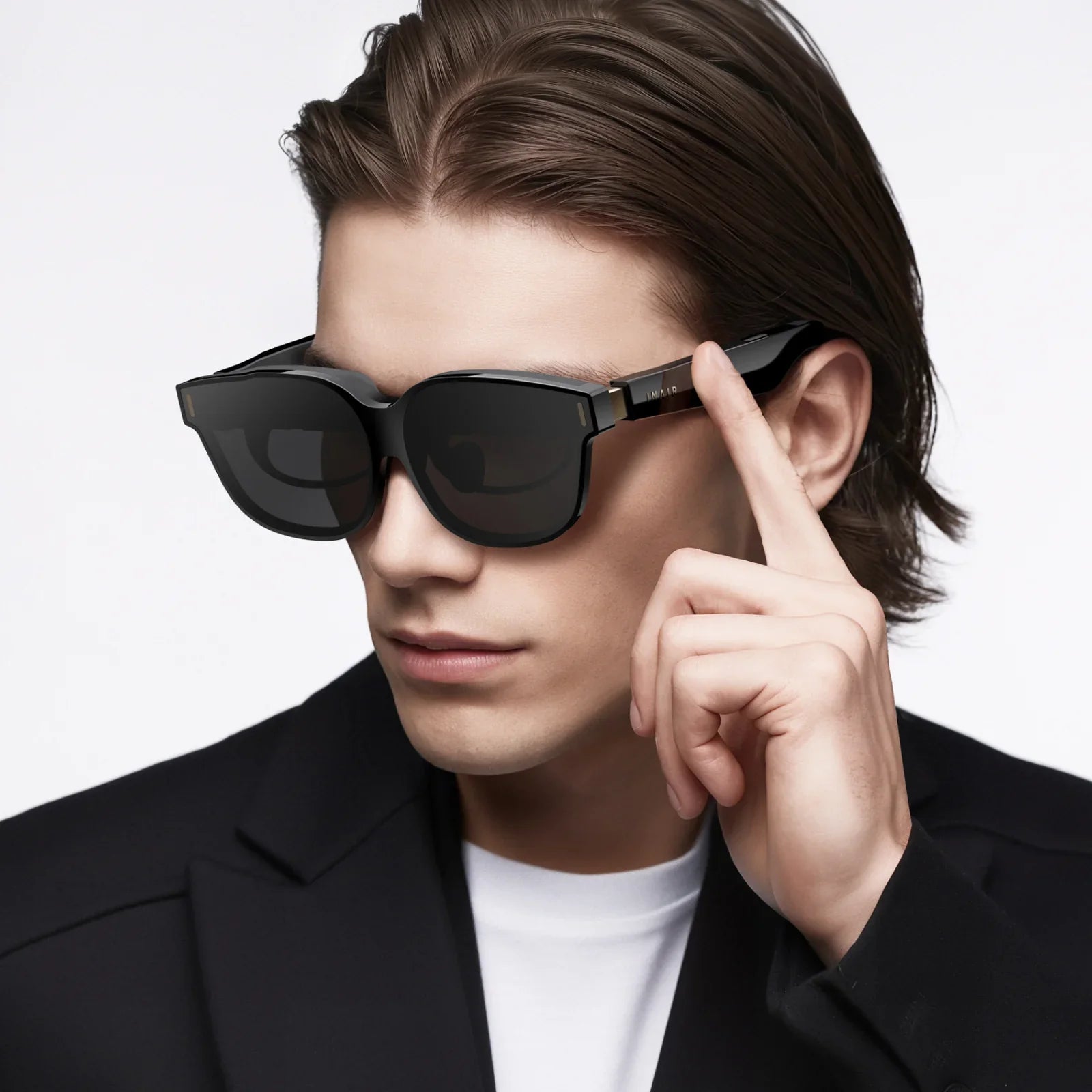
Imagine a world where digital information doesn't live on a screen in your hand, but floats seamlessly in the space around you, interacting with your physical reality. A world where your productivity setup is a boundless array of virtual monitors, your entertainment is a private cinema projected onto your retinas, and your virtual meetings feel as tangible as being in the same room. This is no longer the stuff of science fiction; it's the promise of the best XR glasses of 2024, and the future is putting them on our faces right now. The race to dominate this new computing paradigm has never been more intense, and this year's crop of devices represents a monumental leap towards making blended reality an indispensable part of our daily lives.
Demystifying the XR Landscape: AR, VR, and MR Explained
Before we dive into the devices themselves, it's crucial to understand the spectrum of experiences encapsulated by the term 'XR' or Extended Reality. XR is the umbrella that covers all immersive technologies.
Virtual Reality (VR) is a fully digital, immersive experience. By blocking out the physical world entirely, VR headsets transport you to a computer-generated environment for gaming, simulation, or social interaction. Traditionally, these have been the most powerful but also the most isolated experiences.
Augmented Reality (AR) overlays digital information onto the real world. Think of navigation arrows painted onto the road in front of you or a virtual pet running around your living room. The best AR glasses aim for a sleek, eyeglasses-like form factor, prioritizing awareness of your surroundings.
Mixed Reality (MR) is the most advanced fusion of the two. MR devices not only overlay digital content but also understand and interact with the physical environment. A virtual character can hide behind your real sofa, or a virtual monitor can be locked in place on your real wall. This requires sophisticated sensors and processing, making it the holy grail of immersive computing. In 2024, the lines between these categories are blurring, with the best XR glasses offering a versatile blend of all these capabilities.
The Engine Room: Key Technologies Powering 2024's XR Glasses
The dramatic improvements we're seeing this year are driven by breakthroughs in several core technologies. Understanding these will help you appreciate what makes the best XR glasses of 2024 truly special.
Visual Fidelity: Pancake Lenses and Micro-OLED Displays
Gone are the days of bulky, dim visuals. The widespread adoption of pancake lenses has been a game-changer. These complex optical systems use a folded path to dramatically reduce the distance between the display and your eyes, slimming down the overall form factor of the glasses without sacrificing image quality.
Paired with these lenses are stunning Micro-OLED displays. Unlike the LCDs of older headsets, these self-emissive panels offer incredible pixel density, perfect blacks, vibrant colors, and a high refresh rate. The result is a visual experience that is sharper, brighter, and more immersive than ever before, with significantly reduced screen-door effect (seeing the gaps between pixels).
Inside-Out Tracking and Spatial Mapping
Modern XR glasses have eliminated the need for external sensors or lighthouses. Using a array of high-resolution cameras and sensors, they perform inside-out tracking. This means the device itself maps your room and tracks the position of your head and controllers in real-time with astonishing accuracy. This is the foundation for convincing MR; the device needs to know the geometry of your space to anchor digital objects convincingly. In 2024, this technology has become faster, more precise, and more power-efficient.
On-Device AI and Neural Processing Units (NPUs)
AI is no longer a cloud-based service for XR; it's happening directly on the device. Dedicated NPUs are handling complex tasks like hand-tracking (allowing you to use your bare hands as controllers), scene understanding (identifying tables, walls, and objects), and voice commands. This on-device processing is crucial for responsiveness and privacy, creating intuitive and natural interactions that feel like magic.
Choosing Your Portal: A Framework for Selecting the Best XR Glasses
With several compelling options on the market, the "best" pair of glasses is entirely dependent on your needs. Ask yourself these key questions.
What Is Your Primary Use Case?
Productivity & The Metaverse Office: Are you looking to replace your monitors with virtual screens for a portable, massive workspace? Prioritize devices with high-resolution displays for reading text, comfortable ergonomics for long sessions, and strong support for productivity applications.
Immersive Gaming & Entertainment: If your goal is to play cutting-edge VR games or watch movies on a giant virtual screen, you need a device with a high refresh rate (90Hz or above), powerful processing, excellent controllers, and a vast, high-quality content library.
Social Connection & Fitness: For attending virtual events, hanging out with friends in social spaces, or using fitness apps, a combination of comfort, a good built-in microphone and audio system, and a strong social ecosystem is key.
On-the-Go Augmentation: If you want lightweight glasses for getting directions, checking messages, and viewing contextual information while walking around, you’ll want to focus on true AR glasses with a transparent display and all-day battery life, often paired with a companion device.
Standalone vs. Tethered: The Power and Freedom Dilemma
Standalone devices have all the computing power built into the headset itself. They offer incredible freedom and ease of use—you can use them anywhere. However, they are constrained by battery life, thermal limits, and mobile-grade processors.
Tethered devices connect to a powerful external computer or game console. This unlocks the highest possible graphical fidelity and performance for the most demanding games and professional applications. The trade-off is, of course, that your movement is limited by the length of a cable, though wireless streaming options are improving.
The Comfort & Fit Factor
You can have the most technologically advanced device in the world, but if it's uncomfortable, you won't use it. Consider weight distribution (does it press on your cheeks or forehead?), materials, and adjustability. The best devices in 2024 offer multiple facial interface options and strap designs to ensure a secure and comfortable fit for a wide range of face shapes during extended use.
Beyond the Hype: The Real-World Applications of XR in 2024
While gaming is a massive driver, the applications for the best XR glasses extend far beyond entertainment.
- Remote Work & Collaboration: Engineers on different continents can collaborate on a 3D model as if it were sitting on the table between them. Colleagues can meet in a virtual boardroom with shared whiteboards and presentations, feeling a sense of presence that video calls cannot replicate.
- Design & Prototyping: Architects can walk clients through virtual builds of their homes before a single brick is laid. Automotive designers can life-size virtual prototypes of new cars, saving millions in physical materials.
- Education & Training: Medical students can practice complex surgical procedures on virtual patients. History students can take a field trip to ancient Rome. The potential for experiential learning is limitless.
- Retail & Try-Before-You-Buy: See how a new sofa would look in your living room or how a pair of glasses would look on your face, all from the comfort of your home.
Gazing into the Crystal Ball: The Future Beyond 2024
The progress we've seen is just the beginning. The trajectory points towards even more incredible advancements. We are moving towards varifocal displays that dynamically adjust to where your eyes are focused, solving the vergence-accommodation conflict that can cause eye strain. Lightfield technology promises to project light rays that mimic natural vision, creating holograms that are visually indistinguishable from physical objects. Form factors will continue to shrink, eventually converging on the ultimate goal: a pair of stylish sunglasses that can effortlessly switch between AR immersion and a full VR escape. The devices of 2024 are the foundational stepping stones to this ubiquitous, always-available computing future.
The journey to find the perfect pair of XR glasses is deeply personal, a balance of raw power, elegant design, and a thriving software ecosystem. This year's contenders have turned the corner from promising prototypes into powerful, usable tools and thrilling entertainment platforms. They are no longer just for early adopters; they are for creators, professionals, gamers, and anyone ready to expand their reality. The question is no longer if you will eventually wear a computer on your face, but which of these incredible portals you will choose to step through first.
Share:
VR AR Market Trends 2025: The Next Frontier of Immersive Technology
VR AR Market Trends 2025: The Next Frontier of Immersive Technology