


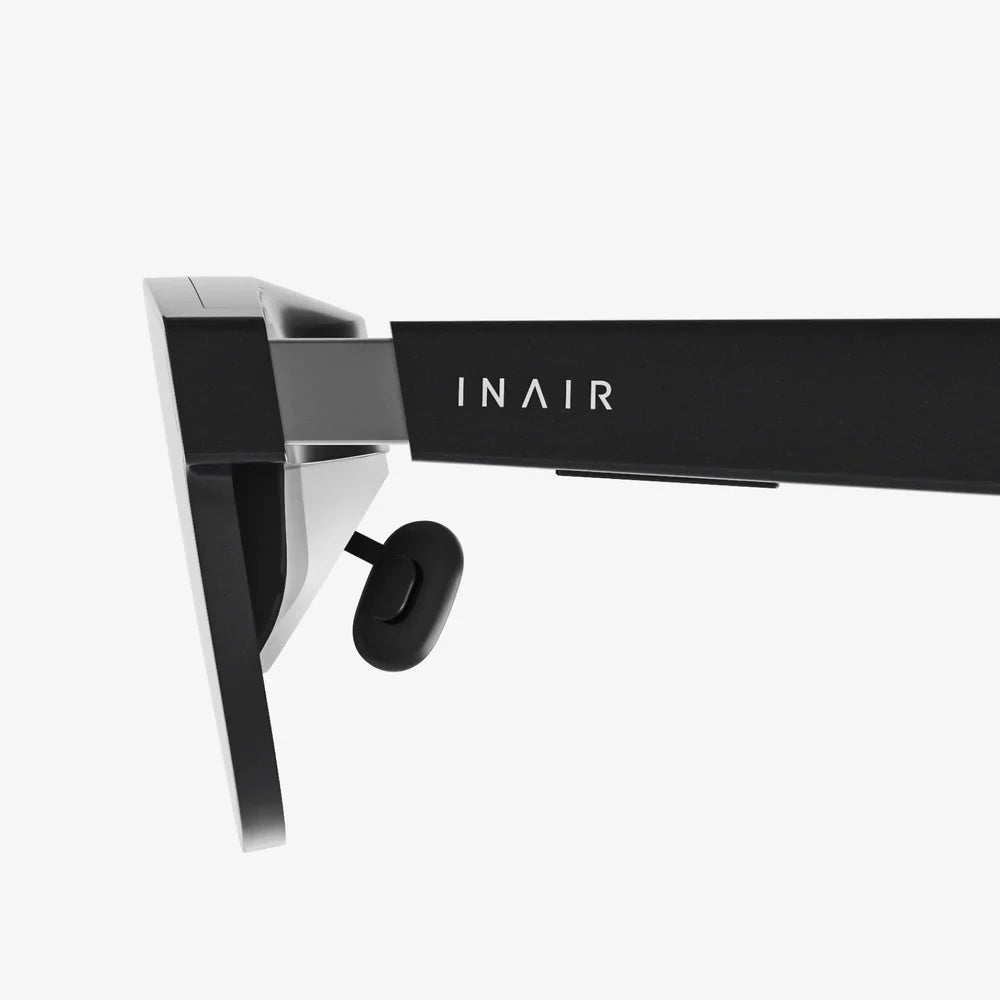
Imagine a world where your physical surroundings are seamlessly woven with a layer of digital intelligence, where collaboration happens across continents as if you were in the same room, and where complex data is visualized and manipulated with the wave of a hand. This is not a distant science fiction fantasy; it is the tangible future being built today, and by 2025, it will begin to redefine entire industries and how we interact with information. The convergence of virtual and augmented reality is accelerating at a breathtaking pace, moving beyond niche gaming and novelty applications to become a fundamental pillar of the next computing paradigm. The journey to 2025 is not just about better hardware; it's about the creation of an entirely new ecosystem of value, productivity, and human connection.
The Enterprise Metaverse Takes Center Stage
While consumer applications often capture headlines, the most significant and immediate growth by 2025 will be driven by enterprise adoption. Companies are moving beyond pilot programs and proofs-of-concept to full-scale implementation, recognizing the immense return on investment that immersive technologies offer. The enterprise metaverse is emerging as a strategic platform for training, design, remote assistance, and collaborative workspaces.
In sectors like manufacturing and logistics, AR is revolutionizing workflows. Technicians on the factory floor can wear sleek, hands-free glasses that overlay precise assembly instructions, highlight potential faults in machinery with thermal imaging, and connect them instantly with remote experts who can annotate their real-world view. This not only drastically reduces error rates and downtime but also empowers a less experienced workforce with the knowledge of seasoned veterans. By 2025, we expect this to become a standard tool for field service and complex assembly, integrated directly into enterprise resource planning (ERP) and product lifecycle management (PLM) systems.
Similarly, VR is becoming the gold standard for high-stakes training in industries where mistakes are costly or dangerous. From surgeons practicing complex procedures on virtual patients to oil rig workers navigating safety protocols in hyper-realistic simulations, VR provides a safe, repeatable, and measurable training environment. The data collected from these sessions—eye tracking, decision-making paths, biometric responses—provides invaluable insights for improving both the training program and the trainee's performance. By 2025, we will see the rise of AI-driven training modules that adapt in real-time to the user's actions, creating a truly personalized and dynamic learning experience.
The Blurring Line Between VR and AR: The Age of Mixed Reality
The distinction between virtual reality (fully digital) and augmented reality (digital overlays on the real world) is rapidly dissolving. The future, and a key trend for 2025, belongs to Mixed Reality (MR)—a spectrum of experiences that seamlessly blends the physical and digital worlds. This is enabled by a combination of advanced passthrough technology and powerful environmental understanding.
Modern headsets are increasingly equipped with high-resolution cameras that allow users to see their physical environment in real-time while wearing the device. This "video passthrough" capability is the foundation of MR. When combined with sophisticated sensors like LiDAR and powerful computer vision algorithms, the headset can understand the geometry of a room, recognize objects, and allow digital content to interact with the physical world in believable ways. A virtual screen can be pinned to your real wall, a digital character can sit on your actual sofa, and a holographic engine model can be placed on your desk for collaborative review.
This shift towards MR is crucial for mainstream adoption. It solves the fundamental issue of isolation associated with early VR and makes the technology usable for prolonged periods in everyday settings. By 2025, we anticipate that most new high-end devices will be MR-first, capable of sliding effortlessly along the reality-virtuality continuum based on the user's needs. This will unlock new use cases, particularly in social interaction and persistent computing, where digital artifacts remain anchored in your space across sessions.
Spatial Computing and The Web
The underlying architecture that powers these immersive experiences is evolving into what is known as spatial computing. This refers to the digitization of human interaction with machines, where the machine understands and leverages the physical space around the user. It’s the fusion of the physical and digital worlds into a unified ecosystem. A major trend leading into 2025 is the development of open standards for this spatial web.
Initiatives are working to create a common framework for 3D assets, avatars, and environments, ensuring interoperability across different platforms and devices. This is akin to the early standardization of the World Wide Web (HTML, HTTP), which allowed anyone to create a website viewable on any browser. Similarly, open standards for the immersive web will allow a 3D model created for one application to be easily ported into another, or for a virtual storefront to be accessible from any compatible AR or VR headset.
This move towards an open, interoperable metaverse is critical for preventing walled gardens and fostering widespread innovation among developers. It means that by 2025, small businesses and individual creators will be able to build spatial experiences that can reach a global audience, much like building a website today. This will democratize content creation and lead to an explosion of diverse applications, from immersive educational modules to virtual art galleries.
The AI Catalyst: Smarter, More Responsive Experiences
Artificial intelligence is the silent engine supercharging every aspect of the VR/AR market. It is not a separate trend but a fundamental force that amplifies all others. AI algorithms are essential for making sense of the vast amounts of sensor data collected by headsets, enabling features like hand-tracking, gaze-tracking, and real-time environmental mapping without dedicated controllers.
Looking ahead to 2025, AI's role will become even more profound in generating content and powering interactions. Generative AI models are already being used to create expansive, dynamic virtual worlds and realistic NPCs (Non-Player Characters) on the fly, moving beyond pre-scripted environments. AI-powered digital humans will serve as customer service agents, training instructors, and collaborative partners, capable of understanding natural language, emotion, and intent to provide nuanced and helpful interactions.
Furthermore, AI will drive hyper-personalization. Your immersive experience will adapt to your preferences, learning style, and even your emotional state, as inferred from biometric data. An educational VR module might present information visually to one user and audibly to another, or a fitness app might adjust its intensity based on your heart rate and fatigue levels. This level of personalization, powered by AI, will make immersive technology far more effective and engaging.
Avatars and the Embodiment of Identity
As we spend more time in virtual spaces, the representation of our digital selves—our avatars—becomes increasingly important. The trend towards 2025 is a move away from cartoonish or generic figures and towards avatars that are expressive, realistic, and truly representative of our identity. This is known as embodiment, the feeling of truly inhabiting a virtual body.
Advancements in real-time rendering, coupled with data from inward-facing cameras that track eye movement and facial expressions, are enabling avatars that mirror our subtle emotions. A smile, a furrowed brow, or a glance of surprise will be accurately translated to our digital counterpart, fostering a much deeper sense of social presence and empathy in virtual meetings and social gatherings.
This has profound implications for remote work and social connection. A team meeting in a virtual boardroom will feel significantly more natural and productive when colleagues can read each other's non-verbal cues through their avatars. We will also see a diversification of avatar creation tools, allowing users to craft a digital identity that may be an idealized version of themselves, a fantastical creature, or a purely abstract form, giving individuals unprecedented freedom of expression.
Hardware Evolution: Towards the Ultimate Form Factor
The success of any software experience is ultimately tied to the hardware it runs on. The quest for the "ultimate headset"—one that is powerful, wireless, comfortable, and visually stunning—is a central theme driving innovation. By 2025, we will see significant strides across several hardware fronts.
Visual fidelity will see major improvements with the adoption of Micro-OLED and eventually Micro-LED displays. These technologies offer higher resolutions, perfect blacks, faster response times, and more efficient power consumption than current LCD screens, drastically reducing the screen-door effect and bringing virtual imagery much closer to real-world visual quality.
Perhaps the most critical evolution will be in form factor. The bulky, front-heavy designs of today will give way to smaller, lighter, and more balanced glasses-like form factors. This will be achieved through advancements in pancake lenses, which allow for a much shorter distance between the display and the eye, and the strategic distribution of battery weight. Some companies are exploring a "compute puck" design, where the processing unit is separate from the head-worn display, connected via a thin wire, to maximize comfort during extended use. The goal is to make the hardware disappear, making the immersive experience the sole focus.
Navigating the Challenges: Privacy, Safety, and Accessibility
This rapid advancement is not without its significant challenges. The very nature of AR and VR means these devices collect an unprecedented amount of sensitive biometric and environmental data—where you look, how you move, the layout of your home, even your pupil dilation. This creates a massive responsibility for companies to implement robust privacy and security frameworks. By 2025, we expect to see increased regulatory scrutiny and the emergence of new data-handling standards specific to immersive technology. Transparency and user control over their data will be non-negotiable for widespread trust and adoption.
Furthermore, as these technologies become more pervasive, ensuring user safety—both physical and psychological—is paramount. This includes addressing concerns around cybersickness, establishing clear ethical guidelines for persuasive design and virtual advertising, and creating safe social spaces free from harassment. The industry must proactively build guardrails rather than react to problems after they arise.
Finally, accessibility must be a core design principle from the outset. Immersive experiences need to be usable by people with a wide range of physical and cognitive abilities. This includes providing alternative control schemes for those who cannot use hand-tracking, implementing strong subtitle and audio description support, and ensuring virtual environments are navigable for everyone. Making the metaverse inclusive is not just a moral imperative; it's a commercial one, ensuring the widest possible audience can participate.
The stage is set for a period of unprecedented transformation. The VR and AR market trends leading to 5 point towards a future where these technologies are not just gadgets for entertainment but are woven into the very fabric of how we work, learn, connect, and understand the world around us. It's a future brimming with potential to solve real-world problems, unlock human creativity, and bridge physical divides. The immersive age is dawning, and its impact will be felt far beyond the screen.
Share:
Best XR Glasses 2024: The Ultimate Guide to the Future on Your Face
Best XR Glasses 2024: The Ultimate Guide to the Future on Your Face