


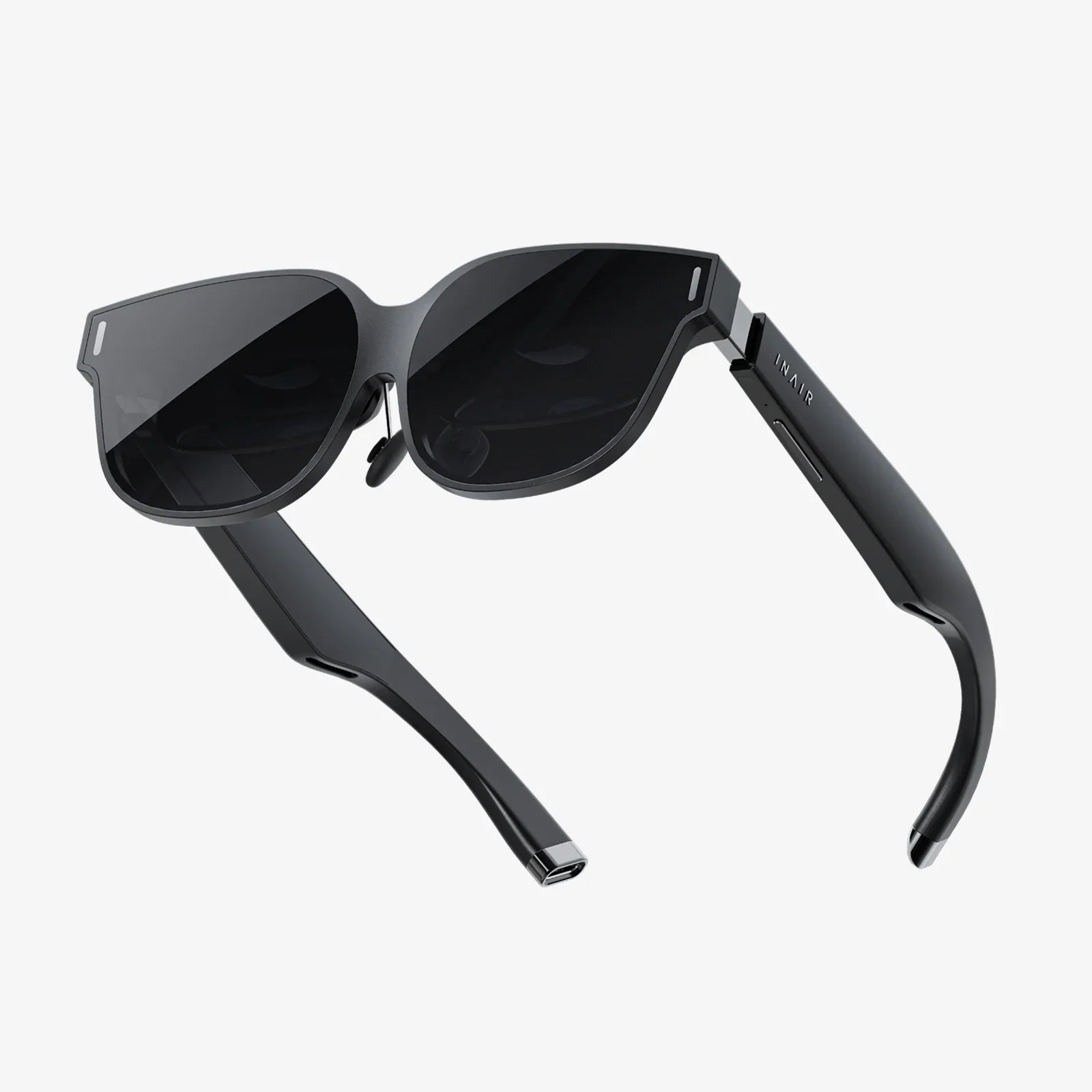
Imagine stepping through the screen, leaving your living room behind and finding yourself on the deck of a starship, in the heart of a fantasy battlefield, or at the starting line of a futuristic grand prix. This isn't a distant dream; it's the reality offered by today's generation of Extended Reality (XR) glasses, the most powerful gateways to immersive gaming ever created. The hunt for the perfect pair is about more than specs; it's about finding your personal portal to another world. If you're ready to play in a new dimension, you've come to the right place.
Demystifying the XR Spectrum: AR, VR, and the Blended Future
Before we dive into the features that set the best apart, it's crucial to understand the landscape. XR is an umbrella term that encompasses the entire spectrum of immersive technologies.
- Virtual Reality (VR): This is a fully digital, immersive experience. High-quality VR glasses completely block out your physical surroundings, transporting your vision and hearing entirely into a computer-generated world. This is the domain of deep, narrative-driven adventures and incredibly realistic simulations.
- Augmented Reality (AR): AR overlays digital information and objects onto your real-world environment. Think of game elements appearing on your coffee table or virtual enemies hiding behind your sofa. The best AR gaming experiences seamlessly blend the real and the virtual.
- Mixed Reality (MR): Sitting between AR and VR, MR is more advanced than simple AR. It doesn't just overlay digital objects; it allows them to interact with your real environment in a believable way. A virtual character can jump off your real desk and hide behind your real couch, understanding the geometry of your room.
The best XR glasses for gaming often excel in one area but are increasingly blending these capabilities, offering a full spectrum of experiences from a single device.
The Pillars of Gaming Performance: What Truly Matters
Not all XR glasses are built for the high-octane, low-latency demands of gaming. When evaluating your options, these are the non-negotiable pillars of performance.
Visual Fidelity: Seeing is Believing
This is arguably the most critical factor. A blurry, pixelated world shatters immersion instantly.
- Resolution and Pixels-Per-Degree (PPD): Look beyond the raw resolution numbers. PPD measures angular resolution—how many pixels are packed into each degree of your field of view. A higher PPD means a sharper, clearer image without the "screen door effect" (seeing the gaps between pixels). For truly immersive gaming, a high PPD is essential.
- Field of View (FoV): This is how much of the virtual world you can see at once, measured diagonally like a TV. A narrow FoV feels like looking through binoculars, while a wide FoV (110 degrees or more) creates a much more convincing and encompassing sense of presence.
- Refresh Rate: Measured in Hertz (Hz), this is how many times the image refreshes per second. For fast-paced games, a high refresh rate (90Hz, 120Hz, or even higher) is crucial. It makes motion buttery smooth, reduces latency, and is a key weapon in the fight against motion sickness.
The Lag Killer: Low Latency and Responsive Tracking
In gaming, milliseconds matter. Latency is the delay between your action and the system's response.
- Overall System Latency: The best devices have an end-to-end latency (from head movement to photon display) of less than 20 milliseconds. This is achieved through powerful processors, optimized software, and high-speed displays.
- Inside-Out Tracking: Modern systems use cameras on the device itself (inside-out tracking) to map your environment and track the position of your head and controllers without external sensors. The best systems do this with incredible speed and accuracy, ensuring your virtual hands move exactly as your real ones do.
- Controller Precision: Whether it's wielding a lightsaber or aiming a plasma rifle, haptic feedback, ergonomic design, and sub-millimeter precision are what separate good controllers from great ones.
Auditory Immersion: The Sound of Another World
3D spatial audio is half of the immersion equation. The best devices feature advanced audio solutions that accurately place sounds all around you—behind, above, and to the sides. Hearing the footsteps of an opponent creeping up from your blind spot or the roar of a crowd in a stadium above you is a game-changing advantage and a profound sensory experience.
Form and Function: Design Considerations for Gamers
You might be wearing this device for hours on end during an intense gaming session. Comfort and design are paramount.
- Comfort and Weight Distribution: A heavy device will strain your neck. The best designs use lightweight materials, counter-balance the weight of the front display with the head strap, and offer plush, breathable facial interfaces. Look for systems that distribute weight across your head, not just your face.
- Wired vs. Untethered Freedom: This is a major trade-off. Tethered devices connect to a powerful gaming computer, offering the highest possible graphical fidelity and performance for the most demanding titles. Untethered (standalone) devices offer complete freedom of movement but are limited by the processing power and battery life built into the glasses themselves. Some devices offer a hybrid mode, functioning as a standalone unit but also able to connect to a PC for maximum power.
- Inter-Pupillary Distance (IPD) Adjustment: This physical adjustment shifts the lenses to match the distance between your pupils. Proper IPD adjustment is critical for visual clarity, depth perception, and preventing eye strain during long sessions.
The Software Ecosystem: Your Library of Worlds
The hardware is just a window; the software is the world you see through it. The value of any XR platform is directly tied to its game library and platform features.
- Exclusive Titles and Flagship Games: A robust platform will have must-play exclusive games that showcase the hardware's capabilities, from epic RPGs and shooters to innovative puzzle and fitness games.
- Backward Compatibility and Storefront: A large, curated store with regular new releases and sales indicates a healthy, supported ecosystem. Backward compatibility ensures your purchased games remain playable on future hardware iterations.
- Social and Metaverse Features: Gaming is social. The best platforms offer integrated social spaces where you can hang out with friends, watch videos, and attend live events together in VR, creating a sense of shared presence that flat screens cannot match.
Future-Proofing Your Experience: The Cutting Edge
The XR industry is moving at a breakneck pace. While today's devices are incredible, knowing what's on the horizon helps contextualize your purchase.
- Eye-Tracking and Foveated Rendering: This is a game-changing technology. Advanced eye-tracking cameras monitor exactly where you are looking. The system can then render the area you're directly looking at in full resolution, while subtly reducing the rendering detail in your peripheral vision. This massive efficiency gain allows for stunning graphical fidelity without requiring impossibly powerful hardware.
- Varifocal Lenses and HDR: Current devices have a fixed focal depth, which can cause a conflict between convergence and focus, leading to eye strain for some. Experimental varifocal lenses dynamically adjust focus based on where you are looking, creating a more natural and comfortable experience. High Dynamic Range (HDR) displays are also emerging, offering a much wider range of contrast and color for more vivid and realistic worlds.
- Biometric Integration: Future devices may integrate heart rate monitors, galvanic skin response sensors, and other biometrics. Imagine a horror game that subtly increases its intensity based on your measured fear level, or a fitness game that tailors your workout in real-time.
Finding Your Perfect Match: A Gamer's Guide
With these pillars in mind, your choice ultimately comes down to your gaming preferences, platform, and budget.
- For the PC VR Enthusiast: If you own a powerful gaming computer and demand the absolute highest fidelity, a tethered device is your only choice. You'll benefit from the full power of your GPU, experiencing vast, graphically intense worlds with stunning detail.
- For the Standalone Freedom Seeker: If you value convenience, ease of use, and the ability to play anywhere in your home (or even take your system to a friend's house), a capable standalone device is ideal. The library for these platforms is vast and growing rapidly.
- For the AR Pioneer: If your dream is to turn your entire home into a playground, you'll want to prioritize devices with high-quality color passthrough cameras and powerful spatial mapping, enabling advanced MR experiences.
Remember to consider the total cost of ownership, including the price of additional accessories, mandatory software, and the potential library of games you'll want to purchase.
The journey to find the best XR glasses for gaming is a deeply personal one. It's a quest to find the device that not only has the specs on paper but also disappears on your face, allowing you to fully believe, for a few precious hours, that you are somewhere else entirely. It's about the thrill of physically ducking behind cover, the awe of looking up at a digital sky, and the connection of sharing a virtual high-five with a friend across the globe. This isn't just the next step in gaming; it's a leap into a new paradigm of play. Your new reality is waiting.
Share:
Top Augmented Reality Companies Shaping Our Digital Future
XR Glasses 2025: The Year Your World Gets a Major Upgrade