


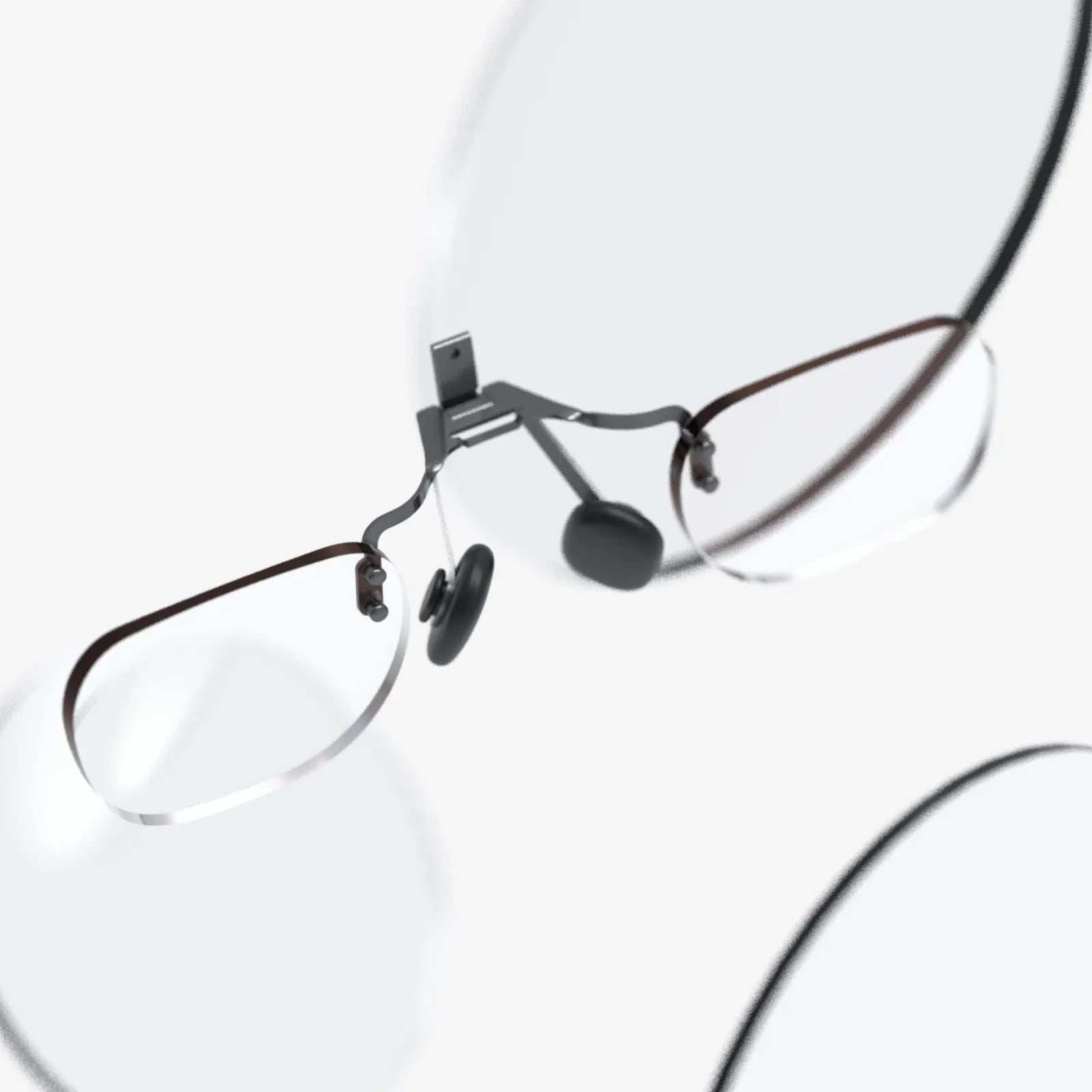
Imagine the perfect movie night: the screen is impossibly large, the sound is impeccably crisp, and the outside world has completely melted away. No, you haven’t built a multi-million dollar home theater; you’ve simply slipped on a pair of the best XR glasses for movies. This isn't just another tech trend; it's a fundamental shift in how we consume visual media, offering a portal to a private cinema that fits in your pocket. The quest for the ultimate viewing experience is leading cinephiles and casual viewers alike away from their traditional screens and towards the immersive, boundless world of extended reality. If you're ready to experience films in a way you never thought possible outside a commercial theater, you're in the right place.
The Rise of the Personal Cinema: Why XR for Movies?
For decades, the trajectory of home entertainment has been a relentless pursuit of bigger, sharper, and more vivid. We progressed from boxy CRT televisions to wall-sized 4K and 8K OLED panels, with sound systems to match. Yet, this pursuit has inherent limitations: physical space, ambient light, cost, and the simple fact that you can't take your 85-inch TV on a business trip or enjoy it in bed without disturbing a partner. This is where Extended Reality (XR) technology, an umbrella term encompassing Virtual Reality (VR), Augmented Reality (AR), and Mixed Reality (MR), enters the scene as a revolutionary solution.
XR glasses for movies cleverly circumvent these traditional limitations. Instead of projecting an image onto a physical screen for your eyes to see, they project images directly onto your retinas. This creates a virtual screen that can be scaled to feel anywhere from a respectable 100 inches to a truly monumental 300-inch canvas, all from the comfort of your favorite armchair. The world becomes your theater, with no constraints imposed by your living room walls.
Decoding the Experience: What Truly Matters for Movie Viewing?
Not all XR glasses are created equal, especially when the primary goal is watching high-quality films. Understanding the key specifications and features will help you identify the best XR glasses for movies tailored to your needs.
Visual Fidelity: The Cornerstone of Cinematic Immersion
The quality of the virtual screen is paramount. This is determined by several interconnected factors:
- Resolution and Pixels Per Degree (PPD): While manufacturers tout a single high resolution (like 1920x1080 per eye or 4K total), a more critical metric is Pixels Per Degree. PPD measures the angular resolution, or how many pixels are packed into one degree of your field of view. A higher PPD (aim for 45+) means a sharper, more detailed image with less visible "screen door effect" (the faint grid lines between pixels). It’s the difference between seeing individual pixels and seeing a seamless, continuous picture.
- Display Technology: Modern devices primarily use micro-OLED displays. These panels offer exceptional contrast ratios, achieving true blacks and vibrant colors because each pixel is self-illuminating. This is crucial for enjoying dark scenes in horror films or the deep blacks of space in a sci-fi epic. Some older or lower-cost models may use LCDs, which often suffer from backlight bleed and lower contrast.
- Color Accuracy and Contrast: A wide color gamut (like DCI-P3) ensures the colors you see are rich, saturated, and true to the director's intent. Combined with high contrast, this creates a image that pops with depth and realism.
- Refresh Rate: A high refresh rate (90Hz and above) ensures smooth motion during panning shots and high-action sequences, eliminating judder and stutter that can break immersion and cause eye strain.
Optical Comfort: See Clearly and Stay Engaged
You can have the best display in the world, but if the optics are poor or uncomfortable, your movie will be ruined.
- Lens Quality and Sweet Spot: High-quality, low-dispersion lenses are essential for edge-to-edge clarity. A large "sweet spot"—the area where the image remains in perfect focus—means you don't have to hold your head perfectly still to enjoy a clear picture. Pancake lenses are a popular design in newer models as they allow for a much slimmer and lighter form factor while maintaining excellent optical performance.
- Diopter Adjustment: This is a game-changer for the vast number of people who wear prescription glasses. Built-in diopter dials allow you to finely tune the focus to match your specific vision needs, allowing you to watch comfortably without cramming your own glasses into the headset or dealing with blurry vision.
- Comfort and Weight: Movie runtimes often exceed two hours. A heavy, front-heavy device will become unbearable. The best devices for media consumption prioritize a balanced, lightweight design using materials like magnesium alloy and soft, breathable face gaskets. They feel more like wearing sunglasses than a bulky helmet.
Audio: The Unsung Hero of Immersion
Sound is half the experience. While you can always use your own high-end headphones, many modern XR glasses feature impressive integrated audio solutions.
- Spatial Audio: Many devices use directional audio drivers that sit just off the ear. They create a convincing and immersive spatial soundscape, making it feel like audio is coming from around you in the virtual environment, without isolating you from your real-world surroundings. This is ideal for hearing a door creak open behind you in a thriller or the roar of a spaceship flying overhead.
- Bone Conduction: Some models utilize bone conduction technology, which transmits sound through vibrations in your skull. This leaves your ears completely open, maximizing awareness of your environment—a useful feature for parents who need to hear their children while watching.
Form Factor and Connectivity: The Practicalities
The ideal movie-watching device is simple and convenient.
- Glasses-like Design: The industry is rapidly moving away from bulky, enclosed VR headsets towards sleek, glasses-style form factors. These are less socially isolating, far more portable, and significantly more comfortable for extended viewing sessions.
- Wired vs. Wireless: Most dedicated media glasses connect via a single USB-C cable to a compatible smartphone, laptop, or gaming console. This provides power and a flawless, low-latency video signal without the need for compression or battery anxiety. Fully wireless solutions offer ultimate freedom but introduce potential latency and the need to manage another device's battery life.
Crafting Your Perfect Movie Night with XR
Owning the hardware is only the first step. Setting up your virtual theater is part of the magic.
- Choosing Your Environment: Many media player apps allow you to choose your virtual backdrop. Do you want to simulate a classic movie theater, a cozy cabin, the edge of a lunar cliff, or simply a void of pure blackness? This setting can dramatically alter the mood of your viewing experience.
- Content is King: To truly appreciate the visual fidelity of high-end XR glasses, you need high-bitrate source material. Streaming services that support 4K HDR and high-quality audio like Dolby Atmos will provide the best results. Your own library of high-resolution movie files will also shine.
- Sharing the Experience: While XR is often a solitary activity, some platforms and apps allow for synchronized watching with friends in a virtual space. You can see their avatars, hear their reactions, and chat as if you were in the same room, even if you're continents apart.
Beyond the Hype: Considerations and Limitations
As revolutionary as this technology is, it's important to approach it with realistic expectations.
- The Reality of Resolution: Even with a high PPD, the virtual screen, while massive, may not yet match the absolute pixel-perfect sharpness of a high-end 4K television viewed from an ideal distance. The trade-off is the sheer scale and immersion.
- Battery Life for Wireless Models: If you opt for a untethered model, battery life for both the glasses and the streaming device is a key consideration. A three-hour epic might be a challenge on a single charge.
- Content DRM: Some streaming services have strict Digital Rights Management (DRM) that can limit playback resolution when using external display modes, potentially preventing you from watching in full 4K. This is a software limitation that is gradually being addressed.
The Future of Film is Wearable
The technology is advancing at a breathtaking pace. We are quickly moving towards devices with even higher resolutions, wider fields of view, more advanced pancake optics, and increasingly intuitive interfaces. The line between a physical screen and a virtual one will continue to blur until the virtual experience is not just an alternative, but the preferred choice for millions. The concept of a fixed television in every home may one day seem as antiquated as a dedicated telephone room.
Your next favorite film is waiting, not on a screen mounted to your wall, but on a canvas limited only by your imagination. The best XR glasses for movies are more than a gadget; they are a passport to countless worlds, a private IMAX for your eyes only, and a testament to the fact that the most powerful theater isn't built with walls and a projector, but with cutting-edge optics and software. The era of personal, immersive cinema is here, and it’s waiting for you to hit play.
Share:
AR vs VR Comparison Diagram: A Visual Guide to Understanding the Key Differences
AR vs VR Comparison Diagram: A Visual Guide to Understanding the Key Differences