


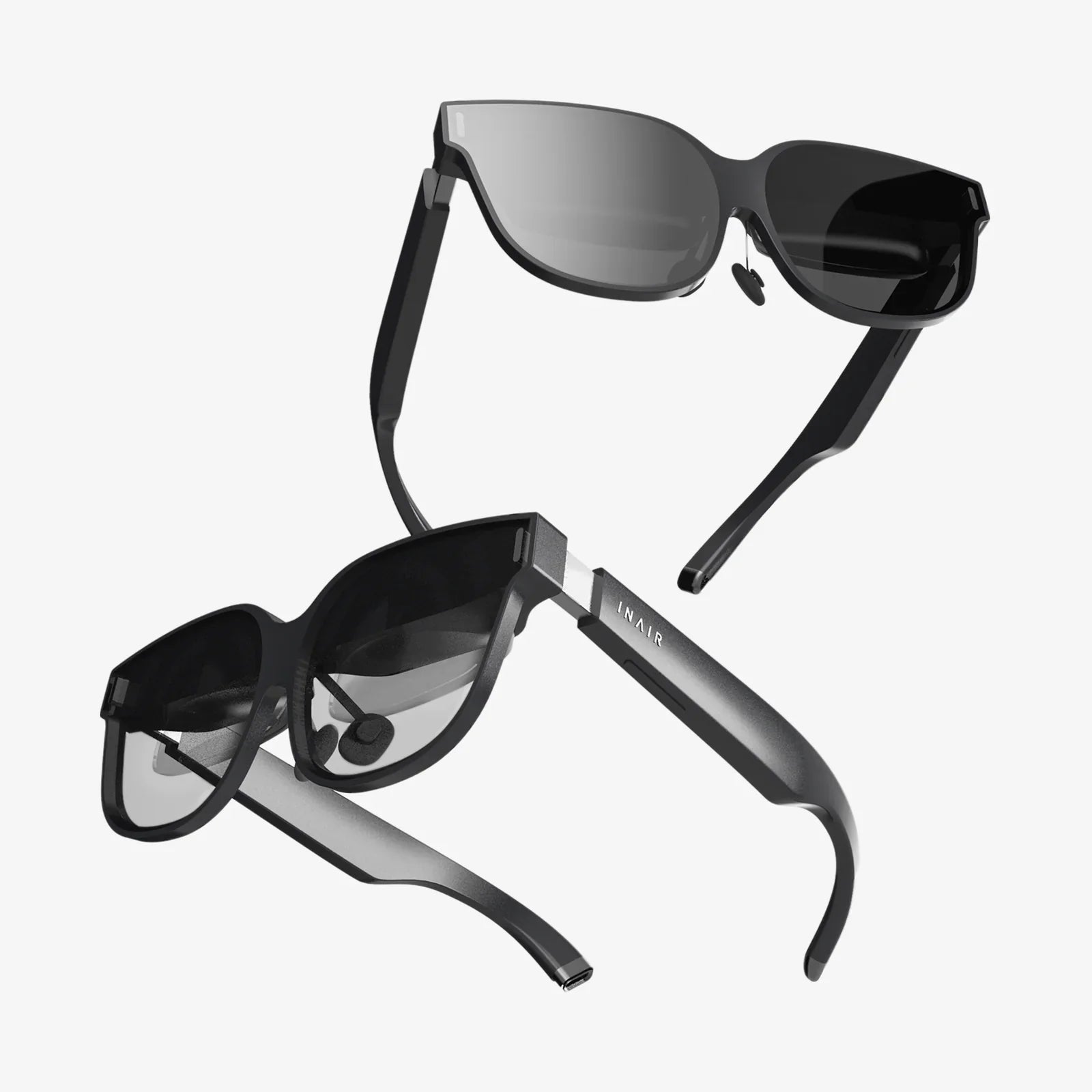
Imagine a world where your most essential accessory, the one you put on every morning without a second thought, transforms into a powerful portal for sound, information, and connection. A world where the barrier between your digital life and your physical reality dissolves into something so elegant and unobtrusive, you forget it's even there. This is no longer the stuff of science fiction; this is the present reality offered by Bluetooth eyeglasses, a technological marvel that is quietly revolutionizing how we interact with our environment and our devices. Step into a future where your vision is enhanced not just by lenses, but by an immersive auditory experience woven directly into the frame of your life.
The Convergence of Form and Function: A New Wearable Category
For decades, wearable technology has promised a more integrated digital life. Wrist-worn devices track our health, and earbuds pipe audio directly into our ears. Yet, these often exist as separate, tangible objects we must remember to wear and charge. Bluetooth eyeglasses represent a fundamental shift. They don't ask you to adopt a new behavior; they enhance an existing one. By embedding advanced microelectronics into the familiar and necessary form of eyeglasses, they achieve a level of seamless integration that other wearables can only dream of. This isn't an add-on; it's an upgrade to a fundamental human tool.
The core premise is deceptively simple: take the standard components of wireless headphones—a battery, microphones, speakers, and a Bluetooth chipset—and miniaturize them to fit within the arms and frame of a pair of glasses. The result is a device that corrects your vision (or can be fitted with non-prescription lenses for those with perfect eyesight) while simultaneously acting as a personal audio hub. This convergence marks the birth of a truly utilitarian wearable, one that serves a primary purpose while layering on a suite of secondary, powerful features without compromising on style or comfort.
Deconstructing the Technology: How Do They Work?
To appreciate the engineering feat of Bluetooth eyeglasses, it's helpful to understand the components working in harmony behind the scenes.
The Core Components
- The Frame and Battery: The arms of the glasses are ingeniously designed to house a small, rechargeable lithium-ion battery. This is often the largest component, dictating the slight thickening of the temples. Despite their size, these batteries are powerful enough to deliver anywhere from 6 to 16 hours of continuous audio playback or talk time on a single charge, seamlessly lasting a full day.
- Bluetooth Connectivity: Integrated circuitry manages a low-energy Bluetooth connection, typically version 5.0 or higher, ensuring a stable, efficient, and high-fidelity wireless link to your smartphone, tablet, or laptop. This allows for seamless audio streaming and call management.
- Bone Conduction vs. Open-Ear Speakers: This is a critical distinction. True bone conduction technology, which vibrates the skull to transmit sound to the inner ear, is less common in standard eyeglass designs. Most models utilize miniature, directional open-ear speakers. These speakers are positioned in the arms just above the ear, projecting sound down the ear canal without blocking it. This allows ambient noise to remain audible, a key safety feature.
- Microphone Arrays: For clear call quality and voice assistant interaction, multiple microphones are strategically placed on the frame. These work together using beamforming technology to isolate the user's voice from background wind and noise, ensuring you are heard clearly even on a busy street.
- Touch and Button Controls: intuitive controls are embedded into the frame, often as a touch-sensitive surface or discreet physical button on an arm, allowing you to play/pause audio, adjust volume, skip tracks, answer calls, and activate your device's voice assistant without ever reaching for your phone.
A Symphony of Benefits: Transforming Daily Life
The true value of Bluetooth eyeglasses is revealed in the myriad of ways they enhance everyday experiences.
Unparalleled Audio Convenience and Situational Awareness
This is their flagship advantage. Unlike earbuds or headphones that create a seal, isolating you from your environment, open-ear audio keeps you connected to the world around you. You can listen to a podcast, an audiobook, or your favorite playlist while still hearing traffic, a colleague calling your name, or your child playing in the next room. This makes them incredibly safe for walking, cycling, or working in an environment where auditory awareness is crucial. There's no more fumbling with wires or worrying about losing an earbud; your audio is simply always on, always available.
Seamless Communication and Call Management
For professionals and busy individuals, they are a game-changer. Incoming calls are handled with a simple tap on the frame. The microphone array ensures your voice is crystal clear, making them perfect for walking meetings, quick calls while working, or hands-free conversations while cooking or driving (where local laws permit). The discreet nature means you can take a call in a public space without drawing attention or having to hold a phone to your ear.
Accessibility and Multi-Device Connectivity
For individuals who find earbuds uncomfortable or who have hearing difficulties that make traditional headphones problematic, the open-ear design can be a wonderful alternative. Furthermore, most pairs can connect to two devices simultaneously. You can be listening to music from your laptop and instantly take a call from your smartphone without any manual switching.
Navigating the Considerations: Sound Quality and Privacy
No technology is perfect, and Bluetooth eyeglasses come with their own set of considerations that are important to understand before adopting them.
Understanding the Audio Experience
It is vital to set realistic expectations for audio fidelity. Due to their open-ear design and tiny speaker drivers, they cannot compete with the rich, deep bass and immersive sound isolation of high-quality over-ear headphones or in-ear monitors. The audio can lack punch in the low-end frequencies and, in quieter environments, sound can leak out and be heard by those in very close proximity. However, for spoken word content like podcasts, calls, and audiobooks, the quality is typically excellent and more than sufficient for casual music listening, especially when considering the trade-off for situational awareness.
Battery Life and the Charging Ritual
While battery life is continually improving, it is another component to manage. Unlike traditional glasses, you must remember to charge them, typically via a proprietary magnetic charging cable. Forgetting to charge them overnight means you might lose your audio functionality the next day, though they will still function as regular glasses.
Style, Fit, and Durability
Because they house delicate electronics, they can be slightly heavier and more expensive than their non-tech counterparts. Finding a pair that fits your face shape comfortably is paramount, as pressure points from the electronics in the arms can become uncomfortable over time. They also require more careful handling and storage to protect the embedded technology.
Beyond the Now: The Future of Augmented Auditory Experiences
Bluetooth eyeglasses are not the endgame; they are a foundational step toward a more augmented future. They are the perfect platform for the next evolution of wearable tech: true audio augmented reality (AR).
Imagine walking through a city and receiving audio navigation cues that feel like they're coming from the direction you need to turn. Tourists could hear historical commentary automatically triggered as they approach a landmark. Language translation could occur in near-real-time during a conversation with someone speaking a different language. Fitness metrics and coaching could be delivered directly into your ears during a run. All of this is possible by leveraging the precise positioning of speakers and integrating sensors like accelerometers and gyroscopes to understand head movement and orientation.
The glasses frame is the ideal vessel for this auditory layer of reality. It's always-on, hands-free, and positioned perfectly to deliver spatial, directional audio. The current iteration of Bluetooth eyeglasses is effectively laying the groundwork for this immersive sonic future, normalizing the idea of technology-enhanced hearing and priming us for the next wave of innovation that will blend the digital and physical worlds even more profoundly.
The subtle power of Bluetooth eyeglasses lies in their quiet integration. They don't shout about their capabilities; they whisper them directly into your ear. They represent a maturity in wearable technology, moving away from bulky gadgets and towards elegant, multifunctional tools that adapt to our lives rather than demanding we adapt to them. They offer a glimpse into a less isolated, more aware way of interacting with our digital ecosystems, proving that the most profound technological shifts are often the ones you can barely see, but will never want to stop hearing.
Share:
Types of Digital Content: The Ultimate Guide to Modern Media Formats
Wearables for Seniors: A Comprehensive Guide to Safety, Health, and Independence