


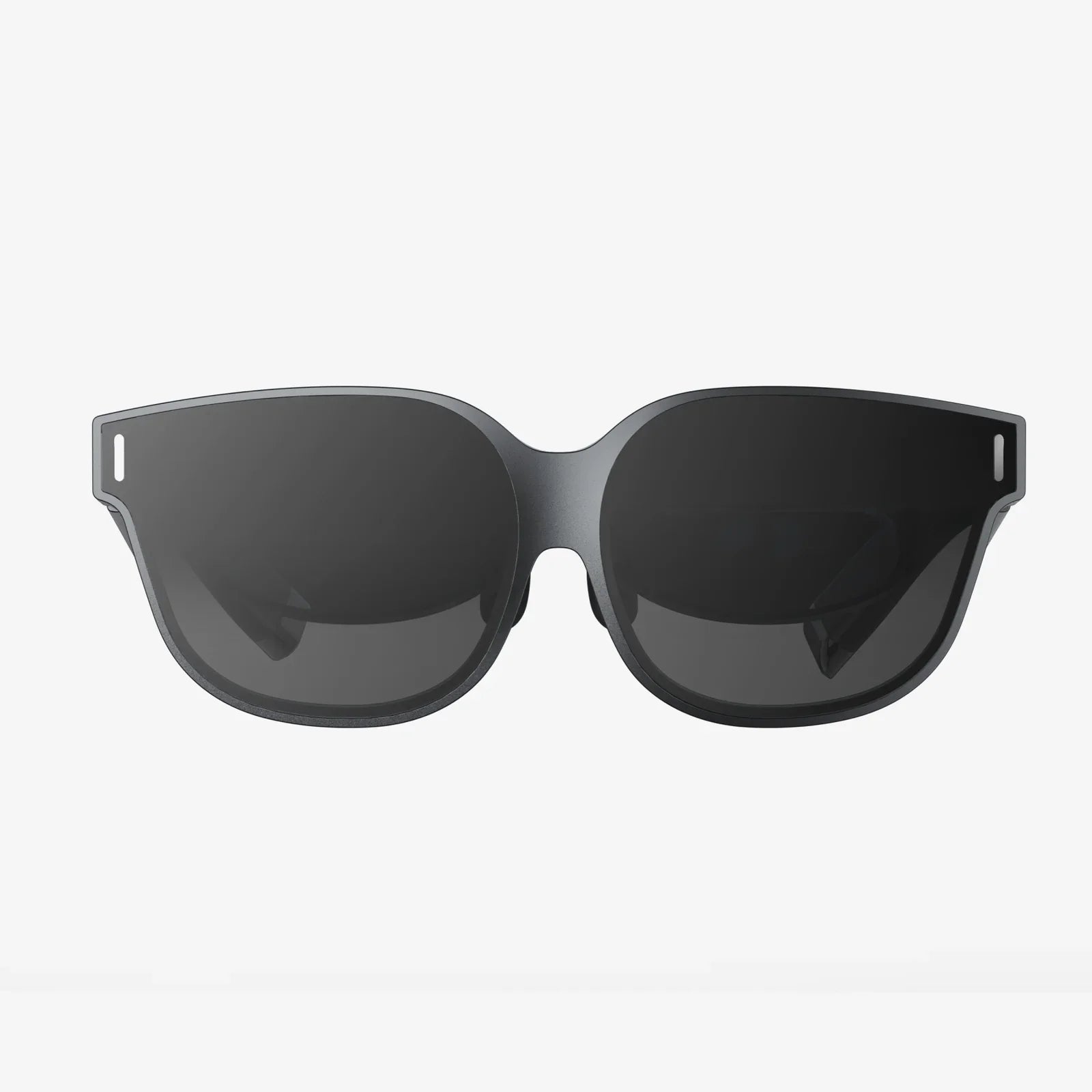
Imagine walking through an art museum, pausing before a complex, abstract painting. A quiet, synthesized voice in your ear begins to narrate: "This piece, created in 1952, is a seminal work of the abstract expressionist movement. The artist is known for using bold, aggressive brushstrokes to convey post-war anxiety. Critical analysis suggests the dominant red hues symbolize both passion and conflict." You didn't pull out your phone, you didn't scan a QR code. The information was simply delivered, contextually and instantly, based solely on what your eyes were seeing. This is no longer a scene from science fiction. The question driving the next wave of wearable technology is a profound one: can AI glasses summarize what you’re looking at? The answer is not just yes, but that they are already on the cusp of transforming how we perceive and interact with the entire visual world around us.
The Confluence of Sight and Intelligence
The concept of machines that can see and understand has been a dream for decades, but only recently have the necessary technological stars aligned. The ability for a device worn on your face to summarize your visual field is not the result of a single invention, but rather the convergence of several revolutionary technologies, each reaching a critical point of maturity and miniaturization.
Computer Vision: The Art of Teaching Machines to See
At the heart of this technology is computer vision (CV), a field of artificial intelligence that enables computers and systems to derive meaningful information from digital images, videos, and other visual inputs. For AI glasses, this process happens in a continuous, real-time loop. Miniature, high-resolution cameras capture the world from the user's perspective. This raw visual data is then processed through sophisticated deep learning models, primarily convolutional neural networks (CNNs), which have been trained on millions, even billions, of labeled images.
This training allows the AI to perform several critical tasks simultaneously:
- Object Detection and Recognition: Isolating and identifying objects within a scene—is that a car, a tree, a specific model of espresso machine?
- Optical Character Recognition (OCR): Reading and digitizing text from signs, documents, books, and screens.
- Scene Understanding: Moving beyond individual objects to comprehend the overall context. Is the user in a kitchen, a supermarket aisle, or a train station? This contextual awareness is crucial for generating relevant summaries.
- Facial Recognition: Identifying individuals (a feature fraught with ethical implications, which we will address later).
Natural Language Processing: From Pixels to Prose
Recognizing objects is only half the battle. The true magic of summarization lies in the seamless handoff from computer vision to natural language processing (NLP). Once the visual data is parsed and structured, NLP models, most recently powered by the transformative architecture of large language models (LLMs), take over. Their job is to synthesize the identified elements into coherent, concise, and contextually appropriate language.
This is far more complex than simply generating a list of detected items. The AI must understand intent and relevance. If you glance at a restaurant menu, the summary should highlight popular dishes or dietary information, not just list every item. If you look at a complex engineering diagram, the summary should explain the flow of the system, not just name the shapes on the page. The LLM acts as a digital narrator, weaving the visual facts into a useful spoken or displayed summary.
The Hardware: A Marvel of Miniaturization
Packaging this immense computational power into a form factor light enough to wear on your face is perhaps the greatest engineering challenge. There are two primary architectural approaches:
- On-Device Processing: The glasses themselves contain a specialized AI chip, a System-on-a-Chip (SoC) designed for ultra-low power consumption and efficient AI inference. This allows for faster response times and greater privacy, as data never leaves the device. However, it is limited by the size of the model the local hardware can run.
- Cloud-Based Processing: The glasses act primarily as a sophisticated sensor. They stream visual data to a smartphone or directly to powerful cloud servers where the heavy-duty AI processing occurs. The summary is then generated in the cloud and sent back to the glasses. This allows for access to the most powerful and up-to-date AI models but introduces latency, requires a constant internet connection, and raises more significant data privacy concerns.
Furthermore, the output mechanism must be discreet and intuitive. This is typically achieved through a miniature bone conduction speaker that delivers audio directly to the inner ear without blocking ambient noise, or a micro-LED projector that creates a transparent display overlay in the user's peripheral vision, effectively turning the lens into a screen.
A World Summarized: Transformative Applications
The potential applications for this technology extend far beyond a novel gadget for tech enthusiasts. They promise to break down barriers, enhance human capability, and redefine accessibility.
Revolutionizing Accessibility
For individuals with visual impairments, AI glasses could serve as a powerful visual prosthesis. Imagine a system that doesn't just tell a user there is an obstacle ahead, but describes it: "A park bench is five feet ahead, partially occupied by two people. There is a low-hanging branch to your right." It could read aloud the text on a street sign, a product label in a grocery store, or the menu on a restaurant wall, granting a new level of independence and interaction with the written world.
For those who are deaf or hard of hearing, the glasses could provide real-time captions for conversations, identifying the speaker and transcribing their speech directly into the visual overlay, making group interactions significantly easier to follow.
Supercharging Professional and Academic Productivity
The implications for specialized fields are staggering. A surgeon could look at a patient's MRI scans displayed on a monitor and receive an AI-summarized highlight of the most critical anomalies, serving as a second set of eyes. A mechanic working on a complex engine could look at a part and instantly pull up the relevant section of the service manual or a summary of common faults. A lawyer could rapidly review stacks of physical documents during discovery, with the glasses highlighting and summarizing key clauses or pertinent information.
Students and researchers could walk through a library or archive, and by looking at the spine of a book, receive a summary of its thesis, its critical reception, and its relevance to their saved research topics. Learning a new language could be accelerated by looking at objects and hearing their names and descriptions, or by reading a foreign text and receiving an instant translation and summary.
Navigating Daily Life with Enhanced Context
On a more mundane level, this technology could dissolve the friction of everyday tasks. Traveling in a country where you don't speak the language becomes effortless, with signs, menus, and conversations translated and summarized in real time. Shopping for groceries could involve looking at two products and getting a summarized comparison of their nutritional content, ingredients, and ethical sourcing practices. You could glance at a complex control panel for a smart home and receive a simple, verbal explanation of what each button does.
The Inherent Challenges: A Pandora's Box of Ethical and Practical Concerns
For all its promise, the path to widespread adoption of AI summarization glasses is riddled with profound challenges that society is only beginning to grapple with.
The Privacy Paradox
This is the most significant hurdle. A device that sees everything you see is the ultimate surveillance tool. It continuously captures not only your environment but also the people in it, often without their knowledge or consent. The ethical implications are vast:
- Bystander Privacy: How do we protect the privacy of individuals who are inadvertently recorded by someone else's glasses? Laws and social norms are completely unprepared for this.
- Data Security: The visual data collected is incredibly intimate. A breach could reveal everything from a user's location patterns to their reading habits to their financial information. Ensuring this data is encrypted and secure is paramount.
- Consent and Notification: Should these devices be required to have a visible indicator light when recording? How do we inform people they are in the field of view of an AI that is analyzing them?
The Bias in the Machine
AI models are only as good as the data they are trained on. Historical biases present in training datasets can lead to skewed or even harmful summaries. If an AI is summarizing a person, could it perpetuate racial, gender, or other stereotypes? If a model is trained primarily on Western art, how accurately can it summarize a piece from an Eastern tradition? Ensuring these systems are fair, unbiased, and culturally competent is a continuous and difficult process.
The Accuracy Problem and Over-Reliance
An AI summary is not ground truth; it is a probabilistic interpretation. What happens when the glasses misread a crucial piece of text on a medical prescription? Or fail to identify a critical step in a technical manual? The risk of user over-reiance on a system that is inherently fallible is a major concern. These systems must be designed with clear boundaries, constantly communicating their level of confidence and encouraging human verification for critical tasks.
The Social and Cognitive Cost
Will constant, on-demand summarization change how we think? If we no longer need to read a full article or study a painting to understand it, do we risk losing the ability for deep analysis and personal interpretation? There is a danger of trading depth for breadth, of skimming the surface of the world without ever diving in. Furthermore, the social awkwardness of speaking to someone who is simultaneously receiving information about you through their glasses could create new barriers to genuine human connection.
Glimpsing the Horizon: What Comes Next?
The current generation of technology is impressive, but it is merely the foundation. The future trajectory points toward even more seamless and intuitive integration. We are moving toward systems that understand not just what you are looking at, but why you are looking at it—inferring intent from gaze patterns, biometrics, and personal context. Summaries will become more personalized, filtering information based on your unique knowledge base and goals. The hardware will continue to shrink, evolving from conspicuous glasses to potentially contact lenses or even more subtle interfaces, further blurring the line between the digital and the physical self.
The journey to answer can AI glasses summarize what you’re looking at? is ultimately a journey into a new era of human-computer symbiosis. It’s a future filled with breathtaking potential to augment human ability and dismantle barriers. Yet, it simultaneously demands a rigorous, thoughtful, and inclusive conversation about the world we want to build. The technology itself is neutral; its value will be determined entirely by the ethical frameworks, regulations, and social contracts we establish around it. The goal must not be to replace human observation and analysis, but to augment it—to give us not just answers, but deeper questions, and more time to focus on what makes us uniquely human: creativity, connection, and wonder.
The next time you look at something—a street sign, a historical monument, a loved one's face—consider the layers of meaning waiting to be unlocked. The ability to have a knowledgeable companion quietly decipher the visual noise of the world is arriving. It promises a reality where information is no longer something we seek out, but something that flows seamlessly into our perception, allowing us to engage with our surroundings on a profoundly deeper level, provided we navigate the delicate balance between empowerment and intrusion with wisdom and care.
Share:
What's Augmented Reality? The Digital Layer Transforming Our World
Augmented Reality Workout: The Future of Fitness is Here and It's Gamified