


Imagine pointing your device at a city street and seeing historical figures materialize, explaining the significance of the buildings around you. Envision trying on a new piece of furniture in your living room before you buy it, or a surgeon seeing a patient’s vital signs and 3D anatomical models overlaid directly onto the operating field. This isn't a glimpse into a distant future; it's the world being built today through the power of augmented reality. This technology, once confined to research labs and blockbuster movies, is now seamlessly integrating into our daily lives, promising to fundamentally alter our perception of and interaction with reality itself.
Beyond the Buzzword: A Foundational Definition
At its core, augmented reality (AR) is an interactive experience that enhances the real world by superimposing computer-generated perceptual information onto it. Unlike Virtual Reality (VR), which creates a completely artificial, immersive digital environment, AR starts with the real world and adds to it. The key differentiator is that AR allows users to remain present in their own environment while digital content is blended with their real-world view. This digital content can take many forms: 3D models, text, images, videos, and even auditory information. The goal is not to replace reality but to supplement it, providing additional data, context, and experiences that are deeply relevant to the user's immediate surroundings and tasks.
The Engine Behind the Illusion: How AR Technology Works
The magic of AR isn't magic at all; it's a sophisticated symphony of hardware and software working in concert. The process generally involves three key steps: sensing, processing, and projecting.
1. Sensing the World
An AR system must first understand its environment. This is achieved through a suite of sensors, most commonly cameras, but also including GPS, accelerometers, gyroscopes, and depth sensors (like LiDAR). The camera acts as the system's eyes, capturing a live feed of the physical world. The other sensors provide crucial contextual data: GPS pinpoints the user's location, while accelerometers and gyroscopes track the device's orientation and movement in space, understanding tilt, rotation, and direction. This collective sensor data creates a digital map of the immediate environment.
2. Processing and Alignment
This is where the real computational heavy lifting occurs. Sophisticated software algorithms, often powered by machine learning and computer vision, analyze the sensor data. A critical task is simultaneous localization and mapping (SLAM). SLAM allows the device to both map an unknown environment and track its own position within that map in real-time. It identifies unique features, points, and planes in the physical space. Once the environment is mapped and the device's position is known, the software can determine exactly where and how to place a digital object so it appears anchored to a specific point in the real world. This ensures that a virtual dinosaur doesn't float aimlessly but walks convincingly across your actual floor, or that a navigation arrow stays fixed to the road ahead as you move.
3. Projection and Display
Finally, the composed image—the blend of real-world feed and digital content—is presented to the user. This happens primarily through a few display methods:
- Smartphone and Tablet Displays: The most accessible form of AR, using the device's screen as a viewport into the augmented world. The user holds up the device, and the software displays the combined image on the screen.
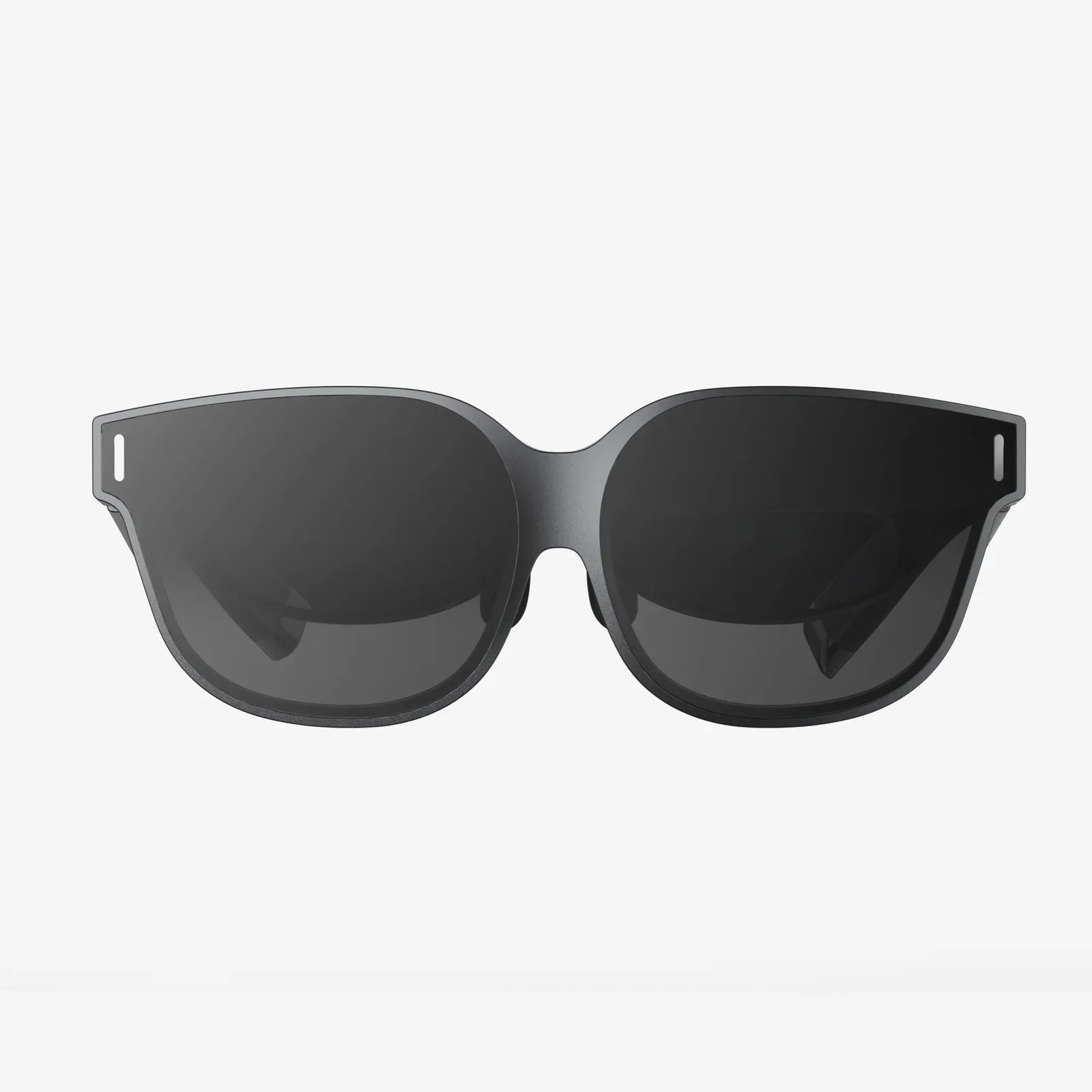
- Smart Glasses and Headsets: These wearable devices project images directly onto transparent lenses (optical see-through) or use cameras to capture the real world and blend it with digital content on a display (video see-through). This allows for a hands-free, more immersive experience.
- Projection Mapping: This method projects light directly onto physical surfaces, effectively "painting" them with digital information without requiring the user to wear or hold a device.
A Spectrum of Experience: Marker-Based vs. Markerless AR
Not all AR experiences are created equal. They are often categorized by how they anchor digital content to the real world.
Marker-Based AR (Recognition-Based)
This was one of the earliest forms of AR. It relies on a specific, predefined visual marker—often a black-and-white QR code or a distinct image—to trigger the digital overlay. The device's camera scans the environment for this unique pattern. Once recognized, the software uses the marker's position and orientation to correctly place the associated 3D model or animation on top of it. This method is highly reliable and precise but is limited by its dependence on these physical triggers.
Markerless AR (Location-Based or SLAM-Based)
This is the more advanced and increasingly common form of AR. It uses the technologies discussed above (SLAM, GPS, etc.) to understand the environment without needing a predefined marker. The digital content is anchored to a specific location (like a GPS coordinate for a city tour guide) or a specific surface (like placing a virtual chair on your floor). This allows for far more dynamic and flexible applications, from immersive games that transform your entire neighborhood to furniture apps that let you decorate any room.
The Real-World Impact: Applications Reshaping Industries
The theoretical potential of AR is vast, but its practical applications are already delivering tangible value across numerous sectors.
Revolutionizing Retail and E-Commerce
AR is solving one of online shopping's biggest drawbacks: the inability to try before you buy. Customers can now use their smartphones to see how a new sofa would look in their living room, how a pair of glasses fits their face, or how a shade of paint changes a room's ambiance. This not only enhances consumer confidence and reduces return rates but also creates a more engaging and interactive shopping experience that bridges the gap between digital and physical retail.
Transforming Education and Training
Textbooks and diagrams are becoming interactive. Students can explore a beating human heart in 3D, watch historical battles unfold on their desk, or dissect a virtual frog. This moves learning from passive absorption to active exploration, dramatically improving engagement and knowledge retention. In corporate and industrial settings, AR provides invaluable on-the-job training. A technician repairing a complex machine can see step-by-step instructions and part labels overlaid directly on the equipment, while a new employee can be guided through intricate assembly processes with digital cues.
Advancing Healthcare and Medicine
In medicine, AR is more than a convenience; it's a powerful tool for improving patient outcomes. Surgeons can use AR headsets to visualize critical information like a patient's heartbeat or blood pressure without looking away from the surgical site. 3D reconstructions from CT or MRI scans can be projected onto a patient's body, acting as an X-ray vision tool to precisely guide incisions and procedures. It is also used for medical training, phobia therapy, and helping patients better understand their conditions through interactive visualizations.
Powering Industrial and Manufacturing Sectors
The industrial world is a major beneficiary of AR. Factory workers can access real-time data, assembly instructions, and safety information hands-free. Designers and engineers can project full-scale 3D models of new products onto a factory floor to identify potential design clashes before anything is physically built. Maintenance technicians can point a device at a malfunctioning piece of equipment to see diagnostic data, past service records, and repair instructions, drastically reducing downtime and errors.
Gazing into the Crystal Ball: The Future of Augmented Reality
The current state of AR, while impressive, is merely the foundation. The future points toward even more seamless and powerful integration. We are moving toward lightweight, socially acceptable smart glasses that we wear all day, replacing smartphones as our primary computing interface. The concept of the spatial web or WebXR envisions a world where digital information is persistently anchored to locations and objects, creating a shared, interactive layer of intelligence over our entire planet. This will enable hyper-contextual experiences: walking through a city could reveal its rich history, social interactions could be enhanced with real-time translation and information sharing, and remote collaboration could feel as natural as being in the same room.
Navigating the Challenges and Ethical Considerations
This powerful technology does not come without significant challenges and questions. Widespread AR adoption raises critical concerns about data privacy and security, as devices with always-on cameras and sensors continuously scan our environments. The potential for digital addiction and a further blurring of the lines between our online and offline lives is a real social concern. There are also risks of reality blurring, misinformation, and new forms of spam—imagine virtual graffiti defacing public spaces or malicious actors overlaying false navigation cues onto a road. Establishing ethical guidelines, robust security protocols, and thoughtful digital etiquette will be paramount as we build this new layer of reality.
The journey into an augmented world is already underway, and it’s a transition far more profound than simply swapping a phone for a pair of glasses. It represents a fundamental shift in how we compute, connect, and comprehend the world around us. This isn't about escaping reality; it's about enriching it, layering it with knowledge, context, and experiences that were previously invisible. The question is no longer if this digital layer will become ubiquitous, but how we will choose to design it, regulate it, and ultimately use it to enhance not just our reality, but our humanity.
Share:
How to Develop Augmented Reality: A Comprehensive Guide to Building Immersive Experiences
Can AI Glasses Summarize What You’re Looking At? The Future of Visual Intelligence