


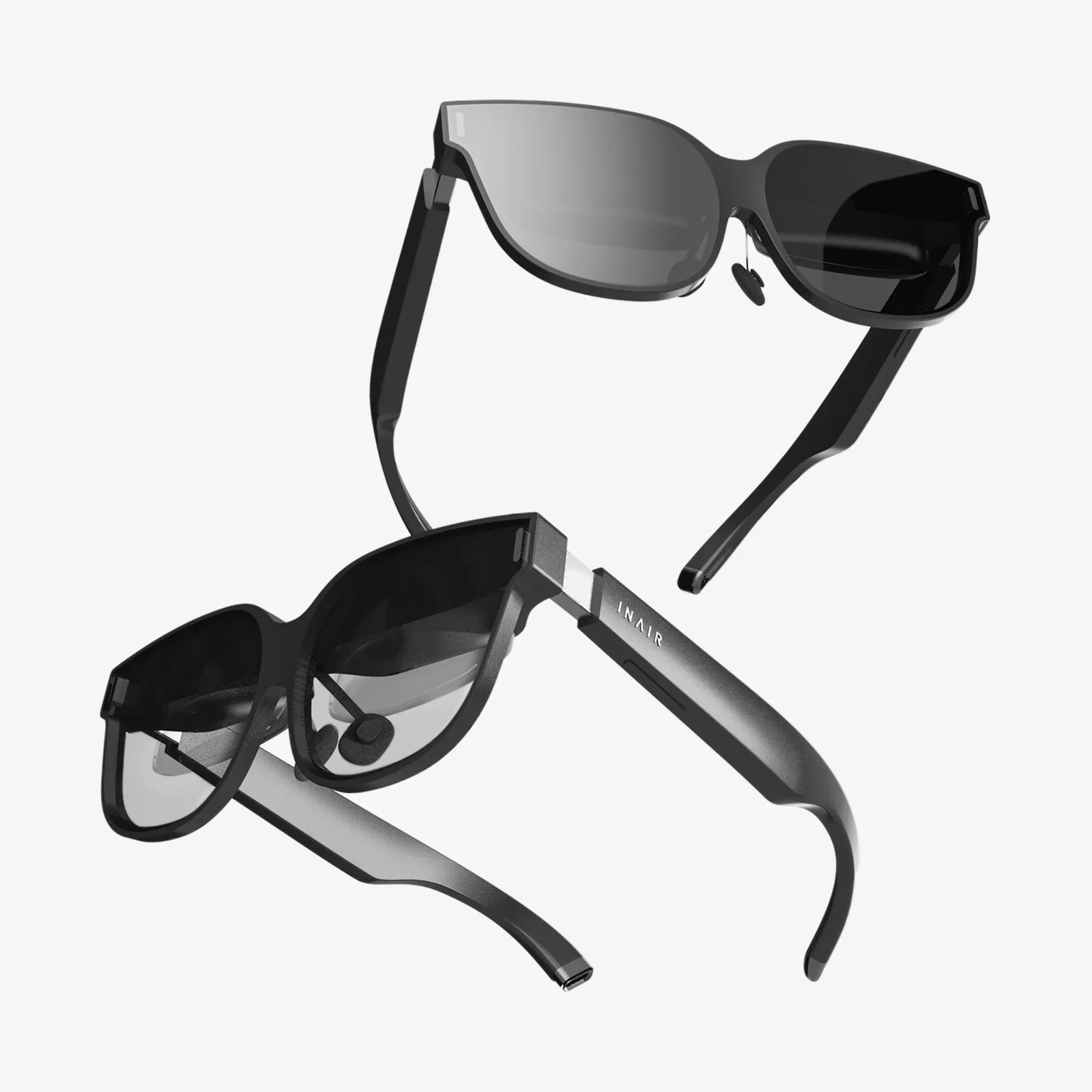
Imagine a world where your entire digital workspace is not confined to a slab of glass on your desk but is instead seamlessly integrated into your physical environment, limited only by the boundaries of your imagination. This is the tantalizing promise held by the latest wave of augmented reality eyewear, a promise that challenges the very foundation of how we interact with computers: the monitor. For decades, the screen has been our unchanging portal to the digital realm, but a quiet revolution is brewing, suggesting that the future of computing might not be on your desk, but on your face. The question is no longer a matter of if, but when, and to what extent, this paradigm shift will occur.
The Allure of an Infinite Canvas: Why the Idea is Gaining Traction
The concept of replacing a physical monitor with a virtual one projected directly onto your retina is profoundly compelling. It speaks to a deep-seated desire for unbounded efficiency and minimalist aesthetics.
Unprecedented Screen Real Estate: The most immediate advantage is the potential for limitless screen space. Instead of being constrained by the physical dimensions and cost of multiple monitors, a user could summon as many virtual displays as they need, arranging them in a virtual semi-circle, placing a reference document on a virtual wall to their left, or having a communication window hover persistently in the upper corner of their vision. This creates a truly immersive and expansive workspace that adapts to the task at hand, not the other way around.
The Ultimate in Portability and Minimalism: Your entire multi-monitor setup could, in theory, fit into a glasses case. This is a game-changer for digital nomads, frequent travelers, or anyone who values a clean, uncluttered desk. The ability to carry a high-fidelity, large-screen experience anywhere, and to activate it instantly by simply putting on a pair of glasses, eliminates the need for external displays and the tangled cables that accompany them.
Seamless Context Switching and Spatial Context: AR glasses can overlay information directly onto the physical world. Imagine a mechanic seeing a wiring diagram superimposed onto the engine they are repairing, a surgeon having vital stats and guides visible during a procedure without looking away, or a designer manipulating a 3D model that appears to sit on their actual desk. This blending of digital and physical contexts is something a traditional monitor can never achieve, offering a layer of situational awareness and intuitive interaction that is transformative for specific professions.
The Immovable Object: The Formidable Challenges of Monitor Replacement
Despite the futuristic allure, the path to replacing the trusty monitor is fraught with significant technological, human-factors, and economic hurdles that current generations of AR glasses are still struggling to overcome.
The Critical Hurdle of Visual Fidelity: For anyone working with text, code, or detailed imagery, resolution is paramount. The benchmark is the modern high-density monitor, often boasting resolutions of 4K or higher with pixel densities that make individual pixels indistinguishable to the naked eye. AR displays must project an image that appears sharp and clear in the variable focus of the human eye. Issues like screen-door effect (seeing the gaps between pixels), chromatic aberration (color fringing), and a limited field of view that creates a "binoculars" effect all contribute to a experience that can feel less crisp and more straining than a high-quality physical panel. Until AR visual fidelity matches or exceeds that of a premium monitor, it will remain a niche product for certain use cases rather than a full replacement.
Ergonomics and Comfort: A Weighty Matter: Wearing a computer on your face is a very different proposition than looking at one on your desk. Concerns about prolonged wear are valid. Can a device, which must house batteries, processors, and waveguide projectors, be made light and comfortable enough to wear for an entire eight-hour workday without causing pressure points, overheating, or general fatigue? This is a major challenge in industrial design and materials science. Furthermore, users who already wear prescription glasses face an additional layer of complexity, needing custom inserts or integrated prescription lenses.
The Battery Life Conundrum: High-resolution displays and spatial tracking are computationally intensive and power-hungry. Being tethered to a power outlet every few hours defeats the purpose of portability. For AR glasses to be a true monitor replacement, they need to offer all-day battery life, either through massive efficiency gains, swappable batteries, or a combination of onboard and external battery packs. This remains a key area of development.
User Interface and Input Paradigms: How do you interact with floating windows? While hand-tracking and voice commands are evolving, the precision and muscle memory of a physical mouse and keyboard are hard to beat for productivity tasks. The lack of tactile feedback and the potential for arm fatigue from constant gesturing ("gorilla arm") present unsolved interaction challenges. A new, intuitive, and efficient input language needs to be developed for spatial computing.
The Social and Isolation Factor: Walking into an office or a coffee shop where everyone is wearing sleek visors, isolated in their own digital worlds, presents a dystopian image to some. Monitors are inherently shareable; you can easily look at a colleague's screen to collaborate. AR experiences are intensely personal. While shared virtual spaces are possible, the act of simple, ad-hoc collaboration becomes more complex. Furthermore, the social acceptability of wearing technology that can potentially record video or display distracting imagery in social settings is still being negotiated.
A Spectrum of Use Cases: Who Stands to Benefit First?
The replacement of the monitor will not be a binary event but a gradual erosion across different user segments. Some will abandon their screens much sooner than others.
The Early Adopters: Developers and Power Users: Those who crave immersive, multi-tasking environments and value portability above all else may be the first to make the switch. The ability to code in a virtual space station or have ten terminal windows open in the air around them is a powerful draw, even if visual fidelity isn't yet perfect.
Specialized Professional Applications: This is where AR has already found strong footing. Architects walking clients through 3D building models, field engineers accessing schematics hands-free on a factory floor, or logistics workers seeing package information overlaid on warehouse shelves—these professionals are not just replacing a monitor; they are gaining a superpower that a traditional screen could never provide.
The Mainstream Consumer: A Distant Horizon? For the average user browsing the web, watching videos, and working on documents, the current cost and complexity of high-end AR glasses far outweigh the benefits over a simple, affordable, and high-quality laptop screen or external monitor. This segment will likely be the last to adopt, waiting for the technology to become invisible, effortless, and supremely comfortable.
The Road Ahead: A Future of Hybrid Computing
The most likely future is not one where monitors vanish entirely, but one where AR glasses become another powerful tool in our computing arsenal, used in tandem with other devices.
We are moving towards a paradigm of contextual computing, where the optimal display is determined by the task and environment. You might use your glasses for focused, portable work on a train, switch to a large physical monitor for a long, detailed editing session at your desk, and use your phone for quick glances. These devices will work in concert, seamlessly handing off tasks and content between them. The glasses won't replace the monitor; they will liberate us from being chained to it, offering freedom and flexibility when we need it most.
Continued advancements in micro-OLED and Laser Beam Scanning displays will push resolution and brightness higher. Improvements in computer vision and AI will enable more stable and intuitive interactions. And breakthroughs in battery technology and materials science will lead to lighter, more comfortable, and longer-lasting form factors. Each step forward will close the gap between the promise and the reality.
The traditional computer monitor, a workhorse of innovation for over half a century, is not facing immediate obsolescence. Its combination of affordability, reliability, and stunning visual quality ensures its relevance for years to come. However, the fundamental way we perceive its role is shifting. It is evolving from being the sole gateway to the digital world to becoming a stationary anchor point in a much larger, fluid, and personalized computing environment—an environment that we will not just look at, but one we will live and work within. The age of spatial computing is dawning, and it promises to redefine the very pixels we use to connect, create, and explore.
The race to build the perfect window to the digital world has moved from the desk to the human eye itself, and the finish line is a horizon of infinite possibility where our reality becomes the ultimate desktop.
Share:
What Is A Human Computer? The Evolution of a Concept and Our Collaborative Future
Hi Tech Glasses: The Invisible Revolution Reshaping Our Reality