


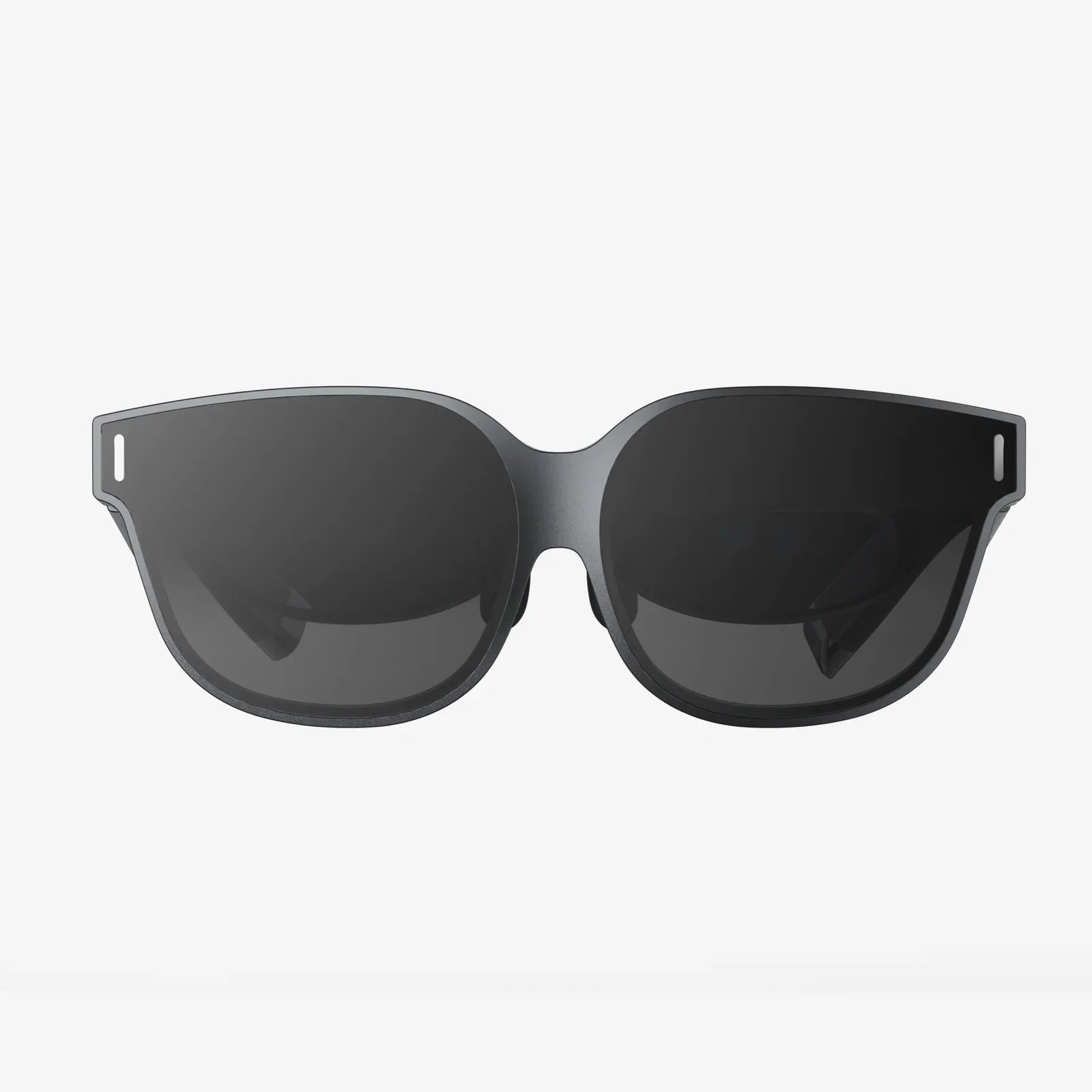
Imagine a world where information floats effortlessly before your eyes, where digital assistants whisper in your ear without a visible device, and your entire field of vision becomes a canvas for productivity, entertainment, and connection. This is no longer the stuff of science fiction; it is the burgeoning reality promised by hi tech glasses, a revolution in wearable technology that is poised to fundamentally alter our perception of reality itself. The journey from clunky prototypes to sleek, intelligent eyewear marks a pivotal moment in our relationship with technology, shifting it from something we hold in our hands to something we see through.
From Sci-Fi Fantasy to Mainstream Reality
The concept of technology-enhanced vision has captivated human imagination for decades. From the Geordi La Forge's visor in Star Trek: The Next Generation to the dystopian overlays in countless cyberpunk narratives, the idea of augmenting our sight with data has been a persistent futuristic trope. Early attempts to bring this vision to life were often cumbersome, expensive, and limited to industrial or military applications. They were defined by bulky headsets, limited battery life, and a narrow field of view that felt more like looking through a keyhole than a window into a new world.
However, the last decade has witnessed a seismic shift. Breakthroughs in micro-electronics, display technology, battery efficiency, and artificial intelligence have converged to make hi tech glasses not only possible but increasingly practical. The key has been the relentless miniaturization of components. Processors that once required a desktop computer's worth of space are now smaller than a fingernail yet exponentially more powerful. This miniaturization is the silent engine driving the revolution, allowing developers to pack incredible functionality into a form factor that increasingly resembles ordinary eyewear.
The Core Technologies Powering the Vision
Understanding hi tech glasses requires a look under the hood at the sophisticated technologies working in concert.
Advanced Optical Systems
At the heart of any pair of hi tech glasses is the display technology that projects digital images onto the user's retina. Two primary methods dominate:
- Waveguide Displays: This technology uses microscopic gratings etched into a piece of glass or transparent plastic to bend light from a micro-projector at the temple into the eye. This allows for a sleek design and a seemingly floating image that blends with the real world.
- MicroLED Projection: Incredibly small and bright LEDs project images directly onto the retina or onto a specially designed lens. This can offer superior brightness and color accuracy, crucial for outdoor use.
The ultimate goal of these systems is to achieve what is known as "visual immersion"—a seamless blend of digital and physical realities where the user cannot distinguish where one ends and the other begins.
Spatial Computing and Environmental Awareness
For digital content to interact meaningfully with the real world, the glasses must understand their environment. This is the domain of spatial computing. A suite of sensors, including:
- High-resolution cameras
- Depth sensors (LiDAR, time-of-flight)
- Inertial measurement units (IMUs for tracking head movement)
- Gyroscopes and accelerometers
...work together to create a real-time 3D map of the surroundings. This allows a virtual cat to jump onto your actual sofa or navigation arrows to be painted onto the street in front of you. This environmental awareness is what separates true augmented reality (AR) from simple heads-up displays.
On-Device Artificial Intelligence
Processing the immense amount of visual and spatial data requires immense computational power. Modern hi tech glasses incorporate specialized AI chips designed for on-device machine learning. This allows for features like:
- Real-time translation: Overlaying translated subtitles onto a foreign-language sign as you look at it.
- Object recognition: Identifying products, plants, or landmarks and displaying relevant information.
- Contextual assistance: Pulling up a recipe and measuring instructions as you look at ingredients in your kitchen.
- Voice and gesture control: Enabling intuitive, hands-free interaction with the digital interface.
This AI is the brain of the operation, transforming raw data into actionable, contextual intelligence.
A World Transformed: Applications Across Industries
The potential applications for hi tech glasses are as vast as human endeavor itself, stretching far beyond consumer entertainment.
Revolutionizing the Workplace
In industrial and field service settings, hi tech glasses are already proving their worth. Technicians can have complex repair manuals and schematics overlaid directly onto the machinery they are fixing, allowing them to work hands-free and with greater accuracy. Remote experts can see what the on-site worker sees and annotate their field of view with arrows and notes, enabling collaborative problem-solving from across the globe. This reduces errors, slashes training time, and dramatically improves efficiency.
The Future of Healthcare
Surgeons are using AR glasses to visualize patient data, such as MRI scans or vital signs, without turning away from the operating table. This "x-ray vision" can highlight critical structures like blood vessels or tumors during a procedure. Medical students can learn anatomy through immersive, 3D holographic models. Furthermore, these glasses can assist individuals with visual impairments by enhancing contrast, recognizing faces, and reading text aloud from the environment, granting a new level of independence.
Redefining Social Connection and Entertainment
Imagine watching a movie where the characters appear to be acting in your living room, or playing a video game that transforms your local park into an alien landscape. Hi tech glasses promise a level of immersive entertainment that flat screens cannot match. Socially, they could enable more natural-feeling telepresence, where holographic representations of friends and family can sit on your couch for a conversation, making geographical distance feel less significant.
Enhancing Daily Navigation and Learning
Turn-by-turn navigation will evolve from a map on a phone to giant, floating arrows guiding you down the street. Historical sites could come alive with recreations of past events as you look at them. Learning a new skill, like playing the piano or cooking a complex dish, could be guided by interactive instructions overlaid onto the real objects, making the process more intuitive and effective.
Navigating the Inevitable Challenges
Despite the exciting potential, the path to widespread adoption is fraught with significant hurdles that developers and society must overcome.
The Privacy Paradox
Devices equipped with always-on cameras and microphones that record the world from a first-person perspective represent a profound privacy challenge. The potential for unauthorized surveillance, data collection, and a erosion of public anonymity is a serious concern. Robust, transparent privacy frameworks, clear user consent models, and perhaps even physical indicators like recording lights will be non-negotiable for gaining public trust. The very feature that makes the glasses powerful—their ability to see what you see—is also their greatest point of contention.
The Social Hurdle: The "Glasshole" Effect
Early attempts at consumer smart glasses were met with social resistance, a phenomenon often referred to by a derogatory term. People were uncomfortable being unsure if they were being recorded or photographed in casual settings. For hi tech glasses to become as socially acceptable as smartphones, they must be designed with social cues in mind. This could include obvious signals when recording and designs that are fashionable and discreet, avoiding a dystopian or overly robotic aesthetic. Normalization will be a slow process that requires thoughtful design and cultural adaptation.
Battery Life and Connectivity
Powering a high-resolution display, multiple sensors, and an AI processor is incredibly energy-intensive. Current battery technology often forces a trade-off between performance, size, and all-day battery life. While some designs utilize a separate battery pack, the ideal is a self-contained unit that can last a full waking day. Similarly, seamless connectivity to cloud services and other devices is essential for a smooth experience, requiring robust and low-latency data networks.
The Road Ahead: An Augmented Future
The next generation of hi tech glasses is focusing on overcoming these challenges. We can expect to see:
- Improved Form Factors: Designs that are indistinguishable from high-end fashion eyewear, with a focus on lightweight materials and user choice in style.
- Advanced Human-Computer Interaction (HCI): A move beyond voice and simple gestures to more nuanced control mechanisms, such as neural interfaces that detect subtle intention or even silent, subvocalized speech commands.
- Ecosystem Development: The creation of robust app stores and developer platforms, which will be crucial for building the software that unlocks the hardware's potential, much like the smartphone revolution before it.
- Contextual and Predictive Intelligence: Glasses that learn from your habits and environment to proactively offer the right information at the right time, moving from a tool you command to a intelligent partner that anticipates your needs.
The true potential of hi tech glasses lies not in replacing the world around us, but in enriching it. They represent a fundamental shift from looking down at a device to looking out at an enhanced world. This isn't just about having a screen in front of your eyes; it's about dissolving the barrier between our digital and physical lives, creating a seamless tapestry of information and experience. The future is not about escaping reality, but about seeing it, for the first time, in its complete and augmented glory.
Share:
Can AR Glasses Replace Monitor? The Future of Personal Computing
Human Computer Interaction Programs: The Invisible Hand Shaping Our Digital Future