


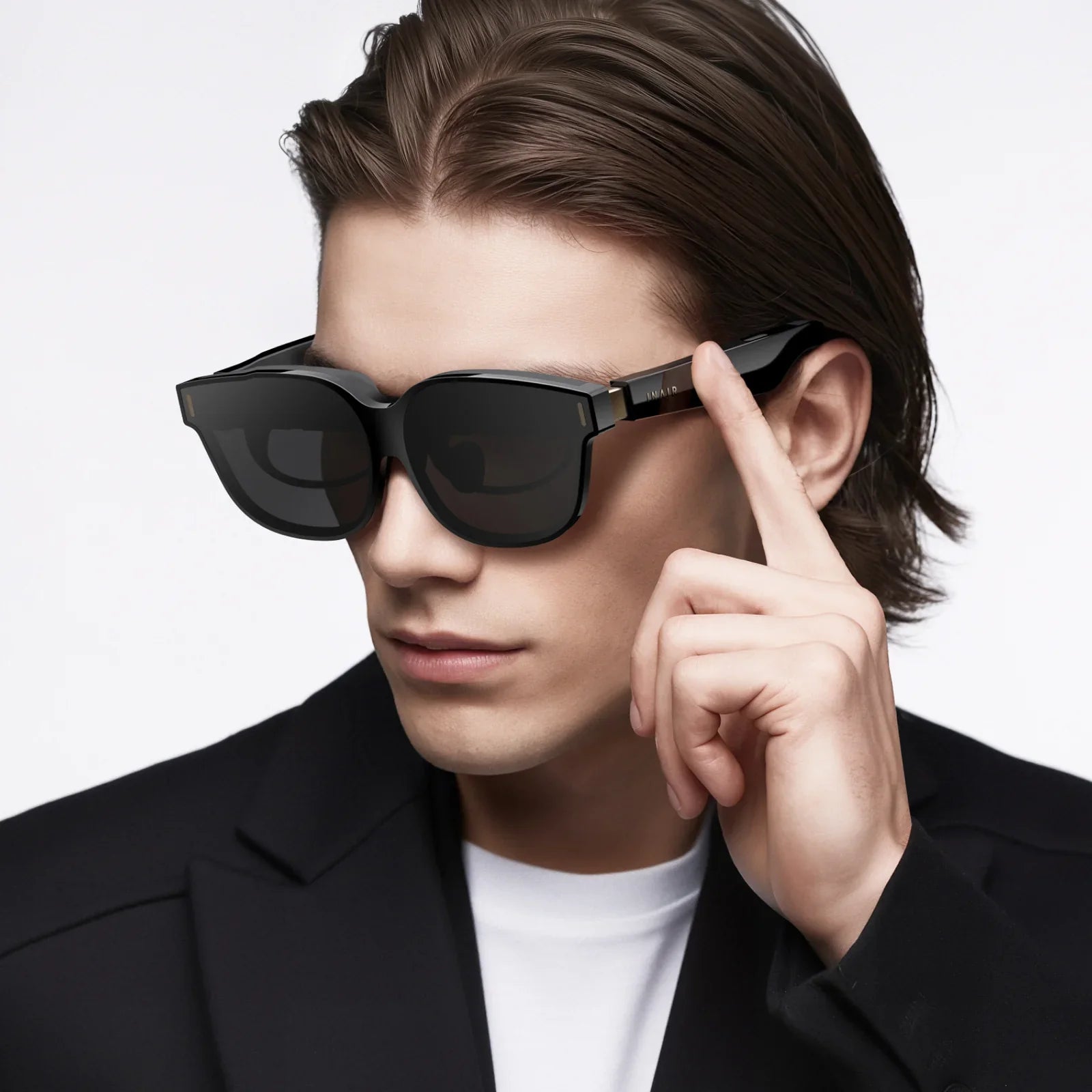
Imagine a world where your eyewear does more than just correct your vision—it augments your reality, connects you to a digital universe, and serves as a personal assistant, all while being tailored perfectly to your unique prescription. The concept of AI glasses, once a fragment of science fiction, is rapidly becoming a tangible reality, merging cutting-edge technology with essential healthcare. For the millions who rely on prescription lenses to navigate the world, the prospect of integrating smart capabilities into their daily eyewear is not just a luxury; it's a revolutionary step towards seamless living. This convergence of optometry and artificial intelligence promises to redefine accessibility, productivity, and how we interact with information. But the central question for early adopters and curious consumers alike remains: can you actually get AI glasses with prescription lenses? The answer is a fascinating journey into the present and future of wearable tech.
The Seamless Fusion of Form and Function
The primary challenge for developers in this space is the integration of sophisticated electronics with the personalized nature of prescription lenses. Unlike standard smart glasses that can be one-size-fits-most, prescription AI glasses must account for a myriad of individual factors: pupillary distance, sphere, cylinder, axis, and add power for those requiring multifocals. This requires a fundamentally different design philosophy, moving beyond a simple clip-on solution to a deeply integrated product.
Currently, the market is evolving through several innovative approaches. Some manufacturers design their smart frames to be compatible with lenses crafted by your local optician. You purchase the frame, and a professional inserts your custom prescription lenses, much like they would with any other pair of glasses. This method leverages existing optometric infrastructure, ensuring a perfect fit for your vision needs.
Another approach involves partnerships between tech companies and optical industry giants. These collaborations aim to create a seamless, end-to-end experience where the prescription process is built into the purchasing journey. You provide your prescription details online or through a partnered optometrist, and the company delivers a complete, pre-assembled unit with the technology embedded within your corrected lenses. This model prioritizes convenience and guarantees that the optical clarity and tech performance are perfectly aligned.
Core Technologies Powering Your Augmented Vision
What exactly do these glasses do? The term "AI glasses" encompasses a range of functionalities, all powered by a combination of hardware and sophisticated software.
Audio and Voice Integration
One of the most common and mature features is advanced audio. Many smart glasses feature built-in speakers that deliver sound directly to your ears without blocking ambient noise, and microphones for crystal-clear voice pickup. This allows for:
- Hand-free calls and video conferences.
- Interaction with voice assistants (e.g., asking for directions, setting reminders).
- Real-time language translation, where spoken foreign language is translated and heard through the speakers.
- Immersion in podcasts and music without isolating you from your environment.
Heads-Up Display (HUD) and Augmented Reality (AR)
This is the true frontier. Some advanced models project digital information onto the lenses themselves, creating a transparent overlay on your real-world view. This can include:
- Navigation arrows superimposed onto the street in front of you.
- Text messages, emails, or calendar notifications floating in your periphery.
- Real-time information about landmarks, restaurants, or products you look at.
- Step-by-step instructional guides for repairing equipment or following a recipe.
The AI component analyzes what you see through integrated cameras and sensors to provide contextually relevant information instantly.
Computer Vision and Contextual Awareness
Powered by AI algorithms, the glasses can understand and interpret the visual world. This enables features like:
- Object identification: Pointing out your keys on a cluttered table or identifying plant species.
- Text recognition and reading: Translating foreign language menus in real-time or reading aloud signs for the visually impaired.
- Scene description: Providing audio descriptions of environments for enhanced accessibility.
Navigating the Purchase: A Buyer's Checklist
If you're ready to explore this technology, knowing what to look for is crucial. Here’s a checklist to guide your decision-making process.
1. Prescription Compatibility
This is the most critical factor. You must confirm:
- Lens Curve: Can the frame accommodate your prescription strength? High prescriptions often require more curved lenses, which may not fit all smart frame designs.
- Multifocal Support: If you need bifocals or progressive lenses, verify that the smart frame's design and display technology can work with them.
- The Process: Does the company handle the lens insertion, or are you responsible for taking the frame to an optician? Understand the warranty implications of third-party modifications.
2. Battery Life and Performance
Smart features drain power. Assess the battery life both for active use (with displays and audio on) and standby time. Consider your daily routine—will the glasses last from morning until night? Also, look into the charging mechanism (e.g., magnetic charging case, USB-C) and how convenient it is for your lifestyle.
3. Design and Comfort
You'll be wearing these all day. They must be comfortable, lightweight, and durable. Evaluate the materials, hinge strength, and overall aesthetics. Do they look like regular glasses, or is the technology obvious? Your comfort with their appearance is key to regular use.
4. Privacy and Data Security
Devices with cameras and microphones raise valid privacy concerns. Investigate the company's data handling policies. How is your visual and audio data processed? Is it stored on the device, in the cloud, and is it encrypted? Look for features like physical camera shutters or recording indicator lights that enhance privacy and transparency.
5. Ecosystem and Connectivity
How do the glasses connect to your other devices? Seamless integration with your smartphone's operating system (iOS or Android) is vital for notifications and app functionality. Check for Bluetooth stability and the quality of the companion app.
Addressing the Elephant in the Room: Privacy and Social Etiquette
The ability to record video or take pictures discreetly makes some people understandably nervous. The responsible development and use of this technology are paramount. Reputable companies are implementing clear visual and audio cues to signal when recording is active. Furthermore, social norms and potentially new laws will evolve around the use of such devices in sensitive areas (locker rooms, private meetings, cinemas). As a user, being mindful and transparent about when you are using these features is essential for fostering public trust and acceptance.
The Future is Clear: What's Next for Prescription AI Glasses?
We are merely at the dawn of this technology. Future iterations promise even tighter integration. We can anticipate:
- **Thinner, Lighter Designs:** As micro-electronics and battery technology improve, the hardware will become virtually indistinguishable from traditional frames.
- **More Advanced AR Displays:** Full-color, high-resolution overlays that are bright enough for outdoor use will become standard.
- **Health Monitoring:** Integration of sensors to track biometrics like blood oxygen levels, heart rate, and even blood glucose through tear film analysis, turning your glasses into a daily health dashboard.
- **Enhanced AI Companions:** On-device AI that learns your habits and preferences, offering proactive assistance without constant cloud dependency.
The barrier between needing vision correction and wanting smart technology is crumbling fast. The question is no longer if you can get AI glasses with prescription lenses, but which model and feature set will best suit your life. While considerations around cost, privacy, and design remain, the trajectory is clear: the future of eyewear is intelligent, personalized, and incredibly exciting, offering a clearer view of the world in more ways than one.
Share:
Screen Protector Spectacles: The Ultimate Defense for Your Digital Vision
Smart Glasses Field of View Specs: The Ultimate Guide to Seeing the Bigger Picture