


Imagine diving into a virtual world, exploring alien landscapes, or standing front row at a concert happening across the globe—all without strapping a bulky device to your face. The dream of seamless, accessible virtual reality is closer than you might think, and it starts with asking one simple question: can I watch VR without a headset? The pursuit of this idea is revolutionizing how we think about digital immersion, pushing the boundaries of technology to break free from the confines of hardware. This isn't just about convenience; it's about a fundamental shift towards a more integrated and natural human-computer interaction. The answer is more complex and exciting than a simple yes or no, opening a portal to the next chapter of experiential media.
Deconstructing the VR Experience: More Than Just a Headset
To understand the possibilities of headset-free VR, we must first dissect what constitutes a true Virtual Reality experience. At its core, VR is about immersion and presence. It's the sensation of being transported to another place, a digital environment that feels tangible and real. This is achieved through a combination of key technological components:
- Visual Immersion: A stereoscopic, 360-degree view that replaces your natural field of vision.
- Audio Immersion: Spatial, 3D audio that changes dynamically as you move your head, convincing your brain that sounds are coming from specific points in the virtual space.
- Tracking: The technology that monitors your head movements (and often hand/body movements) and translates them into the digital world, maintaining the crucial link between your actions and what you see and hear.
- Interactivity: The ability to not just observe but to influence and manipulate the virtual environment.
A traditional headset elegantly bundles all these elements into one wearable package. It contains the screens, lenses, headphones, and sensors necessary to create this illusion. Therefore, the question "Can I watch VR without a headset?" is really asking: Can we replicate or approximate these core components of immersion using other technologies? The answer is a fascinating exploration of current workarounds and futuristic innovations.
The Here and Now: Current Methods for Experiencing VR-Like Content
While a dedicated headset provides the most complete and high-fidelity experience, there are several ways to dip your toes into the waters of immersive media today without purchasing one. These methods offer varying degrees of immersion, from simple 360-degree viewing to more interactive setups.
1. The 360-Degree Video on a Flat Screen
The most accessible and widespread method is watching 360-degree videos on a standard computer, tablet, or smartphone screen. Platforms are filled with this type of content, from wildlife documentaries to music videos.
- How it works: You load a 360-degree video on a compatible platform. Using your mouse, touchpad, or finger, you can click and drag the view to look around in every direction—up, down, and all around.
- The Experience: This is often called "windowed VR." You are looking into a spherical environment through the rectangular window of your screen. It lacks the true stereoscopic 3D depth and full field-of-view of a headset, but it provides a compelling sense of place and exploration. It's panoramic, not fully immersive.
- The Limitation: The immersion is broken the moment you see the edges of your screen or the room around you. There is no positional tracking, and the experience is purely visual, lacking integrated spatial audio.
2. The Smartphone and Cardboard Holder Combo
This clever hack was many people's first introduction to VR. It involves placing a smartphone into a simple holder, often made of cardboard or plastic, with two lenses. You then hold this device up to your face.
- How it works: The smartphone's high-resolution screen is split into two images (one for each eye). The lenses warp these images and create a stereoscopic 3D effect, while the phone's built-in gyroscope tracks your head movements. This effectively turns your phone into a rudimentary VR headset.
- The Experience: This is a significant step up from watching on a flat screen. It provides stereoscopic vision and basic head tracking, offering a genuine, albeit low-fidelity, taste of VR immersion. It’s affordable and accessible.
- The Limitation: Technically, this is using a headset, albeit a simple and low-cost one. The experience is often plagued by low-quality lenses, a limited field of view, and a lack of interactivity beyond looking around. It also doesn't solve the problem of being physically tethered to a device on your face.
The Bleeding Edge: Emerging Technologies for True Headset-Free VR
Beyond today's simple workarounds, serious research and development are underway to achieve true, high-quality VR without any head-worn hardware. These technologies aim to reconstruct the pillars of immersion—visual, audio, and tracking—in entirely new ways.
1. Light Field Displays and Volumetric Technology
This is one of the most promising avenues for ditching the headset. Instead of sending images directly to your eyes, this technology projects light fields into a physical space.
- How it works: Imagine a advanced version of a hologram. Volumetric displays create 3D images that can be viewed from different angles without needing glasses or a headset. Light field technology goes further, projecting images with realistic depth cues that allow your eyes to focus naturally on near and far objects within the scene, just like in the real world. Early examples include large-scale installations and experimental tabletop devices.
- The Potential: This could enable multiple people to gather around and share a VR experience simultaneously, something impossible with individual headsets. It represents the ultimate goal: virtual objects coexisting seamlessly in our real-world environment.
- The Challenge: The technology is incredibly complex and expensive. Creating displays with sufficient resolution, brightness, and field of view for a convincing personal experience is a monumental engineering challenge that is still years away from consumer viability.
2. Spatial Computing and Augmented Reality (AR) Overlap
The lines between VR and AR are blurring into what is often termed spatial computing. While AR overlays digital information onto the real world, advanced AR systems could be used to create virtual environments.
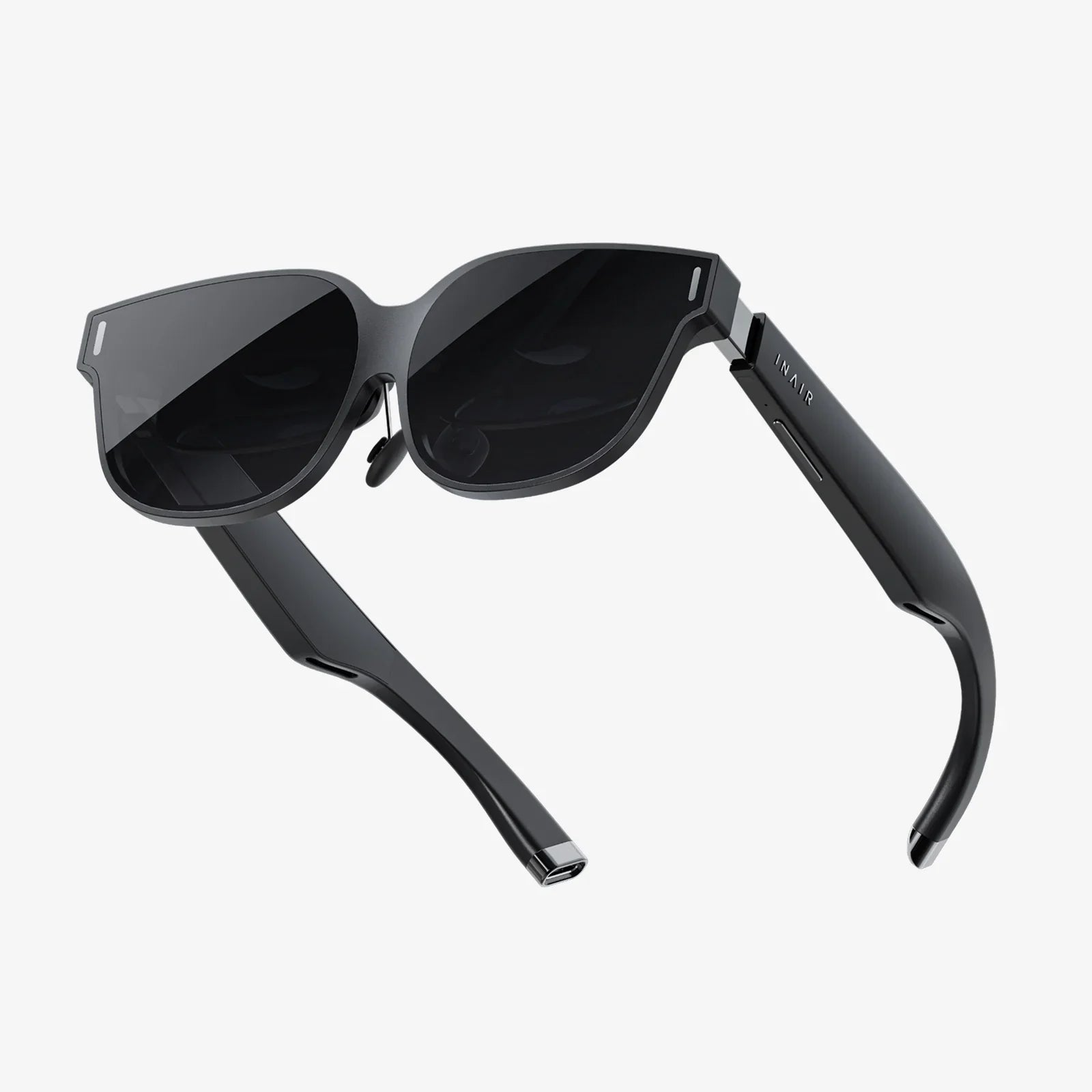
- How it works: Future AR glasses, which are designed to be as sleek as everyday eyewear, could potentially function as VR devices by using "videopaque" lenses that can digitally occlude the real world and replace it entirely with a virtual one. This isn't headset-free, but it moves towards a more socially acceptable and comfortable form factor than today's bulky headsets.
- The Potential: This hybrid approach could become the dominant paradigm, where a single, lightweight device switches seamlessly between AR and VR modes, effectively making the headset disappear as a distinct, obtrusive object.
- The Challenge: We are still waiting for the breakthroughs in waveguide, battery, and processing technology required to make powerful, all-day AR glasses a consumer reality.
3. Neural Interfaces and Direct Brain Stimulation
The most futuristic and radical solution bypasses the eyes and ears entirely. This concept involves communicating the virtual experience directly to the brain.
- How it works: Through non-invasive or minimally invasive interfaces, computers could theoretically stimulate the visual and auditory cortices to generate perceptions of sight and sound without any actual sensory input. This is the stuff of science fiction, but companies and research agencies are investing heavily in basic brain-computer interface (BCI) research.
- The Potential: This would be the ultimate "headset-free" experience. It promises perfect immersion with no external hardware, creating virtual worlds that are indistinguishable from reality, or even experiences beyond human reality.
- The Challenge: The scientific and ethical hurdles are immense. We have a very limited understanding of how the brain encodes complex information like sight and sound. This technology is likely decades, if not a century, away from any practical application for entertainment.
The Role of Audio in Crafting an Immersive Illusion
Visuals are only half the battle for presence. Audio is arguably just as critical for selling the illusion of being somewhere else. For headset-free VR to work, it must also solve the audio problem.
- Current Solution - Headphones: Just as headsets solve the visual problem, headphones are the current best solution for spatial audio. They deliver personalized, precise sound directly to the ears.
- The Headset-Free Challenge: How do you create a convincing 3D audio environment that moves with a user's head without physically attaching speakers to them?
- Emerging Tech - Ambisonics and Speaker Arrays: Advanced speaker setups in a room can simulate spatial audio through a technique called ambisonics. By carefully controlling the phase and amplitude of sound waves from multiple speakers, it's possible to create the illusion of sounds coming from specific points in 3D space. This is complex and requires a calibrated environment, but it points towards a future where your entire living room is an audio-VR portal.
Weighing the Trade-Offs: Freedom vs. Fidelity
The journey towards headset-free VR is a story of trade-offs. Each alternative method currently sacrifices something that dedicated hardware provides.
| Method | Immersion Level | Key Advantage | Primary Compromise |
|---|---|---|---|
| Dedicated VR Headset | High (Full) | Complete immersion, high fidelity, interactivity | Cost, bulk, isolation, accessibility |
| Smartphone + Holder | Medium | Extremely low cost, uses existing device | Low fidelity, limited features, comfort |
| 360° on Flat Screen | Low (Windowed) | Instant access, no extra hardware | No immersion, no head tracking |
| Future Light Field Tech | Potentially High | No wearable, social shared experience | Extremely expensive, early R&D stage |
The ideal of perfect, high-fidelity VR without any wearable device remains a long-term goal. For the foreseeable future, there will be a spectrum of experiences. The choice will depend on the user's priority: maximum immersion (favoring headsets) or maximum convenience and accessibility (favoring screen-based or future projection-based methods).
The Societal and Ethical Implications of Invisible VR
Moving towards VR that doesn't require obvious hardware raises profound questions. If a VR experience is projected into a room or directly into our minds, how do we distinguish it from reality? How do we manage shared spaces when one person is interacting with a virtual object invisible to others? The very obviousness of a headset acts as a social signal and a grounding mechanism. Its removal could deepen immersion but also amplify the risks of addiction, dissociation, and the manipulation of perceived reality. The technology's development must be accompanied by a parallel conversation about its ethical use and integration into society.
So, can you watch VR without a headset? Today, you can experience a compelling glimpse of it through 360-degree videos on your screen, but the full, breathtaking immersion of true virtual reality still requires a device to transport your senses. Yet, the relentless march of technology is making the headset increasingly transparent—first becoming smaller and lighter, and perhaps one day disappearing altogether. The quest to answer this question is not just about removing a piece of hardware; it's about fundamentally reimagining our gateway to digital worlds, pushing us towards a future where the line between the physical and virtual isn't just crossed, but gracefully erased. The journey to that future is already underway, and it promises to redefine reality itself.
Share:
Best VR Headset Display: A Deep Dive into Visual Fidelity and Immersion
AR to MR: The Seamless Convergence Reshaping Our Digital and Physical Worlds