


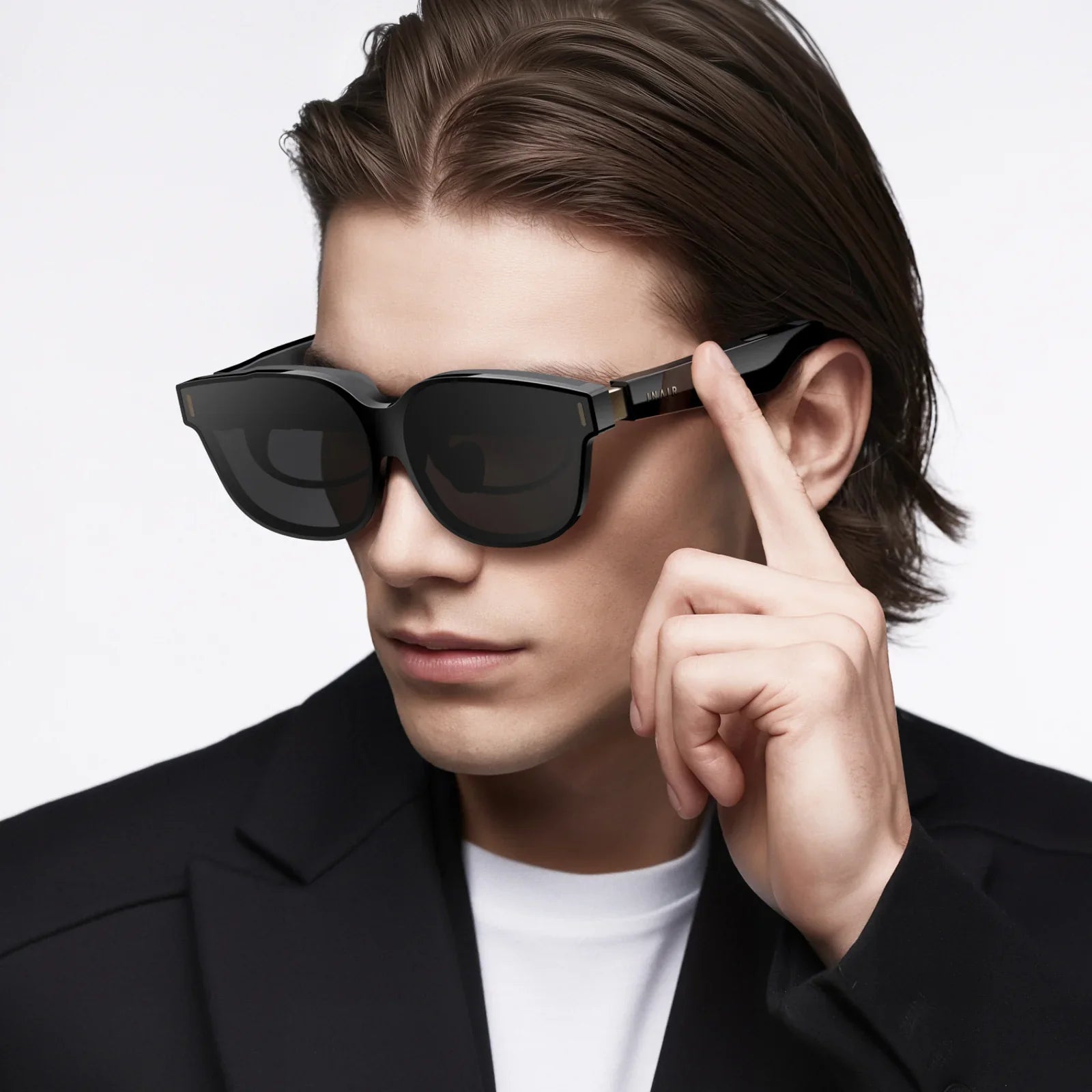
Imagine a world where the digital and the physical are no longer separate realms, viewed through the awkward lens of a smartphone screen or a clunky headset, but a single, unified experience. A world where information, entertainment, and connection are woven directly into the fabric of your existence, accessible with a glance, a gesture, or a word. This is the profound promise of the journey from Augmented Reality to Mixed Reality—a technological evolution that is not just about better graphics or faster processors, but about fundamentally rearchitecting the human experience. This isn't a distant sci-fi fantasy; it's the next chapter of computing, and it's already being written. The transition from AR to MR marks a pivotal moment, moving beyond simple overlay to true integration, and it will change everything we know about how we live, work, and connect.
Defining the Spectrum: From Augmentation to Immersion
To understand the significance of this shift, we must first delineate the terms. Often used interchangeably, Augmented Reality (AR) and Mixed Reality (MR) exist on a spectrum known as the reality-virtuality continuum.
Augmented Reality is the digital enhancement of the real world. It superimposes computer-generated images, text, or data onto a user's view of their physical environment. The key characteristic of AR is that the digital objects simply exist in the space; they do not interact with it in a physically believable way. You might see a navigation arrow floating on the street in front of you through your smartphone, or a virtual dinosaur standing in your living room, but if you walk around it, the illusion remains static. The digital and the physical are layered, but they are not conversing.
Mixed Reality, however, is the next step. It represents a true merger of worlds where digital and physical objects co-exist and interact in real-time. In a MR experience, a virtual character can jump onto your real-world sofa and the cushions would depress digitally. A virtual ball can bounce off your real walls. MR systems use advanced sensors, cameras, and spatial mapping to understand the geometry, lighting, and acoustics of a environment, allowing them to anchor digital content with a convincing sense of permanence and physics. This creates a seamless blend where the line between what is real and what is simulated becomes beautifully blurred.
The Technological Leap: The Engine Behind the Merge
The transition from AR to MR is not a simple software update; it is powered by a suite of sophisticated technologies working in concert. This leap is what separates a simple phone-based AR filter from a truly immersive and interactive experience.
Spatial Mapping and Scene Understanding
At the heart of MR is the device's ability to perceive and comprehend the world in three dimensions. Through technologies like LiDAR (Light Detection and Ranging), depth-sensing cameras, and simultaneous localization and mapping (SLAM) algorithms, a MR device doesn't just see a flat image—it constructs a detailed 3D mesh of the environment. It understands the distance to the walls, the height of the table, the shape of the chair, and even the texture of surfaces. This digital twin of the physical space allows virtual objects to be placed with occlusion (they can be hidden behind real objects), and to interact with the world's physics.
Advanced Display Technologies
How we view this merged reality is equally critical. Early AR often relied on pass-through video, where cameras capture the real world and display it on a screen with digital elements added—a method that can create latency and a sense of disconnection. True MR aspires towards advanced optical see-through displays, like holographic waveguides, which project light directly into the user's eyes, allowing them to see the real world naturally with digital light seamlessly composited onto it. This eliminates the screen-door effect and creates a much more comfortable and immersive experience.
Precise Tracking and Input
Interaction in MR moves beyond touchscreens and controllers. It requires a new language of input. This includes:
- Eye-tracking: Knowing precisely where a user is looking enables foveated rendering (saving processing power by rendering only the center of vision in high detail) and intuitive UI control.
- Hand-tracking: Cameras and sensors allow users to manipulate digital objects with their bare hands, using pinches, grabs, and gestures, making the interaction feel natural and direct.
- Voice control: Speaking to assistants and systems becomes a primary method of command, freeing the user's hands and integrating seamlessly into the flow of work.
- Spatial Anchors: Cloud-based services that allow digital content to be persistently pinned to a specific location in the real world, so that multiple users can experience the same content in the same place, or a single user can return to it days later.
Transforming Industries: The Practical Power of a Merged World
The implications of moving from simple AR overlays to complex MR interactions are vast, with the potential to revolutionize nearly every professional field.
Healthcare and Medicine
Surgeons can overlay 3D scans of a patient's anatomy directly onto their body during procedures, providing an X-ray vision-like view of internal structures, tumors, or blood vessels. Medical students can practice complex surgeries on hyper-realistic virtual patients that respond to their actions. Therapists can use MR to create controlled, immersive environments for treating phobias or PTSD, gradually exposing patients to triggers in a safe and manageable way.
Engineering and Manufacturing
Complex machinery can have digital twins visible to engineers during assembly or repair. A technician wearing a MR headset could see step-by-step instructions overlaid directly on the engine they are fixing, with arrows pointing to specific bolts and warnings highlighting live wires. Designers and architects can walk clients through full-scale, interactive 3D models of buildings before a single brick is laid, allowing for real-time changes to layouts, materials, and lighting.
Education and Training
History lessons can become immersive time travel, with students witnessing historical events unfold around them in their classroom. Biology students can walk through a beating human heart or examine a life-sized dinosaur. This shift from abstract textbook learning to experiential, hands-on interaction has the potential to dramatically improve comprehension and retention.
Remote Work and Collaboration
The concept of a "virtual meeting" will be completely redefined. Instead of a grid of faces on a screen, MR will enable true spatial collaboration. Colleagues from across the globe can appear as life-like holograms in your living room, gathered around a virtual prototype that you can all manipulate and examine together. Whiteboards, documents, and 3D models can be shared and interacted with as if they were physically present, creating a sense of co-presence that video calls cannot match.
The Human Factor: Social, Ethical, and Philosophical Considerations
With such a powerful technology comes a profound responsibility. The seamless blending of realities raises critical questions that society must grapple with.
The Privacy Paradox
MR devices, by their very nature, are data collection powerhouses. They have constant, intimate access to our personal spaces, our movements, our interactions, and even our eye gaze. Who owns this spatial data? How is it stored, secured, and used? The potential for surveillance, both corporate and governmental, is unprecedented. Robust ethical frameworks and regulations will be essential to prevent a dystopian future where our every physical action is monitored and monetized.
The Reality Divide
As with any transformative technology, there is a risk of creating a new digital divide. Will access to these powerful MR tools and experiences be available to all, or will they become a luxury that further separates socioeconomic classes? Furthermore, if people can curate and control their perceived reality, will it lead to a further fragmentation of shared truth and experience? The potential for hyper-personalized information bubbles could become literal, altering not just what we see on a screen, but what we see in the world around us.
Identity and Agency in a Blended World
MR will challenge our notions of self and presence. With photorealistic avatars and holographic representations, the concept of "being there" will be fluid. This has amazing potential for connection but also for deception. Deepfakes could evolve into "deep presence," where a convincing hologram of someone could be generated without their knowledge or consent. Establishing authenticity and trust in a world where anything can be simulated will be a paramount challenge.
The Future is Mixed: What Lies Beyond the Horizon
The journey from AR to MR is not the final destination. It is a stepping stone towards even more integrated forms of computing. Researchers are already working on neural interfaces and brain-computer interfaces that could one day allow us to access information and experiences directly through our thoughts, bypassing screens and gestures entirely. This could lead to a true "ultimate reality" where the digital is not just blended with the physical, but is perceived as a natural extension of our own cognition.
In the nearer term, we will see MR devices evolve towards greater social acceptance. The current form factors of headsets will give way to sleek, fashionable glasses that are indistinguishable from regular eyewear. The processing power will move from the device on your face to the cloud, enabling incredibly complex simulations and shared experiences with minimal latency. The killer app for MR has likely not even been imagined yet, just as the smartphone's destiny was not predicted by the first brick-sized mobile phones.
The path from AR to MR is the most significant evolution in personal technology since the advent of the smartphone. It’s a shift from looking at a world of information to living inside it. It promises to amplify human potential, break down barriers of distance and understanding, and unlock new forms of creativity and expression. But it also demands a new level of digital literacy, ethical consideration, and thoughtful design. We are not just building new devices; we are building a new layer of reality itself. The choices we make today will determine whether this new realm becomes a dystopian trap or a utopian tool for elevating the human experience. The merge is coming. The question is, what will we become when it arrives?
This isn't just an upgrade to your phone's camera; it's the beginning of a new sensory layer for humanity, a silent revolution waiting to be unlocked with a simple pair of glasses and the courage to see the world not just as it is, but as it could be.
Share:
Can I Watch VR Without a Headset? Exploring the Future of Immersive Media
I Want a VR Headset - The Ultimate Guide to Entering the Virtual World