


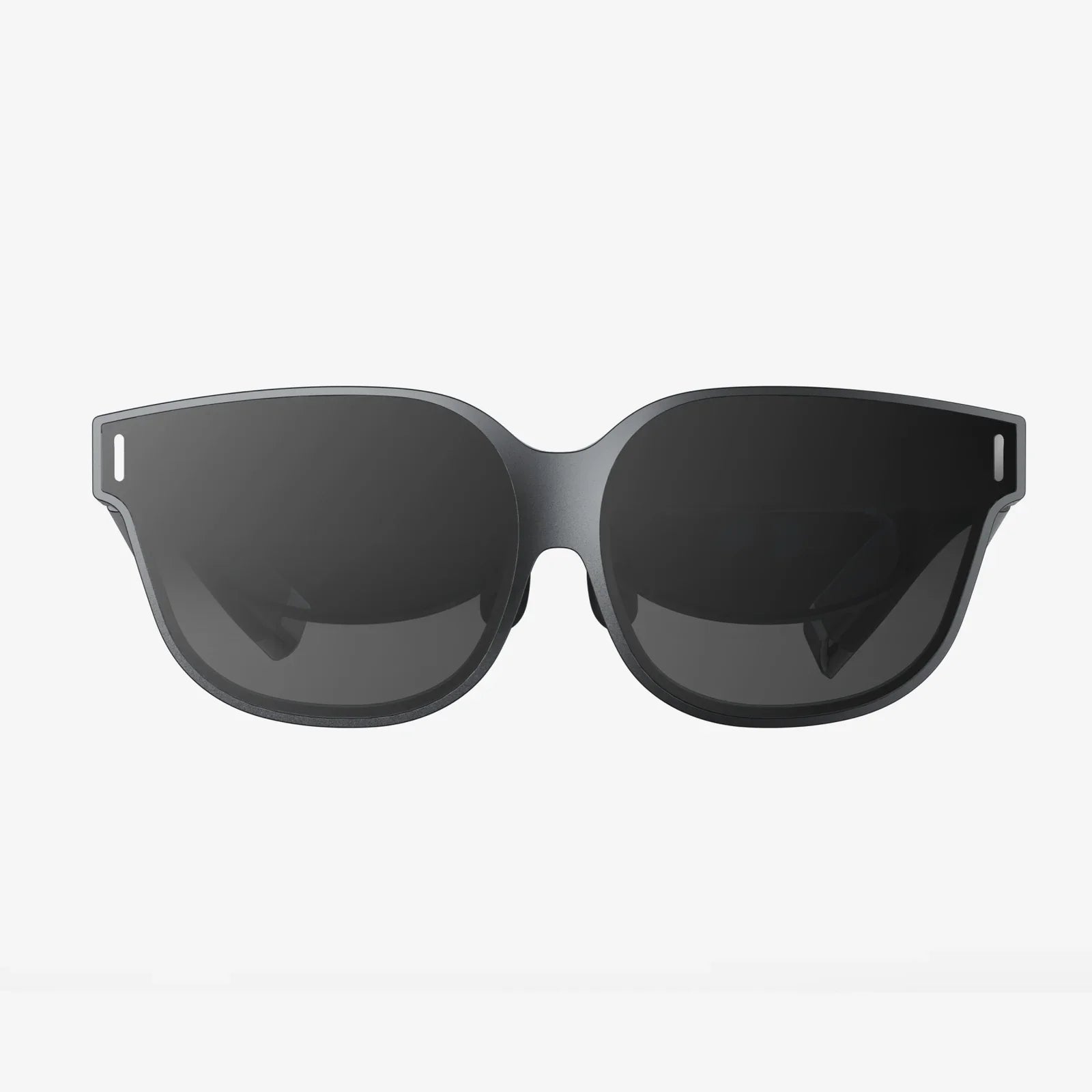
Imagine a world where you can climb Mount Everest before breakfast, have lunch on a Martian base, and attend a concert with a long-deceased music legend in the evening—all without leaving your living room. This is the tantalizing promise of advanced virtual reality, a technology rapidly blurring the lines between the digitally constructed and the physically tangible. As these immersive experiences become increasingly sophisticated, a profound and urgent question emerges from the realm of science fiction into our daily lives: can the synthetic ever truly replace the authentic? The answer is far more complex than a simple yes or no, forcing us to confront the very nature of reality, human connection, and what it means to be.
The Allure of the Virtual: Beyond Mere Entertainment
The appeal of virtual reality extends far beyond its obvious entertainment value. At its core, VR offers something humanity has perpetually sought: agency over our environment and experiences. In the physical world, we are constrained by laws of physics, societal norms, economic barriers, and the limitations of our own bodies. Virtual reality proposes a liberation from these constraints. It is a canvas for the impossible, a space where the only limit is the imagination of the programmer.
This potential for unbounded creation positions VR not as a mere toy, but as a powerful tool with transformative applications. In the field of education, students can take immersive journeys through the human bloodstream or walk the streets of ancient Rome, transforming abstract concepts into visceral understanding. For medical professionals, VR serves as a zero-risk training ground for complex surgeries, allowing for the honing of skills without endangering a single patient. Therapists are already using controlled virtual environments to treat phobias, allowing patients to confront their fears in gradual, manageable steps. For individuals with physical disabilities or mobility issues, VR can open doors to experiences otherwise permanently closed, offering a form of social and experiential inclusion that the physical world cannot.
The Philosophical Divide: Simulated Experience vs. Lived Truth
To ask if VR can substitute for actual reality is to stumble into a centuries-old philosophical debate about the nature of reality itself. If a VR experience is indistinguishable from a physical one to our senses, does the distinction still matter? Proponents of a functionalist view might argue that if the neural pathways fired and the emotional responses triggered are identical, the experience is, for all intents and purposes, "real" to the individual. The brain, the ultimate reality engine, is convinced.
However, this perspective clashes with more embodied and existential philosophies. Thinkers would argue that human existence is not merely a series of sensory inputs but is fundamentally rooted in being-in-the-world—a constant, dynamic interaction with a shared, objective reality that exists independently of our perception. There is an irreplaceable value in the authenticity of an experience that is not programmed but discovered. The unexpected chill of the wind on a hike, the imperfect and unscripted conversation with a stranger, the tangible resistance of clay in your hands as you sculpt—these elements contain a randomness, a fragility, and a truth that a predetermined simulation inherently lacks. A virtual campfire may look and sound real, but it will never emit heat, never carry the scent of burning pine, and never pose any actual danger. It is a representation, a facsimile that cleverly mimics the effect but is devoid of the cause.
The Psychological Impact: Rewiring Connection and Perception
The potential psychological consequences of long-term immersion in virtual environments are perhaps the most significant point of contention. Our brains are remarkably plastic, constantly adapting and rewiring based on our experiences. What happens when the primary source of those experiences is a curated, risk-free digital world?
On one hand, VR could be a powerful force for empathy. Projects that allow users to "step into the shoes" of someone from a different background, gender, or socioeconomic status can foster a deeper, more visceral understanding than any documentary or book. This embodied cognition could be a key to breaking down prejudices and building bridges.
On the other hand, there is a palpable risk of dissociation, alienation, and what some theorists call the "experience economy" trap. If we can have any perfect experience on demand, do we lose our ability to appreciate the imperfect beauty of the real world? The danger is not that we will be unable to tell the difference, but that we may begin to prefer the simulation. Real relationships are messy, demanding, and unpredictable. They require effort, compromise, and the courage to be vulnerable. Virtual relationships, while potentially meaningful, are ultimately safe, predictable, and often designed to satisfy the user's ego. A large-scale retreat into personalized virtual paradises could erode the social fabric, diminishing our capacity for the very real-world interactions that have historically defined communities and cultures.
The Societal Reckoning: Accessibility, Ethics, and a New Class Divide
The question of substitution is not merely individual; it is societal. The widespread adoption of VR as a substitute for reality would inevitably create new forms of inequality. If the most desirable "experiences"—travel, education, social events—migrate into premium virtual spaces, a new divide emerges: those who can afford high-fidelity reality and those who are stuck with the low-fidelity, often grim, actual one. This could lead to a terrifying stratification where the affluent withdraw into bespoke digital utopias, further neglecting the problems of the physical world—climate change, infrastructure decay, poverty—which would then disproportionately affect those without the means to escape.
Furthermore, the ethical implications are staggering. In a VR-saturated world, who controls the code? The entities that build these virtual realities would wield unprecedented power over perception, experience, and even truth itself. The potential for manipulation, propaganda, and behavioral control far exceeds anything possible with current social media. If our reality is provided by a corporation, what happens to our autonomy? Our data, our emotions, our very attention become the product, mined and monetized with a intimacy we can scarcely imagine today.
The Uncopyable Essence: Where Simulation Reaches Its Limit
Despite the breathtaking advances in haptic feedback, photorealistic graphics, and spatial audio, there remain fundamental aspects of actual reality that seem inherently uncopyable. These are the very things that often give life its deepest meaning and value.
The Tangible and the Tactile: While technology can simulate pressure and texture, it cannot replicate the true physicality of the world. The satisfying heft of a hardcover book, the grain of weathered wood under your fingertips, the genuine fatigue and muscle ache after a physical accomplishment—these sensory details are tied to material existence.
Unscripted Randomness: The magic of life often lies in its accidents and imperfections—a sudden rainstorm that forces you to take shelter, leading to an unexpected encounter; a wrong turn that reveals a hidden gem of a street. VR experiences are, by their nature, built on code and algorithms, which are ultimately predictable and finite. The infinite, beautiful chaos of the real world cannot be coded.
Authentic Risk and Consequence: Virtual worlds are safe. You can fall from a virtual skyscraper and reset. This safety is their greatest gift for training and therapy, but also their greatest limitation. Actual reality matters precisely because it is fraught with real stakes and irreversible consequences. The joy of a hard-won achievement, the pain of a genuine loss, the growth that comes from navigating real risk—these are the forge and anvil of character, and they cannot exist in a world where you can always hit "pause" or "reset."
Shared, Objective Existence: Perhaps the most crucial element is the shared nature of actual reality. We all, despite our subjective perceptions, agree on a common foundational world. This shared context is the bedrock of culture, science, and society. A proliferation of personalized virtual realities threatens to fragment this common ground, leading to a world where we no longer just have different opinions, but literally inhabit different realities, making communication and collective action nearly impossible.
A Symbiotic Future: Augmentation, Not Replacement
The most likely and desirable future is not one of substitution, but of symbiosis. Virtual reality will not replace actual reality; instead, it will augment and enhance it. It will become a new layer of human experience, a powerful medium for storytelling, creativity, connection, and problem-solving that coexists with our physical lives.
The goal should not be to escape our reality, but to use virtual tools to enrich it. To better understand our world, to empathize with others, to visualize solutions to complex problems, and to experience stories in profoundly new ways. The value of VR lies in its potential to be a window, a tool, and a playground—not a permanent residence. It can remind us of the wonders of the actual world, giving us new perspectives on the familiar and inspiring us to explore it further.
The challenge for us, as individuals and as a society, is to engage with this technology intentionally and ethically. We must be the architects of our future, not its passengers. This means establishing clear boundaries, prioritizing real-world connection, and fiercely protecting the shared, objective reality that unites us. It means using VR to serve humanity, not to escape from it.
The true risk, then, is not the technology itself, but our relationship with it. The headset is merely a device; the choice of how we use it—whether to hide from the world or to engage with it more deeply—remains, as it always has, utterly and profoundly human.
So, the next time you don a headset and are transported to a breathtaking digital landscape, take a moment to appreciate the marvel of human ingenuity that created it. But when you take it off, take a deeper moment to appreciate the unscripted, unpredictable, and irreplaceable world waiting right outside your door—the only reality we all truly share, and the one that deserves our utmost attention and care. The future may be virtual, but it must be built on a very real foundation.
Share:
Requirements for Virtual Reality: The Essential Pillars for Building Immersive Digital Worlds
Virtual Reality Too Real: The Psychological Impact of Hyper-Realistic Simulations