


Imagine a world where digital information seamlessly overlays your physical reality, where instructions float before your eyes as you repair complex machinery, where historical figures narrate their stories on the very streets they once walked, and where surgeons can visualize a patient's anatomy in breathtaking 3D before making a single incision. This is not a distant sci-fi fantasy; it is the burgeoning reality of the Canada augmented reality (AR) market, a dynamic and rapidly expanding sector poised to fundamentally reshape how Canadians live, work, and play. From the bustling tech hubs of Toronto and Vancouver to the innovative research labs in Montreal and Waterloo, a quiet revolution is underway, blending the physical and digital worlds in ways previously unimaginable.
The Canadian AR Landscape: A Foundation of Innovation
The Canada augmented reality market did not emerge in a vacuum. Its growth is deeply rooted in a national ecosystem that has long fostered technological innovation. Canada boasts a world-class education system producing top-tier talent in computer science, engineering, and design from institutions like the University of Toronto, the University of Waterloo, and Simon Fraser University. These institutions are not just degree factories; they are hotbeds of research and development, often collaborating directly with industry partners to push the boundaries of what AR can achieve.
Furthermore, a robust network of government support, through programs offered by the National Research Council of Canada (NRC) and the Strategic Innovation Fund (SIF), provides crucial funding and resources for startups and established companies venturing into AR development. This public-private partnership model has been instrumental in de-risking innovation and accelerating the commercialization of AR technologies. The cultural fabric of Canada, with its emphasis on diversity and inclusivity, also plays a role, encouraging the development of AR applications that are accessible and beneficial to a wide range of users, considering multiple languages and abilities from the outset.
Key Drivers Fueling Exponential Growth
The momentum behind the Canada augmented reality market is powered by a confluence of powerful drivers. The most significant is the unprecedented advancement in enabling technologies. The proliferation of powerful smartphones and tablets with high-resolution displays, accurate sensors, and powerful processors has placed a capable AR device in the pocket of nearly every Canadian. This widespread hardware accessibility has eliminated a major barrier to entry for consumers and enterprises alike.
Concurrently, the rollout of high-speed 5G networks across urban and rural centers is a game-changer. AR applications, especially those involving complex models or multi-user experiences, demand high bandwidth and ultra-low latency. 5G provides this critical infrastructure, enabling seamless streaming of rich AR content and real-time data synchronization without lag, which is essential for mission-critical applications in fields like remote assistance and telemedicine.
On the software side, the development of sophisticated AR software development kits (SDKs) and cloud-based authoring platforms has dramatically simplified the creation process. Developers can now leverage powerful tools for spatial mapping, object recognition, and gesture tracking without building everything from scratch, significantly reducing development time and cost. This has democratized AR creation, allowing smaller studios and even individual developers to contribute innovative applications to the market.
Finally, a significant shift in investment strategy is evident. Venture capital firms and corporate investors are increasingly betting on the potential of immersive technologies. This influx of capital is providing Canadian AR startups with the fuel they need to scale their operations, conduct extensive research, and attract world-class talent, creating a virtuous cycle of innovation and growth.
Enterprise Adoption: The Primary Engine of the Market
While consumer-facing AR games and filters capture public imagination, the true engine of the Canada augmented reality market is enterprise adoption. Businesses across a spectrum of industries are implementing AR to solve real-world problems, enhance efficiency, reduce errors, and save millions of dollars.
- Manufacturing and Industrial Sectors: AR is revolutionizing assembly, maintenance, and training. Technicians wearing AR smart glasses can see digital work instructions overlaid directly onto machinery, guiding them through complex procedures step-by-step. This reduces training time, minimizes errors, and allows less experienced workers to perform tasks usually reserved for veterans. Remote experts can see what an on-site technician sees and provide visual annotations directly into their field of view, drastically reducing travel costs and downtime.
- Healthcare and Medicine: The healthcare sector is witnessing profound AR applications. Medical students can practice procedures on detailed, interactive 3D holograms of human anatomy. Surgeons use AR for pre-operative planning, visualizing CT scans and MRI data projected onto the patient's body during surgery to improve precision. AR is also being used for patient education, helping them understand their conditions and treatments more clearly.
- Retail and E-commerce: Canadian retailers are leveraging AR to bridge the gap between online and in-store shopping. Customers can use their smartphones to see how a piece of furniture would look in their living room, how a new shade of paint would transform their walls, or how a pair of glasses would fit their face before making a purchase. This "try before you buy" functionality enhances customer confidence, reduces return rates, and creates a more engaging shopping experience.
- Education and Training: From elementary schools to corporate training rooms, AR is making learning immersive and interactive. History lessons can come alive with historical events reenacted in the classroom. Complex scientific concepts, from planetary orbits to molecular structures, can be visualized in 3D space, making them easier to comprehend and remember.
Navigating the Challenges on the Path to Maturity
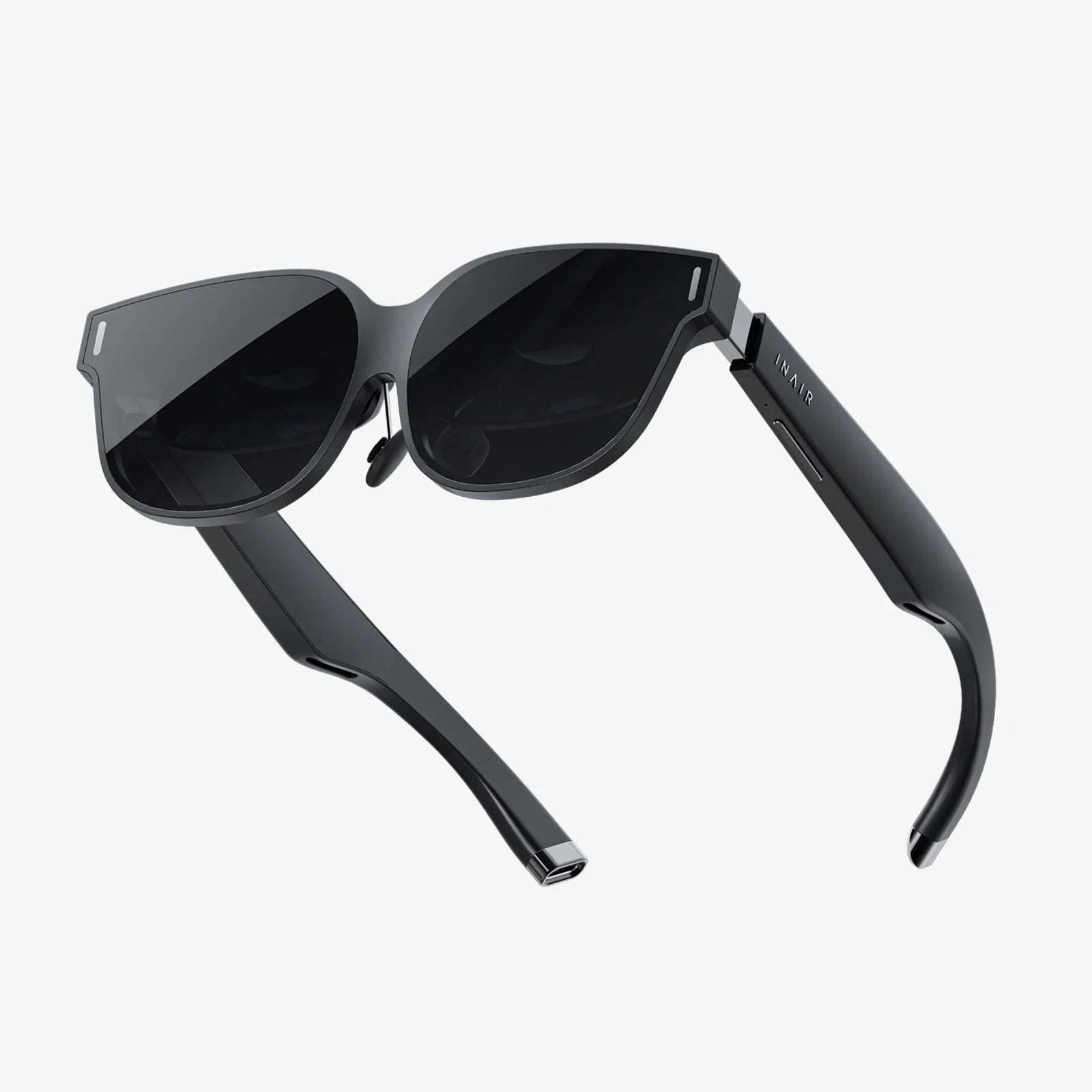
Despite its promising trajectory, the Canada augmented reality market faces several significant hurdles that must be addressed for sustained, long-term growth. The issue of hardware remains a double-edged sword. While smartphones provide access, truly immersive and hands-free experiences require dedicated AR smart glasses. Current generations of glasses often face trade-offs between performance, battery life, field of view, and cost. Creating a device that is socially acceptable, comfortable to wear for long periods, powerful, and affordable is the industry's holy grail.
Content creation is another substantial challenge. Developing high-quality, compelling, and useful AR experiences is still a complex and expensive endeavor. There is a pressing need for more intuitive authoring tools that allow content creators without deep programming expertise to build AR applications, thereby expanding the pool of creators and diversifying the available content.
Perhaps the most critical challenges are those of privacy and data security. AR devices, by their very nature, are equipped with cameras and sensors that continuously scan and interpret the user's environment. This raises profound questions: Where is this environmental data stored? How is it used? Who has access to it? Establishing clear, robust, and transparent regulations and ethical guidelines for data collection and usage is paramount to building public trust. Canada's strong privacy laws, like the Personal Information Protection and Electronic Documents Act (PIPEDA), provide a framework, but they will need to evolve to address the unique nuances of persistent, environmental data gathering.
The Future is Augmented: Trends Shaping Tomorrow
The future of the Canada augmented reality market is incredibly bright, shaped by several converging trends. The concept of the spatial web, or WebXR, promises a future where the internet is not just on a screen but mapped onto the world around us. Digital information will have a persistent location in physical space, accessible through AR browsers.
The integration of Artificial Intelligence (AI) and Machine Learning (ML) with AR will unlock new levels of intelligence and context-awareness. AR devices will not only display information but will understand the environment and the user's intentions within it, providing proactive and highly personalized assistance.
We are also moving towards the era of the AR cloud, a persistent, digital copy of the real world that allows AR experiences to be shared and persistent across multiple users and devices. This will enable collaborative AR experiences on an unprecedented scale, from multi-player games that transform entire cities into playing fields to architects and engineers collaborating on a holographic building model from different parts of the country.
As hardware improves and becomes more affordable, we will see a move towards more seamless form factors—from bulky glasses to sleek, everyday wearables that look no different from standard prescription eyeglasses. This will be the final step in moving AR from a novel technology to an indispensable, integrated part of our daily lives.
The Canada augmented reality market stands at a pivotal inflection point, transitioning from promising novelty to indispensable tool. It is a market built on a unique Canadian alchemy of top-tier academic research, supportive government policy, fearless entrepreneurial spirit, and a diverse talent pool. The journey ahead involves overcoming hardware limitations, establishing ethical guardrails, and compelling a broader audience to see the world through a new, digitally-augmented lens. The potential, however, is limitless—offering not just a new way to interact with technology, but a new way to enhance human capability, deepen understanding, and reimagine the very fabric of our reality. The door to this blended world is now open, and Canada is not just walking through it; it is helping to build it from the ground up.
Share:
Augmented Reality Production Augmented Reality: The Invisible Engine Reshaping Our World
Augmented Reality State of the Art: A Deep Dive into the Future of Perception