


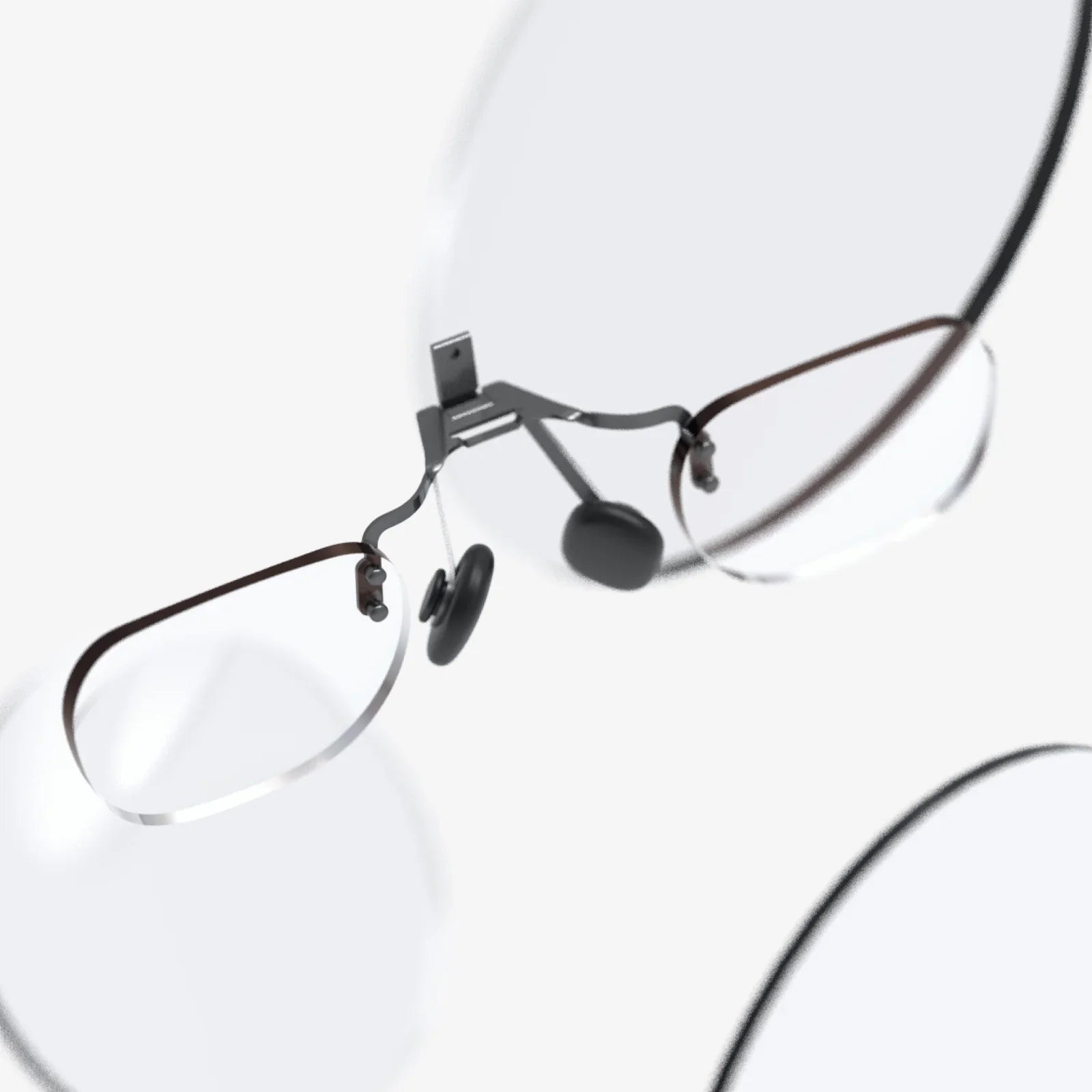
Imagine a world where the digital and the physical are not just connected but seamlessly, intelligently fused—a world where information, creativity, and assistance are painted directly onto the fabric of your reality. This is no longer the realm of speculative fiction; it is the tangible, breathtaking frontier of state-of-the-art augmented reality. The technology has vaulted from clunky prototypes and niche applications into a sophisticated ecosystem of hardware, software, and AI that is fundamentally redefining human-computer interaction. We stand at the precipice of a new era of perception, and the view is nothing short of revolutionary.
The Evolution of the Lens: Seeing the World Anew
The most visceral leap in AR technology has occurred in the realm of display and optics. The quest to render crisp, bright, and convincingly real digital objects into a user's field of view has been the primary technical hurdle. Early waveguides and birdbath optics were groundbreaking but often resulted in narrow fields of view, dim images, and a noticeable screen-door effect. The state of the art has shattered these limitations.
Today's advanced systems employ complex arrays of holographic waveguides and diffractive optical elements. These are not merely lenses; they are intricate light-piping systems that use nanoscale gratings to bend and shape light from micro-LED or laser beam scanning projectors directly into the eye. The result is a dramatic expansion of the field of view, now approaching the human binocular range, making digital content feel present and immersive rather than confined to a small, floating window. Furthermore, advancements in resolution and brightness ensure that virtual text is razor-sharp even in direct sunlight, and digital objects exhibit realistic occlusion, appearing to solidly exist behind physical objects.
Perhaps the most critical development is the move towards varifocal and light field displays. Traditional AR displays have suffered from the vergence-accommodation conflict—a physiological phenomenon where your eyes must constantly refocus between a fixed digital display plane and the real world, causing eye strain and a subtle but persistent sense of unreality. State-of-the-art systems now dynamically adjust their focal depth, matching the virtual object's perceived distance with the appropriate optical focus cue. Some experimental platforms even replicate light fields, simulating the way light naturally radiates from a point in space, allowing the human eye to focus naturally anywhere within the scene. This eliminates fatigue and is the final piece of the puzzle for achieving true visual realism, making prolonged use not just possible but comfortable.
The Intelligent Canvas: Spatial Computing and Environmental Understanding
A stunning display is a blank canvas without intelligence. The true magic of modern AR lies in its brain: its ability to perceive, understand, and interact with the physical environment. This capability, known as spatial computing, is powered by a sophisticated sensor fusion suite and powerful on-device artificial intelligence.
A state-of-the-art AR device is a cartographer in real-time. It utilizes a combination of high-resolution RGB cameras, depth sensors (like LiDAR or structured light), inertial measurement units (IMUs), and simultaneous localization and mapping (SLAM) algorithms to construct a millimetre-accurate, 3D mesh of its surroundings instantaneously and continuously. This is not a simple point cloud; it is a semantically rich understanding of the environment. The AI can identify surfaces (floors, walls, tables), classify objects (a chair, a monitor, a cup), and even understand their material properties and geometry.
This deep environmental awareness enables previously impossible interactions. A virtual character can walk around your real sofa, knowing it is an obstacle. A digital tape measure can provide precise dimensions of a physical room. You can place a virtual lamp on your real end table, and it will cast believable shadows onto your real floor. This persistent understanding means that the digital world can be anchored to specific locations. You could leave a virtual note on a friend's desk or a complex 3D model assembled on a workshop table, knowing it will be exactly there when you or a colleague return days later. This transforms spaces into shared, collaborative digital repositories, blurring the lines between personal computing and the built environment.
The Unseen Engine: AI, Connectivity, and the AR Cloud
The seamless experience described above is fueled by immense computational power, often split between the wearable device and external resources. On-device neural processing units (NPUs) handle the latency-critical tasks: tracking head movements, hand gestures, and performing initial scene analysis in real-time. This ensures that digital content remains locked in place without jitter, providing the essential foundation of believability.
For more complex tasks—object recognition, natural language processing, or rendering highly detailed models—the device leverages high-bandwidth, low-latency 5G and Wi-Fi 6/7 connectivity to offload processing to edge servers or the cloud. This hybrid approach combines the responsiveness of local compute with the limitless power of cloud-based AI. This connectivity is the gateway to the AR Cloud, often described as a digital twin of the real world. This persistent, shared, and universally accessible spatial layer will be the backbone of the AR internet. It will allow for globally persistent AR content, multi-user experiences on a massive scale, and real-time data overlay from IoT devices and environmental sensors, creating a living, breathing digital layer over our cities and homes.
Transforming the Blueprint of Industry
While consumer applications capture the imagination, it is in enterprise and industrial settings that state-of-the-art AR is already delivering profound ROI and revolutionizing workflows.
- Manufacturing and Field Service: Technicians wearing advanced AR headsets can see interactive wiring diagrams overlaid directly on complex machinery, receive real-time guidance from remote experts who can annotate their field of view, and access digital work manuals hands-free. This drastically reduces errors, training time, and downtime.
- Healthcare and Surgery: Surgeons can visualize CT scans and MRI data projected directly onto a patient's body, precisely guiding incisions. Medical students can practice procedures on hyper-realistic holographic patients, and complex physiological processes can be visualized in 3D for enhanced learning.
- Architecture, Engineering, and Construction (AEC): Architects and clients can walk through full-scale, photorealistic holographic models of unbuilt structures, making design decisions long before ground is broken. On the construction site, workers can see the BIM model overlaid on the physical structure, ensuring every beam and conduit is placed with perfect accuracy.
- Retail and Logistics: Warehouses use AR to create "vision picking" systems that guide workers to items with visual cues, optimizing picking routes and reducing errors. In retail, customers can visualize how furniture will look in their home or how clothes will fit, all through their device.
The Human Interface: Gesture, Gaze, and Voice
Interacting with this new layer of reality requires intuitive modalities that go beyond the mouse and keyboard. State-of-the-art AR has converged on a powerful combination of gesture, gaze, and voice control.
Using inward-facing cameras and machine learning, devices can track hand movements with incredible precision, recognizing a vast vocabulary of gestures from simple pinches and swipes to more complex manipulations of 3D objects. This allows for direct, natural manipulation of holograms as if they were physical objects. Gaze tracking adds another dimension of context; simply looking at a virtual interface element can select it, with a subtle pinch confirming the action. This creates a seamless, efficient, and fatigue-free interaction paradigm. Voice assistants, powered by natural language understanding, serve as the final piece, allowing for complex queries and commands without ever lifting a hand.
Navigating the New Frontier: Challenges and Ethical Considerations
For all its promise, the path to a ubiquitously augmented world is fraught with challenges. The hardware, while advancing rapidly, still faces hurdles in miniaturization, battery life, and achieving social acceptance in the form of stylish, everyday eyewear. The computational demands are immense, requiring continued innovation in chip design and power efficiency.
However, the most significant challenges are not technical but societal and ethical. The concept of the AR Cloud raises monumental questions about data ownership, privacy, and security. Who owns the digital map of your home or your city? How is personally identifiable information collected by these always-on, always-watching devices protected? The potential for persistent advertising and spam in the physical world could lead to visual pollution on an unprecedented scale.
Furthermore, the ability to alter perception itself introduces risks of misinformation, manipulation, and new forms of cyber-physical crime. Establishing a robust framework of norms, regulations, and digital rights will be as important as the technological development itself to ensure that the augmented future is equitable, safe, and enhances human potential rather than diminishing it.
The state of the art in augmented reality is not a single gadget or a specific application; it is a converging symphony of breakthroughs in optics, AI, connectivity, and interface design. It represents a fundamental shift from looking at a screen to looking through a computational lens that enhances our perception of everything. We are moving beyond simply accessing information to having a dialogue with our environment, unlocking new depths of understanding, productivity, and creative expression. The boundary between the atoms of our world and the bits of the digital realm is dissolving, and we are all poised to become active artists in the resulting canvas of reality.
Share:
Canada Augmented Reality (AR) Market: A Deep Dive into Innovation and Growth
Technology Technology Augmented Reality: The Invisible Layer Reshaping Our World