


Imagine a world where the digital and the physical are no longer separate realms but a single, intertwined experience, where information is not something you search for but something that appears contextually all around you. This is the promise and the rapidly unfolding reality of augmented reality, a technology poised to become as ubiquitous and transformative as the smartphone. It’s not about escaping our world, but about enhancing it, overlaying it with a dynamic, interactive layer of data, narrative, and connection. The journey into this blended existence is already underway, and it’s reshaping everything from how we work and learn to how we connect and perceive reality itself.
Beyond the Novelty: Defining the Augmented World
At its core, augmented reality is a technology that superimposes computer-generated perceptual information—be it images, sounds, haptic feedback, or GPS data—onto a user's view of the real world. Unlike virtual reality, which creates a fully immersive, digital environment, AR allows users to remain present in their physical space while interacting with digital content. This key distinction makes AR uniquely positioned for seamless integration into daily life. The goal is to create a system where the digital augmentation is so intuitive and contextually relevant that it feels like a natural extension of reality itself.
The concept is far from new. The term was coined in the early 1990s, but its roots stretch back further to the head-up displays (HUDs) used by fighter pilots in the 1950s, projecting crucial flight data onto the cockpit canopy. What has changed explosively in recent years is the convergence of several critical technologies. The miniaturization of powerful processors, the improvement of high-resolution cameras and sensors, the proliferation of high-speed mobile networks, and advances in computer vision and machine learning have all coalesced to move AR from military applications and clunky prototypes into the pockets of billions via smartphones and onto the faces of early adopters through smart glasses.
The Engine Room: Key Technologies Powering AR
The magic of AR doesn't happen by chance; it's the result of a sophisticated symphony of hardware and software working in perfect harmony. Understanding these components reveals the incredible complexity behind a seemingly simple overlay.
Sensing and Perception
An AR device must first understand the world it is augmenting. This is achieved through a suite of sensors. Cameras capture the visual field, while depth sensors (like LiDAR) scan the environment to create a precise 3D map, understanding the distance and dimensions of objects. Inertial Measurement Units (IMUs), including accelerometers and gyroscopes, track the device's movement and orientation in space. Together, these sensors provide the raw data needed for the device to comprehend its surroundings.
Processing and Computation
The sensor data is meaningless without immense computational power. This is where computer vision algorithms come into play, performing tasks like simultaneous localization and mapping (SLAM). SLAM allows the device to both map an unknown environment and track its own location within that map in real-time. This is fundamental for placing digital objects in a way that they appear locked in place, rather than floating arbitrarily. Machine learning models further enhance this by recognizing specific objects, surfaces, and gestures, enabling more intelligent interactions.
Display and Interaction
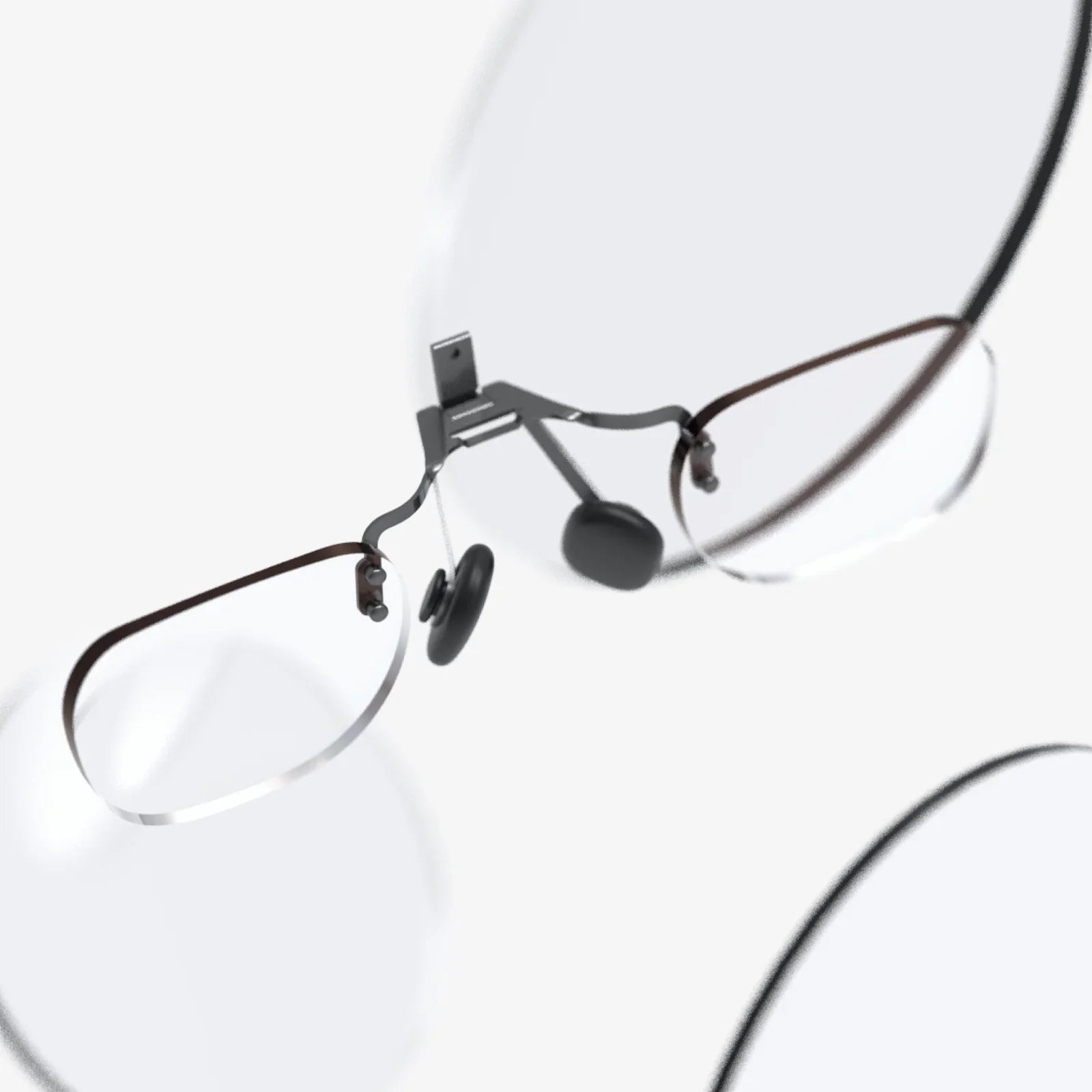
Finally, the processed digital content must be presented to the user. Current display methods range from the accessible (smartphone screens) to the advanced (optical head-mounted displays). These displays, particularly in glasses, often use waveguides or holographic optical elements to project images directly into the user's eye, blending them with the real world. Interaction paradigms are also evolving, moving beyond touchscreens to include voice commands, hand gestures, and even eye-tracking, creating a more natural and hands-free user experience.
A Spectrum of Applications: AR in Action
The true power of AR is revealed not in tech demos, but in its practical applications across countless industries, solving real-world problems and creating new forms of value.
Revolutionizing Enterprise and Industrial Work
Perhaps the most significant adoption of AR is happening in the industrial sector. Technicians performing complex repairs can see step-by-step instructions and animated diagrams overlaid directly on the machinery in front of them, reducing errors and training time. Warehouse workers equipped with AR glasses can receive optimal picking routes and instantly verify items without consulting a handheld scanner, dramatically increasing efficiency. Architects and engineers can walk through full-scale 3D models of their designs long before ground is broken, facilitating better planning and collaboration.
Transforming Education and Training
AR brings an unparalleled level of engagement to learning. Medical students can practice procedures on detailed, interactive holograms of the human body. History students can explore ancient ruins rebuilt in 3D around them. Mechanics-in-training can disassemble and reassemble virtual engines. This learning-by-doing in a risk-free, immersive environment accelerates comprehension and retention of complex information.
Enhancing Retail and E-Commerce
The try-before-you-buy dilemma is being solved by AR. Customers can see how a new sofa would look in their living room, how a pair of glasses fits their face, or how a shade of paint appears on their wall—all from their smartphone. This not only boosts consumer confidence and reduces return rates but also creates a novel and engaging shopping experience that bridges the gap between online and physical retail.
Redefining Navigation and Wayfinding
Instead of glancing down at a phone map, imagine walking through a city with digital arrows painted onto the sidewalk, guiding you to your destination. Indoor navigation in vast spaces like airports, hospitals, or shopping malls becomes intuitive. Information about local businesses, historical landmarks, or public transit schedules can pop up as you look around, creating a context-aware urban environment.
Unleashing New Forms of Storytelling and Entertainment
While gaming popularized AR, its potential for narrative is vast. Museums can bring exhibits to life with animated characters and historical reenactments. Live events and sports can overlay statistics and replays for attendees. Artists can create site-specific digital sculptures and installations visible only through an AR lens, turning the entire world into a potential canvas.
The Flip Side of the Lens: Ethical and Societal Considerations
As we rush to build this augmented future, it is imperative to confront the profound challenges and risks it presents. The technology that can enhance our reality can also distort, manipulate, and surveil it.
Privacy in a Perpetually Scanned World
AR devices, by their very nature, are data collection machines. They continuously capture and analyze their surroundings. This raises critical questions: Who owns the spatial data of your home once it's scanned? How do we prevent the unauthorized collection of biometric data from unsuspecting people in the background? The potential for persistent surveillance by corporations or governments is a serious threat, requiring robust new privacy frameworks and ethical design principles that prioritize user consent and data minimization.
The Reality Divide and Accessibility
There is a tangible risk of creating a new digital divide. As AR becomes a platform for essential information, services, and social interaction, those who cannot afford the hardware or access the required network infrastructure could be severely disadvantaged. Furthermore, designing for accessibility is paramount; experiences must be inclusive for users with different physical and cognitive abilities to prevent further marginalization.
Misinformation and Reality Manipulation
If we increasingly rely on digital overlays for contextual information, the potential for manipulation is staggering. Malicious actors could create convincing AR experiences that spread misinformation, alter historical sites with false narratives, or even superimpose defamatory content onto real people—a terrifying evolution of deepfake technology into real-time, real-space. Developing verification systems and digital provenance standards for AR content will be a crucial battleground.
The Blurring of Reality and Mental Well-being
Prolonged immersion in an augmented world could have unforeseen psychological effects. Will we become less present in our un-augmented reality? Could constant notifications and information overlays exacerbate attention deficits? The line between the real and the virtual will blur, potentially leading to confusion, dependency, or a diminished appreciation for the unadorned physical world. Understanding the long-term impact on human cognition and social interaction is essential.
The Invisible Future: Where Do We Go From Here?
The ultimate evolution of AR is towards invisibility—not of the technology itself, but of its interface. The goal is a seamless, always-available, context-aware digital layer that feels less like a tool and more like a enhancement of human cognition. This will likely culminate in elegant, socially acceptable glasses or even contact lenses that we wear all day. This future, often called the "Spatial Web" or "Web 3.0," will see information and experiences anchored to places and objects, creating a world where every physical space has a digital twin and a dynamic history.
Getting there will require breakthroughs in battery life, network latency (a key promise of 6G), and miniaturization. But the greater challenge will be building this future responsibly. It will require unprecedented collaboration between technologists, ethicists, policymakers, and artists to ensure that this powerful technology amplifies our humanity rather than diminishes it, that it enhances our reality without replacing it.
The door to a world where your surroundings can teach, assist, and tell stories is now open, offering a glimpse into a future where the line between what is real and what is digital gracefully dissolves into a more informed, connected, and astonishing human experience.
Share:
Augmented Reality State of the Art: A Deep Dive into the Future of Perception
Augmented Reality Production Equipment: The Unseen Engine Reshaping Reality