


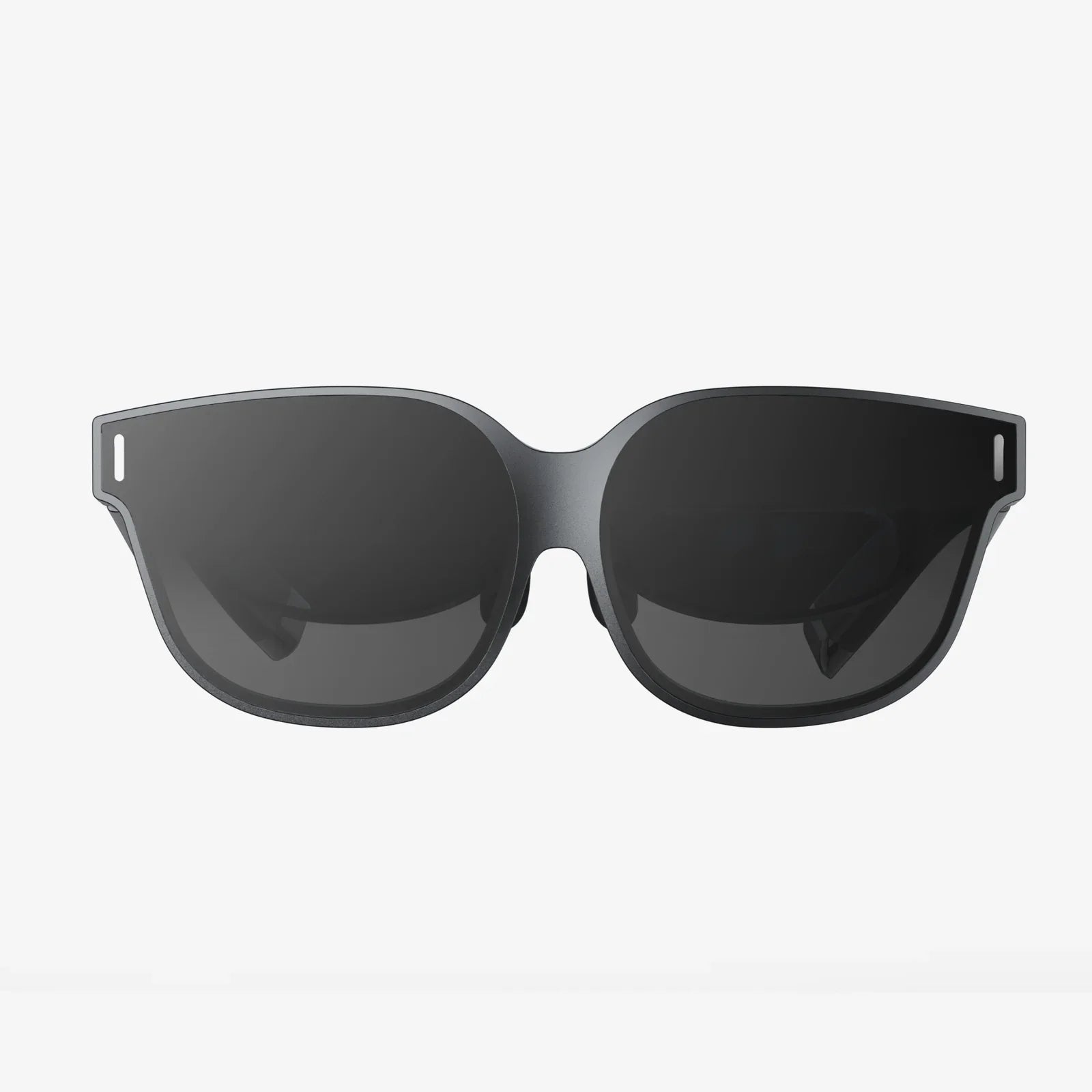
Imagine slipping on a pair of sleek, unassuming glasses and instantly overlaying a world of digital information, interactive art, and practical guidance onto your living room, your workspace, or your city street. This vision of the future, once the exclusive domain of multi-billion-dollar tech giants and science fiction, is now knocking at your door for a price that won't break the bank. The era of the truly cheap augmented reality headset is upon us, and it's poised to fundamentally reshape our relationship with technology, information, and each other. This isn't just a minor price drop; it's the critical catalyst that will transition AR from a niche curiosity into a ubiquitous tool for billions.
The Technological Alchemy Behind Affordability
Creating a functional AR headset is a complex dance of optics, processing, sensors, and software. For years, achieving high fidelity in these components was prohibitively expensive. The journey to affordability is a story of ingenious engineering and strategic compromise.
The Optics Revolution: From Waveguides to Birdbaths
At the heart of any AR headset is the optical system—the mechanism that projects digital images into your eye, making them appear as part of the real world. Early high-end systems used complex and exquisitely manufactured waveguide displays, which pipe light through a thin piece of glass. These are incredibly difficult and costly to produce at scale.
Affordable headsets have embraced alternative, more cost-effective solutions. The "birdbath" optic design has become a popular choice. This system uses a combiner—a partially mirrored surface—to reflect the image from a micro-display (often a smartphone-grade screen) into the user's eye. While it can result in a slightly bulkier form factor compared to waveguides, the manufacturing process is vastly simpler and cheaper, driving down costs dramatically without sacrificing a compelling visual experience.
The Processing Power Paradigm: Tethered vs. Standalone
Rendering complex 3D graphics in real-time and tracking the user's head position with pinpoint accuracy requires serious computational muscle. High-end standalone headsets bake this power into the device itself, using advanced, expensive processors.
Budget-friendly AR has cleverly sidestepped this cost in two ways. The first is the tethered model, where the headset acts primarily as a display and sensor suite, offloading all the heavy processing to a nearby smartphone or computer. This leverages hardware users already own, drastically reducing the bill of materials for the headset itself.
The second is the use of highly optimized, efficient mobile processors. While not as powerful as their desktop counterparts, these chips have become remarkably capable. Advances in chip manufacturing and AI acceleration allow them to handle spatial tracking and basic AR rendering efficiently enough for a wide range of applications, all while keeping power consumption and heat generation low.
Sensor Suite Simplification
Precise AR requires understanding the environment. Premium headsets use a dense array of specialized sensors, including LiDAR, depth sensors, and multiple high-resolution cameras for simultaneous localization and mapping (SLAM).
Economical headsets achieve similar results with a more minimalist approach. They often rely on a combination of:
- Monocular Cameras: Using computer vision algorithms, a single camera can estimate depth and track surfaces.
- Inertial Measurement Units (IMUs): These low-cost sensors (gyroscopes, accelerometers) provide crucial data on head movement and orientation.
- Software Magic: The real hero is the software. Machine learning models have become incredibly adept at extracting a rich understanding of the world from limited sensor data, compensating for less hardware.
The Market Forces Driving the Price Down
The push for cheaper AR isn't just happening in a vacuum. It's the result of powerful economic and strategic forces converging.
The Smartphone Spillover Effect
The components that power modern AR headsets—high-resolution micro-displays, efficient processors, compact batteries, and miniaturized cameras—have all been driven to mass-market affordability by the smartphone industry. AR headset manufacturers are essentially riding a wave of R&D and economies of scale they didn't have to pay for, sourcing commodity parts from the vast mobile supply chain.
The Platform Play: Ecosystem Over Hardware
For some of the biggest players in tech, the hardware itself is not the primary profit center. The real value lies in controlling the platform—the operating system, the app store, and the data that flows through it. By subsidizing or pricing headsets aggressively, these companies can quickly onboard millions of users, enticing developers to build applications and creating a virtuous cycle that establishes their AR ecosystem as the dominant standard. They are selling the razor handle to move the razor blades.
Mass Manufacturing and Competition
As consumer interest grows, manufacturing scales up. What was once a bespoke process becomes automated assembly line production, driving per-unit costs down. Furthermore, a increasingly crowded market fuels competition, forcing companies to compete on price and features, a battle that invariably benefits the consumer.
Beyond the Hype: Real-World Applications Unleashed by Affordability
The significance of cheap AR isn't about watching movies on a virtual screen; it's about augmenting human capability in everyday tasks. Low cost enables high impact across countless domains.
Revolutionizing Education and Training
Imagine a biology student examining a life-sized, beating holographic heart from every angle, or a history class walking through a reconstructed ancient Roman forum right in their classroom. Cheap AR headsets can make this a reality for public schools and institutions with limited budgets, moving beyond textbook diagrams and videos to truly immersive, interactive learning. For vocational training, technicians can learn to repair complex machinery with step-by-step instructions overlaid directly onto the equipment, reducing errors and accelerating proficiency.
Democratizing Design and Creativity
Architects, interior designers, and artists can now use AR to visualize their creations in real space at a 1:1 scale before a single physical resource is committed. A cheap headset allows a homeowner to see how a new sofa would look in their lounge, or a sculptor to see their digital maquette placed in a public park. This tools down what was once a multi-thousand-dollar professional tool to an accessible utility for creators of all levels.
Transforming Remote Assistance and the Frontline Worker
This is perhaps one of the most immediate and valuable applications. A field technician fixing a wind turbine or a nurse operating specialized medical equipment can wear a headset that allows an expert thousands of miles away to see what they see and annotate the real world with arrows, circles, and instructions. This "see-what-I-see" guidance drastically improves first-time fix rates, reduces travel costs for experts, and empowers frontline workers with instant knowledge.
New Frontiers in Entertainment and Social Connection
While gaming is an obvious application, affordable AR unlocks social experiences that are less isolating than virtual reality. Families separated by distance could place a life-sized hologram of a grandparent in the room to read a bedtime story. Friends could collaborate on a virtual 3D puzzle sitting on a real table. The barrier to these shared experiences isn't the technology; it's the cost of entry, which is now crumbling.
The Challenges and Considerations on the Road Ahead
The path to a mainstream AR future is not without its bumps. Affordability introduces its own set of challenges that developers, manufacturers, and society must address.
The Balance of Performance and Price
There will always be a trade-off. A cheap headset might have a narrower field of view, lower display resolution, or less accurate tracking than its premium counterparts. The key is finding the "good enough" threshold for the mass market—a level of performance that enables compelling applications without introducing frustration. The success of mobile gaming shows that users are willing to accept limitations for accessibility and convenience.
Privacy in an Augmented World
A device that is constantly scanning and interpreting your environment raises profound privacy questions. The data collected—the layout of your home, the objects you own, the people you meet—is incredibly sensitive. Manufacturers of affordable headsets must prioritize on-device processing and clear, transparent data policies to build trust. The conversation about digital ethics must evolve to include the always-on, ambient nature of AR.
Battery Life and Form Factor
All-day usability requires all-day battery life. Packing enough power into a lightweight, comfortable form factor remains a significant engineering challenge, especially at a low cost. Innovations in battery technology and power-efficient chips are critical to moving AR from a purpose-driven tool to an all-day wearable.
The Killer App Question
For any new computing platform, a "killer app" emerges that drives adoption. For the PC, it was the spreadsheet. For the smartphone, it was the app store and the mobile web. The AR world is still searching for its definitive, must-have application. Affordable hardware puts this tool in the hands of millions of creative developers, dramatically increasing the odds that this killer app will be found through iteration and experimentation.
The arrival of the cheap augmented reality headset is far more than a simple price point; it's the key that unlocks the door. It shifts the question from "Can we build it?" to "What will we build with it?" It empowers educators, elevates workers, connects families, and unleashes creators. The digital world is stepping out of our pockets and screens and is beginning to blend seamlessly with our physical reality. This fusion promises to be the most significant technological shift since the advent of the mobile internet, and for the first time, it's an revolution everyone can afford to join. The future is not just something we will watch; it's something we will see, interact with, and shape through the accessible lens of augmented reality.
Share:
What Best Describes Augmented Reality: A Portal to Our Digitally-Enhanced World
Buy XR Glasses: The Ultimate Guide to Navigating the Immersive Future