


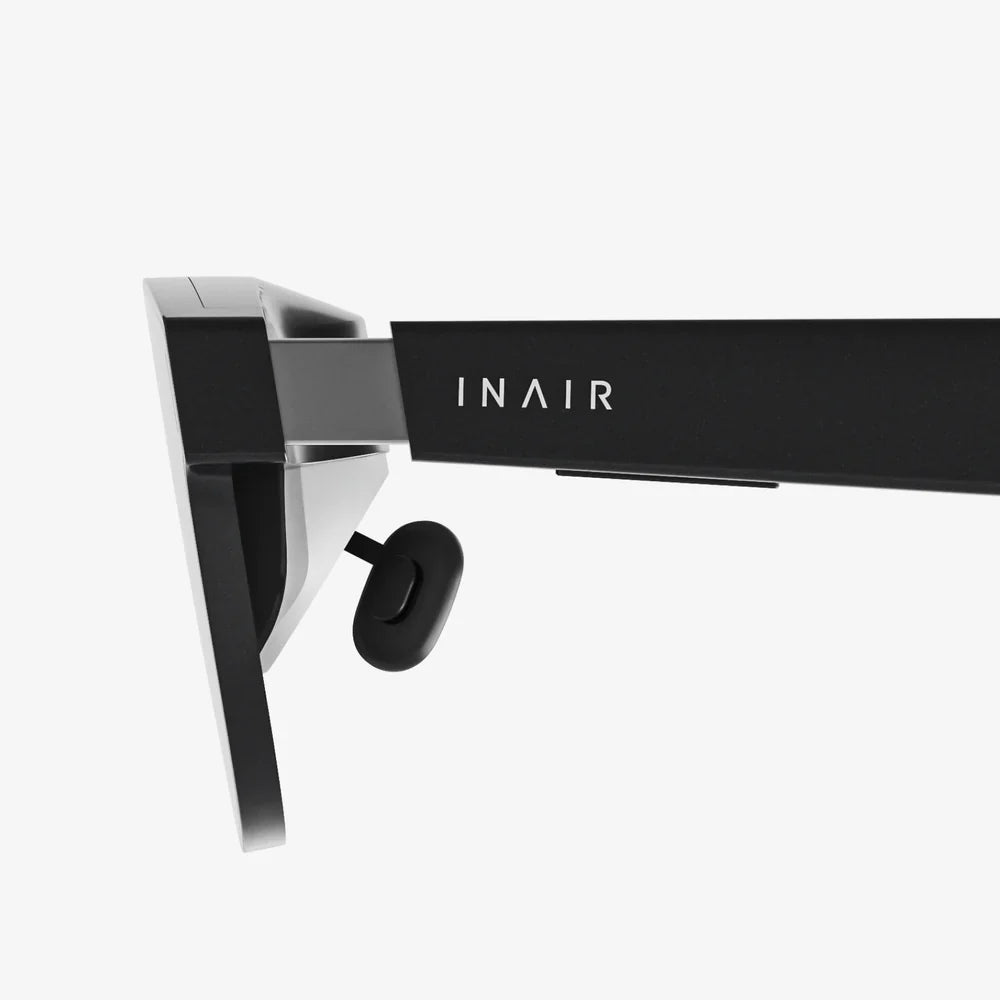
Imagine slipping a sleek, lightweight module onto your existing eyewear and instantly transforming your view of the world into an interactive, information-rich digital canvas. This isn't a scene from a distant sci-fi future; it's the reality being built today with the advent of clip-on AR glasses. This innovative form factor is poised to shatter the biggest barriers to widespread augmented reality adoption, offering a tantalizing glimpse into a future where digital and physical realities merge seamlessly, affordably, and on your own terms. For anyone curious about AR but hesitant to commit to a full-fledged, often expensive headset, clip-on designs represent the most compelling and accessible entry point yet.
Demystifying the Clip-On AR Form Factor
At its core, the concept of clip-on AR glasses is elegantly simple. Instead of a complete pair of smart glasses that replace your prescription lenses or favorite sunglasses, this design utilizes a self-contained unit that physically clips or magnetically attaches to a standard pair of frames. This unit houses all the essential technology—micro-displays, waveguides, sensors, processors, and batteries—required to project digital imagery onto transparent lenses, overlaying it onto your natural field of vision.
The fundamental components remain consistent with other optical see-through AR headsets:
- Micro-OLED Displays: Tiny, incredibly high-resolution screens that generate the digital images.
- Optical Waveguides: Thin, transparent lenses that use a combination of optics (like diffraction gratings or holographic films) to "bend" the light from the displays into the user's eyes.
- Sensors: An array including cameras for computer vision, inertial measurement units (IMUs) for tracking head movement, and ambient light sensors.
- Processing Unit: Either an onboard chip within the clip-on module or a connected computing device, such as a smartphone.
- Battery: A compact power source to drive the system, often housed in the arms of the clip or in a separate small puck.
The genius of the clip-on design lies in its modularity. It acknowledges that eyeglasses are deeply personal—they are medical devices, fashion statements, and daily essentials. By decoupling the advanced AR technology from the frame itself, manufacturers have created a solution that respects user choice and existing investments.
The Unbeatable Advantages of a Modular Approach
Why choose a clip-on model over a dedicated, all-in-one AR headset? The benefits are numerous and address the most significant pain points that have plagued the AR industry for years.
Ultimate Compatibility and Personalization
The most immediate advantage is compatibility. Users are not forced to choose between their vision and experiencing AR. Those with complex prescriptions, including high astigmatism or bifocals, can continue to wear their perfectly tailored lenses. Furthermore, it allows individuals to switch between their everyday glasses, prescription sunglasses, and even safety glasses while still utilizing the same AR module. This "bring your own frames" philosophy empowers the user and eliminates the need for costly prescription inserts or the compromise of wearing contacts.
Lower Barrier to Entry
Dedicated smart glasses represent a significant financial commitment, often costing as much as a high-end smartphone. By focusing the engineering and cost on the technological module alone, clip-on AR glasses can be offered at a substantially lower price point. This affordability is crucial for catalyzing mainstream adoption, allowing a broader audience to experiment with and integrate AR into their daily lives without a prohibitive upfront investment.
Discreetness and Social Acceptance
Social awkwardness has been a persistent hurdle for head-worn technology. A sleek clip-on module is far less conspicuous than a full, chunky AR headset. When not in use, the module can be easily detached and pocketed, allowing the user to revert to their normal appearance instantly. This on-demand AR reduces the social friction of being perceived as constantly "plugged in" or recording, making the technology feel more natural and less intrusive in social settings.
Future-Proofing Your Investment
The technology in the AR space is advancing at a breakneck pace. Display resolution, field of view, and processing power are all rapidly improving. With a clip-on system, a user could potentially upgrade their AR module to a newer, more powerful version in a few years without needing to replace their beloved, high-quality frames. This modular upgrade path is both economically and environmentally sustainable.
Exploring the Potential Use Cases
The applications for this technology are as diverse as the users who will adopt it. Clip-on AR glasses are not designed for a single killer app but rather serve as a versatile platform for countless experiences.
Professional and Enterprise Applications
In the workplace, the hands-free, on-demand nature of clip-ons is a game-changer. A field technician can clip on the module to view schematics, receive remote expert guidance, or access sensor data overlaid on the machinery they are repairing, and then remove it for a client meeting. Architects and interior designers could visualize 3D models on a physical construction site. Warehouse workers could have picking instructions and inventory data seamlessly integrated into their workflow without hindering their movement or safety.
Navigation and Contextual Information
Imagine walking through a foreign city with subtle directional arrows painted onto the sidewalk, or looking at a restaurant to instantly see its reviews and menu highlights. Clip-on AR can turn the entire world into an intuitive interface, providing just-in-time information exactly where and when you need it, all without having to look down at a phone.
Immersive Entertainment and Gaming
While currently limited by field of view compared to VR, AR gaming can turn a living room into a digital battlefield or a coffee table into a strategy game board. The convenience of clip-ons means jumping into an immersive experience can be as simple as attaching a module, with no need to wear a separate, bulky device.
Accessibility and Enhanced Communication
For individuals with hearing impairments, real-time speech-to-text transcription could be displayed in their field of view during a conversation. Language translation could occur seamlessly, with subtitles appearing near the person speaking. These applications demonstrate the profound potential for AR to bridge communication gaps and enhance human connection.
Navigating the Current Limitations and Challenges
While the promise is immense, it is important to acknowledge the current technological constraints that clip-on AR glasses must overcome.
Field of View (FoV): One of the most significant limitations is the relatively narrow field of view. The digital images often appear as a small, floating screen or a limited overlay in the center or corner of your vision, rather than filling your entire view. Expanding the FoV without making the optics bulky or prohibitively expensive remains a key engineering challenge.
Battery Life and Thermal Management: High-resolution displays and complex processing are power-intensive and generate heat. Balancing performance with all-day battery life and comfortable wear is a constant battle. The compact form factor of a clip-on module intensifies this challenge, leaving little room for large batteries or complex cooling systems.
Computational Power: To deliver truly immersive and responsive AR, significant onboard processing is needed for tasks like spatial mapping and object recognition. Many current solutions offload this processing to a connected smartphone, which can create latency and tether the user to another device. Developing efficient, powerful, and tiny chips is critical for the next leap forward.
Design and Comfort: Even as a module, the added weight on one side of the glasses can cause imbalance and pressure, leading to discomfort during extended use. Achieving a design that is both technologically advanced and comfortable enough for all-day wear is the holy grail for manufacturers.
The Future of On-Demand Augmented Reality
The trajectory of clip-on AR glasses points toward a future of even greater integration and miniaturization. We can anticipate developments like:
- Vanishingly Small Form Factors: Advancements in nanotechnology and holographic optics will eventually allow the AR module to become as thin as a piece of tape, potentially integrating directly into the lens of standard glasses without a visible clip.
- Advanced Interaction Paradigms: Control will move beyond simple voice commands and touchpads to include more intuitive methods like subtle eye-tracking, neural interfaces, and gesture recognition that doesn't require holding your hands up.
- Seamless AI Integration: A powerful, contextual AI assistant will become the core of the experience, proactively delivering information and functionality based on what you see, where you are, and what you're doing.
- The "Phygital" Layer: As the technology matures, a persistent digital layer over our physical world—often called the "metaverse" or "spatial web"—will become a standard utility, with clip-ons serving as a primary window into it.
Clip-on AR glasses are more than just a clever product category; they are a strategic bridge. They represent a pragmatic and user-centric approach to solving the hardest problems in wearable technology. By prioritizing accessibility, affordability, and social comfort, they lower the walls that have kept augmented reality a niche curiosity. They offer a compelling vision of the future—not one where we are isolated in fully digital worlds, but one where technology enhances our reality, respects our individuality, and empowers us to see the world around us not just as it is, but as it could be. The power to add a digital layer to your perception is no longer a fantasy reserved for the few; it's becoming an on-demand accessory for everyone, waiting to be clipped on and brought to life.
Share:
Best Virtual Reality Lenses: The Ultimate Guide to Visual Fidelity in Immersive Worlds
Is AR Glasses Bad for Your Eyes? The Truth About Digital Eye Strain and Visual Health